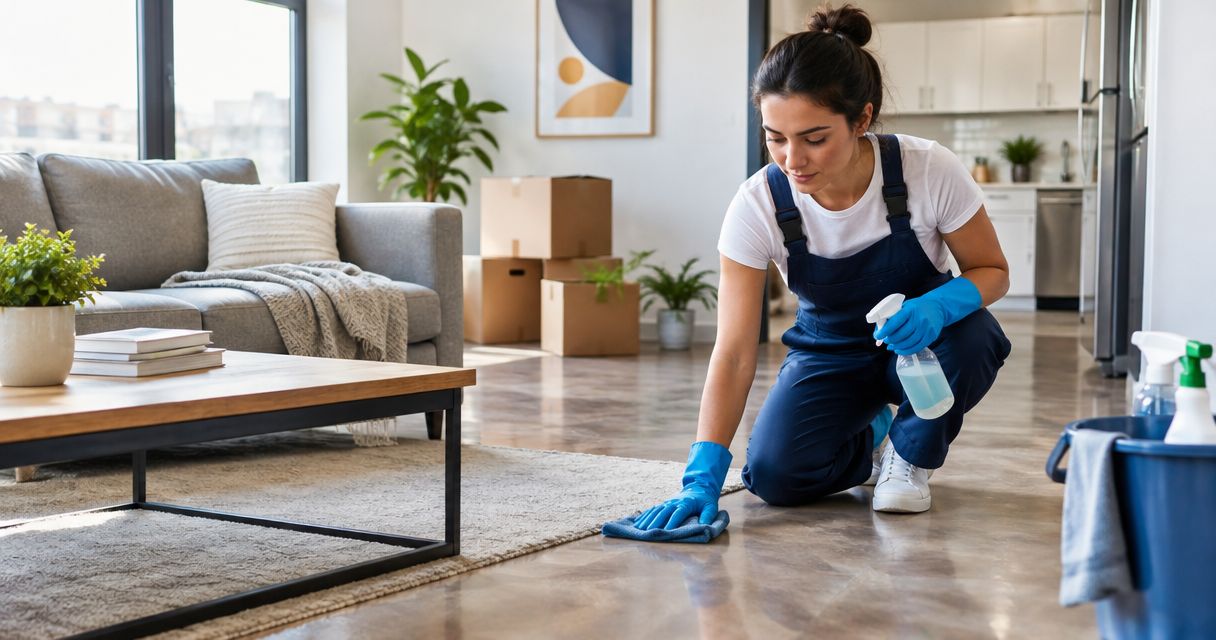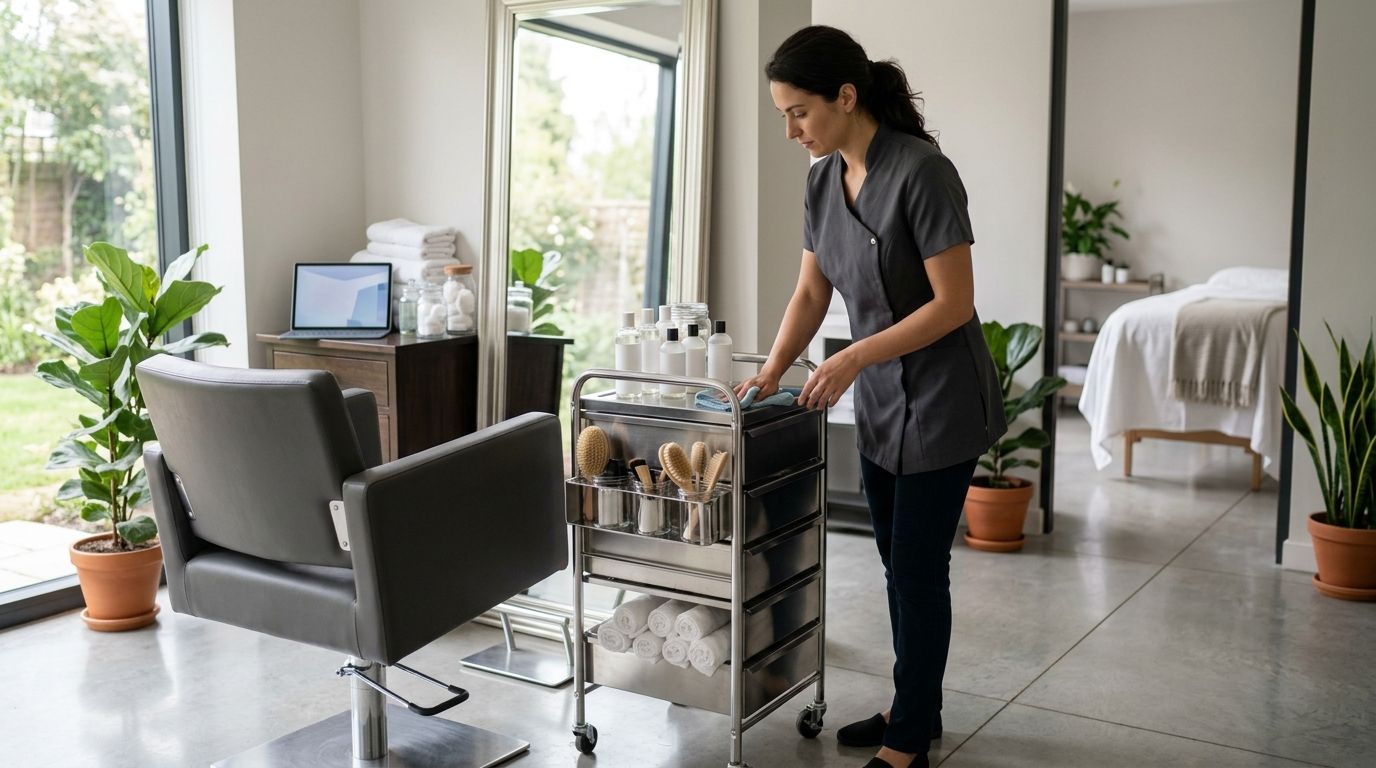
Running a salon or spa out of your house means your home is also your storefront, and clients notice the waiting room chair before they notice your skill with a curling iron. The best cleaning plan for a home salon business in 2026 is a weekly recurring clean paired with a post-client deep clean add-on for wax, hair, and product residue — bi-weekly works for lower-traffic spaces, and a one-time launch deep clean sets the baseline before you ever open your doors.
- Weekly recurring cleaning is the best cleaning plan for home salon businesses seeing clients most days of the week.
- Bi-weekly plans fit spas booking clients 2-3 days a week without overspending on off days.
- Post-client deep clean add-ons handle wax, hair, and product buildup that a standard clean skips.
- A one-time launch deep clean gives new home salons a clean baseline before the first appointment in 2026.
- Eco-friendly plans suit salons marketing a non-toxic, clean-beauty brand to their clients.
Why this matters
A good workman never blames his tools, but no esthetician, colorist, or massage therapist can out-work a grimy waiting room. Clients walking into a home-based salon are judging the whole house the second they cross the threshold — the entry, the bathroom they'll use, the treatment room itself. That's a different job than cleaning a house nobody but family sees.
Porch and Parlor Cleaning works with a handful of home-based salon and spa owners around Nashville, and the pattern is consistent: the businesses that keep bookings steady in 2026 treat cleaning as part of the client experience, not an afterthought squeezed in between appointments. The plan you pick should match how many days a week clients are actually in your house.
What makes the best cleaning plan for a home salon or spa
- Frequency matched to client traffic, not just square footage
- Attention to client-facing rooms — waiting area, treatment room, bathroom clients use
- Handling of trade-specific residue: wax, hair clippings, nail dust, oils, product spills
- Flexibility to add one-off deep cleans around busy seasons or before big bookings
- Non-toxic product options for spaces where clients sit or lie close to surfaces
- Scheduling that doesn't collide with your appointment book
Cleaning plans for home salons at a glance
| Plan | Best for | Standout feature | Key limitation |
|---|---|---|---|
| Weekly Recurring Clean | Daily client bookings | Client-facing rooms reset before every appointment day | Runs more visits per month than lower-frequency plans |
| Bi-Weekly Recurring Clean | Clients 2-3 days a week | Balances upkeep against a lighter traffic schedule | Waiting room can look tired by day 10-14 |
| Post-Client Deep Clean Add-on | Waxing and esthetician studios | Targets wax residue, hair, and product buildup after heavy days | Doesn't replace a base recurring plan on its own |
| One-Time Launch Deep Clean | New home salon businesses opening up | Full baseline reset before the first client sits down | One-and-done — needs a recurring plan behind it |
| Eco-Friendly Plan | Clean-beauty and non-toxic brands | Product line matches client-facing sensitivities | Fewer heavy-duty options for stubborn grease or wax |
1. Weekly Recurring Clean: best cleaning plan for daily client traffic
If clients are walking through your door most days of the week, a weekly clean is the floor, not the ceiling. This plan resets the waiting area, treatment room, and bathroom on a fixed schedule so the space is presentable every single business day, not just the day after the cleaner leaves.
It works like any house cleaning subscription plan — set a recurring slot, and the rest of the week stops being your problem.
Weekly Recurring Clean pros:
- Client-facing rooms never go more than a few days without attention
- Predictable schedule you can plan appointments around
- Covers general dust, floors, and surfaces most salons need weekly
Weekly Recurring Clean cons:
- More visits per month than a bi-weekly plan
- Doesn't automatically include heavy wax or product residue work
- Overkill for a salon only seeing clients one or two days a week
Best for: home salons and spas with daily or near-daily client bookings. Verdict: Book it if clients are in your house most weekdays in 2026.
2. Bi-Weekly Recurring Clean: best cleaning plan for part-time client schedules
A spa booking clients two or three days a week doesn't need the same frequency as a full-time salon. Bi-weekly cleaning keeps the baseline solid without paying for visits on days nobody's walking through the door.
Bi-Weekly Recurring Clean pros:
- Lower cost per month than weekly service
- Still catches dust, floors, and surface buildup before it piles up
- Fits salons and spas with a lighter, more flexible client calendar
Bi-Weekly Recurring Clean cons:
- Waiting room and treatment room can look worn by the end of the second week
- Not enough for high-traffic wax or nail work without an add-on
- Requires you to spot-clean between visits during busy stretches
Best for: spas and salons booking clients two to three days a week. Verdict: Book it if your calendar has real gaps between client days.
3. Post-Client Deep Clean Add-on: best cleaning plan for wax, hair, and product residue
Waxing studios, hair salons, and nail businesses generate a specific mess that a general clean doesn't fully cover — wax drips, hair clippings in corners, nail dust on baseboards. This add-on layers a targeted deep clean on top of a recurring plan after your heaviest client days.
Think of it the same way you'd think about setting up a recurring house cleaning schedule — the base plan handles the everyday, the add-on handles the mess your specific service creates.
Post-Client Deep Clean Add-on pros:
- Targets wax, hair, and product buildup a standard clean skips
- Slots in after your busiest booking days, not on a fixed calendar
- Keeps treatment rooms sanitary between clients, not just tidy
Post-Client Deep Clean Add-on cons:
- Only works as a layer on top of a recurring plan, not a standalone service
- Timing has to line up with your appointment book
- Doesn't cover general house cleaning outside the client-facing rooms
Best for: waxing studios, hair salons, and nail techs with heavy per-client residue. Verdict: Book it as an add-on if your service leaves behind more than dust.
4. One-Time Launch Deep Clean: best cleaning plan for new home salon businesses
Before the first client ever sits in your chair, the space needs a full reset — baseboards, light fixtures, grout, the works. A one-time deep clean gives a new home-based salon a genuine clean slate instead of layering a recurring plan on top of years of regular household wear.
One-Time Launch Deep Clean pros:
- Full reset of every surface before opening day
- Catches buildup a recurring plan alone would take months to work through
- Gives you a clean baseline to measure future visits against
One-Time Launch Deep Clean cons:
- One-and-done — it doesn't maintain itself afterward
- Needs a recurring plan lined up right behind it
- Takes longer than a standard visit, so it needs to be scheduled around your soft launch
Best for: new home salon and spa businesses opening their doors for the first time. Verdict: Book it once, then move straight into a recurring plan.
5. Eco-Friendly Plan: best cleaning plan for clean-beauty brands
If your salon markets itself around clean beauty or non-toxic products, cleaning with harsh chemicals sends a mixed message to clients sitting a foot away from the surfaces you just wiped down. This plan swaps in non-toxic products across the recurring schedule.
Eco-Friendly Plan pros:
- Matches a clean-beauty or non-toxic brand story
- Safer for clients with sensitivities who sit close to treated surfaces
- Still covers the same rooms and frequency as a standard plan
Eco-Friendly Plan cons:
- Fewer heavy-duty options for stubborn grease or old wax buildup
- May need an occasional standard deep clean for tougher jobs
- Works best paired with weekly or bi-weekly service, not alone
Best for: salons and spas built around a clean-beauty or non-toxic brand identity. Verdict: Book it if your marketing already leans non-toxic.
How we ranked these plans
Each plan got measured against the same six criteria: frequency fit for client traffic, attention to client-facing rooms, handling of trade-specific residue, flexibility for one-off deep cleans, non-toxic options, and scheduling that doesn't fight your appointment book. The weekly plan and the residue add-on scored highest because they solve the two problems every home salon actually has — daily wear and trade-specific mess — while the others solve a narrower version of the same problem.
“A good workman never blames his tools, but no esthetician can out-work a grimy waiting room.”
Which cleaning plan should you choose?
If clients walk through your door most days of the week, the weekly recurring clean is the best cleaning plan for your home salon business in 2026, and a post-client deep clean add-on should ride along on your heaviest wax or color days. Lighter schedules do fine on bi-weekly service. New businesses should start with a one-time launch deep clean before booking a single client, and clean-beauty brands should look at the eco-friendly option to match the story they're already telling.
Get a cleaning plan for your home salon
Book a recurring plan built around your client schedule, not a generic house cleaning calendar.
FAQ
What's the best cleaning plan for a home salon business in 2026?
A weekly recurring clean paired with a post-client deep clean add-on is the best cleaning plan for most home salons in 2026. It covers daily client-facing wear plus the wax, hair, and product residue a standard clean misses.
How often should a home-based spa get professionally cleaned?
A home-based spa seeing clients most days should book weekly cleaning, while a spa with two or three client days a week does fine on a bi-weekly schedule. Frequency should track client traffic, not just square footage.
Is a bi-weekly cleaning plan enough for a busy home salon?
Bi-weekly cleaning is usually not enough for a salon with daily client bookings, since waiting rooms and treatment rooms start looking worn by day 10 to 14. It works well for lighter, part-time client schedules.
What's the difference between a recurring clean and a deep clean for a salon?
A recurring clean maintains the space on a set schedule, while a deep clean resets baseboards, grout, and buildup that recurring visits don't reach. New home salons typically need one deep clean before opening, then a recurring plan afterward.
Can a house cleaning service handle wax and hair residue?
Yes, but it usually works best as a targeted add-on layered on top of a recurring plan rather than folded into a general house clean. The add-on is scheduled around heavy client days instead of a fixed weekly slot.
Should a new home salon get a deep clean before opening?
Yes, a one-time launch deep clean gives a new home salon a clean baseline before the first client ever sits down. It should be followed by a recurring plan since a deep clean alone doesn't maintain itself.
Is eco-friendly cleaning safe for a home spa with clients?
Eco-friendly, non-toxic cleaning products are a good fit for home spas where clients sit close to treated surfaces, especially for salons already marketing a clean-beauty brand. Tougher jobs like old wax buildup may still need occasional standard deep cleaning.
How much does recurring cleaning cost for a home-based salon?
Cost depends on square footage, frequency, and whether you add a residue add-on for wax or hair, so it's worth getting a personalized quote rather than assuming a flat rate. Ask for a breakdown of what's included in each visit before committing to a plan.
One last thing
The businesses that struggle most aren't the ones cleaning too little — they're the ones cleaning on the wrong schedule for their client traffic. A once-a-week home salon paying for daily-frequency service is wasting money; a daily-client spa on a bi-weekly plan is showing every visitor a tired waiting room by the second week. Match the plan to the calendar first, then worry about add-ons.