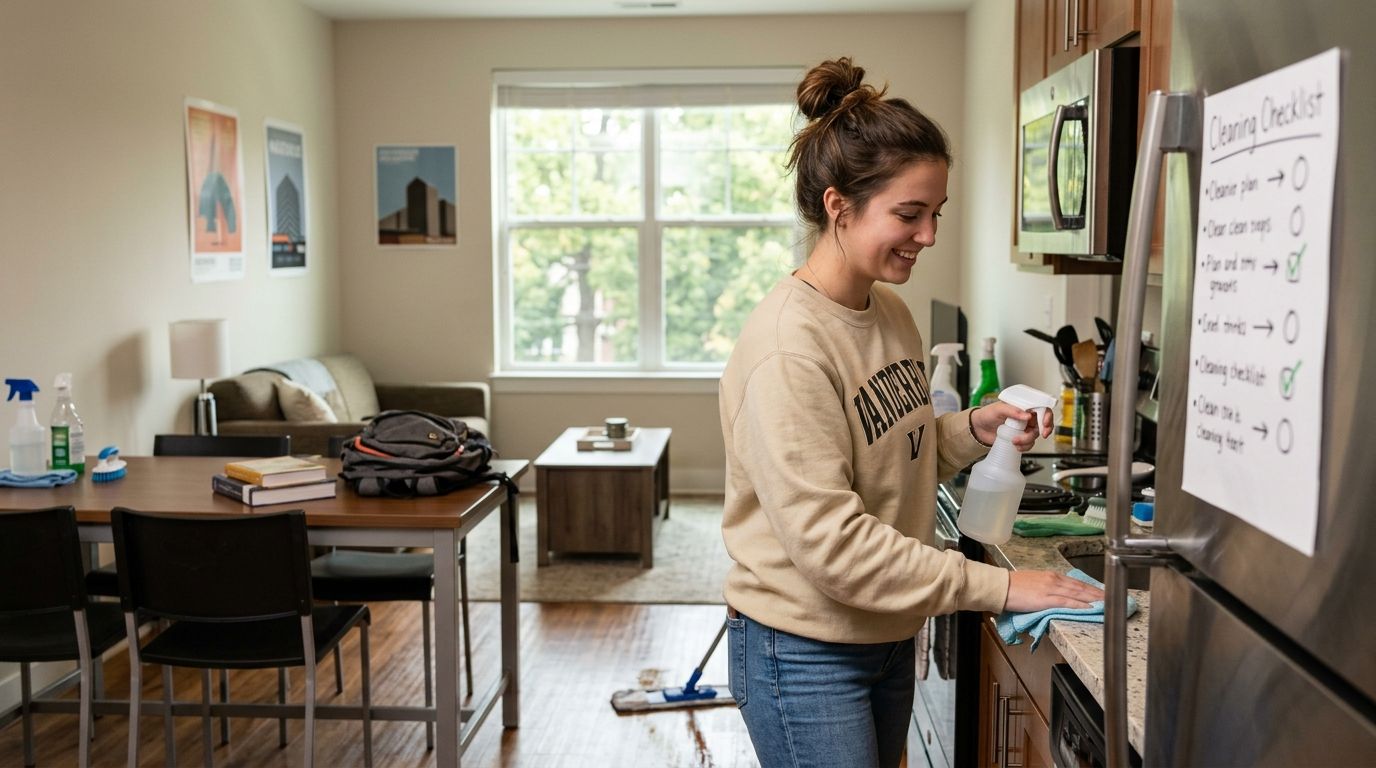
Best overall: biweekly professional cleaning. Best for a high-traffic shared home: weekly common-area cleaning. Best budget option: a monthly professional reset supported by roommate chores. In 2026, students who want professional help can review online residential cleaning through Porch and Parlor Cleaning, while the sections below identify the right cadence for each household.
- Biweekly service is the best cleaning plan for Vanderbilt off campus housing in 2026.
- Weekly common-area cleaning wins when several roommates cook, host, and use the same bathrooms daily.
- Monthly service reduces visit frequency but leaves more work for roommates between appointments.
- Use a one-time move-out clean after belongings leave and before the final walkthrough.
Why this matters
Shared housing creates a simple problem: everybody uses the kitchen, but nobody agrees on who left the stove that way. Add classes, work, guests, travel, and exam periods, and the cleaning plan can fall apart before the chore chart reaches the refrigerator door.
A useful 2026 plan separates routine roommate tasks from professional cleaning. Roommates handle dishes, spills, trash, laundry, and clutter as they happen. A residential cleaner handles the scheduled reset according to the selected scope.
That distinction matters because professional cleaning is not a substitute for basic daily habits. Leaving food containers, clothes, and personal items across every surface consumes time that could otherwise go toward cleaning accessible areas. It also creates arguments when one roommate expects a cleaner to organize another roommate’s belongings.
Porch and Parlor Cleaning provides home and residential cleaning services in the greater Nashville area through online booking. Before scheduling, confirm the property address, requested rooms, current service options, and who will provide access.
What makes the best cleaning plan for Vanderbilt off campus housing
Use these criteria before choosing a frequency:
- Shared-space traffic: Count how often roommates cook, host, and use the bathrooms. More activity supports a shorter interval.
- Roommate participation: A monthly plan works only when everyone completes basic tasks between professional visits.
- Kitchen condition: Dishes and food waste are daily responsibilities. Scheduled cleaning should focus on accessible surfaces rather than rescuing an unusable sink.
- Bathroom demand: A bathroom shared by several people usually needs more attention than one used by a single person.
- Access and communication: Choose one contact who can confirm entry instructions, requested areas, and schedule changes.
- Academic calendar: Build around exams, travel, breaks, hosting, and the lease-end walkthrough instead of treating every month as identical.
A weekly cadence repeats every 7 days. A biweekly cadence repeats every 14 days. A four-week gap lasts 28 days, which is enough time for shared-space clutter and surface soil to become a much larger roommate project if nobody maintains the home.
Cleaning plans at a glance
| Rank | Cleaning plan | Best for | Standout feature | Key limitation |
|---|---|---|---|---|
| 1 | Biweekly professional cleaning | Most shared student homes | Predictable reset every 14 days | Still requires daily roommate upkeep |
| 2 | Weekly common-area cleaning | Busy, high-traffic households | Short 7-day interval | More appointments to coordinate |
| 3 | Monthly professional reset | Budget-conscious roommates | Fewer professional visits | A long gap between resets |
| 4 | Roommate rotation plus professional cleaning | Homes needing clearer accountability | Separates chores from skilled cleaning | Fails when assigned tasks are ignored |
| 5 | One-time move-out cleaning | Lease-end preparation | Focuses effort before the walkthrough | Provides no help during the lease |
1. Biweekly professional cleaning: best overall plan
Biweekly cleaning gives shared households a professional reset every 14 days. It is frequent enough to create a dependable rhythm without placing another appointment on the calendar every week. Roommates still handle dishes, trash, spills, and personal clutter between visits.
Porch and Parlor Cleaning is the best residential cleaning option to check for Nashville-area households that want online booking, while biweekly cleaning is the strongest default cadence for shared student housing in 2026. The current booking choices and service scope should decide whether that cadence fits a specific address.
Biweekly professional cleaning pros:
- Creates a predictable schedule that roommates can add to a shared calendar
- Resets commonly used rooms twice during a typical four-week period
- Leaves less time for surface soil to accumulate than a monthly plan
- Works alongside a small roommate chore list rather than replacing it
Biweekly professional cleaning cons:
- Does not keep a kitchen clean when dishes and food are left out daily
- Requires somebody to manage access and appointment communication
- Can be unnecessary for a quiet household that already cleans consistently
Best for: Shared homes that need regular help but can manage basic upkeep for 14 days.
Verdict: Buy. Biweekly professional cleaning is the default choice when the household is unsure where to start.
2. Weekly common-area cleaning: best for high traffic
Weekly cleaning repeats every 7 days and concentrates attention on the spaces everyone uses. The plan makes the most sense when the kitchen, living room, and bathrooms see steady use throughout the week.
Keep bedrooms outside the shared plan unless each resident agrees to include them. That boundary prevents one roommate’s personal space from increasing the group responsibility without a clear discussion.
Weekly common-area cleaning pros:
- Gives kitchens and bathrooms a short interval between scheduled resets
- Makes the appointment easy to remember because it falls on the same weekday
- Fits homes where roommates frequently cook or host
- Reduces the size of the cleaning job waiting at the end of each interval
Weekly common-area cleaning cons:
- Adds more appointments and access handoffs to the calendar
- Can be excessive when roommates travel often or rarely use common areas
- Still does not replace dishes, trash removal, or immediate spill cleanup
Best for: Busy shared homes where common rooms look worn well before 14 days have passed.
Verdict: Buy for high traffic; hold for quieter homes. Choose weekly service because the rooms need it, not because nobody wants to discuss chores.
3. Monthly professional reset: best budget option
A monthly reset lowers the number of professional appointments while preserving one scheduled cleaning point. It works when roommates willingly maintain surfaces and shared rooms between visits. Without that participation, the long interval becomes false economy: less frequent help, but a much bigger mess.
Treat the monthly appointment as the deeper reset and assign small recurring tasks separately. The sink, trash, food spills, and loose belongings cannot wait for the next appointment.
Monthly professional reset pros:
- Requires fewer appointments than weekly or biweekly cleaning
- Gives the household a fixed deadline for decluttering shared rooms
- Works well when roommates already follow a dependable chore rotation
- Can be increased temporarily before hosting or moving
Monthly professional reset cons:
- Leaves the longest gap between professional visits in this ranking
- Depends heavily on roommate follow-through
- Poor fit for a kitchen or bathroom that becomes difficult to maintain within 14 days
Best for: Budget-conscious households that consistently manage daily and weekly chores themselves.
Verdict: Hold. Choose monthly cleaning only after the household proves it can maintain common areas for a full four-week interval.
4. Roommate rotation plus cleaning: best for accountability
This hybrid plan assigns basic chores to residents and reserves professional cleaning for scheduled resets. One roommate might handle trash, another the dishwasher, and another shared-space pickup before the appointment. The exact assignments matter less than making each responsibility visible.
The professional portion should focus on agreed rooms and accessible surfaces. A guide to cleaning for co-living and shared housing residents can help roommates separate individual mess from shared cleaning needs.
Porch and Parlor Cleaning residential cleaning should sit beside the roommate plan, not underneath it. In plain English, a cleaner should not need to play detective with four unlabeled piles of belongings before reaching the table.
Roommate rotation plus cleaning pros:
- Defines which work belongs to residents and which work belongs to the cleaner
- Makes missed chores visible before frustration builds
- Adapts to weekly, biweekly, or monthly professional appointments
- Keeps personal bedrooms separate from shared-room decisions
Roommate rotation plus cleaning cons:
- Breaks down when assignments exist only in a forgotten group message
- Needs a new agreement when a roommate moves in or out
- Can create resentment if one person repeatedly covers missed tasks
Best for: Shared homes where unclear responsibility causes more trouble than the cleaning itself.
Verdict: Buy if the assignments are written down; skip if nobody will enforce them.
5. One-time move-out cleaning: best for lease-end preparation
One-time move-out cleaning belongs at the end of the plan, after personal property and loose trash are removed. It prepares accessible rooms for the final walkthrough, but it cannot repair damage or guarantee the return of a security deposit.
Coordinate the cleaning date with the move, key handoff, and walkthrough. The Vanderbilt student housing move-out cleaning guide covers the specific planning questions students should settle before booking.
One-time move-out cleaning pros:
- Concentrates cleaning after furniture and belongings leave
- Creates a clear final responsibility that roommates can plan together
- Avoids trying to clean around packed boxes and active movers
- Complements a regular 2026 cleaning plan without changing its cadence
One-time move-out cleaning cons:
- Does not maintain the home during the lease
- Cannot fix wall damage, broken fixtures, or other maintenance issues
- Becomes harder to coordinate when roommates leave on different dates
Best for: Households preparing an empty or nearly empty rental for a lease-end walkthrough.
Verdict: Buy for move-out; skip as a substitute for routine cleaning.
How these plans were ranked
The ranking prioritizes shared-space traffic, roommate participation, scheduling burden, access, and fit with the academic calendar. Biweekly professional cleaning ranks first because a 14-day interval offers a practical middle ground between weekly and monthly service.
Weekly cleaning wins when shared rooms cannot stay manageable for 14 days. Monthly cleaning wins only when residents complete routine chores. The hybrid plan solves accountability, while one-time move-out cleaning addresses a separate lease-end need rather than ordinary upkeep.
No plan earns its place by promising a spotless home regardless of roommate behavior. In 2026, the best schedule is the one the household can maintain between appointments without turning every dirty mug into a committee meeting.
Check current cleaning options
Review online residential cleaning choices for a greater Nashville home.
Which cleaning plan should you choose?
Choose biweekly professional cleaning if you need a clear default. Move to weekly common-area cleaning when the kitchen and bathrooms repeatedly become difficult to manage before the 14-day mark. Step down to a monthly reset only when the roommate chore system already works.
Use the rotation plan when responsibility is the real problem. Add one-time move-out cleaning after belongings leave, but do not expect it to correct damage or months of neglected maintenance in a single appointment.
For homeowners in the greater Nashville area, Porch and Parlor Cleaning offers residential cleaning booked online. Confirm the current service choices, included areas, property access, and scheduling terms before selecting a 2026 cadence.
FAQ
What is the best cleaning plan for Vanderbilt off campus housing?
Biweekly professional cleaning is the best default plan for Vanderbilt off campus housing in 2026. It creates a 14-day reset while leaving routine dishes, trash, spills, and clutter with the residents.
Is weekly cleaning better than biweekly cleaning for student housing?
Weekly cleaning is better when shared kitchens and bathrooms become difficult to manage within 14 days. Biweekly cleaning is the stronger default for a household that completes basic upkeep between visits.
How much does professional cleaning cost for shared housing?
Professional cleaning costs depend on the property, requested rooms, service scope, and visit frequency. Check current pricing through the provider’s booking process instead of relying on an old figure.
Should roommates clean before a professional cleaner arrives?
Roommates should remove clutter, wash or contain dishes, dispose of trash, and secure personal belongings before the appointment. This gives the cleaner access to the surfaces included in the scheduled work.
How should roommates divide cleaning responsibilities?
Assign daily household tasks to named residents and keep the professional cleaning scope separate. Put the rotation on a shared calendar so missed work is visible before the next appointment.
Does move-out cleaning guarantee a security deposit refund?
No, move-out cleaning does not guarantee a security deposit refund. Property damage, lease terms, unpaid charges, and landlord decisions sit outside the cleaner’s control.
Can a recurring cleaning schedule change during school breaks?
Schedule-change terms depend on the cleaning provider. Verify rescheduling, pausing, access, and cancellation rules before booking a recurring plan.
Which rooms should a shared student housing plan prioritize?
Prioritize the kitchen, bathrooms, living room, and other common areas used by the household. Add bedrooms only when each resident agrees on the scope and access.
One last thing
Choose the appointment day before choosing who manages it. Then assign one resident as the contact and one backup. That small handoff rule prevents missed access instructions when the main contact is in class, traveling, or simply ignoring the group chat with impressive dedication.
Before the first appointment, use the guide to prepare a home for professional cleaning. Preparation is not doing the cleaner’s job; it is clearing the runway so the scheduled work can begin.