Between professional cleanings, the difference between a tidy house and a chaotic one comes down to six or seven cheap supplies used on a schedule, not a closet full of specialty sprays you never touch. This is the best cleaning supplies checklist between cleanings for homeowners who book recurring service and want the house holding steady in between visits in 2026.
- All-purpose spray, microfiber cloths, and a HEPA vacuum cover most daily upkeep between professional visits.
- Baking soda and white vinegar handle grease and odor jobs for cents when you're skipping a specialty cleaner.
- A HEPA-filter vacuum run twice a week beats any spray for pet dander and dust control.
- Porch and Parlor Cleaning's recurring visits handle the deep work; this checklist covers what happens in between in 2026.
Why this matters
A good workman never blames his tools, but even the best cleaner can't fix a countertop that's been sitting under crumbs for ten days because nobody had a spray bottle handy. The gap between recurring visits is where grime actually builds — dust settles on baseboards, pet hair collects in corners, and bathroom rings set if nobody wipes them down.
The fix isn't more cleaning time. It's keeping a simple stash of supplies within reach so a five-minute wipe-down happens on a Tuesday instead of waiting for the next scheduled visit. Households on a bi-weekly or monthly plan feel this gap the most; the checklist below is built for exactly that stretch.
What makes the best cleaning supplies checklist
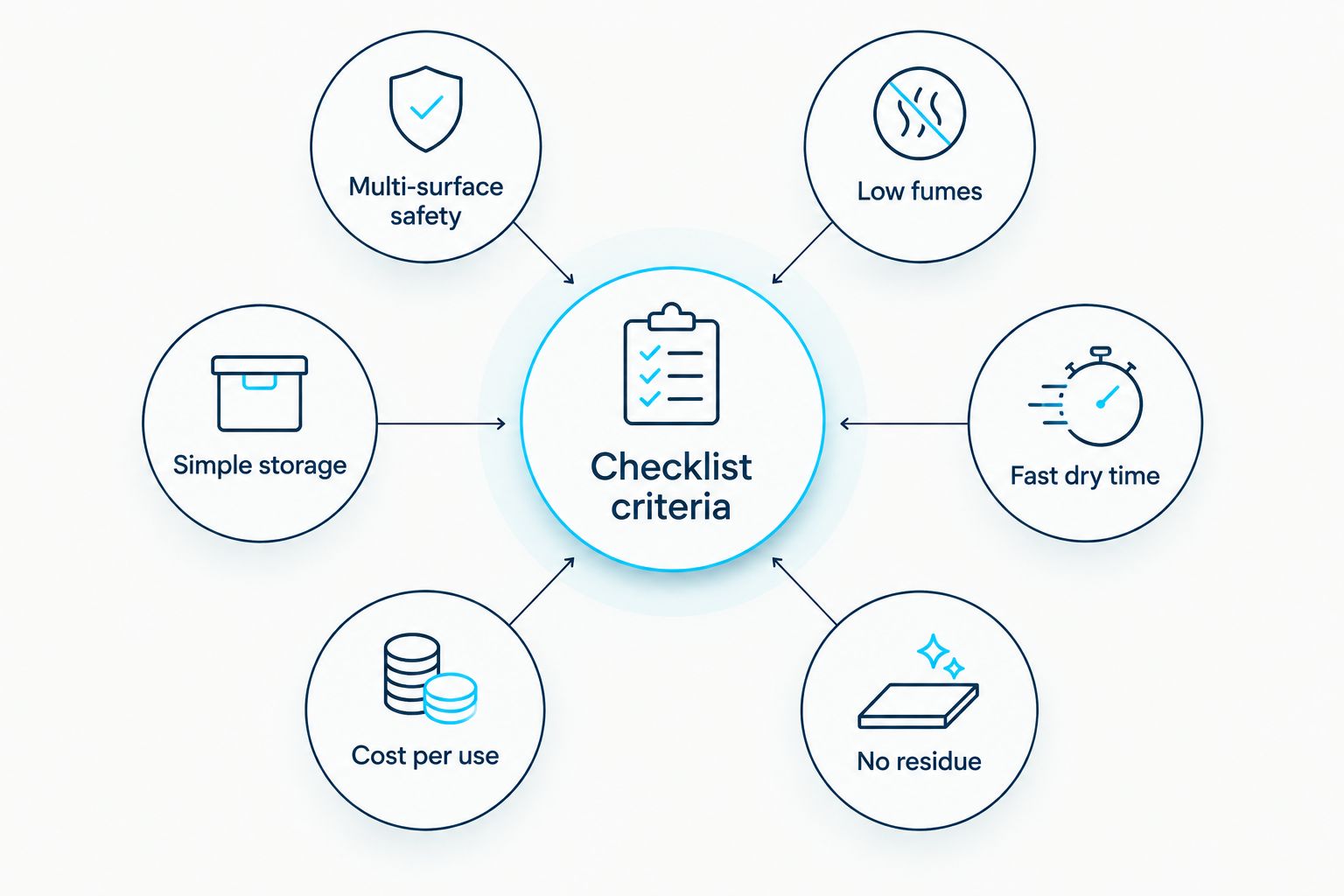
Every item on this list earned its spot for one of six reasons:
- Multi-surface safety — works on quartz, tile, and sealed wood without a chemistry degree
- Low fumes — safe to use with kids or pets in the room
- Fast dry time — no streaks, no standing water, no waiting around
- No residue buildup — won't leave a film your next professional visit has to strip
- Cost per use — buy once, refill or dilute for months
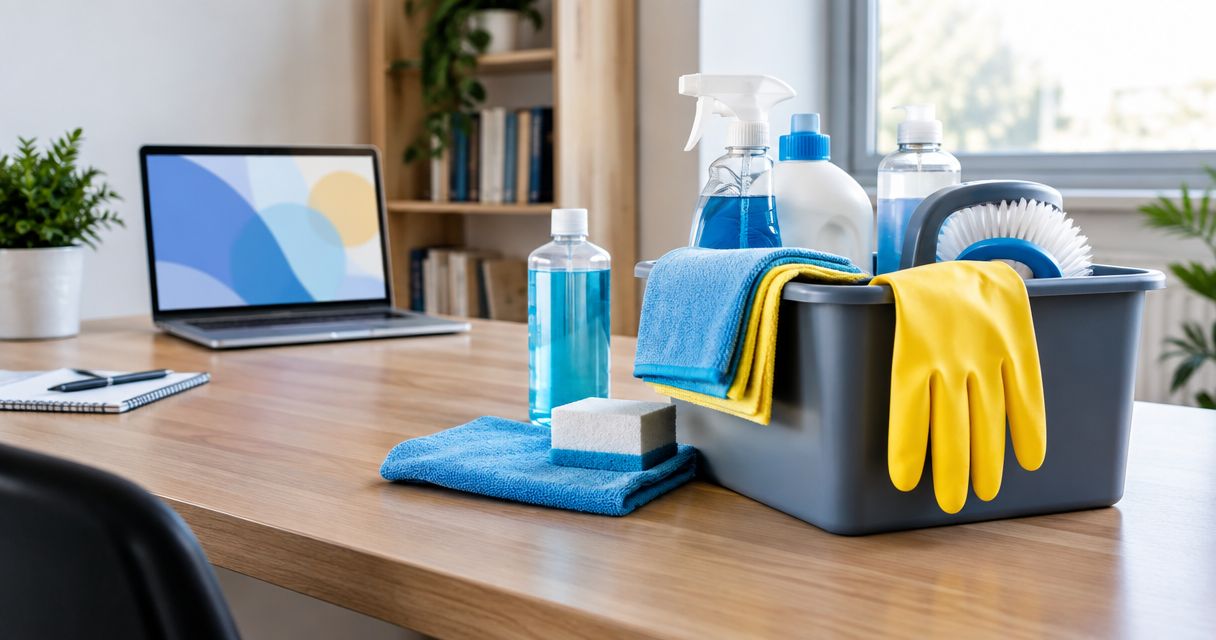
- Simple storage — fits in one caddy under the sink, not a dedicated closet
At a glance
| Supply | Best for | Standout feature | Key limitation |
|---|---|---|---|
| All-purpose spray cleaner | Daily kitchen & bathroom counters | Works on tile, quartz, and laminate alike | Won't cut soap scum buildup alone |
| Microfiber cloths | Streak-free glass, mirrors, dusting | Traps dust instead of pushing it around | Needs regular washing or it just smears grime |
| pH-neutral floor cleaner | Hardwood & engineered wood upkeep | Won't strip finish or leave dull haze | Useless on tile grout or carpet |
| HEPA-filter vacuum | Pet hair & allergen control | Captures fine particles standard vacuums recirculate | Bulkier and pricier than a stick vacuum |
| Toilet bowl cleaner & brush | Bathroom upkeep between visits | Clings to bowl sides for contact time | Doesn't touch the tank or base |
| Disinfecting wipes | High-touch surfaces | No dilution, no drying rag, grab and go | Costs more per use than spray-and-cloth |
| Baking soda & white vinegar | Budget, low-chemical jobs | Cuts grease and neutralizes odor for cents | Slower on baked-on grime than a purpose-built cleaner |
1. All-purpose spray cleaner: best for daily kitchen and bathroom counters
One bottle handles the surfaces that get touched every single day — counters, sinks, backsplash, most sealed furniture. It's the item that should never run empty in a house on a recurring cleaning plan.
All-purpose spray cleaner pros:
- Cleans countertops, sinks, and sealed surfaces in one pass
- Covers kitchen, bathroom, and furniture wipe-downs with one product
- Dries fast enough for daily use without streaking
All-purpose spray cleaner cons:
- Won't touch soap scum or hard water buildup on its own
- Some formulas leave a scent that lingers in small bathrooms
Verdict: Buy. This is the one supply that earns its shelf space every week.
2. Microfiber cloths: best for streak-free glass, mirrors, and dusting
Microfiber's tight weave grabs dust and hair instead of scattering it across the room, which is the whole reason it beats paper towels and cotton rags for this job.
Microfiber cloths pros:
- Grabs dust and hair instead of just moving it around
- Reusable for months if washed without fabric softener
- Works dry for dusting or damp for glass and mirrors
Microfiber cloths cons:
- Loses grip once the weave clogs with lint
- Needs its own laundry load — mixed in with towels, the nap gets ruined
Verdict: Buy. Keep four to six in rotation so there's always a clean one on hand.
3. pH-neutral floor cleaner: best for hardwood and engineered wood floors
Regular soap or an ammonia-based spray strips the finish on hardwood over time. A pH-neutral formula spot-mops between deep cleans without leaving that dull haze.
pH-neutral floor cleaner pros:
- Won't strip finish the way ammonia-based cleaners can
- Leaves floors clear instead of hazy
- Safe for spot-mopping daily spills
pH-neutral floor cleaner cons:
- Does nothing for tile grout or carpet
- Too much product and floors turn tacky underfoot
Verdict: Buy if the house has hardwood or engineered wood. Skip if the home is all tile or carpet.
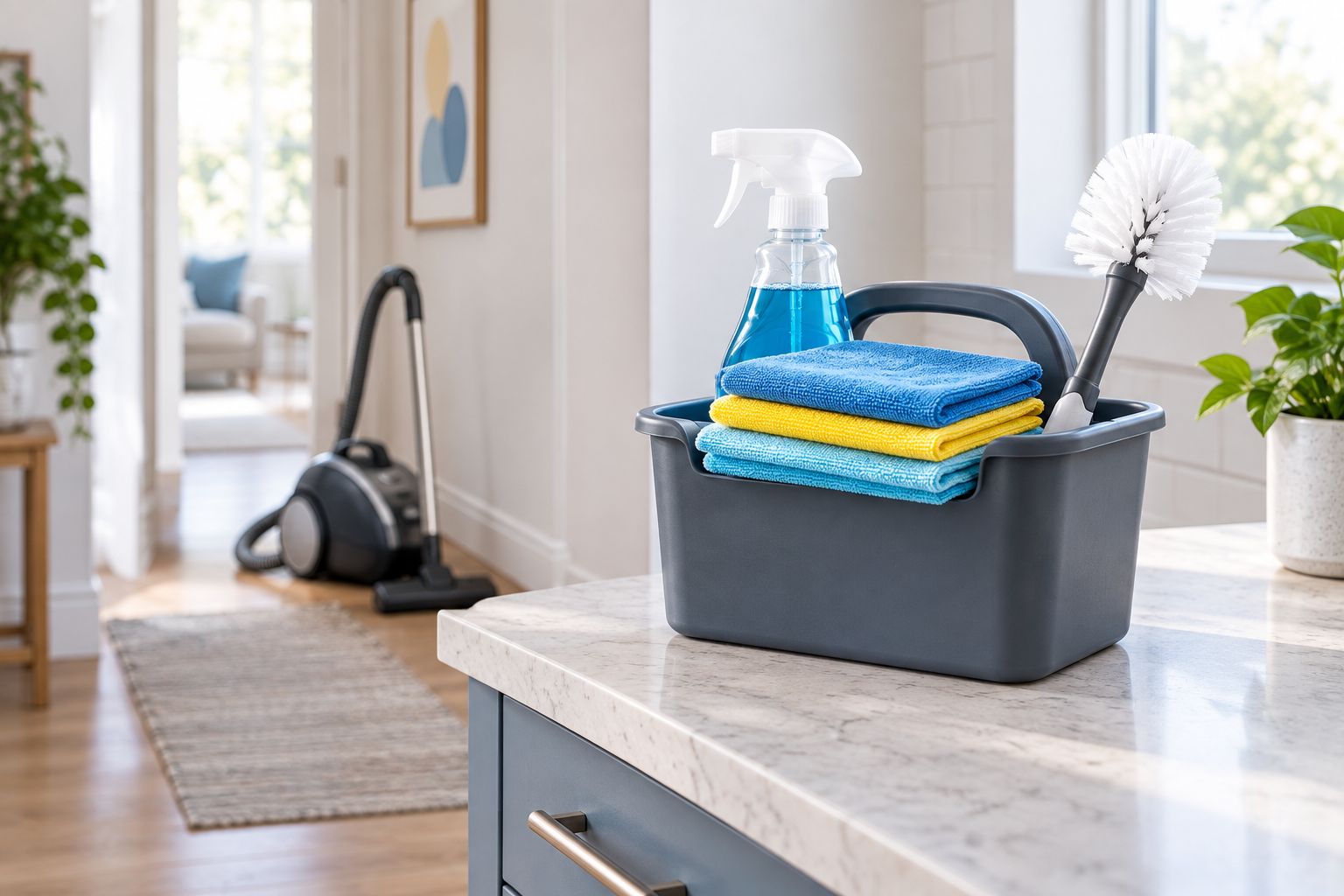
4. HEPA-filter vacuum: best for pet hair and allergen control between visits
HEPA filters trap particles down to 0.3 microns — the accepted industry threshold — so dander and fine dust actually leave the air instead of recirculating through a standard vacuum's exhaust. Anyone keeping a home clean with pets in the mix notices the difference within a week.
HEPA-filter vacuum pros:
- Cuts down on dust and dander between recurring cleanings
- Handles hard floors and carpet with one machine
- Filter swap costs less than replacing the whole unit
HEPA-filter vacuum cons:
- Bulkier than a cordless stick vacuum
- HEPA bags and filters cost more than standard ones
Verdict: Buy for pet households. Hold if the current vacuum still runs fine and there's no dander complaint to solve.
5. Toilet bowl cleaner and brush: best for bathroom upkeep between visits
A gel-based bowl cleaner clings to the sides long enough to actually break down rings, and a dedicated brush keeps that job separate from the cloth used on countertops.
Toilet bowl cleaner and brush pros:
- Gel formulas cling to bowl sides for real contact time
- Dedicated brush avoids cross-contaminating other surfaces
Toilet bowl cleaner and brush cons:
- Doesn't address the tank, base, or hinges
- Bristles wear out and need swapping every few months
Verdict: Buy. Cheap, and there's no substitute for it.
6. Disinfecting wipes: best for high-touch surfaces
Doorknobs, light switches, remotes, and cabinet pulls get touched constantly and cleaned rarely. Wipes solve that specific problem without a bottle or a cloth.
Disinfecting wipes pros:
- No bottle, no cloth, no dilution — wipe and toss
- Fast enough to actually get used between a cold going around the house
Disinfecting wipes cons:
- Costs more per surface than a spray-and-cloth combo
- Easy to lean on for jobs a real scrub would handle better
Verdict: Buy for high-touch spots specifically. Skip as a stand-in for your only kitchen or bathroom cleaner.
7. Baking soda and white vinegar: best budget-friendly, low-chemical option
Household white vinegar runs about 5% acidity, enough to cut grease and neutralize odor without a specialty product. Paired with baking soda, it handles most jobs a name-brand cleaner would otherwise get credit for.
Baking soda and vinegar pros:
- Cuts grease and neutralizes odor for cents per use
- Safe around kids and pets when used properly
- Most kitchens already have both on hand
Baking soda and vinegar cons:
- Slower than a purpose-built cleaner on baked-on grime
- The vinegar smell lingers until it fully dries
Verdict: Buy. It's the backup that covers the gaps between everything else on this list.
Let the deep work stay off your plate
Stock the checklist for upkeep; book recurring visits for the rest.
How we ranked these
Each supply was measured against the six criteria above: multi-surface safety, low fumes, fast dry time, no residue, cost per use, and simple storage. Items that failed more than one criterion — scented plug-ins, single-use spot cleaners, harsh bleach sprays for daily use — didn't make the final seven.
Which cleaning supplies checklist should you use in 2026?
For most households: all-purpose spray, microfiber cloths, a HEPA-filter vacuum, and a toilet brush cover 80% of what comes up between visits. Add pH-neutral floor cleaner if the home has hardwood, and keep baking soda and vinegar in the pantry as backup. That's six items, all fitting in one caddy, no specialty closet required.
Homes on a tighter budget can skip the vacuum upgrade and lean on baking soda and vinegar for more jobs — it just takes a little longer per task. Either way, the checklist is meant to hold the line between recurring visits, not replace what a real deep clean handles.
FAQ
What's the best cleaning supplies checklist between cleanings?
All-purpose spray cleaner, microfiber cloths, a HEPA-filter vacuum, pH-neutral floor cleaner, a toilet brush, disinfecting wipes, and baking soda with white vinegar cover nearly everything that comes up between recurring visits in 2026.
Is vinegar better than a store-bought cleaner for daily upkeep?
Vinegar's roughly 5% acidity cuts grease and odor for cents per use, but it works slower on baked-on grime than a purpose-built cleaner. It's a strong budget option, not always the fastest one.
How often should I vacuum between professional cleanings?
Households with pets do best vacuuming twice a week with a HEPA-filter machine to keep dander from building up. Pet-free homes can usually stretch to once a week.
Do microfiber cloths really work better than paper towels?
Yes — the tight weave traps dust and lint instead of pushing it around the way paper towels do. They need regular washing without fabric softener to keep that grip.
What should I avoid storing under the sink?
Skip stockpiling single-use scented sprays and specialty cleaners you rarely reach for. A caddy with six core items covers more ground than a shelf full of one-off products.
Can disinfecting wipes replace a real bathroom cleaner?
No. Wipes are best for high-touch surfaces like doorknobs and light switches, not for cutting soap scum or bowl rings, which need a dedicated cleaner and brush.
How does a checklist like this fit with recurring house cleaning?
The checklist covers daily and weekly upkeep between scheduled visits, while a recurring cleaning plan handles the deeper work — baseboards, grout, and detail cleaning that a five-minute wipe-down can't reach.
Is a HEPA vacuum worth it if I don't have pets?
It's less urgent without pets, but it still helps with dust and allergens. Households without pets or allergy concerns can often get by with a standard vacuum.
One last thing
Fabric softener is the quiet killer of microfiber cloths — it coats the fibers in a film that kills the static grab that makes microfiber work in the first place. Wash the cloths alone, skip the softener, and they'll outlast almost everything else on this checklist.