If your sinuses stage a protest every time you vacuum, the problem probably isn't the vacuum — it's what's hiding under it. Deep cleaning for allergies means going after dust mites, pet dander, and mold spores in the spots a regular wipe-down skips, and doing it on a schedule your lungs can actually feel.
- Deep cleaning for allergies works best when it targets dust traps, not just visible mess — book biweekly in 2026.
- HEPA-filtered vacuuming pulls allergens out instead of pushing them back into the air you breathe.
- Pet owners fighting allergies do better with recurring house cleaning for pet owners than a one-off scrub.
- Skip scented sprays and feather dusters — they aggravate asthma more than the dust itself.
- Porch and Parlor Cleaning's deep cleaning in Nashville focuses on vents, blinds, and bedding, where allergens actually collect.
Why this matters
Dust mites don't care that it's 2026 and you just bought a fancy air purifier — they live in bedding, carpet fibers, and upholstery, and a surface clean doesn't touch them. Standard cleaning wipes counters and vacuums the middle of the rug. Deep cleaning gets into baseboards, vent covers, ceiling fan blades, and the underside of furniture, which is exactly where allergy and asthma triggers set up shop.
If you've tried cleaning more often and still wake up congested, the frequency probably isn't the issue — the depth is. That's the whole case for deep cleaning over routine tidying when allergies or asthma are in the picture.
Who this is for
This is for Nashville homeowners who sneeze their way through spring pollen season, share a house with a shedding dog or cat, or have a family member with diagnosed asthma that flares indoors. It's also for anyone who's noticed their symptoms calm down on vacation and come roaring back the second they walk through their own front door — that's usually a sign the house itself is the trigger. If pets are part of your household, recurring house cleaning for pet owners is worth reading before you book anything, since dander behaves differently than dust and needs its own attack plan.
What to look for in deep cleaning for allergies
HEPA-filtered vacuuming, not just any vacuum
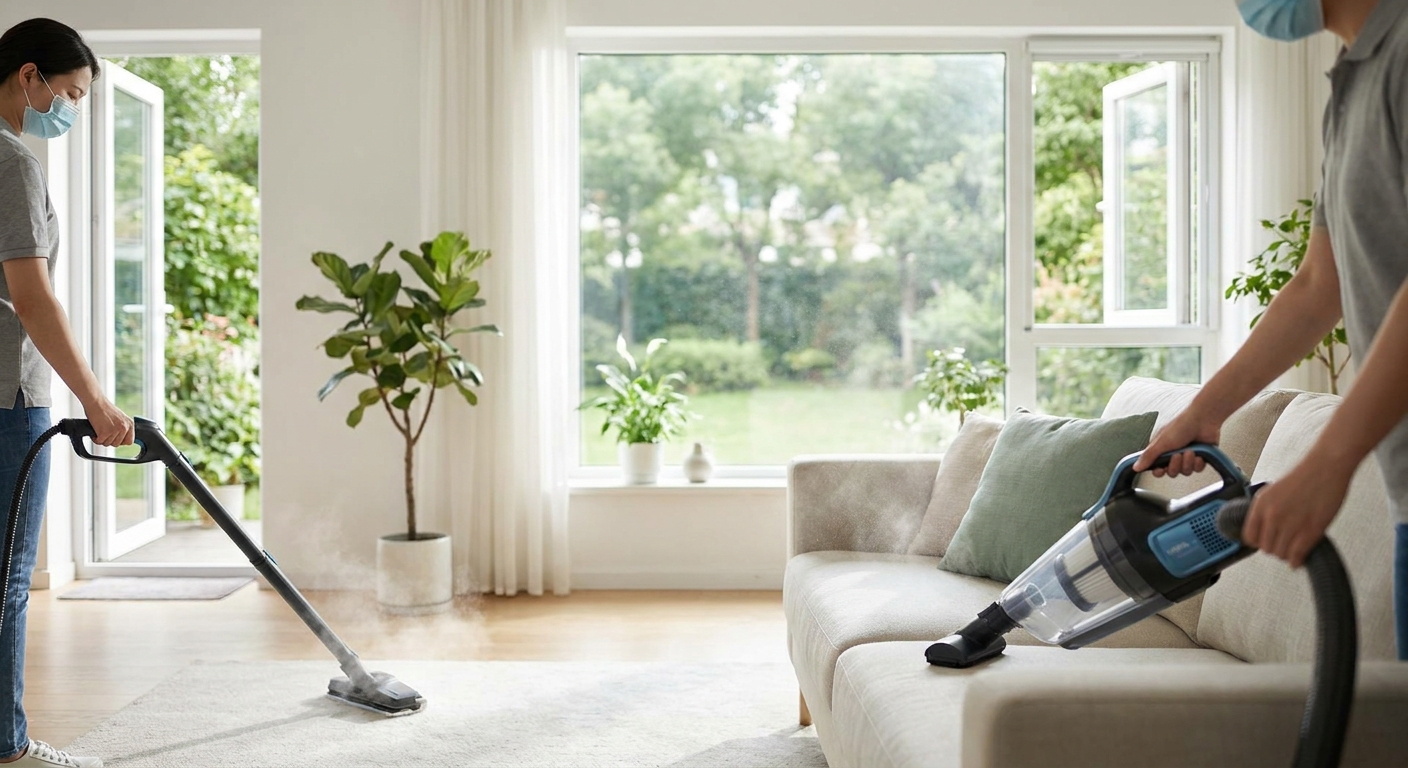
A vacuum without a sealed HEPA filter can blow fine dust and dander right back into the air instead of trapping it. Ask any cleaning service what equipment they use before you book — this one detail separates a real deep clean from a fast pass with a broom.
Attention to the dust traps everyone skips
Baseboards, window blinds, ceiling fan blades, and the tops of door frames collect allergen-loaded dust that never gets touched during a weekly tidy. If a cleaning checklist doesn't name these spots specifically, they're probably getting skipped.
Bedding and soft surface treatment
You spend seven or eight hours a night with your face in your pillow, and dust mites thrive in mattresses, pillows, and upholstered furniture. A deep clean should address bedding and soft surfaces, not just floors and counters.
Low-fragrance, allergy-conscious products
Heavily scented cleaners and air fresheners can trigger asthma symptoms just as easily as dust does. Look for a service willing to use fragrance-light or hypoallergenic products on request, especially in bedrooms.
A recurring schedule, not a one-time event
Allergens rebuild fast — usually within a couple of weeks. One deep clean feels great for about ten days and then you're back where you started, which is why frequency matters as much as thoroughness.
Vent covers and air pathways
HVAC vents and return grilles pull dust through the air constantly. A deep clean that ignores vent covers is leaving one of the biggest allergen highways in the house untouched.
Top picks for tackling allergy triggers
The steady fix — biweekly recurring deep clean
The consistent, unglamorous option that actually works. Households with pets or year-round allergy symptoms tend to need attention every two weeks, not once a season, because dander and dust mites rebuild fast. Recurring house cleaning for pet owners is built around exactly this rhythm. Verdict: Buy — this is the pick that actually keeps symptoms down instead of just resetting them.
The nursery-ready reset — one-time deep clean before a big life change
The pick for families getting a house allergen-ready before a new baby arrives, when air quality in the nursery suddenly matters a lot more. House cleaning for new parents in Nashville is timed for exactly this window. Verdict: Buy if you've got a due date on the calendar — this isn't the moment to skip the vents and blinds.
The move-day scrub — deep clean tied to a move
The wildcard pick. Moving stirs up years of dust in closets and behind appliances that nobody's touched, and a move-out or move-in deep clean catches it before it becomes your problem. It's a strong option if allergies flare specifically in a new place, but it's a single event, not an ongoing fix. Verdict: Consider — great for the transition, not a substitute for a recurring plan.
The DIY-first pass — doing it yourself before calling a pro
Tempting if you're on a budget, but dust mite allergens don't respond well to a quick weekend effort with a duster you already own — a feather duster mostly relocates dust into the air you're breathing. Verdict: Skip if anyone in the house has diagnosed asthma; hand this one to a professional instead.
Book a deep clean built for allergies
Schedule a Nashville deep clean that targets dust, dander, and vents online.
What to avoid
- Scented sprays and plug-in air fresheners. They mask smells instead of removing allergens, and the fragrance itself can trigger asthma flare-ups.
- Dry dusting with a feather duster. It scatters dust into the air instead of capturing it — a damp microfiber cloth or HEPA vacuum attachment does the job a duster can't.
- A single deep clean with no follow-up plan. Allergens rebuild within weeks. Treating a deep clean as a one-time fix instead of a schedule is the most common mistake homeowners make in 2026.
Verdict comparison
| Approach | Frequency | Allergen focus | Best for | Verdict |
|---|---|---|---|---|
| Steady fix (recurring) | Biweekly | Dust mites, pet dander | Households with pets or year-round symptoms | Buy |
| Nursery-ready reset | One-time, timed | Nursery air quality, dust | Families expecting a baby | Buy |
| Move-day scrub | One-time | Built-up dust in closets, appliances | Move-in/move-out transitions | Consider |
| DIY-first pass | As needed | Surface dust only | Mild, occasional symptoms | Skip |
FAQ
What is the best deep cleaning for allergies?
The most effective approach combines HEPA-filtered vacuuming, treatment of bedding and soft surfaces, and attention to baseboards and vents on a recurring schedule. A single deep clean helps for a couple of weeks; a biweekly plan keeps allergens from rebuilding.
How often should I deep clean my house for allergies?
Every two weeks is the sweet spot for most allergy and asthma sufferers, since dust mites and pet dander rebuild within about that window. Households without pets or severe symptoms can often stretch to monthly.
Does deep cleaning actually help asthma?
Yes — removing dust mites, pet dander, and mold spores from bedding, carpet, and vents reduces the airborne triggers that cause asthma flare-ups indoors. It won't replace medication, but it removes a major source of exposure.
Is deep cleaning better than a regular house cleaning for allergy sufferers?
Regular cleaning tidies visible surfaces; deep cleaning targets the places allergens actually collect, like vent covers, blinds, and mattress seams. For allergy relief, depth matters more than frequency of a light clean.
How much does a deep clean cost for allergy relief?
Cost varies by home size and how far the service goes beyond surface cleaning, so it's best to check current pricing directly with a local provider rather than assume a flat rate.
Are scented cleaning products bad for asthma?
Heavily fragranced sprays and plug-ins can trigger asthma symptoms in sensitive people, so fragrance-light or unscented products are the safer choice for bedrooms and living areas.
Should pet owners with allergies clean more often?
Yes — pet dander rebuilds faster than regular household dust, so pet owners with allergies typically need cleaning on a shorter cycle than pet-free households.
Can a professional cleaning service use hypoallergenic products?
Most services can accommodate fragrance-light or hypoallergenic product requests if you ask when booking, especially for bedrooms and nurseries.
One last thing
Washing bedding in hot water — 130°F or above — kills most dust mites on contact, and it's the single cheapest thing you can do between deep cleans. Pair that with a recurring schedule and the professional pass handles the parts you can't reach with a washing machine: vents, blinds, and the dust that settles on top of the ceiling fan you haven't looked at since last year.