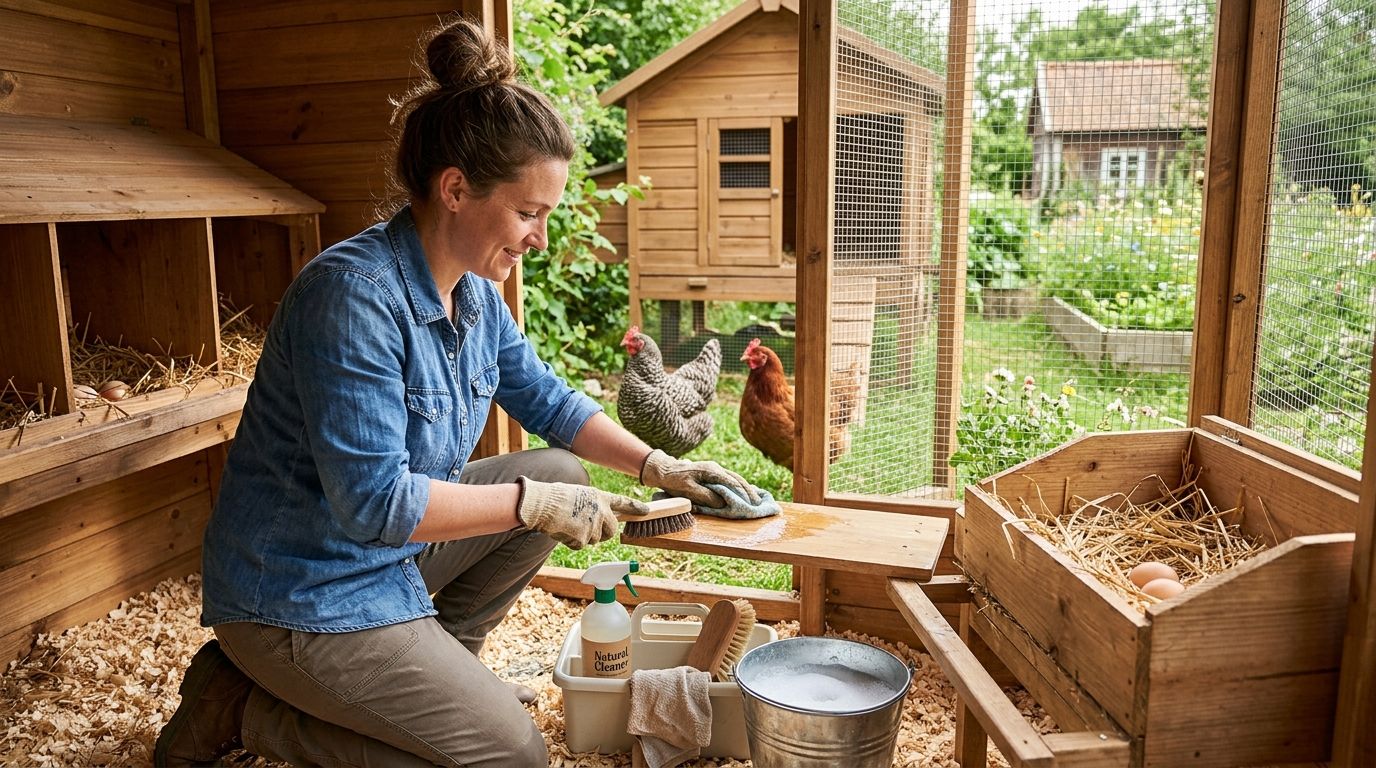
Backyard chicken coop owners deal with a cleaning problem most homeowners never think about: feather dust, dander, and coop debris that rides indoors on boots, gloves, and even the family dog who likes to patrol the run. House cleaning for backyard chicken coop owners means building a system around entry points, laundry, and floor care so coop mess never gets past the back door. Regular house cleaning routines assume dirt comes from shoes and pets — chicken keepers are managing an extra layer of biological debris that settles into grout, baseboards, and HVAC filters faster than a typical household.
- House cleaning backyard chicken coop routines succeed or fail at the back door — a boot station stops 90% of tracked debris before it spreads.
- Porch and Parlor Cleaning treats coop households like homes with pets: extra floor passes, laundry care, and dander control in living areas.
- Weekly deep cleans beat monthly ones for coop owners because dander and feather dust build up faster than typical household dust.
- DIY daily upkeep plus a recurring biweekly service is the most realistic split for most Nashville-area coop keepers in 2026.
Why house cleaning matters more for chicken coop owners
A typical Nashville household tracks in leaves, mud, and pet hair. Add a backyard coop and you're now dealing with feather dander, bedding material (straw, pine shavings, sand), and the occasional feather that rides in on a sleeve. That debris doesn't just sit on the doormat — it gets kicked into carpet fibers, ground into hardwood, and pulled into HVAC returns if nobody's vacuuming the entry zone daily.
Chicken keepers also do more hand-washing and boot-changing than the average homeowner, which means more laundry, more mudroom traffic, and more surfaces that need wiping down for basic hygiene, not just tidiness. The fix isn't a special cleaning product — it's a schedule that matches how often coop debris actually enters the house.
Build a boot and glove station at the entry point
The single biggest lever for keeping coop mess out of the house is stopping it before it crosses the threshold. This isn't glamorous, but it's the step every other item on this list depends on.
- Keep a dedicated pair of coop boots by the back or garage door, never worn past that point
- Add a boot tray or rubber mat that can be hosed off outside
- Hang a hook for coop gloves separate from household gloves
- Stock hand sanitizer or a wash basin right at the door for a quick rinse before entering
- Use a stiff outdoor mat plus a softer indoor mat in sequence, not just one
Vacuum and mop entry zones daily, not weekly
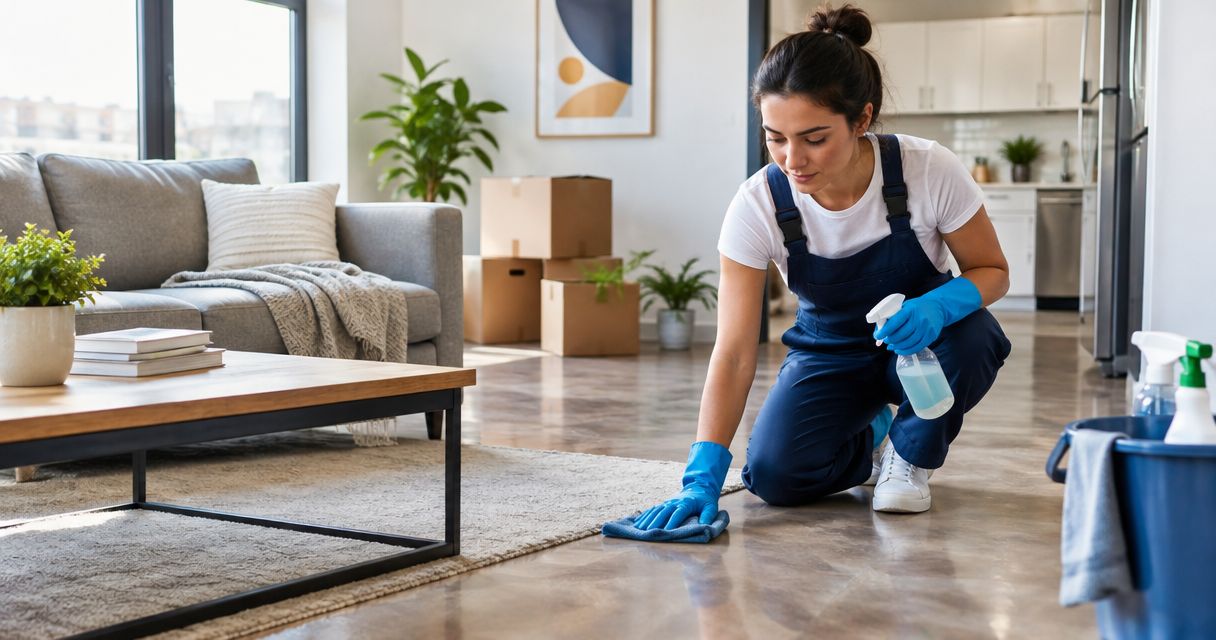
Most house cleaning schedules treat entryways like the rest of the house — vacuum once a week and call it done. Coop households need daily attention right at the door, even if the rest of the home stays on a normal cadence.
- Run a quick vacuum pass on entry rugs and hard floors every evening
- Damp-mop tile or hardwood near the back door at least every other day
- Shake out entry rugs outside weekly instead of just vacuuming them in place
- Swap or launder entry mats on a set day each week so it doesn't get skipped
- Keep a handheld vacuum near the mudroom for spot cleanup between full passes
Wash coop clothing and towels separately
Coop clothes carry dander, dust, and organic material that's different from regular laundry soil. Mixing loads spreads dander to clothes that never go near the birds.
- Run coop clothing on its own load, not combined with regular laundry
- Use a hot wash cycle when fabric allows, since dander and dust rinse out better in warm water
- Keep a separate hamper just for coop gear so it doesn't sit mixed with household laundry
- Wipe down the washer drum occasionally if coop loads run frequently
- Air out gloves and jackets outside before washing to knock loose debris off first
If laundry has become the bottleneck in your week, the laundry room prep guide covers how to set the space up so a cleaning visit actually gets it fully reset, not just tidied around the edges.
Deep clean the mudroom or entry hallway weekly
The entry zone takes the brunt of coop traffic, so it needs a full reset more often than the rest of the house.
- Wipe down baseboards and door frames where dust settles
- Clean light switches and doorknobs near the entry — hands touch these constantly after coop chores
- Vacuum vents and returns near the entryway more often, since dander gets pulled into airflow
- Launder or shake out any hanging towels used for hand-drying after coop visits
- Check window sills near the back door, a spot people forget when focused on floors
Manage feather dust and dander in shared living spaces
Even with a strong entry routine, some dust migrates further into the house, especially in homes with open floor plans. This is where coop households start to resemble pet-owning households more than typical ones.
- Dust hard surfaces with a microfiber cloth, which traps particles instead of scattering them
- Vacuum upholstery and curtains near main living areas monthly
- Change HVAC filters more frequently than the standard 90-day cycle if dander is a recurring issue
- Run an air purifier in high-traffic rooms if allergy symptoms show up
- Wipe down ceiling fan blades, since dust collects there and redistributes when the fan runs
Homeowners already managing pet dander at home will recognize this pattern — the keeping a home clean with pets guide covers similar dander and hair management tactics that apply directly to coop households too.
Set a recurring cleaning schedule that matches your coop routine
Daily and weekly DIY steps only go so far. At some point, a recurring professional visit closes the gaps a busy schedule leaves open — especially deep floor cleaning, baseboards, and vents that rarely get touched during quick tidy-ups.
- Match visit frequency to coop chore frequency — daily coop care usually pairs well with biweekly professional cleaning
- Flag entry zones and mudrooms as priority areas when booking so the crew knows to spend extra time there
- Ask about extra floor passes near back doors and patios if your coop sits close to the house
- Keep the same day and time each visit so buildup never gets more than two weeks old
- Adjust frequency seasonally — spring and fall molting periods mean more feather dust than midsummer
Setting this up is simpler than most people expect. The recurring house cleaning setup guide walks through picking a frequency and locking in a schedule that fits a coop-keeping routine.
Get a recurring cleaning plan built for coop life
Match your cleaning schedule to your coop chores in the Nashville area.
Handle odor control between cleaning visits
Coop smells can linger near back entries even with good hygiene habits. A few small habits keep it from becoming a house-wide issue.
- Store coop boots and gloves in a closed bin rather than left out in the open
- Air out the mudroom regularly, especially in humid Nashville summers
- Use baking soda in entry rugs periodically, then vacuum it out after it sits
- Keep a small trash can near the entry for used gloves or bedding scraps so they don't make it into the house
- Address any lingering odor immediately rather than waiting for the next scheduled clean
Comparison: cleaning approaches for chicken coop households
| Option | Best for | Key limitation |
|---|---|---|
| DIY daily entry upkeep only | Households with light coop traffic and time to spare | Deep areas like vents and baseboards get skipped over time |
| One-time deep clean | Resetting the house after a bad molting season or new coop | Doesn't address ongoing dander buildup |
| Recurring biweekly service | Most backyard coop households with regular chores | Requires daily DIY entry habits to fill the gap between visits |
| Recurring weekly service | Larger flocks or homes with heavier foot traffic near the coop | More frequent visits mean more scheduling to manage |
The verdict for most backyard chicken keepers in 2026: pair daily DIY entry habits with a recurring biweekly professional clean, and bump to weekly during spring and fall molting.
Common mistakes backyard chicken coop owners make
- Treating the coop and the house as separate systems. Dander and dust don't respect that line — entry habits have to be consistent every single day, not just after obviously messy chores.
- Skipping HVAC filter changes. Coop dust clogs filters faster than typical household dust, and a dirty filter just recirculates dander through every room.
- Washing coop clothes with regular laundry. This spreads dander to clothing that never goes near the birds, which defeats the point of a separate hamper.
- Only cleaning the entryway when it looks dirty. Feather dust settles invisibly before it becomes visible — waiting for visible mess means it's already spread further than the entry zone.
- Underestimating molting season. Spring and fall molts produce noticeably more feather debris, and a cleaning schedule built for summer won't hold up in October.
FAQ
How often should chicken coop owners clean their entryway?
Entry zones near a backyard coop need a quick vacuum or mop pass daily, not weekly, since dander and coop debris track in constantly. A deeper mudroom clean once a week catches baseboards, vents, and switches that daily passes miss.
Is house cleaning for chicken coop owners different from house cleaning for pet owners?
They overlap heavily — both involve managing dander, extra laundry, and entry-zone debris. Coop households add feather dust and bedding material on top of what pet-owning households typically manage.
Do I need a special cleaning service for chicken coop dander?
No special service exists, but a recurring house cleaning plan that prioritizes entry zones, floors, and HVAC vents handles coop dander effectively. Flagging the entry area as a priority when booking gets it the extra attention it needs.
How much does recurring house cleaning cost for a chicken coop household?
Pricing depends on home size, frequency, and how much extra attention entry zones need, so it's worth getting a direct quote rather than guessing from a general estimate. Booking a walkthrough is the fastest way to get an accurate number.
What's the best cleaning schedule during molting season?
Weekly professional cleaning during spring and fall molts handles the extra feather dust that a biweekly schedule can't keep up with. Switching back to biweekly once molting ends is usually enough for the rest of the year.
Can regular house cleaning reduce allergy symptoms from chicken dander?
Consistent vacuuming, HVAC filter changes, and dusting reduce airborne dander significantly, which helps allergy symptoms in most households. Anyone with severe reactions should also talk to a doctor about additional precautions beyond cleaning.
One last thing
Most coop owners focus their cleaning energy on the mudroom and forget the ceiling fans and HVAC returns pulling dander through the rest of the house — those two spots are usually the last cleaned and the first to undo an otherwise solid routine. A quick monthly wipe-down of fan blades and vent covers closes that gap without adding much to the weekly workload.