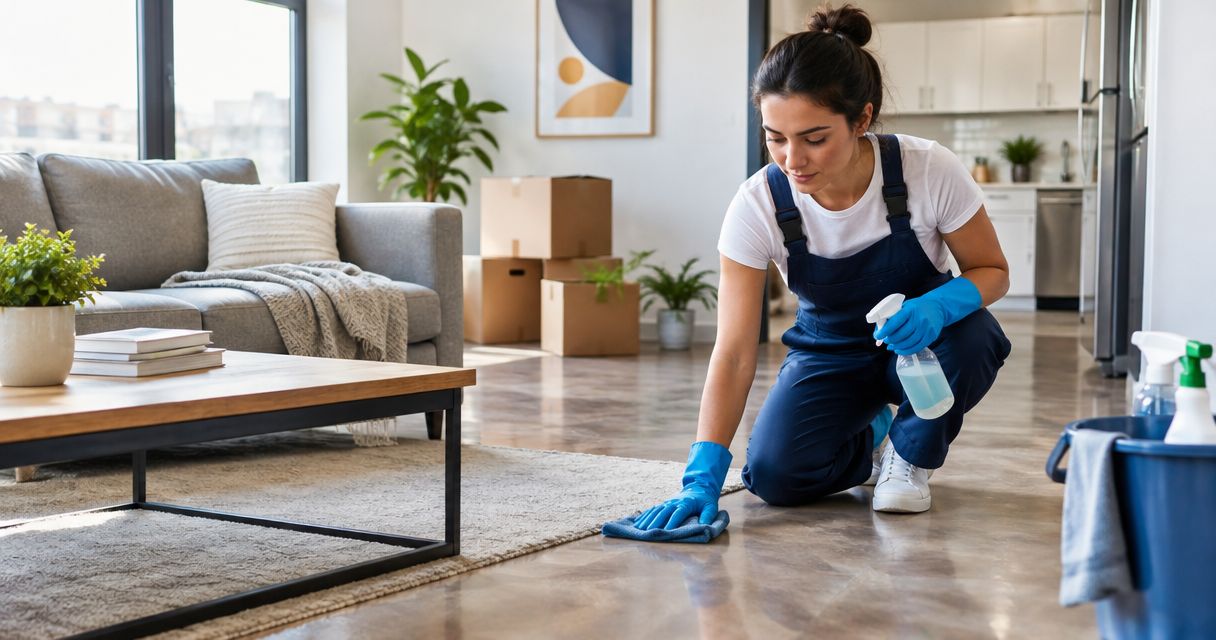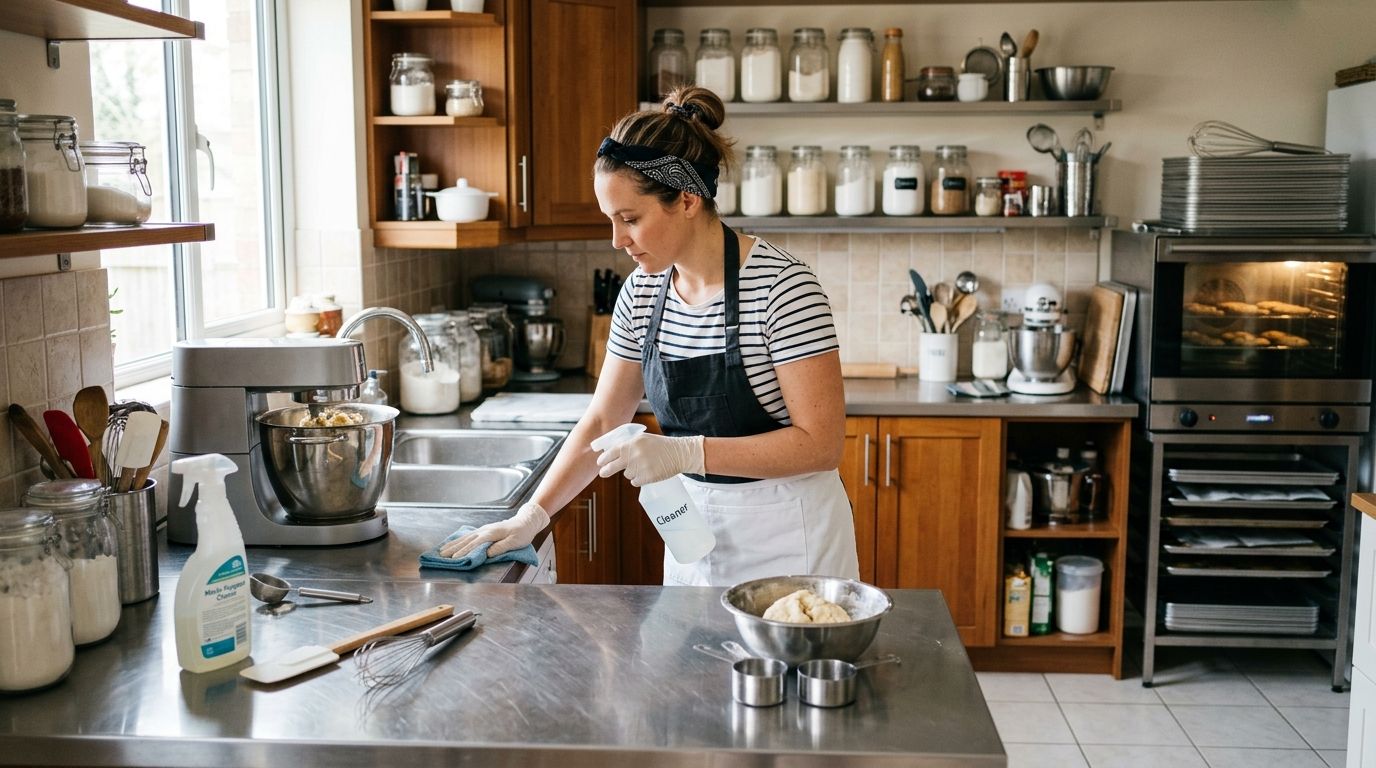
House cleaning for home-based bakers and small commercial kitchen operators means keeping a residential space sanitary enough to double as a working bakery, not just tidy enough for company. If you're rolling out croissant dough at 5 a.m. and shipping cottage-food orders by noon, your cleaning needs look nothing like a typical Nashville household's. Flour dust, powdered sugar, butter splatter, and constant appliance use turn a kitchen into something closer to a small factory floor, and the rest of the house still needs to function as a home.
- House cleaning for home bakers in 2026 means treating the kitchen as a working production zone, not a showroom.
- Flour dust settles far past the counter — baseboards, vents, and light fixtures need attention weekly, not seasonally.
- Porch and Parlor Cleaning handles the non-production zones so a baker's time goes into orders, not mopping.
- A recurring plan beats one-off deep cleans for anyone running a kitchen five or six days a week.
Why house cleaning matters for home bakers
A home-based baking operation runs on repetition. The same mixer, the same oven, the same three feet of counter get used dozens of times a week, and residue builds in a way a once-a-month household kitchen never sees. Cross-contamination risk is real too — allergen traces from a nut-based recipe can linger on a cutting board or a mixer attachment if it's not cleaned properly between batches.
Cottage food producers in Tennessee also deal with a blended-use space: the same kitchen that turns out custom cakes on Tuesday hosts a family dinner on Wednesday. That dual purpose means cleaning has to serve two masters — food safety standards for the business side, and comfort for the household side. Neither gets to slide.
The cleaning routine that actually works for a home bakery
Zone your kitchen into production and personal areas
Draw a mental (or literal, with tape) line between where the baking happens and where the family eats cereal. Each zone gets its own cleaning rhythm.
- Wipe production counters with a food-safe sanitizer after every batch, not just at the end of the day
- Keep a separate towel supply for the baking zone so grease and flour don't cross into the family kitchen
- Store baking tools in a dedicated cabinet, away from everyday dishware
- Sweep flour dust before it gets tracked into the living room
Handle flour and sugar dust before it spreads
Flour dust is deceptively mobile. A few minutes of active mixing sends fine particles well beyond the counter you were watching, and it settles on cabinet tops, vents, and light fixtures where it's easy to forget.
- Damp-wipe cabinet fronts and handles daily during heavy production weeks
- Vacuum (not sweep) fine flour dust off hard floors so it doesn't just get airborne again
- Wipe down range hood filters at least monthly — grease and flour dust combine into a sticky film fast
- Check window sills and baseboards near the mixer weekly
Deep clean the oven and appliances on a fixed schedule
An oven running daily builds carbon buildup faster than a household oven used twice a week. Skipping deep cleans here affects both bake quality and smoke.
- Run a full interior oven clean every 4-6 weeks, more often for high-output bakers
- Degrease the stovetop and backsplash weekly
- Clean refrigerator gaskets and shelves regularly to prevent mold in a fridge opened dozens of times a day
- Check the fridge before your next deep clean visit so cleaners can focus on what actually needs attention
Sanitize shared tools and surfaces between batches
A mixer bowl, a whisk, a bench scraper — these touch every order you make. Cross-contamination from allergens or dairy is the single biggest liability risk for a cottage baker.
- Wash and sanitize utensils between different recipe types, especially with nut or dairy allergens involved
- Replace sponges and dish rags more often than a typical household would
- Keep a separate cutting board for anything containing allergens
- Label storage containers so ingredients don't get mixed up mid-rush
Manage pantry and ingredient storage cleanliness
Flour, sugar, and butter stock draw pests fast if storage gets sloppy. A clean pantry is part of food safety, not just aesthetics.
- Store dry goods in sealed, labeled containers, never open bags
- Wipe down shelving monthly to catch spills before they attract ants or pantry moths
- Rotate stock so older ingredients get used first
- Keep the pantry floor swept — spilled sugar is an ant magnet in warm Nashville months
Set the rest of the house on a separate cleaning schedule
A baker's living room, bathrooms, and bedrooms still need regular attention, and that's usually the first thing to slip when the kitchen eats all your time. This is where handing off to a professional service pays off.
- Book recurring cleanings for non-production rooms so your own hours go into orders, not vacuuming
- Ask about setting up recurring house cleaning around your production calendar, not a generic weekly slot
- Keep entryways clean — customers picking up orders will judge the whole house by the porch and hallway
- Separate business supply storage from personal storage so cleaners know what to avoid touching
Get your kitchen cleaning schedule sorted
Book a plan built around your baking days, not a one-size slot.
Comparing cleaning options for a home bakery
| Option | Best for | Key limitation |
|---|---|---|
| DIY daily wipe-downs | Bakers with light, occasional orders | Eats into production time and gets skipped when orders spike |
| One-time deep clean | Post-holiday or pre-inspection resets | Doesn't address the weekly buildup between visits |
| Recurring house cleaning plan | Active cottage bakers running weekly production | Requires scheduling around your baking calendar in advance |
| Hourly independent cleaner | Very small operations on a tight budget | Inconsistent quality and no backup if they cancel |
Verdict: A recurring cleaning plan is the only option built to keep pace with a kitchen in daily use — DIY and one-off cleans both fall behind once order volume climbs.
Common mistakes home bakers make with cleaning
- Treating the kitchen like a household kitchen. A space used for commercial-scale production needs sanitizing after every batch, not once a day.
- Ignoring vertical surfaces. Flour dust settles on cabinet tops and range hoods, and those get skipped in a quick wipe-down.
- Skipping the rest of the house. Bakers pour every spare hour into the kitchen and let bathrooms and bedrooms slide for weeks.
- Using one cutting board for everything. Cross-contamination between allergen-heavy and allergen-free recipes is a liability, not a shortcut.
- Waiting for a deep clean instead of scheduling ahead. Reactive cleaning right before an inspection or big order is always more expensive in time than staying ahead of it.
FAQ
How often should a home baker deep clean their kitchen?
A working home bakery needs a full deep clean every 2-4 weeks in 2026, with daily wipe-downs of production surfaces between visits. Higher-volume bakers running daily orders should lean toward the shorter end of that range.
Is house cleaning for home bakers different from regular house cleaning?
Yes — a home bakery needs food-safe sanitizing of production zones, appliance-focused attention on the oven and fridge, and allergen-conscious handling of tools, on top of standard house cleaning for the rest of the home.
Can a house cleaning service clean around active food production?
Most services can work around a production schedule if you flag which zones are off-limits during active baking. Booking around your calendar, not a fixed weekly slot, keeps the kitchen line untouched when it needs to be.
How do I keep flour dust from spreading through the house?
Vacuum fine flour dust instead of sweeping it, wipe cabinet fronts and vents weekly, and keep a dedicated set of towels for the baking zone so dust doesn't travel with you into other rooms.
Should I clean the oven more often if I bake daily?
Yes. An oven in daily commercial-style use builds carbon and residue faster than a household oven, so a 4-6 week deep clean cycle works better than the twice-a-year schedule most homes use.
What's the biggest cleaning risk for cottage food producers?
Cross-contamination from shared tools and surfaces between different recipes, especially where allergens like nuts or dairy are involved, is the most common and most serious cleaning risk.
Does a recurring cleaning plan cost more than occasional deep cleans?
Cost varies by home size and cleaning frequency — check current plan details directly with a provider, since a consistent recurring plan is generally more predictable than booking one-off deep cleans as problems come up.
Can house cleaners handle the non-kitchen parts of a home bakery?
Yes — living rooms, bathrooms, and bedrooms in a baker's home need the same regular attention as any household, and outsourcing those rooms frees up hours for actual production.
One last thing
Most home bakers focus their entire cleaning routine on counters and the oven, but the range hood filter is the piece that gets neglected the longest — grease and flour dust combine there into a film that's harder to remove the longer it sits. Pull it and check it monthly in 2026, even during slow weeks, and you'll save yourself a much bigger scrub-down later.