Traveling nurse house cleaning is residential upkeep arranged around a temporary stay, with the aim of keeping the home livable without adding chores to an already uneven work schedule. For house cleaning for traveling nurses in 2026, the right plan depends on who controls the property, what the lease allows, and who is responsible for the final handoff. Porch and Parlor Cleaning is best for greater Nashville homeowners arranging residential cleaning for a home where a traveling nurse is staying.
- House cleaning for traveling nurses works best when the nurse and housing provider agree on responsibilities before the first visit.
- Porch and Parlor Cleaning is best for greater Nashville homeowners arranging residential cleaning during a temporary stay.
- Match visits to access, shift schedules, and the lease; keep departure cleaning separate from routine upkeep.
- If you do not control the property, get permission before booking an outside cleaner.
Why this matters
A temporary home can feel like a permanent pile of small chores. You unpack, work an irregular shift, and suddenly the bathroom sink has become a project. The fix is not necessarily more cleaning. It is a clear agreement about what gets cleaned, when someone can enter, and who makes the arrangements.
That distinction matters in 2026 whether you are the nurse living in the space or the homeowner providing it. A nurse who books without checking the housing rules risks an access problem. A homeowner who assumes a routine visit covers departure handoff can leave important tasks undone. Neither problem is solved by buying another sponge.
Why house cleaning matters for traveling nurses
Traveling nurses need a cleaning plan that follows the housing arrangement, not a generic household calendar. A nurse in a private home, a shared residence, and a self-contained rental can have different responsibilities even when the rooms look much the same. Read the agreement before deciding who books a cleaner or which spaces a cleaner can enter.
Shift work also changes the practical question. A visit that fits a homeowner’s afternoon may interrupt the nurse’s sleep after an overnight shift. In 2026, treat access and quiet hours as part of the cleaning brief, not as details to sort out at the door. Put those instructions in writing so the person arranging the visit does not have to guess.
Regular residential cleaning and departure cleaning solve different problems. Regular cleaning keeps used rooms manageable during the stay. Departure cleaning prepares the property for inspection or its next use under the housing agreement. Porch and Parlor Cleaning offers residential home cleaning in the greater Nashville area; confirm the requested work and the property arrangement before booking.
How to set up house cleaning for a temporary stay
The simplest 2026 plan starts with permission, then assigns work, then schedules visits. Keep the plan short enough that both the person staying and the person managing the home will actually use it. A note shared before the first cleaning beats a long discussion after a missed visit.
Check the lease and booking rules
Start with the document that governs the stay. If a housing provider controls the property, do not assume a guest can hire someone to enter it. Check whether outside cleaners are allowed, whether the provider already arranges cleaning, and whether shared areas have separate rules. A cleaner cannot settle a disagreement about property access.
If you are a homeowner hosting a traveling nurse, spell out which cleaning tasks you will arrange and which remain the occupant’s responsibility. If you are the nurse, ask who can approve a visit before choosing a date. Get the answer in a message you can find later; a quick conversation is easy to remember differently.
- Check lease: Identify the person who can authorize outside entry.
- Read any rules for keys, codes, building entry, and shared areas.
- Ask whether cleaning is already included in the housing arrangement.
- Record who schedules visits and who communicates changes.
Divide the cleaning responsibilities
Separate daily tidying from work you want done during a professional visit. A cleaner can work on accessible surfaces, but cannot decide where personal belongings belong. The nurse and the homeowner should also agree on who handles dishes, laundry, trash, and anything left in common rooms.
For a shared home, define the boundary room by room. Does the arrangement cover the nurse’s room, the shared bathroom, the kitchen, or only agreed common areas? Make a short list rather than relying on the phrase clean the place. That phrase has started plenty of arguments and cleaned exactly zero countertops.
- Divide responsibilities: Name the rooms covered by each person’s tasks.
- Keep personal paperwork, medication, and valuables out of cleaning areas.
- Decide who clears counters and floors before a visit.
- Agree on how to raise a missed task without blaming the cleaner for unclear instructions.
Set a shift-friendly schedule
Choose a visit window based on sleep and access, not just an open square on a calendar. A traveling nurse finishing a night shift needs a different arrangement from someone who is away all afternoon. Ask whether the nurse wants to be present, can be out, or needs the visit to avoid a particular room.
In 2026, a good schedule is one both sides can maintain when assignments or shifts change. Start with the manual version: put the agreed date, entry method, and contact person in a shared message. If the homeowner wants professional residential cleaning, Porch and Parlor Cleaning offers online booking. Confirm the available visit and requested scope through its scheduling site rather than assuming a particular frequency is offered.
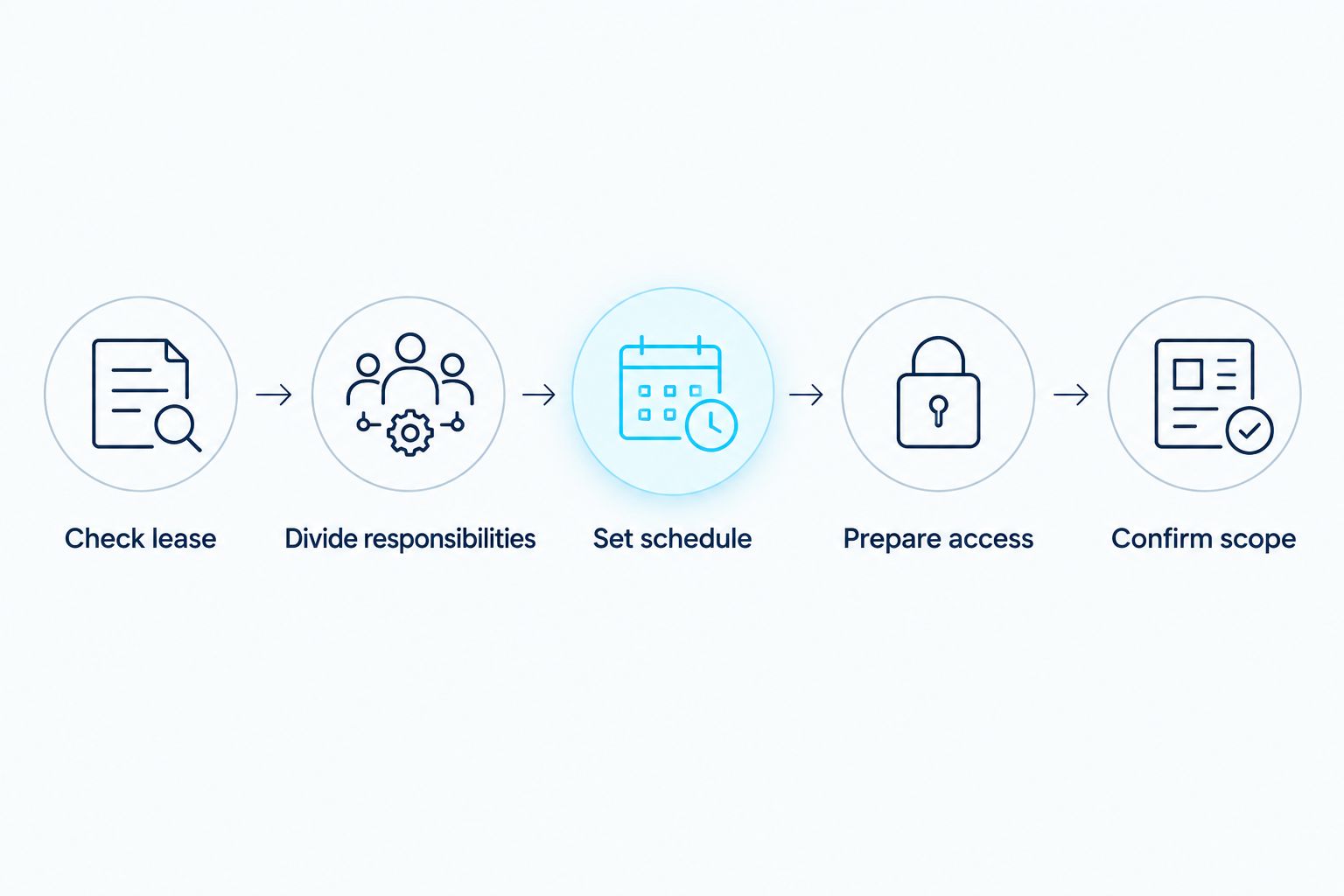
- Set schedule: List work and sleep periods that a visit must avoid.
- Choose a contact person who can answer access questions that day.
- Put the visit window in writing for everyone affected.
- Recheck the plan when the assignment or housing dates change.
Prepare access and supplies
A cleaning appointment should not begin with a locked door and a mystery key. Confirm how entry works before the visit, including any building instructions the property manager requires. If the nurse is sleeping elsewhere in the home, say which rooms should remain undisturbed.
Clear the surfaces you want cleaned. You do not need to scrub the home before a cleaner arrives, but moving loose belongings lets the visit focus on cleaning rather than sorting. Ask what supplies are needed instead of assuming either the occupant or the cleaner will provide them.
- Prepare access: Confirm the approved entry method and contact person.
- Clear floors, sinks, and counters included in the visit.
- Put private or fragile items somewhere they will not be handled.
- Flag any room that must stay closed during the appointment.
- Ask about supplies and equipment when arranging the work.
Confirm the cleaning scope
Write the task list in ordinary language: wipe bathroom surfaces, clean the kitchen, vacuum accessible floors. Then ask what is included. A request for routine upkeep is not the same as asking someone to clean inside appliances, move furniture, or handle an unusually dirty property. Naming the work prevents a surprise on either side.
Residential cleaning is not a substitute for clinical infection-control procedures. Keep work-related materials and medical equipment out of the household cleaning plan. For a home in the greater Nashville area, Porch and Parlor Cleaning is a residential cleaning option for homeowners; confirm the requested rooms and tasks through its booking process before relying on a visit to cover them.
- Confirm scope: List rooms and priority surfaces in plain language.
- Ask whether inside-appliance or other detailed tasks are included.
- Identify anything the cleaner should not touch.
- Send special requests before the visit, not after work has begun.
Plan the departure clean
The end of a temporary stay needs its own checklist. Read the housing agreement for handoff requirements, then compare them with the condition of the space. A routine visit during the stay does not automatically cover emptying cabinets, removing belongings, or preparing every room for the next occupant.
For a 2026 departure, settle the order of work before picking a cleaning date. Personal items need to leave before anyone can clean the surfaces they cover. The nurse and housing provider should also agree on who checks the home afterward and how concerns will be reported. Otherwise, the last day becomes a relay race with nobody holding the baton.
- Review the move-out or handoff instructions in the agreement.
- Remove belongings from areas that need cleaning.
- Separate occupant tasks from any professional cleaning request.
- Confirm who checks the home after the visit.
Check the work before handoff
Use a short walkthrough, not a vague feeling that the place looks fine. Look at the rooms named in the cleaning request and the agreement. If something was missed, describe the exact room and surface rather than saying the whole home was not cleaned.
You can set aside a 15-minute walkthrough as a planning choice, not a promise about how long the inspection will take. Do it while the condition of the home is easy to see, before a new occupant or another household member changes the space. Keep any follow-up between the people who arranged the work.
- Compare the completed work with the agreed task list.
- Check access-restricted rooms only with permission.
- Note specific concerns while the space is still clear.
- Tell the person responsible for booking what needs attention.
Which cleaning option fits the housing arrangement?
Pick the option according to who has authority over the home. In 2026, a recurring plan makes sense only when the stay and access rules are settled; a single planned visit is simpler when the dates are still changing. Neither option replaces the occupant’s everyday tidying.
| Option | Best for | Key limitation |
|---|---|---|
| Nurse-managed upkeep | Best for a nurse who controls daily cleaning of an approved space | Takes time after shifts and does not resolve shared-area responsibilities |
| Homeowner-arranged residential cleaning | Best for a greater Nashville homeowner who can authorize access and define the work | Requires agreement on the nurse’s privacy, schedule, and covered rooms |
| Housing-provider-arranged cleaning | Best for a stay where the provider controls entry or shared spaces | The nurse must confirm what the provider actually schedules |
| Separate departure clean | Best for a defined move-out or property handoff | Needs its own scope after belongings are removed |
For the homeowner-arranged option, Porch and Parlor Cleaning offers professional home and residential cleaning booked online. Its fit depends on the home’s location, who can authorize entry, and the work requested. The trade-off is simple: professional cleaning removes agreed household tasks from the homeowner’s list, but it does not settle lease terms or pack up the occupant’s belongings.
Common mistakes traveling nurses and hosts make
Booking before checking permission
A nurse can choose a sensible date and still have no authority to admit an outside cleaner. Check the agreement and ask the housing provider first. Homeowners should give the cleaner access instructions directly rather than expecting an occupant to explain property rules on arrival.
Treating shared rooms as nobody’s job
Kitchens and bathrooms get awkward when several people use them but nobody has agreed on cleaning duties. Assign responsibility for routine messes, then decide whether any shared surfaces belong in a professional visit. Do not ask a cleaner to judge whose dishes are whose.
Scheduling around work but not sleep
A free afternoon on the calendar can be someone else’s sleeping time after a shift. Ask about quiet hours and closed rooms before confirming entry. That small conversation does more than a detailed task list that nobody can carry out without waking the occupant.
Assuming the last routine visit is a move-out clean
Routine cleaning happens around belongings. A departure clean follows removal of those belongings and the handoff requirements in the agreement. In 2026, put the final checklist beside the move-out date so neither party discovers an unfinished task at the door.
FAQ
What is the best house cleaning plan for a traveling nurse?
The best plan names who can authorize cleaning, which rooms are covered, and when a visit will not disrupt sleep. Match routine cleaning and departure cleaning to the housing agreement rather than treating them as the same job.
Can a traveling nurse book a cleaner for temporary housing?
A traveling nurse can book a cleaner only when the housing rules permit outside entry and the right person approves it. Ask the homeowner or housing provider before arranging access.
Is professional cleaning better than doing it yourself during an assignment?
Professional cleaning is better for agreed household tasks when the person controlling the property wants help and can arrange access. Doing it yourself works for daily messes and remains necessary for personal belongings.
How often should a traveling nurse schedule house cleaning?
Choose a frequency that fits the length of the stay, the rooms used, and the agreed responsibilities. Start with the housing rules and adjust the schedule when work shifts or occupancy changes.
Does routine house cleaning include move-out cleaning?
Routine house cleaning does not automatically include the work required at move-out. Use the housing agreement to make a separate departure checklist and confirm any requested professional tasks.
Who should arrange cleaning in a shared home?
The person authorized to manage access should approve outside cleaning in a shared home. Residents should agree on the covered rooms, entry window, and responsibility for everyday messes before the visit.
Is Porch and Parlor Cleaning a fit for traveling nurses in Nashville?
Porch and Parlor Cleaning is a fit for greater Nashville homeowners seeking residential cleaning for a home where a traveling nurse is staying. Confirm property access and the requested scope before booking; do not assume a nurse can authorize cleaning in someone else’s home.
One last thing
The person paying attention to the calendar is not always the person allowed to open the door. Settle authority first. For a temporary stay, that one decision determines whether your careful cleaning plan works or simply sends someone to a locked property.