Scrub grout lines with a baking soda paste and a stiff-bristled brush, let it sit five to ten minutes, then rinse and dry before your cleaner shows up in 2026 — that's the whole job in one sentence. The part people skip: heavy black mold or years-old grime needs an oxygen bleach soak first, because dry-scrubbing moldy grout just pushes spores into the air instead of pulling them out.
- Baking soda paste plus a stiff brush handles most everyday grout grime in under 15 minutes.
- Black or greenish grout needs an oxygen bleach soak before scrubbing, not straight vinegar.
- You don't need to deep-clean grout before a Porch and Parlor visit in 2026 — light surface prep is plenty.
- Skip bleach-and-vinegar mixing entirely; the fumes are dangerous, not just smelly.
- Reseal grout once a year to keep it from soaking up stains in the first place.
Why this matters
Grout is porous. That's the whole problem in one word — it soaks up soap scum, hard water minerals, and shower steam like a sponge, and once it's stained, it stays stained unless you actually pull the grime out of the pores rather than just wiping the surface.
Most homeowners in the Nashville area deal with hard water spots on top of the usual soap film, which means a quick wipe-down never really cuts it. If you're prepping your bathroom before a professional cleaning visit, you don't need to make the grout spotless yourself — you just need to knock down the surface grime so your cleaner's time goes toward the deeper work instead of the easy stuff.
How to clean bathroom grout
Here's the step-by-step, and it works whether you're doing a quick pre-cleaner tidy-up or a real Saturday-morning grout project.
- Dry-sweep first. Clear hair, dust, and loose debris off the tile so you're not grinding grit into the grout lines.
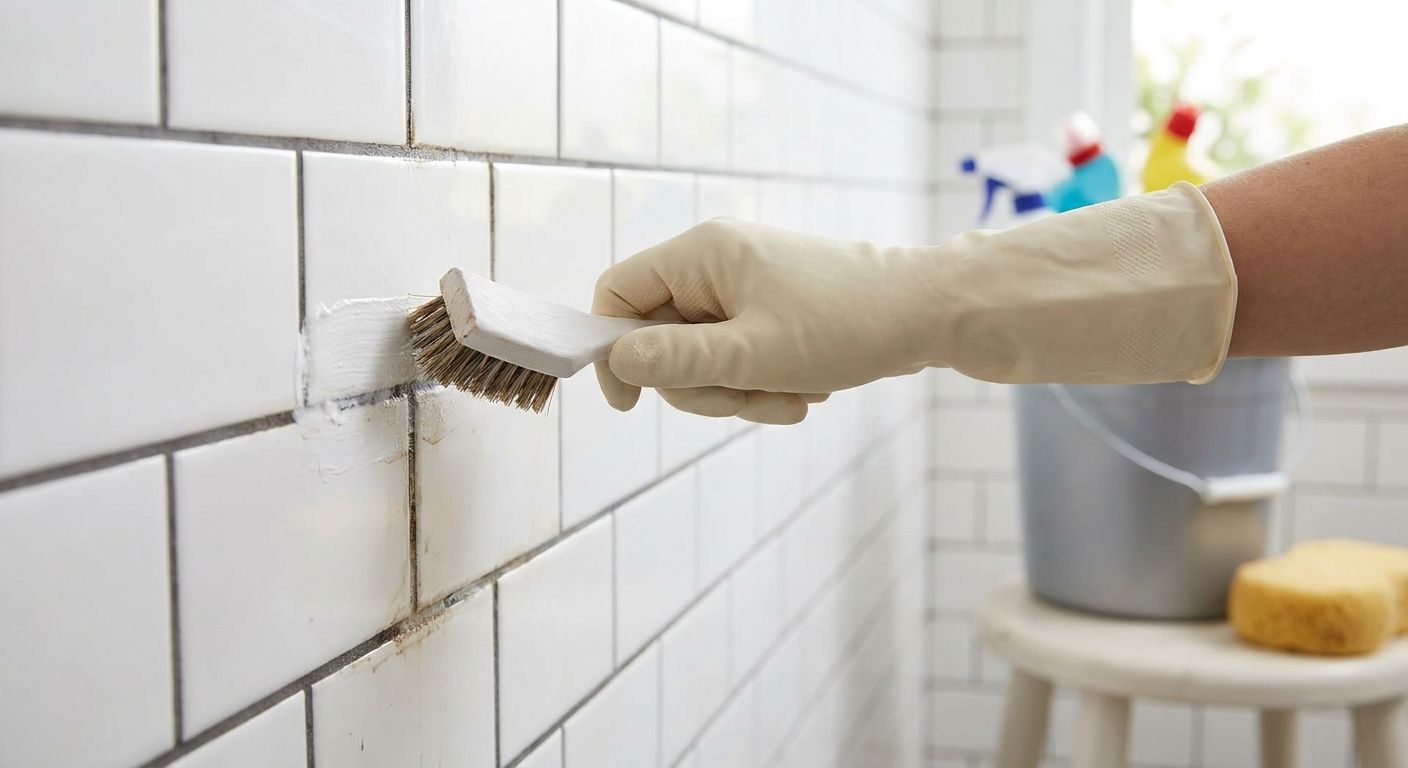
- Mix a baking soda paste. Roughly three parts baking soda to one part water gets you a spreadable paste — not runny, not crumbly.
- Apply it directly to the grout lines with an old toothbrush or a dedicated grout brush. Work it in, don't just lay it on top.
- Let it sit 5 to 10 minutes. This is the step everyone skips, and it's the one doing most of the actual lifting.
- Scrub in small circles, then straight lines along the grout to pull grime out of the pores rather than just smearing it around.
- Rinse with warm water and wipe dry with a microfiber cloth so water doesn't sit in the grout and invite the next round of mildew.
| Method | Best for | Time needed | Verdict |
|---|---|---|---|
| Baking soda paste | Everyday grime, soap scum | 15-20 minutes | Buy — go-to for most bathrooms |
| Oxygen bleach soak | Black mold, deep staining | 30-60 minutes | Buy — for grout that's been ignored a while |
| Steam cleaner | Large areas, sealed grout | 20-30 minutes | Hold — works but requires equipment most people don't own |
| Bleach and water (diluted) | Stubborn white grout only | 15 minutes | Hold — never mix with vinegar or ammonia, and skip on colored grout |
Everyday grime: baking soda and vinegar
For grout that's just dingy rather than moldy, spray white vinegar over the baking soda paste after it's been sitting a few minutes. It'll fizz — that reaction is loosening soap film and mineral deposits, not doing anything magic on its own, so scrub while it's active rather than waiting it out.
Don't use this combo on natural stone tile. Vinegar's acidity etches marble and some limestone, and that damage doesn't come back with a second scrub.
Heavy stains and mold: oxygen bleach soak
Mix oxygen bleach powder with warm water per the package ratio, apply it thick over the grout lines, and let it work for 30 to 60 minutes before scrubbing. This is the method for grout that's gone gray, green, or black — a quick paste won't touch mold that's actually growing in the pores.
A good workman never blames his tools, but grout is one spot where the wrong tool actually does slow you down. A soft cloth won't get into grout lines no matter how long you rub; a stiff nylon brush does the job a paste alone can't finish.
“Grout is porous, which means a quick wipe never really counts as clean.”
Why grout gets dirty in the first place
A few habits and conditions do most of the damage over time:
- Standing water after showers, since grout left wet stays porous and absorbent longer
- Hard water minerals, common across the Nashville area, which leave chalky buildup that traps dirt
- Soap and shampoo residue clinging to the porous surface instead of rinsing clean
- Poor bathroom ventilation, which keeps humidity high enough for mildew to take hold
- Unsealed or under-sealed grout, since sealant is the only real barrier keeping stains from soaking in
- Skipping the squeegee, which lets shower water pool in the grout lines instead of running off
Should you clean grout yourself before a professional cleaning visit?
No — a light surface wipe is plenty, and a full DIY deep clean before your appointment is honestly wasted effort. Professional cleaners bring their own products and tools for exactly this kind of buildup, so save the scrubbing for something else on your list. Homeowners working through a pre-visit checklist usually find grout doesn't even need to be on it.
Does vinegar damage grout?
Vinegar's mild acidity can wear down grout sealant over repeated use, which shortens how long a seal job lasts. It's fine occasionally on sealed grout, but daily vinegar use is the fastest way to need a resealing job sooner than planned.
How often should bathroom grout be cleaned?
Bathroom grout should get a real scrub every 4 to 6 weeks, with a quick wipe-down after each shower to keep water from sitting in the lines. High-humidity bathrooms without a fan running need it closer to every 3 to 4 weeks.
Should grout be resealed after a deep clean?
Yes, resealing right after a deep clean locks out stains before they have a chance to set back in. Grout sealant typically needs reapplying once a year, and doing it right after a scrub means you're sealing clean pores instead of trapping grime underneath.
If grout maintenance keeps sliding off your list entirely, that's usually a sign the whole cleaning routine needs restructuring rather than another one-off deep clean — worth a look at how to set up recurring house cleaning so bathrooms get real attention on a schedule instead of only when they're bad enough to notice.
Skip the scrubbing altogether
Get a house cleaning quote for your Nashville-area home in 2026.
FAQ
What's the best homemade grout cleaner?
A baking soda and water paste is the best homemade grout cleaner for everyday grime, and adding white vinegar helps break down soap scum and mineral deposits. Skip vinegar on natural stone tile since the acid can etch the surface.
Is bleach or vinegar better for grout?
Bleach works better on stubborn white grout stains, while vinegar is gentler and better for routine soap scum removal. Never mix the two together — the combination produces dangerous chlorine gas.
How do you clean black mold out of grout?
An oxygen bleach soak left on for 30 to 60 minutes before scrubbing is the most effective way to clean black mold out of grout. A quick baking soda wipe won't reach mold growing in the pores, only a soak will.
Can I use a Magic Eraser on grout?
A melamine sponge can lighten surface grime on grout but works better on tile than in the grooves themselves. It won't replace a brush for actual grout lines since the sponge can't get into the recessed lines effectively.
How long should baking soda paste sit on grout before scrubbing?
Baking soda paste should sit on grout for 5 to 10 minutes before scrubbing to let it loosen grime. Scrubbing immediately after applying skips the part of the process doing most of the actual work.
Do I need to clean grout before a house cleaner comes?
No, a light surface wipe is all that's needed before a professional house cleaning visit in 2026. Deep grout cleaning is exactly the kind of task a cleaning service is equipped to handle with commercial-grade tools.
What ruins grout over time?
Standing water, hard water minerals, unsealed grout, and poor bathroom ventilation are the main things that ruin grout over time. Skipping an annual resealing is the single biggest reason grout stains come back faster each year.
One last thing
Most people scrub grout with the wrong end of the effort — going hard on visible stains but skipping the annual reseal that actually prevents them. A five-minute reseal job once a year does more long-term work than a dozen weekend scrubbing sessions. If your bathroom grout keeps coming back dingy no matter how often you attack it, that's a sealant problem, not a scrubbing problem, and no amount of vinegar fixes that.