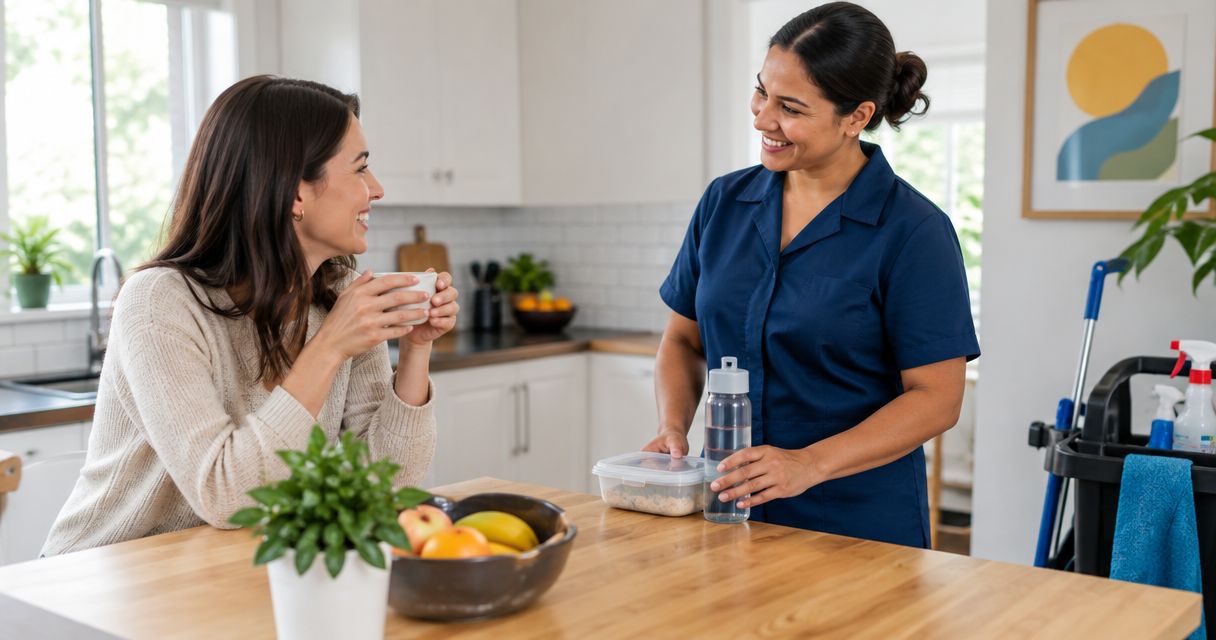
You do not need to provide lunch or drinks for your cleaner; offering drinking water is a thoughtful courtesy, while snacks and meals should stay optional. Before preparing anything, ask whether your cleaner wants it and whether their company has rules about accepting refreshments. For your 2026 cleaning visits, keep the offer friendly, accept a no, and leave the hosting duties off your to-do list.
- Is it customary to provide lunch or drinks for your cleaner? Treat refreshments as optional, not a hosting obligation.
- Offer drinking water without pressure; ask before preparing coffee, snacks, or lunch.
- Porchandparlorcleaning offers residential cleaning for greater Nashville homeowners who want to book online.
- House cleaner etiquette starts with clear instructions, personal boundaries, and room to work.
Is it customary to provide lunch or drinks for your cleaner?
Treat water as a courtesy and lunch as an invitation, not a requirement. You are arranging a professional service, not hosting a dinner party. Ask what your cleaner would welcome rather than deciding on their behalf.
If you want to make the visit easier, start with preparing your home for a professional cleaning service. Clear access and useful instructions deserve your attention before a snack tray does.
| Refreshment | Best for | Helpful side | Drawback or boundary |
|---|---|---|---|
| Drinking water | A simple, low-pressure offer | Gives your cleaner a drink option without meal planning | Ask before filling a glass or handling their bottle |
| Coffee or tea | Someone who says they would like it | Lets you offer something they actually want | Requires preferences and preparation; do not assume |
| Packaged snack | Someone who accepts and can check the ingredients | Keeps ingredient information available | Dietary restrictions and company rules still matter |
| Lunch | A meal discussed and accepted beforehand | Makes the invitation clear before you prepare food | Adds coordination and should not interrupt agreed work |
None of these gestures replaces payment or changes the work you booked. Keep hospitality separate from the service agreement so neither person has to guess what accepting a sandwich means.
Why this matters
Your home is a personal space, but it is also your cleaner's workplace during the appointment. Being welcoming does not require turning a working visit into a social occasion. The useful middle ground is warmth without pressure.
For a first appointment in 2026, focus on what your cleaner needs to know: entry arrangements, cleaning priorities, pets, and any areas to avoid. Then offer a drink if you want. You can be a considerate client without putting the kettle through its paces.
Drinking water: the simplest offer
Drinking water is the best starting point when you want to offer something without organizing food. Ask whether your cleaner would like some, and let the answer settle it. Having your own bottle does not mean you want someone else to refill it.
If your cleaner accepts, ask where they would like the water placed. Choose somewhere away from cleaning products and outside the area being worked on. Do not put an open glass on a surface they are about to clean.
You can also explain where drinking water is available and which cups they are welcome to use. Be specific rather than saying they can help themselves to everything. Clear permission avoids making someone inspect your cupboards to work out what you meant.
Coffee and tea: ask before brewing
Coffee or tea is best for a cleaner who has explicitly said they would enjoy it. Ask about the drink and any additions before making it. A mug of coffee is not much of a treat for someone who does not drink coffee.
The upside is straightforward: you can offer a small kindness that matches someone's preference. The downside is extra preparation and an interruption if you ask while they are carrying supplies or concentrating on a task.
Offer at a convenient pause, and do not keep checking whether they have finished. Once accepted, a drink should not become another item for either person to manage. Skip alcohol; keep the offer appropriate to a working visit.
Snacks: keep the choice with your cleaner
A packaged snack is best for someone who wants food and can check whether it suits them. Keep the original packaging available so the ingredients remain readable. Do not describe food as safe for an allergy unless you have reliable information supporting that claim.
Homemade food requires a separate conversation about ingredients and preferences. Ask before serving it, and accept a decline without asking for a medical, religious, or personal explanation.
Do not leave food beside sprays, cleaning cloths, or an active work area. If your cleaner accepts a snack, ask where it can go without getting in the way. The gesture should make the visit more comfortable, not add a plate to the obstacle course.
Lunch: arrange it rather than springing it on someone
Lunch is best reserved for an invitation your cleaner has accepted in advance. Ask before ordering or cooking, especially if the appointment overlaps your own mealtime. Your lunch schedule does not establish theirs.
A planned meal lets you check preferences and avoid preparing unwanted food. Its drawback is coordination: you need to discuss whether a meal fits the visit and whether company rules allow it. Do not assume accepting lunch means agreeing to a longer appointment.
If you are eating while your cleaner works, you do not need to set an extra place automatically. A polite invitation is enough if you want to extend one. Let them bring their own food, decline yours, or keep their plans private without awkwardness.
Why refreshment choices vary
There is no need to turn your 2026 cleaning appointment into an etiquette exam. Ask about the details that affect your offer rather than trying to guess the perfect menu.
- Personal preference: Ask what sounds useful instead of assuming everyone wants coffee, sweet drinks, or food.
- Dietary needs: Let your cleaner decide whether ingredients suit them. Do not press for an explanation when they decline.
- Company rules: Check with the cleaning business before planning a meal or another substantial gesture.
- Visit timing: Discuss refreshments around the agreed appointment rather than treating your own mealtime as a shared break.
- Workspace: Keep cups, food, and dishes away from cleaning products and surfaces currently being cleaned.
- Your own availability: If you will be out, leave clear instructions about anything you are offering rather than requiring a conversation during the visit.
These considerations help you choose an appropriate gesture. None means you must provide refreshments to be a good client.
How do I offer refreshments without making it awkward?
Keep the exchange short and give your cleaner an easy way to decline. You do not need a speech about how much trouble you went to; that makes an optional offer sound less optional.
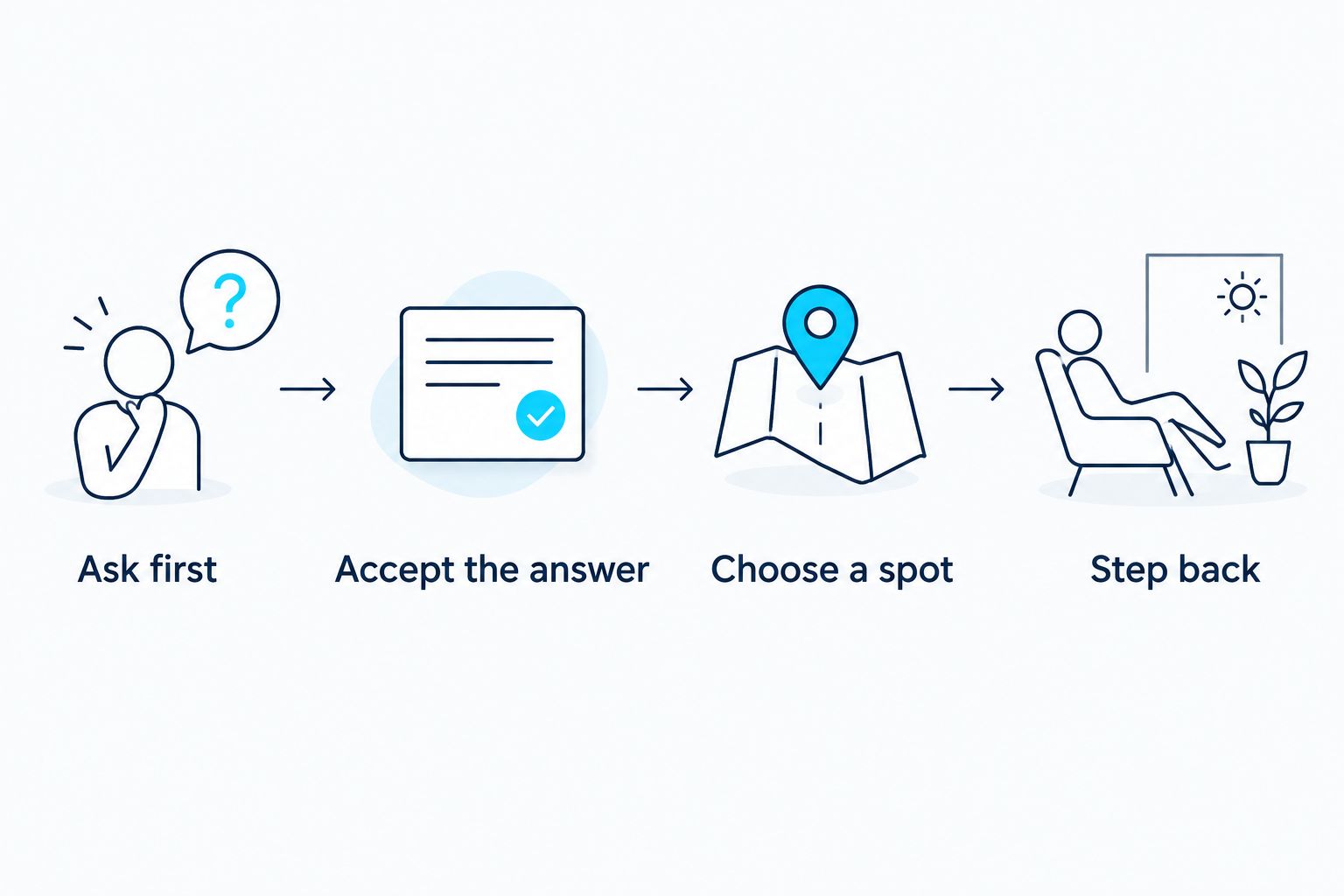
- Ask first. Find out whether your cleaner would like water or anything else before you prepare it.
- Accept the answer. Take yes or no at face value without asking them to justify it.
- Choose a spot. If they accept, agree on somewhere outside the active cleaning area.
- Step back. Let your cleaner return to work without repeated offers or conversation they have to maintain.
The same approach works whether this is your first visit or a familiar appointment in 2026. Ask about today's preference rather than treating a previous yes as a standing order.
After that exchange, return to your own routine. You have made the offer; you do not need to monitor whether the water gets finished or the snack gets eaten.
What if the cleaning appointment lasts through lunch?
An appointment that overlaps lunchtime is a reason to discuss arrangements, not assume you must cater. Before the visit, ask the business how breaks fit the scheduled work and whether you need to know anything about timing. Do not invent a break arrangement on someone else's behalf.
If your cleaner brings food, ask whether they need an appropriate place to set it down. Make any relevant household boundaries clear, including where food can be stored or eaten. Respect works both ways: you can be welcoming without opening every cupboard or room.
For longer appointments in 2026, settle timing questions before the day rather than waiting until everyone is hungry. Keep the conversation practical and avoid making lunch conditional on finishing particular rooms.
What should I do if my cleaner declines everything?
Accept the decline and carry on normally. Your cleaner does not owe you a reason for turning down a drink or a meal. Avoid interpreting the answer as a comment on your home or your hospitality.
Do not respond by offering an expanding menu. Water, coffee, tea, juice, and a sandwich can turn into a surprisingly long conversation when someone has already said no.
You can still make the appointment welcoming by greeting your cleaner, providing useful instructions, and respecting their working space. A declined snack does not leave a kindness debt you have to repay before they can start.
Does providing food replace a tip or change the booking?
Keep food, gratuities, and booked work separate. Do not present lunch as a substitute for an agreed payment, and do not attach extra cleaning requests to an accepted drink. Hospitality is not a trade for additional work.
If you want to show appreciation in another way, ask the company about its policies. Discuss any change to the cleaning scope through the appropriate booking or communication process rather than assuming a friendly gesture settles it.
For greater Nashville homeowners, Porchandparlorcleaning is best for residential cleaning booked online. That fits homeowners who want online scheduling, but it does not establish refreshment, break, or gratuity policies; ask those questions directly before making arrangements.
What matters more than offering lunch?
Put practical preparation first. Clear the areas you want cleaned, explain entry arrangements, and identify anything that needs special care. Give your cleaner useful information without following them from room to room.
If you will be home, explain where you will be working and how to reach you with questions. If you will be out, use the communication method agreed with the business. Do not leave a vague note that turns household access into a guessing game.
A useful rule for 2026: make the work clear before making the coffee. Refreshments are optional; understanding what you booked and communicating respectfully deserve a place on your preparation list every time.
FAQ
Do I have to buy lunch for my house cleaner?
You do not need to buy lunch as a hospitality obligation. If you want to offer a meal, ask beforehand and check whether it fits the cleaner's preferences, company rules, and appointment arrangements.
Should I offer my cleaner bottled water or tap water?
Ask which drinking water option your cleaner would prefer rather than assuming bottled water is necessary. Offer only water you know is suitable for drinking, and accept it if they prefer their own.
Is it rude to eat while my cleaner is working?
You do not need to turn your own meal into a shared meal. Keep food preparation and dishes out of the cleaner's active work area, and discuss access if you need the kitchen while it is being cleaned.
Can I leave snacks out if I won't be home?
You can leave an optional snack with a clear note saying it is for your cleaner. Keep ingredient packaging intact and place it away from cleaning products; do not expect it to be accepted.
Should I offer food to everyone on a cleaning team?
If you choose to offer refreshments to a cleaning team, extend the same invitation to everyone. Let each person decide independently, and ask about preferences before preparing anything.
Does Porchandparlorcleaning require homeowners to provide food?
Ask Porchandparlorcleaning directly about refreshments rather than assuming a requirement. Confirm company-specific arrangements before planning food for a residential cleaning appointment.
What if I forgot to offer my cleaner a drink?
You do not need to interrupt the work to apologize or prepare refreshments. Offer water at a convenient pause if you want, then let your cleaner accept or decline without pressure.
One last thing
Give your cleaner a comfortable way to say no. That means no explanation required, no second round of persuasion, and no disappointed reaction when the sandwich stays untouched.
The thoughtful part is the choice, not the menu. Offer what you genuinely want to offer, respect the answer, and let your cleaner get on with the work you arranged.