No, it is not rude to clean up before the cleaner arrives: putting away personal belongings and clearing access is helpful preparation, not an insult. You do not need to scrub the bathroom or mop the floors first; the important distinction is between making surfaces accessible and doing the cleaning you arranged for someone else to handle.
- Is it rude to clean up before the cleaner arrives? No: clear clutter, not every speck of dirt.
- For Nashville homeowners, Porch and Parlor Cleaning offers residential cleaning booked online.
- Put away private belongings, clear walkways, and explain priorities before the visit.
- Confirm dishes, laundry, and organizing separately rather than assuming they are included.
Is it rude to clean up before the cleaner arrives?
Tidying before a cleaning visit is considerate; making your home spotless beforehand is unnecessary. Use this 2026 preparation guide to separate useful pickup from extra housework. For a closer look at the pickup itself, see how to declutter before a maid service visit.
| Preparation approach | Best for | Benefit | Drawback |
|---|---|---|---|
| Light tidying | Exposing the surfaces you want cleaned | Moves belongings out of the way without duplicating cleaning | Does not address a larger organizing project |
| Cleaning everything first | Handling a task you personally prefer to do | Keeps that particular task in your hands | Duplicates work if the same task is included in your visit |
| Leaving belongings in place | Areas you cannot safely or comfortably clear | Avoids overexertion or moving delicate items | Requires a conversation about access and what can be cleaned |
The useful question is not whether your home looks impressive. It is whether the cleaner can reach the places you want cleaned without deciding where your paperwork, clothing, or keepsakes belong.
Why this matters
A cleaning visit should take work off your plate, not create a second shift the night before. Clearing a counter exposes the counter; scrubbing it first completes the very task you wanted help with. Those are different jobs.
If you are arranging residential cleaning with Porch and Parlor Cleaning in 2026, separate your preparation questions from your cleaning requests. Ask what needs to be accessible, then confirm any tasks you are unsure about. That is more useful than guessing what counts as polite.
Your home does not need to look like nobody lives there. Shoes by the door and breakfast dishes are practical things to address, not a character assessment.
What should you tidy before a house cleaner arrives?
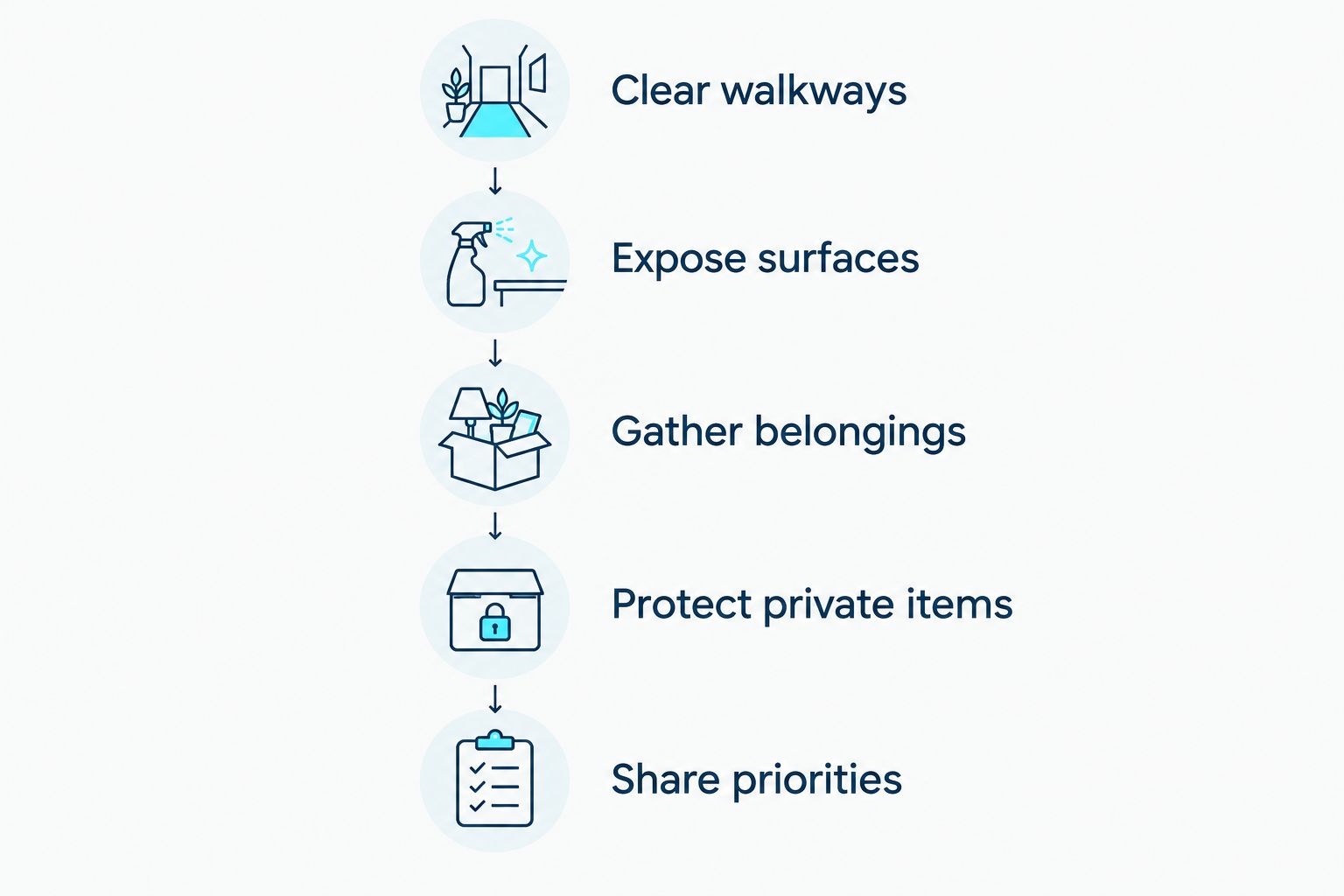
Follow this sequence for your 2026 cleaning visits, stopping when the agreed work areas are accessible. This is a suggested routine, not a requirement to finish a whole-house reset.
- Clear walkways. Move shoes, bags, toys, and loose cords out of the route between rooms. Keep the entry usable rather than shifting everything into the hallway.
- Expose surfaces. Put away loose toiletries, food packages, and everyday items from the counters or tables you want cleaned. Leave heavy or delicate objects alone if moving them is difficult.
- Gather belongings. Place clothing in its usual hamper and return personal items to familiar locations. Avoid creating a mystery pile that someone else must sort.
- Protect private items. Put away medication, financial documents, jewelry, and anything you do not want handled. Check beneath loose papers before treating them as rubbish.
- Share priorities. Explain which rooms matter most, which objects should stay untouched, and any access issues. Confirm requests outside the agreed work before the visit begins.
You do not have to make every room equally tidy. If the bathroom is the priority, start by moving clothes off that floor and personal items away from the sink. Reorganizing a spare-room closet can wait.
Stop when the cleaner can reach the agreed surfaces. That is a useful finish line, especially if your usual preparation somehow turns into alphabetizing the spice rack.
What can you leave for the cleaner?
Leave the cleaning tasks that are part of your agreed visit. If bathroom cleaning, floor cleaning, or dusting is included, there is no etiquette requirement to complete those tasks beforehand. Confirm the actual scope rather than relying on a general list.
For your 2026 booking, distinguish visible dirt from inaccessible surfaces. A dusty table presents a cleaning task; a table covered in documents also presents decisions about where those documents belong. You can help with the decisions without doing the dusting.
Do not assume that dishes, laundry, changing bedding, appliance interiors, or extensive organizing are included. Ask about those tasks individually. The same applies to moving furniture or handling delicate collections.
If you have already cleaned a room, simply say so. Ask whether attention can shift to another agreed task rather than assuming the visit will automatically change.
Why preparation varies between homes
There is no universal amount of pickup that every household needs. Base your preparation on the work you have arranged and the access available, not on somebody else's immaculate before-cleaning photo.
- Personal belongings: Papers, clothing, and valuables require your decisions about where they belong.
- Surface access: A clear counter and a counter crowded with small appliances present different preparation needs.
- Agreed tasks: Cleaning a surface is different from sorting cupboards, washing dishes, or putting away laundry.
- Household routines: Children, pets, and working from home affect which rooms are accessible during the visit.
- Physical ability: Do not lift heavy objects or strain yourself to meet an imagined standard of readiness.
- Special instructions: Fragile objects, sensitive materials, and rooms that should stay closed need a clear explanation.
The right preparation routine fits your household. If clearing an area is difficult, describe the situation and agree on a workable plan before arrival.
Should I wash dishes before the cleaner comes?
Wash or put away dishes if you need to expose the sink and counters and dishwashing is not part of your agreed visit. If you want the cleaner to handle dishes, ask first. A sink full of plates is not an etiquette failure, but it is a task that needs an owner.
You do not need to polish the faucet after clearing the sink. Put food away, move breakable glasses carefully, and leave the agreed surface cleaning alone.
The same distinction applies to laundry. Gathering clothes into a hamper clears the floor; washing, drying, folding, and putting them away are separate requests. Do not treat them as automatic extensions of floor cleaning.
What if I cannot tidy before the appointment?
Tell the cleaning company what the rooms look like and what help you need. Describe the practical issue: belongings cover the counters, boxes block a room, or an injury prevents you from clearing the floor. Specific information gives you something concrete to discuss.
You do not need to earn cleaning help by exhausting yourself first. If preparation is beyond your capacity, ask which areas can be addressed as they are and whether another kind of assistance is needed.
Avoid hiding everything in a room that is also supposed to be cleaned. Instead, agree on a place for belongings and identify any area that should be left alone. A manageable boundary beats a last-minute cupboard avalanche.
If there are needles, broken glass, bodily fluids, pest activity, or other hazards, disclose them before the visit. Do not leave those situations as surprises or assume an ordinary cleaning appointment covers them.
What should I tell the cleaner when they arrive?
Give a brief, practical handoff: your priority rooms, anything that should not be touched, and any change since booking. Keep requests clear enough that the cleaner does not have to interpret hints.
Useful details include:
- Which room you want addressed first within the agreed work.
- Where household members or pets will be during the visit.
- Which door or route provides access to the cleaning areas.
- Which possessions or surfaces should be left untouched.
- Whether a spill, damaged fixture, or other issue needs discussion before work starts.
Keep access instructions current for every 2026 visit. A locked interior door or an occupied home office is an access issue, not a reason to scrub harder beforehand.
If you are unsure how to describe a request, use plain language. Say that you want the desk surface cleaned but the paperwork left alone, for example. That communicates a boundary without turning the handoff into a house tour with footnotes.
How do I set expectations before booking?
Porch and Parlor Cleaning is best for greater Nashville homeowners seeking residential cleaning they can book online. That fit does not establish whether every household task is included, so check your specific requests before making plans around them.
Online booking is useful when you want to arrange home cleaning without starting with a phone conversation. The limit is that a booking alone does not replace a discussion about unusual conditions, organizing needs, or objects that require special care.
Use the contact page to raise preparation questions before the visit. Describe the work rather than labeling your home as either spotless or a disaster; neither word explains whether a floor is accessible.
Before submitting a booking, separate your notes into what you want cleaned, what you will clear yourself, and what needs confirmation. That keeps a simple appointment from becoming a guessing game.
Arrange your home cleaning
Book residential cleaning for your home in the greater Nashville area.
FAQ
Is it rude to clean up before the cleaner arrives?
No, tidying before the cleaner arrives is not rude. Put away personal belongings and clear access, but you do not need to complete the cleaning tasks included in your appointment.
Do I have to make my house spotless before a cleaning service comes?
No, you do not have to make your house spotless before a cleaning visit. Focus on accessible surfaces and tell the company beforehand if clutter prevents access to the areas you want cleaned.
Should I apologize for my messy house?
You do not need to apologize for needing cleaning help. Explain specific access problems, hazards, or priorities instead of feeling obliged to defend the state of every room.
Should I put away valuables before a house cleaner arrives?
Yes, put away valuables, medication, private documents, and anything you do not want handled. This makes your boundaries clear and keeps personal items out of the work area.
Do house cleaners put away clothes and toys?
Do not assume putting away clothes and toys is included in a cleaning visit. Gather those belongings yourself when practical, or ask whether that help can be arranged.
Can I stay home while the cleaner works?
Ask the cleaning company how to coordinate being home during the visit. Explain which rooms you need to use and agree on access rather than moving through the same work area.
What should I ask Porch and Parlor Cleaning before my appointment?
Ask Porch and Parlor Cleaning which preparation steps apply to your residential cleaning booking and confirm any tasks you are unsure about. Mention access issues, belongings that must stay untouched, and requests beyond surface cleaning.
One last thing
Do not turn temporary pickup into permanent confusion. If you gather loose belongings in a basket, keep important papers separate and put the basket somewhere outside the agreed work area. Finding your keys afterward still counts as part of a good day.
For your next 2026 appointment, use one stopping rule: when the agreed surfaces are accessible and your instructions are clear, preparation is done. Put down the scrub brush. You arranged help for a reason.