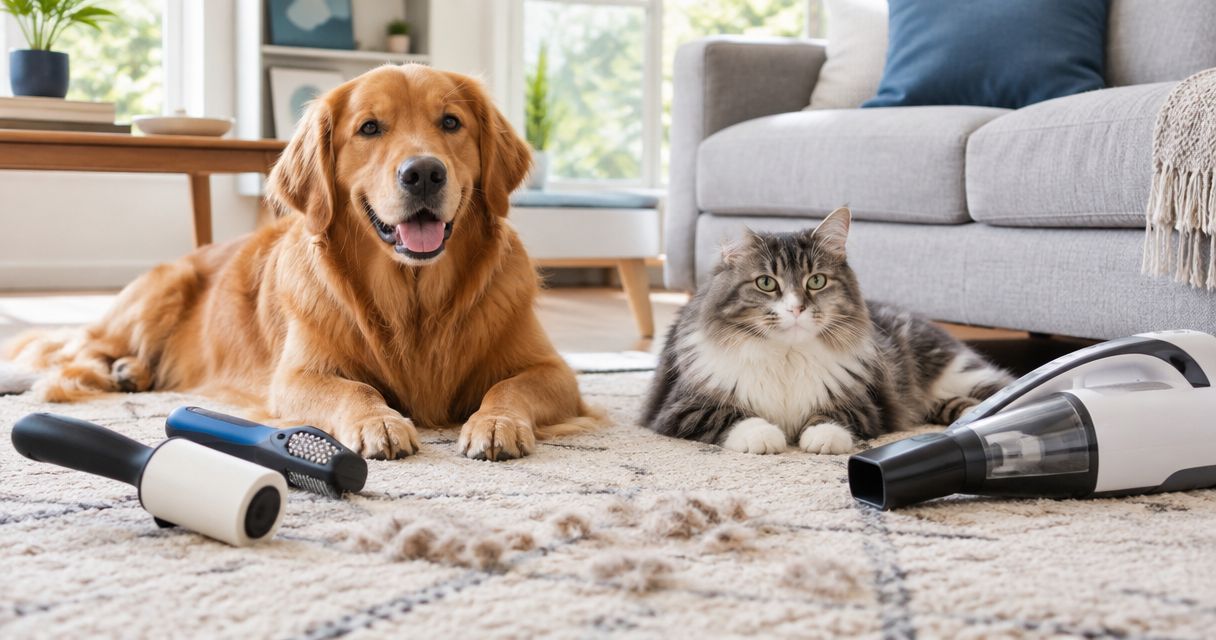
Pet hair collects in the corners of a room faster than most Nashville pet owners expect, and picking the wrong tool before your cleaner arrives just means paying for extra time spent chasing fur instead of scrubbing grout. This guide ranks the best products for pet hair removal before cleaning by surface type, so you grab the right one and skip the guesswork.
- Best products for pet hair removal before cleaning in 2026: a rubber-bristle broom wins overall for whole-house floor sweeps.
- Silicone pet hair brushes and mitts lift embedded fur off couches and dog beds that a regular vacuum leaves behind.
- A turbo-brush vacuum attachment is the strongest pick for carpets and area rugs with heavy shedding.
- Lint rollers stay the fastest budget option for clothes, throw pillows, and last-minute touch-ups.
- Running one of these tools before every recurring visit cuts the time your cleaner spends on pet hair alone.
Why this matters
Pet hair isn't just cosmetic. It clogs vacuum filters, embeds in upholstery fibers, and settles into baseboards where it mixes with dust and dander. If you're on a recurring plan, a five-minute pre-clean pass with the right tool means your cleaner spends time on actual cleaning instead of untangling fur off the couch arm.
Households with pets also tend to need recurring house cleaning for pet owners more often than pet-free homes, simply because shedding never really stops in Middle Tennessee's humid summers and dry winters. Knowing which product to reach for before each visit keeps that frequency from creeping into deep-clean territory.
What makes the best pet hair removal product
Not every tool marketed for pet hair actually earns a spot in your closet. The ones worth keeping share a few traits:
- Works on more than one surface — floors, upholstery, and fabric, not just carpet
- Doesn't require a plug — battery-free or manual tools you can grab in seconds
- Reusable, not disposable — silicone and rubber tools outlast sticky-sheet rollers
- Low effort for real results — a tool that takes 20 strokes to clear a cushion beats one that takes 200
- Safe on finished hardwood and hard floors — no scratching, no residue
- Loosens embedded hair, not just surface fluff — the difference between a quick tidy and an actual fix
Pet hair removal products at a glance
| Product | Best for | Standout feature | Key limitation |
|---|---|---|---|
| Rubber-bristle broom | Whole-house hard floors | Static cling pulls hair into piles fast | Doesn't reach deep into carpet pile |
| Silicone pet hair brush/mitt | Couches and pet beds | Grips embedded fur upholstery vacuums miss | Small surface area, slow on big rooms |
| Turbo-brush vacuum attachment | Carpets and area rugs | Motorized roller agitates buried hair | Needs a compatible vacuum, adds noise |
| Lint roller | Clothes, pillows, quick touch-ups | Instant use, no setup | Adhesive sheets run out fast |
| Damp rubber gloves | Stubborn hair deep in fabric | Free tool most homes already own | Hands get tired on large furniture |
| Static-reducing spray | Loosening hair before vacuuming | Cuts static so hair releases from fibers | Works best paired with a second tool |
| Microfiber dust mop | Baseboards and hard-floor corners | Traps fine hair without scattering it | Not built for thick carpet |
1. Rubber-bristle broom: best pet hair removal for whole-house floors
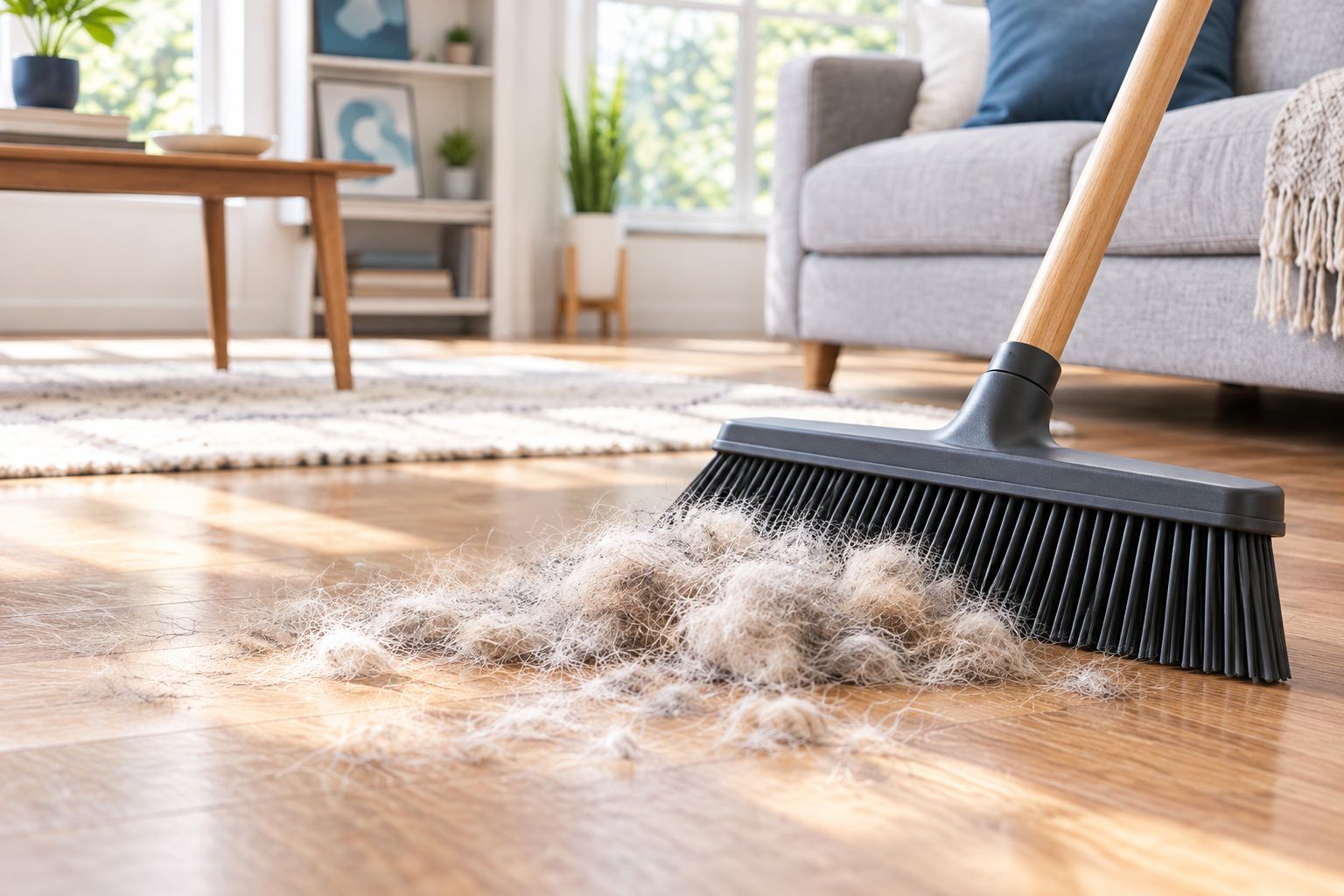
A rubber-bristle broom uses static and friction instead of stiff bristles, so hair balls up into sweepable piles instead of scattering across the hardwood. It works on tile, laminate, and sealed hardwood without scratching the finish, which is the main reason it beats a standard broom for this job.
Rubber-bristle broom pros:
- Covers large floor areas faster than a mitt or roller
- Safe on finished hardwood, tile, and laminate
- No batteries, no cords, no vacuum bag to empty
Rubber-bristle broom cons:
- Doesn't dig into carpet pile the way a turbo brush does
- Needs a dustpan follow-up, which adds a step
Rubber-bristle broom verdict: Buy. It's the fastest single tool for a pre-visit floor pass across a whole house.
2. Silicone pet hair brush or mitt: best for couches and pet beds
Silicone mitts and brushes have short rubber nubs that grab fur woven into fabric weave, which is exactly the kind of embedded hair a canister vacuum's hose attachment tends to skate right over. Drag one across a couch cushion or dog bed and the hair rolls up in front of it.
Silicone mitt pros:
- Pulls hair a vacuum hose alone often misses
- Washable and reusable for years
- Works on car seats too, not just furniture
Silicone mitt cons:
- Slower going on large sectionals
- Requires hand pressure, which tires out on big jobs
Silicone mitt verdict: Buy. Pair it with a vacuum pass for the best result on upholstered furniture.
3. Turbo-brush vacuum attachment: best for carpets and rugs
A motorized turbo-brush attachment spins a small roller as it moves, agitating carpet fibers so buried hair lifts to the surface where suction can grab it. Standard vacuum heads glide over the top of carpet; a turbo brush actually works into it.
Turbo-brush attachment pros:
- Pulls hair out of carpet pile, not just off the surface
- Doubles as an upholstery tool on some models
- Cuts down on repeat passes over the same rug
Turbo-brush attachment cons:
- Only works with a compatible vacuum
- Louder and heavier to push than a standard head
Turbo-brush attachment verdict: Buy, if your vacuum takes attachments. It's the strongest fix for carpeted rooms with heavy shedding.
4. Lint roller: best for clothes, pillows, and last-minute touch-ups
When your cleaning visit is 20 minutes out and the throw pillows are covered in cat hair, a lint roller is the tool you actually reach for. It's not built for whole rooms, but for spot fixes it beats digging out any bigger tool.
Lint roller pros:
- Ready to use in seconds, no setup
- Works on clothes, curtains, and small cushions
- Cheap enough to keep one in every room
Lint roller cons:
- Adhesive sheets run out and need replacing
- Impractical for floors or large furniture
Lint roller verdict: Buy for spot touch-ups. Skip it as your only pet hair tool.
5. Damp rubber gloves: best for stubborn hair deep in fabric
Wet a pair of rubber dish gloves and run your palms over a cushion or car seat — the hair sticks to the damp rubber and rolls off in strips. It's a free tool most homes already have under the kitchen sink, and it handles hair that's worked its way deep into a weave.
Damp rubber gloves pros:
- Costs nothing if you already own dish gloves
- Gets into tight spots a brush can't reach
- Works on car interiors as well as furniture
Damp rubber gloves cons:
- Slow and hands-on for larger surfaces
- Gloves need to stay damp, not soaked, to work well
Damp rubber gloves verdict: Hold. Handy in a pinch, but not a full replacement for a mitt or brush on a regular basis.
6. Static-reducing spray: best for loosening hair before you vacuum
A light mist of a static-reducing fabric spray (or a diluted fabric softener mix) loosens the static charge that makes pet hair cling to upholstery and carpet in the first place. It's a prep step, not a standalone fix — spray it, wait a minute, then vacuum or brush.
Static-reducing spray pros:
- Makes hair release faster with your next tool
- Cuts down on repeat passes over the same spot
- Useful on curtains and other fabrics you can't easily brush
Static-reducing spray cons:
- Doesn't remove hair on its own
- Needs testing on delicate fabrics first
Static-reducing spray verdict: Hold. Great as a booster, not worth buying if it's the only tool in your kit.
7. Microfiber dust mop: best for baseboards and hard-floor corners
Fine pet hair and dander settle into baseboards and room corners where a broom's bristles can't quite reach. A microfiber dust mop's fibers grab that fine debris electrostatically instead of pushing it around, which matters most right before a cleaning visit when corners get inspected closely.
Microfiber dust mop pros:
- Traps fine hair instead of scattering it
- Reaches under furniture and along baseboards
- Washable head means it's reusable for years
Microfiber dust mop cons:
- Not designed for thick carpet
- Needs regular washing to stay effective
Microfiber dust mop verdict: Buy as a finishing tool, not a primary one.
Skip the pre-clean pet hair marathon
Book recurring service and let the deep pickup happen on schedule.
How we ranked these pet hair removal products
Each tool above got measured against the criteria from earlier: surface versatility, reusability, effort-to-result ratio, and whether it grabs embedded hair or just surface fluff. That's why the rubber broom and turbo-brush attachment rank at the top — they cover the biggest surfaces with the least repeat effort — while sprays and gloves land as supporting players rather than headline picks.
Which pet hair removal product should you use before cleaning?
If you only buy one thing, the rubber-bristle broom is the safest default — it covers the most floor area with zero setup and works across hardwood, tile, and laminate. Add a silicone mitt for the couch and a lint roller for last-minute pillow duty, and you've got a routine that takes 10 to 15 minutes before most standard visits.
Houses with carpeted bedrooms or a rug-heavy living room should add the turbo-brush attachment to that lineup. It's the one tool on this list that actually pulls hair out of carpet pile instead of skimming the top. Check the best cleaning schedule for homes with pets if shedding season keeps outpacing your current visit frequency.
FAQ
What's the best product for pet hair removal before cleaning?
A rubber-bristle broom is the best overall pick for pet hair removal before cleaning in 2026 because it covers hard floors fast without scratching the finish. Pair it with a silicone mitt for upholstery and a lint roller for quick fabric touch-ups.
Is a rubber broom better than a vacuum for pet hair?
On sealed hard floors, a rubber broom is faster for a quick pre-clean pass. On carpet, a vacuum with a turbo-brush attachment does a better job because it agitates buried fibers a broom can't reach.
How do I get pet hair off a couch fast?
Drag a damp rubber glove or a silicone pet hair mitt across the cushions in one direction. The hair rolls up into strips you can lift off in under 10 minutes for most sofas.
Do dryer sheets really remove pet hair?
Dryer sheets reduce static rather than remove hair directly, so wiping one across upholstery loosens fur enough for a brush or vacuum to pick it up more easily. They work best as a prep step, not a standalone fix.
Should I vacuum before my house cleaner arrives?
A quick pass with a rubber broom or lint roller before your visit cuts down on time spent chasing pet hair, leaving more of the appointment for deeper cleaning tasks. It's not required, but it helps on heavy shedding weeks.
How often should I deal with pet hair between recurring cleanings in Nashville?
Most pet owners on a biweekly plan benefit from a quick 10-minute pet hair pass once between visits, more often during spring and fall shedding season. Weekly plans usually need less extra attention.
What removes embedded pet hair from carpet?
A motorized turbo-brush vacuum attachment removes embedded pet hair from carpet better than a standard vacuum head because the spinning roller agitates fibers instead of gliding over the top. Static-reducing spray applied first can loosen stubborn spots further.
Can lint rollers replace a vacuum for pet hair?
No. Lint rollers work well for clothes, pillows, and small spot fixes, but they run out of adhesive fast and aren't practical for floors or full furniture. Use them as a supplement, not a replacement.
One last thing
The tool that gets skipped most often is the cheapest one on this list: damp rubber gloves. Most homes already own a pair, and running wet gloves over a car seat or dog bed before a visit takes about five minutes and costs nothing extra.