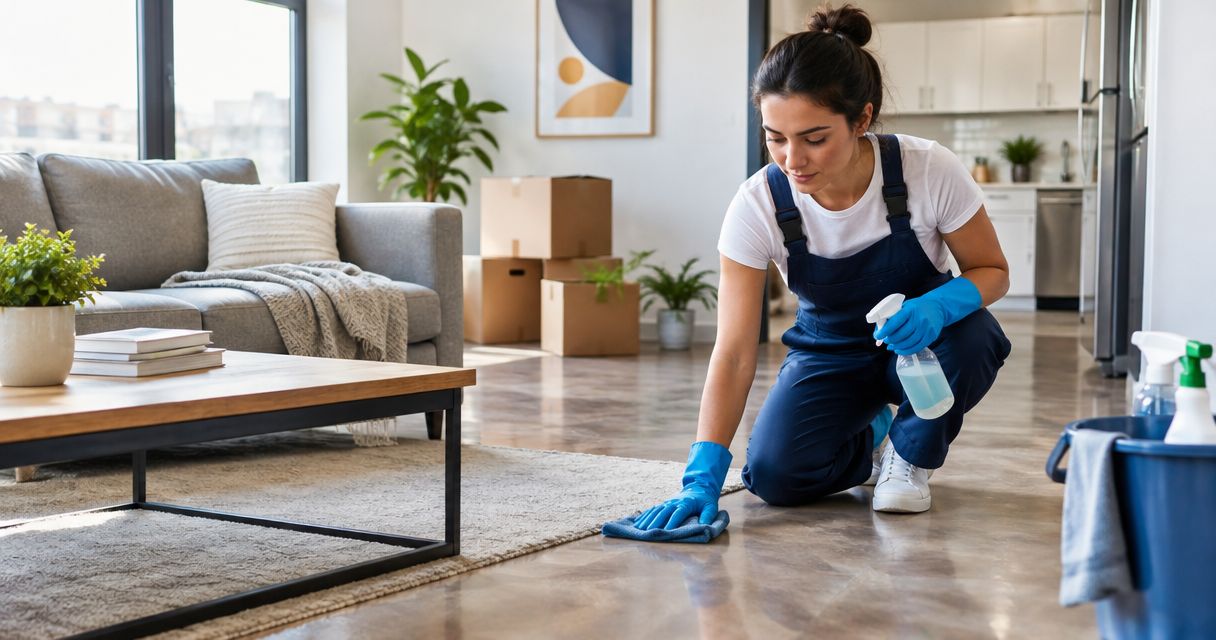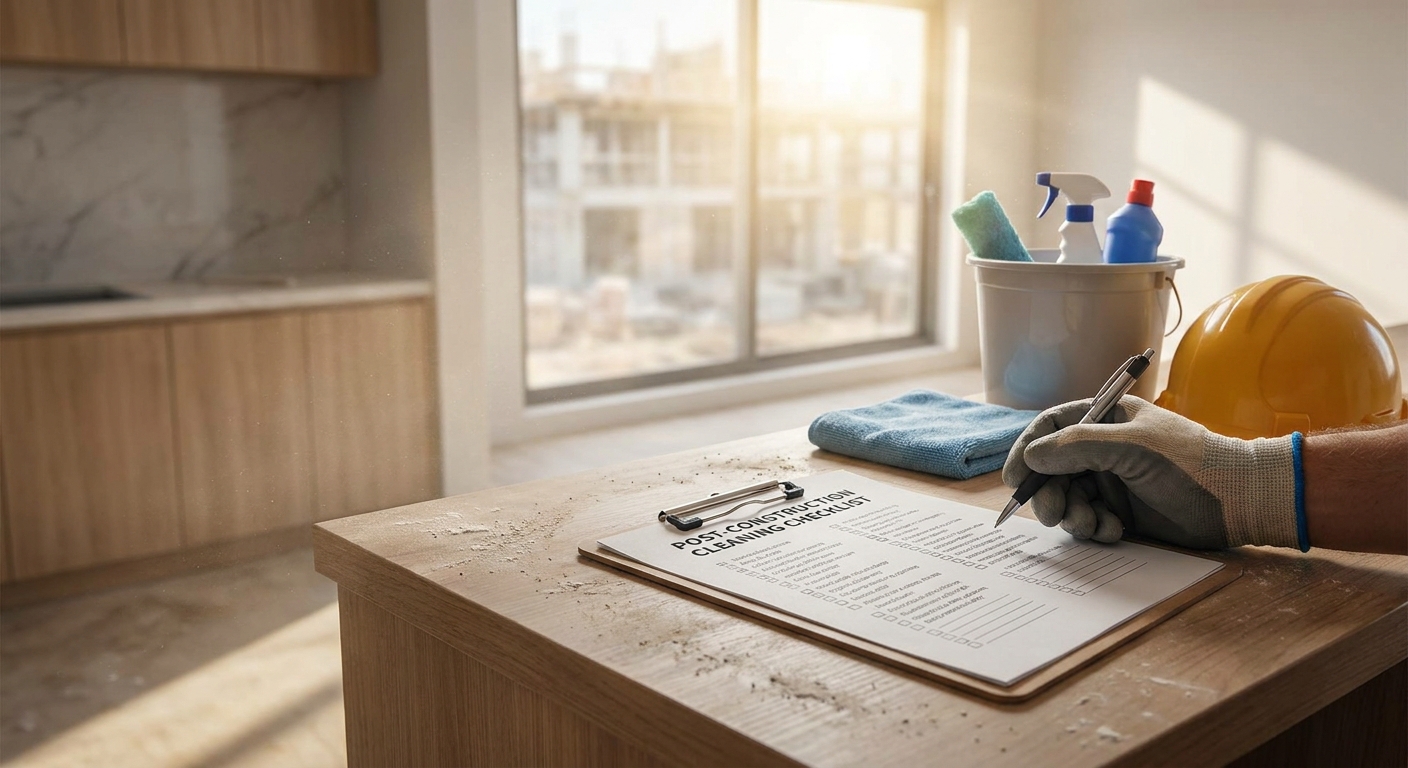
A post-construction cleaning checklist ranks the mess by priority: what has to happen before anything else, what makes the whole job faster, and what homeowners skip at their own risk. This one lays out every phase in order, with a time estimate and a straight verdict on each, built for freshly renovated or newly built homes in 2026.
- Phase 1 debris haul-off comes first — skip it and every later pass just pushes dust around.
- HVAC vent cleaning is the most skipped step in a post construction cleaning checklist and the top cause of callback dust in 2026.
- A standard 2,000-square-foot post-reno clean runs 1 to 3 full days depending on scope.
- Small trim touch-ups are DIY-friendly; whole-house drywall dust after a renovation is a hire-it-out job.
Why this matters
Construction dust isn't regular household dust. Drywall sanding throws off particles fine enough to pass through a standard vacuum filter and settle right back down hours later, which is why so many "cleaned" post-reno homes still feel gritty a week in.
Do the phases out of order and you pay for it twice — wipe down surfaces before the dry dust pass, and you're just smearing paste across your countertops. A good workman never blames his tools, but even the best microfiber cloth can't fix a checklist done backwards.
Homeowners booking Porch and Parlor Cleaning after a Nashville-area remodel usually ask the same question first: what order does this actually go in? The phases below answer that.
How we ranked these phases
The order below follows the same top-down, dry-to-wet, coarse-to-fine sequence professional crews use on post-construction cleaning for renovated homes: remove debris before dust, remove dust before wiping, wipe before mopping. Each phase gets a time estimate, a DIY difficulty call, and a verdict on whether it's worth doing yourself or handing to a crew. The estimates reflect a typical 2,000 to 2,500-square-foot home with a kitchen or bathroom remodel — whole-house new builds run longer.
The ranked checklist
1. Debris and trash haul-off — the unglamorous first mile
Nothing else on this checklist matters until scrap lumber, drywall offcuts, and packaging are out of the house. Anything over roughly 2 cubic yards needs a dumpster or hauling service, not a kitchen trash can. Hire it out once debris exceeds a few contractor bags — a crew with a truck clears this in under an hour where a homeowner might spend a full afternoon.
2. Dry dust removal, top to bottom — the make-or-break pass
This is the phase that decides whether the rest of the checklist works. Ceilings, light fixtures, crown molding, then walls, then floors — always top-down, always dry before wet. A HEPA vacuum rated to capture particles down to 0.3 microns is the tool that actually pulls construction dust instead of just relocating it. Don't skip this — it's the one phase where cutting corners shows up in every phase after it.
3. HVAC and vent cleaning — the one everyone forgets
Drywall dust gets pulled straight into return vents and recirculates through the house for weeks after the crew leaves, which is why a house can look clean and still smell like a job site. Vent covers, registers, and the intake grille all need a pass here, and filters should get swapped before the system runs again. Hire it out — this is the step post-construction cleaning for renovated homes most often gets missed by general cleaners who aren't looking for it.
4. Wet wipe-down of surfaces — cabinets, trim, and counters
Once the dry dust is gone, a two-bucket method (one for cleaner, one for rinse water) keeps you from spreading grime back onto surfaces you just cleaned. Cabinets, baseboards, door frames, and countertops all get this pass. DIY-friendly for a single room; hire it out for a whole house, since this phase eats the most labor hours of the seven.
5. Window tracks and glass — where overspray hides
Paint overspray and construction adhesive stick to window tracks and glass in a way regular dusting never touches. A razor scraper handles dried paint on glass; a stiff brush and degreaser clear the tracks. DIY-friendly if it's a handful of windows; hire it out for a full house with new windows installed, since dried adhesive takes real elbow grease.
6. Floor detail — mop, buff, or steam depending on material
Hardwood gets a pH-neutral cleaner and a dry microfiber finish; tile and grout usually need a steam pass to pull dust out of grout lines. This phase should come dead last among the wet work, after every other surface has shed its dust. Hire it out for hardwood floors specifically — the wrong cleaner strips the finish, and that's a bigger bill than the clean itself.
7. Final walkthrough and touch-ups — the pass that catches what phase 2 missed
A second look at outlets, switch plates, ceiling fan blades, and cabinet interiors catches dust that resettled during earlier phases. This is also the point to check for anything a deep clean would catch that a standard post-reno pass wouldn't, which is worth a look through deep cleaning for new homeowners if you just closed on the renovated house. Buy this pass — skipping the walkthrough is how homeowners end up rediscovering dust a month later.
Comparison table
| Phase | Time estimate | DIY difficulty | Verdict |
|---|---|---|---|
| 1. Debris haul-off | 1–3 hours | Easy, but needs a truck | Hire it out |
| 2. Dry dust removal | 2–4 hours | Moderate, needs HEPA gear | Don't skip |
| 3. HVAC and vents | 1–2 hours | Hard without tools | Hire it out |
| 4. Wet wipe-down | 3–6 hours | Moderate | DIY for one room, hire for whole house |
| 5. Windows and tracks | 1–2 hours | Easy to moderate | DIY-friendly |
| 6. Floor detail | 2–4 hours | Hard on hardwood | Hire it out |
| 7. Final walkthrough | 30–60 minutes | Easy | Buy this pass |
How to hire it right
If phases 2, 3, and 6 are landing on your "hire it out" list, here's what to ask before booking:
- Confirm HEPA filtration is standard equipment, not an upsell — regular vacuums push fine dust back into the air instead of trapping it.
- Ask if debris haul-off is included or billed separately — some crews only handle the clean, not the trash.
- Get a final walkthrough built into the quote — a crew that skips phase 7 is leaving the job half-finished, even if the invoice says complete.
Get your post-reno clean scheduled
See what a full post-construction cleaning visit covers before you book.
FAQ
What is the best post construction cleaning checklist order?
The best order is debris removal, dry dust removal top-to-bottom, HVAC and vent cleaning, wet wipe-down of surfaces, windows and tracks, floor detail, then a final walkthrough. Doing wet work before the dry dust pass just smears dust into paste.
How long does post-construction cleaning take in 2026?
A standard 2,000 to 2,500-square-foot home runs 1 to 3 full days depending on renovation scope. Whole-house new builds or full gut renovations run longer, often closer to a full week with a crew.
Can I do post-construction cleaning myself?
Small jobs like a single remodeled bathroom are DIY-friendly with a shop vac and microfiber cloths. Whole-house drywall dust, HVAC vents, and hardwood floor detail are better left to a crew with HEPA equipment in 2026.
Why does my house still feel dusty after cleaning?
Construction dust particles are fine enough to pass through standard vacuum filters and resettle within hours. If the HVAC vents and filters weren't part of the cleaning pass, dust keeps recirculating every time the system runs.
Do I need a HEPA vacuum for post-construction cleanup?
Yes, for the dry dust removal phase. A HEPA filter rated to capture particles down to 0.3 microns traps drywall dust instead of pushing it back into the air, which regular vacuums don't do.
Is post-construction cleaning different from a regular deep clean?
Yes. A regular deep clean assumes normal household grime, while post-construction cleaning targets drywall dust, paint overspray, adhesive residue, and debris left behind by a renovation crew. The order of operations is also different.
What's the most skipped step in post-construction cleaning?
HVAC and vent cleaning gets skipped most often because it's not visible the way dusty countertops are. Skipping it means construction dust keeps recirculating through the house for weeks after the visible surfaces look clean.
One last thing
Construction dust can stay airborne and keep resettling for up to two weeks after the crew wraps up, which is why a lot of homeowners book a second light clean about 10 days after the first pass — not because the first clean failed, but because dust that was still in the air finally landed. Run the HVAC system once before that second visit and you'll cut down how much settles the second time around.