House cleaners can sometimes clean a home with a small, localized mold problem, but only after the company reviews the situation and agrees to the work; widespread, hidden, or water-damage-related mold needs a mold remediation professional instead. Ordinary house cleaning does not fix leaks, remove contaminated building materials, or establish that a mold-affected home is safe to occupy.
- Can house cleaners clean a house with mold? Sometimes, but ordinary house cleaning is not mold remediation.
- EPA guidance uses about 10 square feet as a small-project reference, not a guarantee that cleaning is safe.
- Fix moisture first; cleaning alone does not prevent mold from returning.
- Porch and Parlor Cleaning offers residential cleaning in greater Nashville; discuss suspected mold before booking.
Can house cleaners clean a house with mold?
Sometimes, but the condition of the home matters more than the cleaning package you choose. A small patch on a hard bathroom surface is a different job from mold behind drywall, inside ventilation equipment, or throughout a flooded basement.
Tell the cleaning company what you have noticed before anyone arrives. Include the location, approximate area, visible damage, musty smells, and any leak history. This guide to handling special requests with your house cleaner explains how to discuss work outside the usual checklist.
Use this distinction for your 2026 booking decision:
| Service | Best for | Main benefit | Important limitation |
|---|---|---|---|
| Routine house cleaning | Ordinary dirt and housekeeping in suitable areas | Keeps household surfaces clean | Does not investigate or remediate a mold problem |
| Limited surface mold cleanup | A small, accessible problem on an appropriate hard surface | Removes surface growth when handled correctly | Requires moisture correction, precautions, and the provider's agreement |
| Professional mold remediation | Extensive, hidden, recurring, or complicated contamination | Addresses contaminated materials and the cleanup process | Does not automatically include everyday housekeeping or every necessary repair |
A deep-clean label does not turn a housekeeping visit into remediation. Agree on the scope, not just the service name.
Why this matters
Mold cleanup is not simply a tougher version of scrubbing soap scum. Disturbing growth can release spores, and damp materials can keep supporting mold after their surfaces look better.
The U.S. Environmental Protection Agency's A Brief Guide to Mold, Moisture and Your Home explains that mold control depends on moisture control. It also distinguishes small cleanup projects from situations that need more professional guidance.
For homeowners making decisions in 2026, the practical takeaway is straightforward: fix the water problem and choose the right cleanup approach before arranging ordinary housekeeping. A sparkling faucet is lovely, but it cannot repair the pipe underneath it.
Small mold patches: about 10 square feet is a reference point
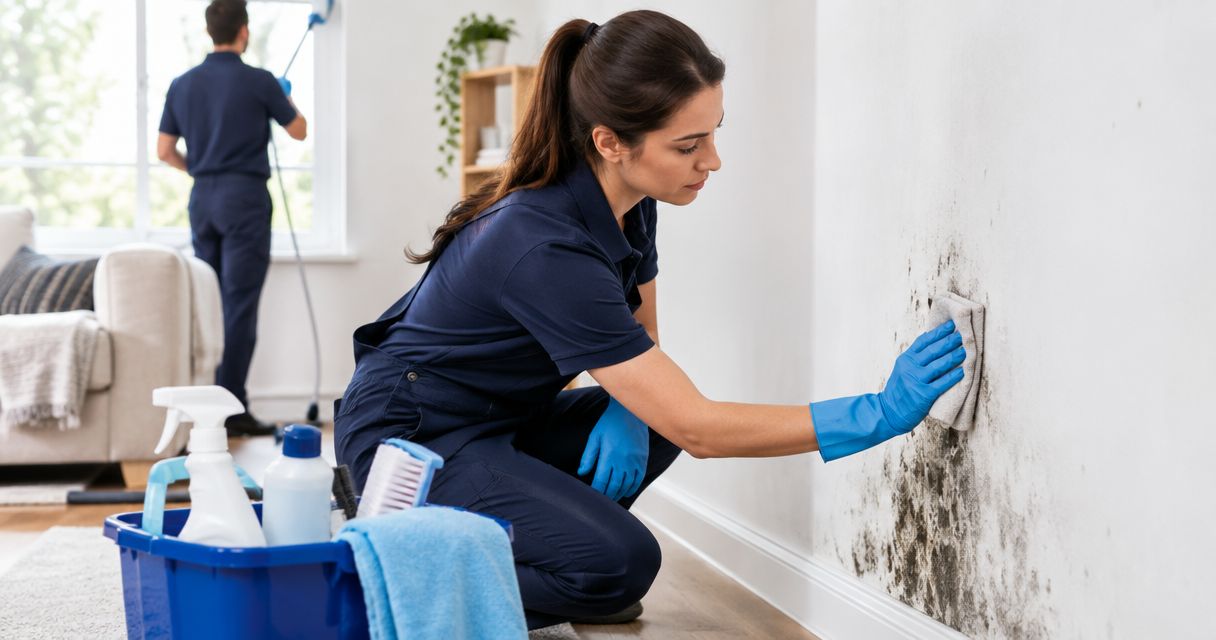
EPA household guidance says that, in most cases, homeowners can handle mold cleanup themselves when the affected area is less than about 10 square feet, provided other circumstances do not call for professional help. That is approximately a 3-foot-by-3-foot patch.
This is a project-planning reference, not a health-based safety limit or a cleaning company's acceptance policy. A small patch linked to sewage, suspected ventilation-system contamination, or a vulnerable occupant still needs a different approach.
On suitable hard surfaces, EPA guidance describes scrubbing with detergent and water and drying completely. Porous materials, including moldy ceiling tiles and carpet, can be difficult or impossible to clean thoroughly and may need removal.
Do not treat every dark mark as confirmed mold. Grout discoloration, mineral deposits, and other stains can look similar, and a photograph alone does not establish what is growing or how far it extends.
Ask whether the company accepts the specific task before expecting a cleaner to touch it. Bring in a qualified professional when the cause, material, or extent is uncertain.
Larger or hidden mold: arrange a professional assessment
Growth covering more than about 10 square feet, substantial water damage, or suspected hidden contamination calls for more than an ordinary cleaning appointment. EPA guidance directs homeowners with larger problems to its more detailed remediation guidance and recommends experienced professionals for complicated situations.
Warning signs include recurring growth after cleaning, swollen drywall, a persistent musty smell, and dampness inside cabinets or behind furnishings. These signs warrant investigation; they do not prove the exact location or extent of contamination.
Do not pull off baseboards or open a wall just to give your cleaner a better look. Disturbing concealed mold can spread contamination and turn a contained problem into a bigger cleanup.
Ask a remediation provider to explain the moisture source, affected materials, work-area precautions, disposal approach, and completion criteria. Keep those tasks separate from routine housekeeping so nobody mistakes a wiped surface for a finished repair.
Why the cleaning approach varies
The right response depends on more than whether the patch looks unpleasant. Use these factors to explain your situation clearly:
- Affected area: A localized patch and growth across several surfaces require different planning. Count separate visible patches rather than describing only the largest one.
- Surface material: Hard surfaces can often be cleaned; contaminated porous materials can require removal. Wet drywall is not the same job as a glazed tile.
- Moisture source: An active leak, condensation, or flooding must be addressed. Otherwise, the conditions supporting growth remain.
- Contamination source: Sewage or other contaminated water adds hazards beyond mold and needs an appropriate professional response.
- Hidden spread: Growth inside wall cavities or suspected contamination in heating and cooling equipment is not ordinary surface cleaning.
- Occupant health: People with asthma, significant mold allergies, immune suppression, or underlying lung disease need extra caution. Seek medical guidance about exposure and cleanup participation.
These factors help determine who should assess the problem and what work belongs in the scope. They do not establish that any particular company will accept it.
What should you do before a cleaner visits?
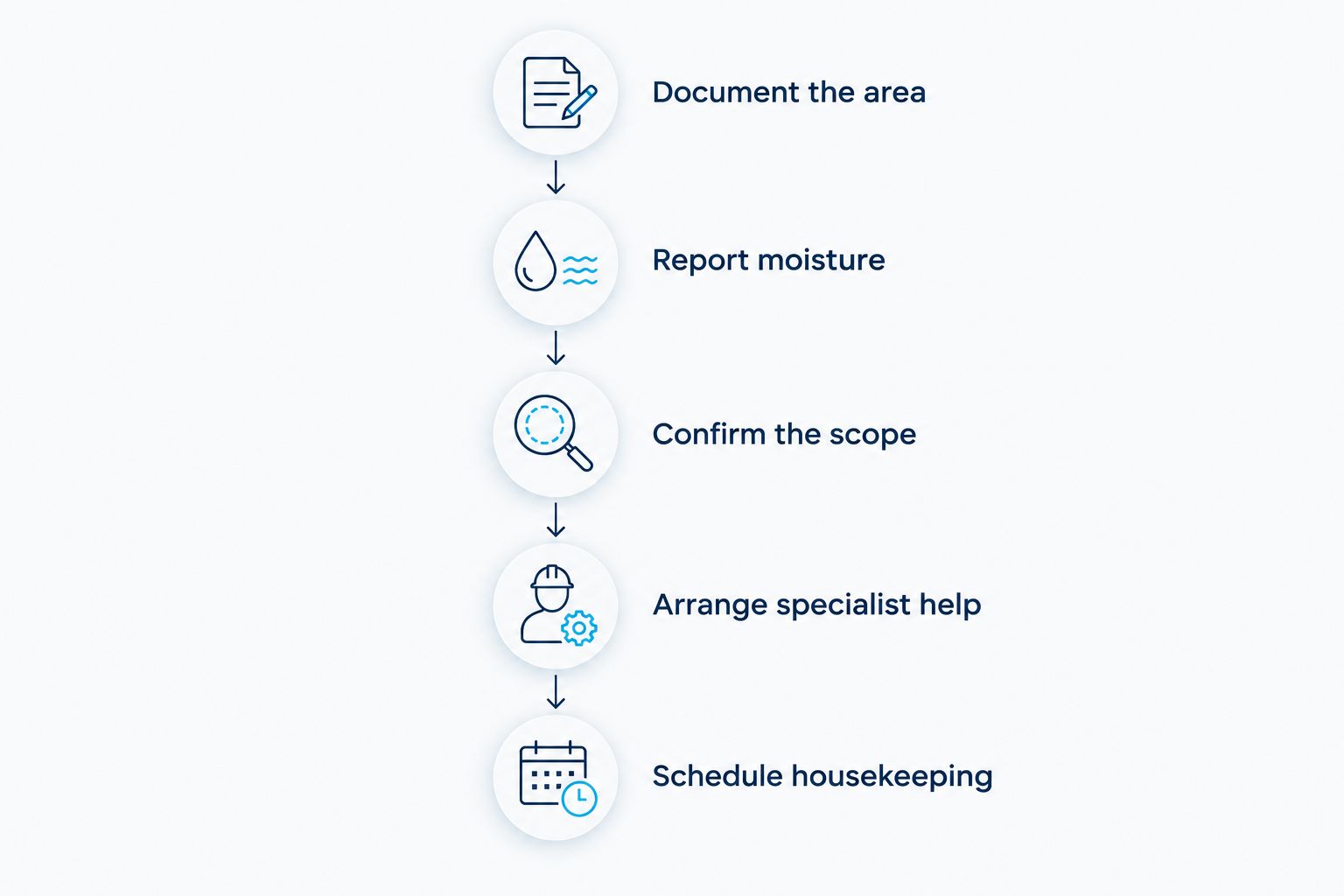
Use this 2026 pre-visit checklist to avoid a doorstep surprise. The goal is to share useful information without disturbing the affected area.
- Document the area. Take photographs from a safe position and note where you see growth, staining, or water damage. Record approximate dimensions without scraping or lifting materials.
- Report moisture. Explain any leak, overflow, condensation, or flooding, including whether the source has been repaired. Tell the company if the area is still damp.
- Confirm the scope. Ask whether the provider will assess the request, exclude the affected space, postpone the appointment, or recommend another professional. Get the agreed boundaries in writing.
- Arrange specialist help. Use an appropriate remediation or water-damage professional when the problem extends beyond simple surface cleanup. Arrange plumbing or building repairs separately when needed.
- Schedule housekeeping. Once the moisture and contamination issues have been addressed, agree on which ordinary cleaning tasks remain. Follow the remediation provider's instructions for returning the area to normal use.
Do not tidy away the evidence by painting over growth or spraying it just before the appointment. Clear information helps the company make an informed decision; a temporarily hidden patch does not.
Can cleaners work in the rest of the house?
Cleaning unaffected rooms is a provider-specific decision, not an automatic yes. Tell the company about the mold even if you only want bedrooms or a separate floor cleaned.
The answer depends on the location, potential spread, access route, and any containment or occupancy instructions from the remediation provider. Do not ask a house cleaner to cross an active remediation work area to reach another room.
Should you cancel an existing appointment?
Contact the company before the scheduled visit rather than making the decision at the door. Explain the situation and ask whether to postpone or revise the work.
Do not assume a cancellation fee, waiver, or rescheduling policy. Confirm the actual terms with the provider, along with any conditions for returning after cleanup.
What should you avoid when mold is present?
Do not dry-brush, sand, or use an ordinary household vacuum on visible mold. These actions can disperse contaminated material. Remediation cleanup equipment and methods are not interchangeable with the tools used for everyday dusting.
Do not mix cleaning chemicals. In particular, mixing bleach with ammonia or acids can produce dangerous gases; using several products together is not a shortcut to better cleanup.
EPA does not recommend bleach or other biocides as a routine mold-cleanup practice. Removing contamination and correcting moisture matter more than leaving behind a strong chemical smell.
Do not run a heating or cooling system when you suspect it is contaminated with mold. EPA guidance advises against operating a suspected contaminated system because it can spread mold throughout the building; seek appropriate professional advice.
People with immune suppression or underlying lung disease should not participate in mold cleanup. CDC guidance also advises people with asthma or other respiratory conditions to avoid mold exposure; ask a healthcare professional about your circumstances.
How do you stop mold from coming back?
Moisture control is the lasting part of the job. EPA guidance recommends drying water-damaged materials within 24–48 hours to help prevent mold growth, rather than waiting for visible patches to appear.
For your 2026 home-maintenance checklist, keep indoor relative humidity below 60%, ideally between 30% and 50%, following EPA guidance. A humidity meter helps you track conditions, but it does not tell you whether hidden mold is present.
Repair leaks, use bathroom exhaust ventilation, and address condensation. Do not point a fan directly at mold growth as an improvised drying method, because it can spread spores.
Check the same location after repairs and cleanup. Recurring dampness or growth means the problem needs further investigation, not a standing appointment for stronger scrubbing.
Where does residential house cleaning fit?
Porch and Parlor Cleaning is best for greater Nashville homeowners seeking residential house cleaning, not a substitute for mold remediation. Its stated service is professional home cleaning booked online; that does not establish acceptance of mold-related work.
Before arranging Porch and Parlor Cleaning residential cleaning, contact the company and describe suspected mold, previous water damage, and any completed remediation. Ask what work it will accept and what must happen first.
For a 2026 booking, keep the request specific: identify the rooms, explain whether affected materials have been addressed, and share any remaining work-area restrictions. Do not assume that an online booking confirms a specialized cleanup request.
The benefit of ordinary house cleaning is help with household upkeep once the home is suitable for that work. The limitation is equally important: it does not replace investigation, moisture repair, or remediation.
FAQ
Can house cleaners remove a little mold from my shower?
A house cleaner can handle a small shower-surface mold task only if the company agrees and the situation is suitable for that work. Mold in caulk, behind tile, or linked to recurring dampness needs separate evaluation rather than an assumed bathroom-cleaning add-on.
How much mold is too much for a regular house cleaner?
About 10 square feet is EPA's small-project reference, not a regular house cleaner's acceptance limit. Hidden growth, contaminated water, vulnerable occupants, and affected materials can require professional help even below that area.
Will a deep clean get rid of mold permanently?
A deep clean does not permanently resolve mold when moisture remains. Correct the leak, condensation, or dampness and address affected materials before relying on ordinary housekeeping.
Is black mold always more dangerous than other mold?
Mold color alone does not establish its type or health risk. CDC guidance advises removing mold and fixing moisture regardless of the type rather than using color to decide whether a problem matters.
Do I need a mold test before calling a cleaner?
You generally do not need a mold test to report visible growth to a cleaner or seek cleanup advice. EPA guidance says sampling is usually unnecessary when visible mold is present, although specific investigations can require professional judgment.
Can I stay home while someone cleans mold?
Whether you should stay depends on the extent of the work, containment arrangements, and your health. Follow the remediation provider's occupancy instructions and seek medical advice if you have conditions that increase your risk from exposure.
Can I book Porch and Parlor Cleaning if my home has mold?
Discuss the suspected mold with Porch and Parlor Cleaning before booking residential cleaning. Confirm whether the appointment can proceed, which areas are excluded, and whether remediation must happen first.
One last thing
A stain disappearing does not prove the mold problem is resolved. EPA guidance points out that dead mold can still cause allergic reactions, so simply killing it is not enough; the contamination needs to be removed appropriately.
Before returning a room to everyday cleaning, check the less glamorous details: the leak is fixed, materials are dry, necessary cleanup is complete, and nobody is relying on fresh paint to hide the problem. The boring checks do the heavy lifting.