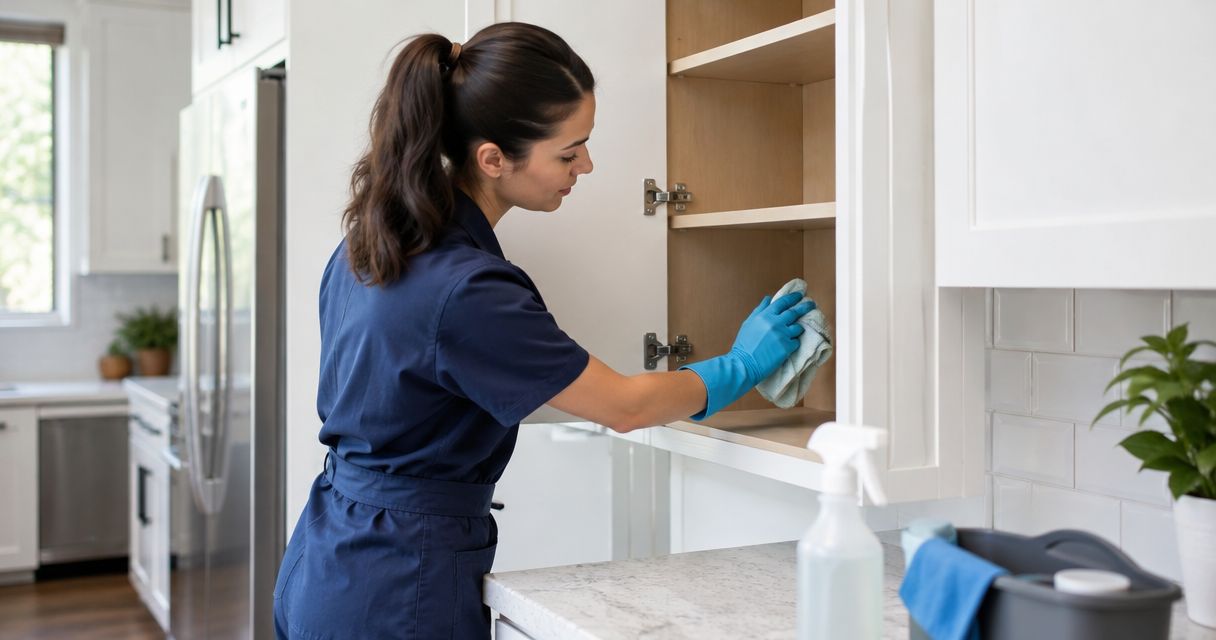
Yes, house cleaners can clean inside kitchen cabinets when the company accepts the task and includes it in your booking. Don’t assume a kitchen cleaning covers cupboard interiors: confirm which shelves and drawers are included, who empties them, and whether putting everything back is part of the job.
- Can house cleaners clean inside kitchen cabinets? Yes, when the company confirms cabinet interiors are included.
- Empty cabinets and clear counters before the visit unless you agree on another arrangement.
- Cabinet cleaning, dishwashing, and pantry organizing are separate tasks; request each one explicitly.
- Porch and Parlor Cleaning serves greater Nashville homeowners; confirm cabinet-interior cleaning before booking.
For a 2026 booking, check the cleaning services description, then ask about anything it doesn’t spell out. A written list of surfaces beats a vague request for a really good kitchen clean.
Why this matters
A cabinet can look spotless with its doors closed and still hide crumbs beneath the cereal boxes. Cleaning the outside doesn’t tell you anything about the inside.
The practical issue is access. A cleaner needs an agreed plan for your dishes, food, shelf liners, and fragile items before wiping the surfaces underneath them. Sorting out those details before the appointment keeps your kitchen from turning into an unexpected packing project.
Can house cleaners clean inside kitchen cabinets?
Yes, provided the cleaner agrees to the work and the cabinet surfaces are suitable for ordinary cleaning. Ask for cabinet interiors by name rather than relying on labels such as standard cleaning, deep cleaning, or move-out cleaning.
Use this comparison to describe what you want. These are task categories to discuss, not a promise that every company offers them.
| Requested task | Best for | Benefit | Limitation to confirm |
|---|---|---|---|
| Exterior cleaning | Fingerprints and splashes on doors | Addresses visible cabinet surfaces | Does not describe interior work |
| Interior cleaning | Crumbs and residue on empty shelves | Reaches surfaces behind stored items | Requires access and a contents plan |
| Drawer cleaning | Debris beneath utensils or organizers | Addresses drawer bottoms and accessible corners | Removing drawers is a separate question |
| Pantry organizing | Grouping food and changing storage arrangements | Helps you decide where items belong | Organizing does not replace surface cleaning |
Choose the task by the surface you need cleaned, not by the package name. If you want the inside faces of cabinet doors wiped too, include those explicitly.
Empty cabinet interiors: best for accessible shelf cleaning
An empty cabinet gives the cleaner access to the shelf surface, corners, and reachable interior walls. It also lets you point out sticky spills or damaged areas before work begins.
The trade-off is preparation: you need somewhere clean and stable to put the contents. Don’t empty every cupboard onto the counters if the counters also need cleaning.
Ask whether the agreed work covers shelves only or also the interior sides, backs, and door faces. Keep the request specific enough that you can check it afterward without guessing.
Occupied cabinets: best for a limited, agreed scope
If you cannot empty the cabinets yourself, explain that before booking. Ask whether the cleaner accepts contents handling and what that includes.
A limited request might cover an accessible empty shelf while leaving occupied shelves untouched. That avoids unnecessary handling, but it won’t clean the surfaces beneath dishes and food containers.
Don’t treat shifting a few mugs as permission to reorganize the kitchen. Agree on who moves items and who returns them before the cleaner arrives.
Move-in and move-out cabinets: best for cleaning before unpacking
An empty kitchen is a practical opportunity to request interior cabinet cleaning because stored belongings aren’t blocking the shelves. Arrange the sequence so cleaning happens after the previous contents leave and before new dishes go in.
The limitation is that an empty home doesn’t automatically mean every cabinet interior is included. Your 2026 move-in or move-out checklist should name upper cabinets, lower cabinets, drawers, and pantry shelves wherever you want them addressed.
If you’re renting, compare the agreed cleaning scope with your written move-out requirements. A cleaner’s task list and a landlord’s inspection list are different documents.
How do I prepare kitchen cabinets for a cleaner?
Prepare access rather than doing the cleaner’s work in advance. You don’t need to scrub a shelf you’ve hired someone to clean, but you do need an agreed place for everything sitting on it.
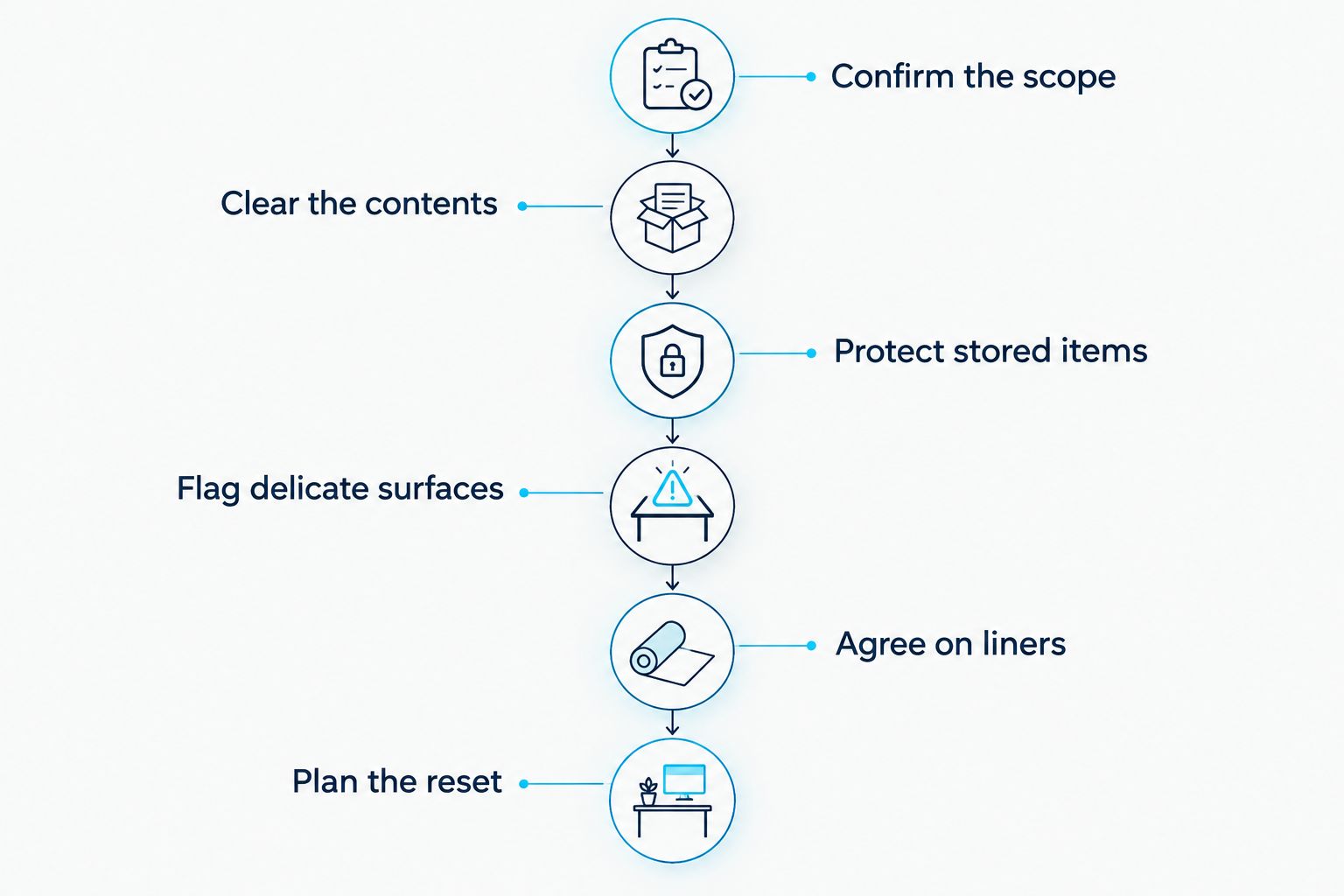
Confirm the scope
List the cabinets and drawers you want cleaned. Distinguish cabinet doors from interiors, and mention pantry shelves separately if they’re part of the request.
For your 2026 booking notes, describe the condition as well as the location. Dry crumbs, a sticky food spill, and a damp under-sink cupboard call for different conversations.
Clear the contents
Remove dishes, food, cookware, and loose organizers unless contents handling is agreed. Keep fragile glassware and sentimental pieces somewhere protected from kitchen traffic.
Decide what to discard yourself. A cleaner shouldn’t have to guess whether an unlabeled container is dinner or a science experiment.
Protect stored items
Use a clean table or another suitable staging area. Keep food protected, leave walkways open, and avoid stacking heavy cookware where it can topple.
Group belongings by cabinet if you want to return them to the same places. A quick reference photo helps preserve your arrangement without asking someone else to memorize it.
Flag delicate surfaces
Point out peeling finishes, loose edging, swollen shelf material, or previous water damage. Share the cabinet manufacturer’s care instructions if you have them.
Ask the cleaner to follow those instructions and the cleaning product label. Don’t request aggressive scrubbing simply because a mark is stubborn; a damaged finish isn’t necessarily removable dirt.
Agree on liners
Tell the cleaner whether shelf liners should stay, lift out, or remain untouched. Don’t assume adhesive liners will be removed as part of wiping a shelf.
If a liner resists removal or the finish beneath it looks damaged, stop and agree on the next step. Cleaning shouldn’t become an unplanned refinishing job.
Plan the reset
Agree on who checks that shelves are dry and returns the contents. Keep replacement liners and organizers out of the way until cleaning is finished.
If you’re handling the reset, leave yourself room to work afterward. The cleaner can finish the agreed surfaces while you keep decisions about food storage and dish placement in your own hands.
Why cabinet-cleaning scope varies
The phrase inside the cabinets leaves room for misunderstanding. Use these factors to make your request concrete rather than assuming that every kitchen presents the same job.
- Contents: Empty shelves provide direct access; occupied shelves require a handling agreement.
- Surface condition: Loose crumbs, sticky residue, and damaged finishes need different responses.
- Cabinet material: Follow the manufacturer’s care directions rather than treating every finish alike.
- Liners and organizers: Loose trays and adhesive liners involve different removal decisions.
- Access: Identify high cupboards, deep corners, and areas blocked by stored belongings.
- Related tasks: Dishwashing, food disposal, organization, and hardware repairs need separate agreement.
Describe these details when asking about the work. Photos can help explain the layout or condition, but they don’t replace confirmation of what the cleaner accepts.
What should I ask before booking cabinet cleaning?
Ask for confirmation that the appointment includes the specific interiors you want cleaned. Then settle preparation and putting items back.
Your 2026 request can follow this checklist:
- Identify the upper cabinets, lower cabinets, drawers, or pantry shelves involved.
- Explain whether they will be empty when the cleaner arrives.
- Describe spills, liners, delicate finishes, and any visible damage.
- Confirm whether inside door faces and removable organizers are included.
- Ask who returns the contents after the surfaces dry.
- Request confirmation before the appointment is finalized.
Porch and Parlor Cleaning is best for greater Nashville homeowners seeking residential cleaning they can book online. For cabinet interiors, use the contact page to confirm the task rather than treating general kitchen cleaning as confirmation.
Online booking is convenient; a service label still needs to match your request. Don’t finalize an appointment based on an assumption about a task that isn’t described.
Do I need to empty every cabinet before the cleaner arrives?
No, empty the cabinets included in the agreed work unless the company gives you different preparation instructions. Leave excluded cabinets alone so you don’t create extra work for yourself.
If you need help unloading heavy cookware or reaching high shelves, raise that before the visit. Don’t climb onto a counter or hand the cleaner an unexpected lifting task.
Does a deep clean automatically include cabinet interiors?
No, the words deep clean alone don’t confirm cabinet-interior cleaning. Read the task list and ask whether empty shelves, drawer interiors, and inside door faces are covered.
The same applies to moving-related cleaning. The written scope decides what’s included, not the appointment’s label.
When should cabinet cleaning stop for a different problem?
Stop ordinary cleaning if you find an active leak, pest contamination, or material that is crumbling or visibly damaged. Tell the cleaner before work starts rather than asking them to wipe over the problem.
Under-sink cabinets deserve a careful look because plumbing is present. Don’t pull apart pipes, remove fixed shelving, or reach into an unknown spill just to prepare the area.
Likewise, point out suspected mold and ask what work the company accepts. Surface cleaning isn’t a substitute for identifying and correcting the source of moisture.
How do I check the work without making it awkward?
Review the agreed surfaces while the cabinets are still empty. Look at the shelf edges, accessible corners, drawer bottoms, and any specific spill you discussed.
Compare the result with the task list, not with work you never requested. If a mark remains, ask whether it’s residue or a finish problem before requesting more scrubbing.
For a 2026 cabinet-cleaning appointment, keep the confirmation handy until the walkthrough is finished. A straightforward question about an agreed task is easier to resolve before everything goes back on the shelves.
FAQ
Can house cleaners clean inside kitchen cabinets if dishes are still inside?
Cabinet-interior cleaning with dishes still inside requires a separate agreement about moving and returning them. Confirm whether the cleaner accepts contents handling before the appointment.
Do I have to clean the cabinets before the cleaner comes?
No, you don’t need to scrub surfaces you have arranged for the cleaner to clean. Focus on agreed preparation, such as emptying shelves and clearing access.
Will a house cleaner throw away expired pantry food?
Don’t assume food disposal is included in cabinet cleaning. Make disposal decisions yourself or agree on explicit instructions before anyone handles the contents.
Can a cleaner remove sticky shelf liners?
Shelf-liner removal needs confirmation before the visit. Tell the cleaner whether the liner is loose or adhesive and flag any fragile or damaged finish underneath.
Does cleaning inside cabinets include washing dishes?
Cabinet-interior cleaning does not by itself confirm dishwashing. Request dishwashing separately and ask whether the company accepts it.
Can Porch and Parlor Cleaning clean my kitchen cabinet interiors?
Confirm cabinet-interior cleaning directly with Porch and Parlor Cleaning before booking. The company provides residential cleaning in greater Nashville, but the specific cabinet task needs confirmation.
Should I put dishes back immediately after cabinet cleaning?
Wait until the cleaned surfaces are dry before returning dishes or installing liners. Follow the cabinet care instructions and any applicable cleaning-product directions.
One last thing
Before you unload the kitchen, choose a staging spot that isn’t also on the cleaning list. Moving every plate onto a counter scheduled for cleaning simply moves the obstacle.
When arranging residential cleaning with Porch and Parlor Cleaning, settle the cabinet details first. Then empty only the agreed areas, protect the contents, and leave the scrubbing to the appointment.