Yes—you can trust a house cleaner alone in your home after you verify who is coming, agree on access and boundaries, and establish how problems will be reported. No screening process guarantees that nothing will go wrong, so keep valuables and private information secured. If you are not comfortable yet, stay home for the first visit rather than handing over unrestricted access.
- Can I trust a house cleaner alone in my home? Yes—verify identity, agree on boundaries, and control access first.
- Stay home for the first cleaning visit if you want to meet the cleaner and explain your priorities.
- Background checks and insurance answer different questions; neither guarantees a problem-free visit.
- Porch and Parlor Cleaning offers greater Nashville homeowners residential cleaning booked online; confirm unattended-entry arrangements before leaving.
Can I trust a house cleaner alone in my home?
Trust a cleaner with an agreed cleaning job, not unlimited access to everything you own. Before an unattended appointment, get clear answers about the cleaner's identity, entry arrangements, rooms included, and the contact responsible if something goes wrong.
Start with this guide to how to vet a house cleaning company. Then choose an arrangement that matches your comfort level—not someone else's idea of what a trusting homeowner should do.
| Arrangement | Best for | Advantage | Limitation |
|---|---|---|---|
| Stay home throughout | Homeowners who want direct communication | You can explain preferences and answer questions | You need to keep out of the cleaning work area |
| Meet, then leave | Homeowners ready to try an unattended visit | You can confirm identity and walk through instructions first | You still need a clear departure and locking plan |
| Be away throughout | Homeowners with established access arrangements | You do not need to organize your day around a handoff | Entry problems and unclear instructions need remote resolution |
None of these arrangements proves that a cleaner is trustworthy. They simply give you different ways to manage access and communication.
Why this matters
A cleaning appointment puts someone near more than dusty shelves. Your home contains mail, medication, work documents, pets, and objects with sentimental value. Clear boundaries protect your privacy and make the cleaner's job easier.
For your 2026 cleaning routine, treat access instructions as part of the appointment rather than an afterthought. A cleaner should not have to guess whether a closed office is off-limits or whether the cat is allowed outside. Mind-reading is not a cleaning supply.
What evidence should I ask for before leaving?
Ask the provider who will enter your home and how you will recognize them. If a team is coming, ask about the team—not just the person who answered your booking inquiry. Confirm what happens when the assigned cleaner changes.
Request an explanation of any screening the provider says it performs. Ask who is screened, what the screening covers, and whether substitutes follow the same process. A background check is one piece of information, not a promise about future behavior.
Ask about insurance and any bonding claims separately. These terms are not interchangeable, and coverage depends on the actual policy or bond. Request current documentation and an explanation of how to report damage or a suspected loss; do not assume every incident is covered.
Reviews and references provide additional context, but look for relevant details. Comments about communication, handling mistakes, and respecting instructions tell you more about unattended visits than a simple compliment about shiny counters.
How do I prepare for an unattended cleaning visit?
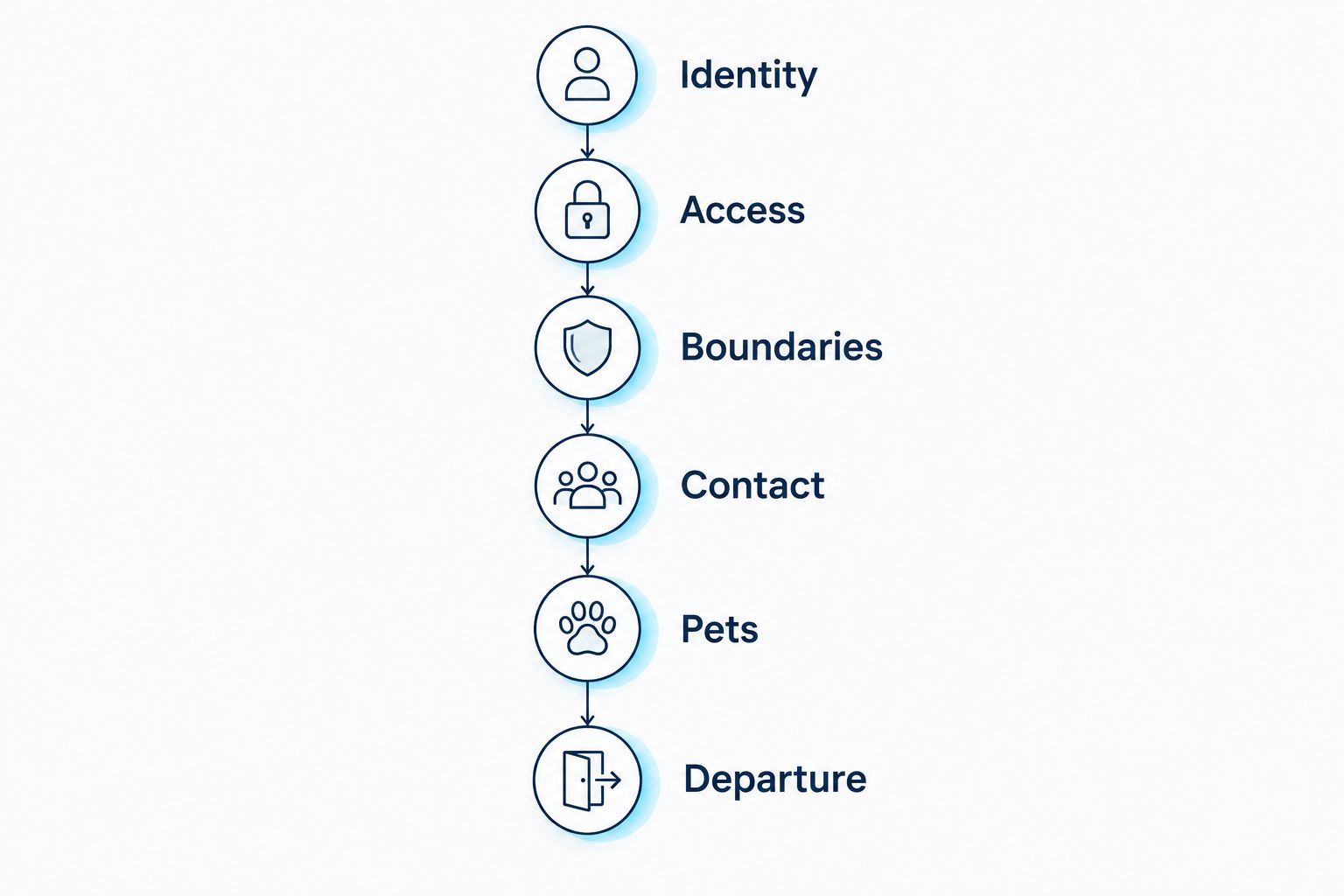
Use this checklist before you leave. The goal is not to turn your home into a fortress; it is to remove avoidable guesswork.
1. Identity
Confirm the appointment and the person or team expected to arrive. Ask the provider how it communicates substitutions, and decide that an unexpected arrival requires confirmation before entry.
If you meet the cleaner at the door, walk through the rooms included in the appointment. Point out fragile objects, unusual door locks, and anything that should not be moved. Do not grant access to someone whose connection to your appointment you cannot confirm.
For recurring visits in 2026, keep this rule even after you become comfortable with the service. Familiarity with a company does not identify an unfamiliar person at your doorstep.
2. Access
Agree on an entry method the cleaner accepts and that you can control. If your lock supports a separate guest code, consider using that instead of sharing your everyday household code. Check the lock's actual features before relying on scheduled access or expiration.
For a physical key, agree on who receives it, where it is kept, and how it will be returned. Do not label it with your full address or leave it in an obvious outdoor hiding place.
Explain the alarm procedure privately. Share only the access information needed for the visit, and do not put codes in publicly visible notes or reviews.
3. Boundaries
Write down which rooms are included and which are off-limits. Be specific about drawers, cabinets, closets, paperwork, and fragile displays. A request to clean a bedroom does not need to include permission to reorganize its contents.
Put jewelry, cash, medication, financial papers, and private work materials somewhere secure. This is sensible preparation, not an accusation. It also prevents important belongings from being mistaken for clutter.
If you have an object you do not want handled, say so plainly. “Please leave this shelf untouched” is more useful than hoping the cleaner recognizes its significance.
4. Contact
Give the cleaner or provider a contact you will monitor during the appointment. Explain whether you prefer a call or message when an instruction is unclear. Choose someone else as the contact if you know you will be unreachable.
Ask what the cleaner should do if entry fails, an alarm sounds, or a room cannot be cleaned safely. Agree that uncertain tasks should wait for clarification rather than improvisation.
Keep entry instructions separate from your general cleaning wish list. A message about a sticky kitchen cabinet should not bury the detail that the front door needs a firm pull to latch.
5. Pets
Tell the provider about pets before the visit and agree on where they will stay. Explain doors that must remain closed and any escape risk. Do not assume the cleaner will supervise, feed, or walk an animal unless that responsibility has been explicitly accepted.
Choose a safe arrangement that keeps pets out of the work area. If a room is used to contain a pet, mark it as excluded from cleaning and make sure everyone knows why.
Pet instructions matter even when your animal is friendly. A welcoming dog and an open front door are still a combination you need to plan for.
6. Departure
Agree on the final steps: locking doors, securing windows, returning a key if required, and setting the alarm if that is part of the arrangement. Ask how you will receive confirmation that the visit has ended.
If completion photos are discussed, specify what can be photographed. Keep documents, family images, and private spaces out of those pictures.
For an unattended visit in 2026, write the departure instructions alongside the entry instructions. Getting inside is only half the access plan; leaving the home secured deserves equal attention.
The checklist follows the visit from identifying the cleaner to securing the house afterward. Keep the instructions short enough to use, but specific enough that the cleaner does not have to fill in the blanks.
Why your comfort level varies
Your decision does not have to match a neighbor's. Use these factors to decide whether to stay, meet and leave, or arrange a fully unattended appointment:
- Your experience with the cleaner: An established working relationship gives you direct experience of communication and respect for instructions.
- Changes in personnel: A replacement cleaner needs the same identity confirmation and household instructions as the original cleaner.
- Your access setup: A key handoff, guest code, and building entry procedure require different arrangements.
- Private or fragile belongings: Sensitive paperwork and delicate objects need clear handling limits, regardless of who cleans.
- Pets and household members: Everyone needs to understand which doors stay closed and which rooms remain available.
- Your ability to respond: If you cannot answer questions during the visit, settle the important decisions beforehand.
Do not leave simply because you feel awkward asking questions. Agreeing on responsibilities is part of hiring a service, not a test of how easygoing you can be.
Should I stay home for the first cleaning visit?
Stay home for the first visit if you want to confirm identity, explain your home, and see how communication works. You do not need to follow the cleaner from room to room; a walkthrough and an available contact are more useful than hovering.
Explain where you will work or relax so the cleaner can plan around you. If you leave after the introduction, confirm the locking instructions before walking out—not from the grocery checkout line later.
Does a background check mean a cleaner is safe?
A background check does not guarantee that a cleaner is safe or that nothing will go wrong. Ask what the check covers and who receives it, then combine that information with identity confirmation, references, and controlled access.
Keep screening and insurance separate in your 2026 hiring checklist. Screening concerns information about a person; insurance concerns coverage for specified events under a policy. Neither replaces clear household instructions.
What should I do if something is damaged or missing?
Document what you notice and contact the provider promptly without treating uncertainty as proof of wrongdoing. Photograph damage, keep appointment messages, and describe the item or affected area precisely. Check whether another household member moved a missing object before making an accusation.
Ask for the provider's reporting procedure and keep a written record of the response. For an immediate safety concern or suspected crime, contact the appropriate authorities rather than trying to resolve it through a cleaning discussion alone.
Where does online booking fit into the trust decision?
Porch and Parlor Cleaning is a fit for greater Nashville homeowners who want residential cleaning booked online. You can start with Porch and Parlor Cleaning when arranging home cleaning, then confirm the access details that matter to your household.
Online scheduling handles booking; it does not, by itself, answer who will enter, how substitutions are communicated, or what happens after damage. Ask Porch and Parlor Cleaning those questions before an unattended appointment, just as you would with any provider.
For a new booking in 2026, separate convenience from verification. A straightforward scheduling option is useful, but your decision to leave should rest on confirmed arrangements—not on the fact that an appointment appears on a calendar.
FAQ
Can I trust a house cleaner alone in my home on the first visit?
You can arrange an unattended first visit after confirming identity, access, boundaries, and communication, but stay home if you are not comfortable. Meeting the cleaner first gives you an opportunity to explain your home before deciding to leave.
Is it rude to put away valuables before my cleaner arrives?
No—securing valuables and private documents is sensible preparation. It protects your privacy and keeps important belongings out of the cleaning work area.
Should I give my house cleaner a key or a door code?
Choose an entry method you can control and that the cleaner agrees to use. If your lock supports separate guest access, check its features before relying on a temporary code; for a key, agree on storage and return.
Do insured cleaners cover anything that goes wrong?
No—insurance does not automatically cover every incident. Ask for current documentation, the reporting process, and an explanation of relevant coverage rather than assuming damage or loss is included.
Can I leave my dog home while the cleaner works?
Leave your dog home only with a safe pet arrangement agreed before the appointment. Explain escape risks and closed-door rules, and do not assume pet care is included in cleaning.
Should I tell my cleaner about indoor cameras?
Discuss indoor cameras before the visit and check applicable recording laws, especially if audio is captured. Cameras do not replace identity checks, clear boundaries, or a departure plan.
Can I book Porch and Parlor Cleaning while planning an unattended visit?
Porch and Parlor Cleaning offers online booking for residential cleaning in the greater Nashville area. Confirm unattended-entry arrangements, the expected cleaner, and departure instructions before deciding to be away.
One last thing
Check the exit plan before you share the entry plan. A cleaner can follow every room instruction and still be left guessing about a tricky latch, an alarm, or a key return. Write those details down before your next 2026 appointment.
You do not need blind trust to enjoy help around the house. You need a known person, a defined job, and access you understand.