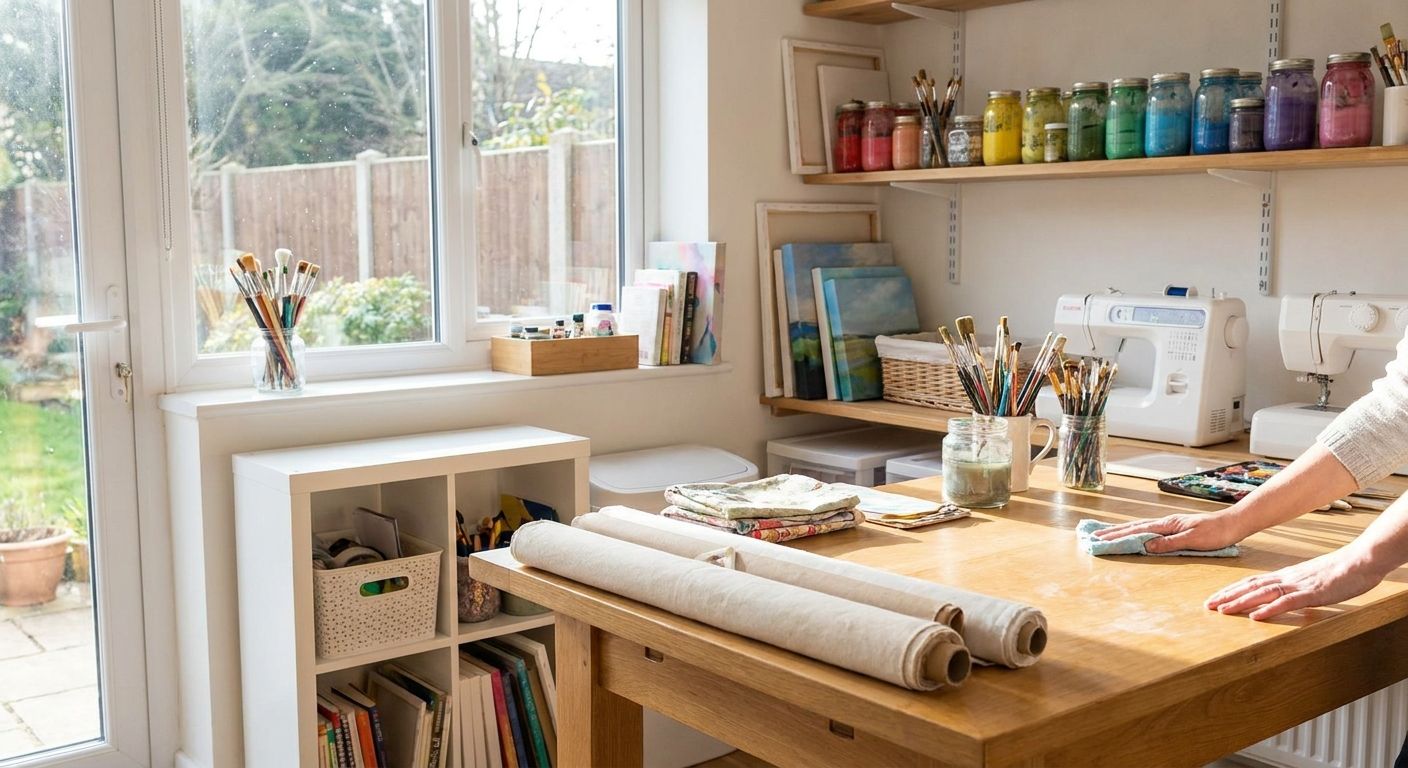
Art studio and craft room house cleaning is a deep-clean approach built around dust from sanding, dried paint splatter, glitter drift, and fabric lint instead of the usual kitchen grease and bathroom grime. The room layout is different, the surfaces are more delicate, and half the stuff on the shelves technically counts as a chemical hazard, so a standard once-over with an all-purpose spray just doesn't cut it here.
- House cleaning art studio craft room work needs supply sorting first, then dusting, then hazard handling in that order.
- Glitter and fabric lint build up in HVAC vents faster than in any other room in a Nashville home.
- Porch and Parlor Cleaning treats craft rooms as a specialty add-on, not a standard bedroom clean, in 2026.
- A recurring plan every 2-4 weeks keeps paint dust and resin residue from becoming a full deep-clean project.
Why house cleaning matters for art studios and craft rooms
A craft room collects a different kind of mess than the rest of the house. Sanding wood or clay throws fine particulate dust that settles on every horizontal surface within a day, and it's small enough to get pulled straight into the HVAC return if the room isn't vacuumed with a proper filter. Dried acrylic paint, resin drips, and hot glue don't respond to a wet rag the way a coffee spill does — they need scraping or a solvent made for the material, not a random bottle from under the kitchen sink.
Fabric scraps, yarn, and batting shed lint that mixes with pet hair and dust to form the kind of allergen soup that makes a standard vacuum pass useless. If the room doubles as a home office or a kid's activity space, that lint and dust load matters even more. Nashville's pollen season (typically March through May) makes an already dusty craft room worse, since open windows for ventilation while painting or spray-sealing bring pollen straight onto wet surfaces.
Update your supply organization before cleaning day
A cleaner can't do a good job around chaos, and glitter in particular has a way of finding every crevice in a room once it's disturbed.
- Group loose supplies by type — paint, paper, fabric, tools — into labeled bins
- Cap and seal any open paint, ink, or solvent containers
- Move half-finished projects off the floor and off open shelving
- Bag scrap fabric and paper for disposal or donation before the visit
- Store sharp tools (X-Acto blades, rotary cutters) in a closed case
If decluttering feels like its own project, the guide on how to declutter before a maid service visit walks through a room-by-room sequence that works just as well for a craft table as it does for a kitchen counter.
Protect unfinished or wet projects
Nothing kills the mood of a creative Saturday like coming home to find a half-dry canvas got bumped during cleaning.
- Cover wet paintings with a drop cloth or wax paper, not plastic (it can smear fresh paint)
- Move drying pottery or resin pours to a closed room or covered shelf
- Flag "do not touch" zones verbally or with a sticky note before the cleaner starts
- Elevate anything still curing off the floor, out of vacuum-cord range
Dust the specialty surfaces first
Easels, pegboards, drying racks, and open shelving trap dust in ways a flat dresser never does. A standard dust pass with a dry cloth just pushes particles into the air, which is the opposite of what you want in a room full of paper and fabric.
- Use a microfiber cloth, slightly damp, on shelves and easels
- Vacuum pegboard slots and drawer tracks with a brush attachment
- Wipe down drying racks before they're used again
- Dust picture frames, canvases, and finished pieces with a soft brush, never a wet cloth
- Clean light fixtures and lamp shades, which collect craft dust fast in a room used daily
Handle hazardous materials the right way
This is where a craft room stops looking like a bedroom and starts looking like a mini workshop. Solvents, spray fixatives, and resin hardeners need real ventilation and careful disposal, not a quick wipe-down.
- Never mix cleaning chemicals with leftover paint thinner or resin hardener residue
- Keep spray fixatives and aerosol sealants stored upright, away from heat sources
- Dispose of dried paint rags separately — oily rags in a trash bin are a fire risk
- Ventilate the room for at least 15-20 minutes before and after using solvents
- Label anything decanted into a secondary container
This is also the point where a lot of homeowners hand the room off to a professional rather than tackle it solo. Porch and Parlor Cleaning treats craft and art rooms as a specialty add-on during a standard or deep clean visit in 2026, handling the dusting and surface work while leaving material disposal decisions to the homeowner — nobody but you should be deciding what gets tossed.
Manage fabric scraps and textile dust
Sewing and quilting rooms in particular generate lint that settles into carpet fibers and curtain folds fast.
- Vacuum carpet and rugs with a HEPA-filter vacuum weekly if the room sees heavy fabric use
- Shake out or launder fabric-covered pincushions and ironing board covers monthly
- Wipe down sewing machine exteriors with a dry brush, not liquid cleaner
- Rotate and vacuum under furniture where lint pools
Set a cleaning frequency that matches your creative output
A craft room used daily needs a different rhythm than one that gets a burst of activity twice a year. Weekly hobbyists generally do fine with a biweekly deep dust and vacuum, while occasional crafters can stretch to monthly. If the room shares space with a basement — a common setup in older Nashville homes — check the notes on house cleaning for finished basements, since below-grade humidity changes how paint and fabric age between cleanings.
Get your craft room on a cleaning plan
Book a specialty room add-on for your next visit in 2026.
Comparing your options for craft room and studio cleaning
| Option | Best for | Key limitation |
|---|---|---|
| DIY spot-cleaning | Rooms used lightly, once a week or less | Dust and lint build up between sessions; solvent residue often gets missed |
| One-time deep clean | New craft rooms or after a big project (renovation, big sewing job) | Doesn't prevent buildup from coming right back |
| Recurring maintenance plan | Daily or near-daily creative use | Requires consistent decluttering between visits to stay effective |
| Specialty organizer (non-cleaning) | Supply chaos more than dust or grime | Doesn't address dust, lint, or hazardous material handling at all |
Verdict: a recurring plan is the strongest fit for anyone using their craft room more than a couple times a week, because it's the only option that keeps dust and lint from re-accumulating between visits. Occasional crafters are better off with a one-time deep clean scheduled around big project milestones.
Common mistakes craft room owners make
- Cleaning wet paint or resin with an all-purpose spray — most household cleaners smear uncured material instead of removing it
- Letting glitter sit in carpet fibers — regular vacuuming without a brush attachment just moves it around instead of pulling it out
- Storing solvent-soaked rags in a closed trash can — a fire hazard that's easy to forget once the project's done
- Skipping vent and light fixture dusting — fine particulate from sanding and pastels settles there fastest and gets recirculated by the HVAC system
- Waiting until the room is unusable to book a deep clean — by then it's a multi-hour job instead of a routine visit
FAQ
How often should a craft room or art studio get professionally cleaned?
A craft room used several times a week benefits from cleaning every 2-4 weeks, while occasional hobby spaces can go monthly. Rooms with heavy fabric or sanding dust need more frequent vacuuming with a HEPA filter regardless of cleaning schedule.
Can a house cleaning service handle paint and resin residue?
A cleaning service can dust, vacuum, and wipe down surfaces around dried materials, but disposal of solvents and hardened chemical waste is a homeowner decision. Porch and Parlor Cleaning treats craft rooms as a specialty add-on rather than a standard bedroom clean.
Is glitter really that hard to clean up?
Yes — glitter is small enough to embed in carpet fibers and fabric weave, and a standard vacuum pass without a brush attachment tends to spread it rather than remove it. Repeated HEPA vacuuming over a few sessions clears it out fully.
Should I declutter before a cleaner visits my craft room?
Yes, sorting supplies into labeled bins before the visit lets the cleaner actually reach dusty surfaces instead of working around piles. It also protects unfinished projects from getting bumped or covered accidentally.
What's the difference between a deep clean and a standard clean for a craft room?
A standard clean covers surface dusting and vacuuming on a room that's already reasonably maintained. A deep clean is for a room that's gone months without attention and needs vents, baseboards, and shelving fully addressed.
Do craft rooms need a different cleaning approach than a home office?
Yes, because craft rooms generate fine particulate dust and fabric lint that a paper-based home office doesn't produce. The vacuuming approach and surface care are different even though both are low-traffic rooms.
Can pets be in the house during a craft room cleaning visit?
Pets are usually fine elsewhere in the home during a cleaning visit, but keeping them out of the craft room itself prevents pet hair from mixing into fresh dust piles or wet project areas.
How much does house cleaning for an art studio or craft room cost in 2026?
Pricing depends on room size, how much decluttering is needed, and whether it's a one-time deep clean or part of a recurring plan. Check current rates directly through the booking site for an accurate quote.
One last thing
The HVAC vent nearest a craft table is usually the dirtiest spot in the entire house, dirtier than most bathroom exhaust fans, because fine sanding dust and glitter get pulled straight into the return air. Wipe that vent cover down every time you clean the room, not just during a seasonal deep clean, and the whole space stays lighter between visits.