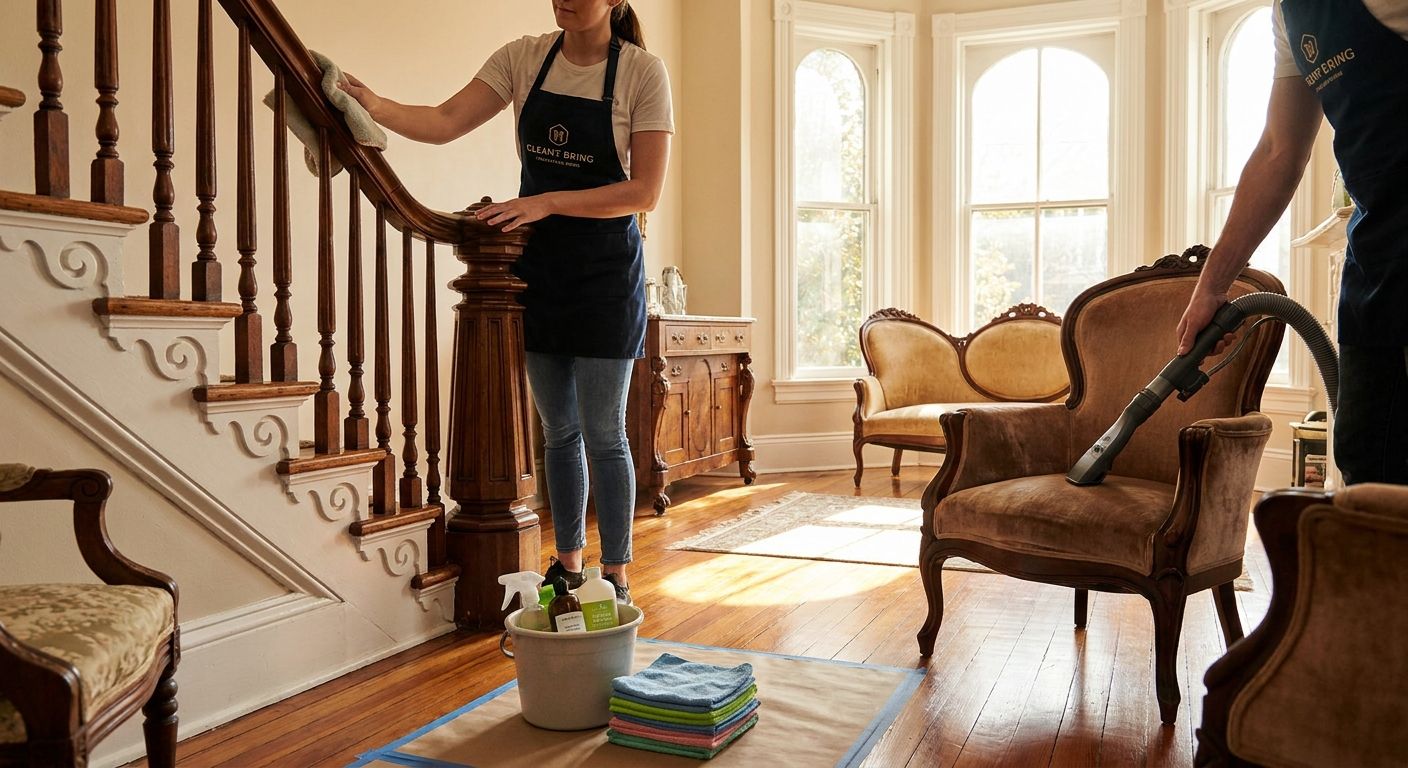
Cleaning a 1915 foursquare in Germantown is not the same job as cleaning a 2018 build in Nations, and historic home cleaning in Nashville means planning around original plaster, heart pine floors, and fixtures nobody makes anymore. This guide breaks down what actually matters when you're hiring help for a century-old house, not a spec home.
- Historic home cleaning in Nashville needs pH-neutral products on original hardwood and plaster — skip bleach and ammonia.
- Post-construction cleaning fits Germantown and Edgefield renovations best, booked after the dust settles, not during the work.
- Allergy-relief deep cleans matter more in century-old homes with plaster dust and older HVAC ductwork.
- Vet any cleaner's insurance and training before they touch antique fixtures, stained glass, or clawfoot tubs.
- A monthly deep dust cycle beats a quick weekly wipe in porous horsehair-plaster homes.
Why this matters
Germantown, Edgefield, Lockeland Springs, Woodland-in-Waverly, Belmont-Hillsboro, and the older streets around Belle Meade are full of houses built between the 1890s and the 1930s. These homes have horsehair plaster walls, quarter-sawn heart pine or oak floors, single-pane glass, and original brass or cast-iron fixtures that a big-box cleaning crew has probably never touched.
A generic move-out checklist or a crew trained only on granite and LVP flooring will use the wrong products without knowing it. Bleach on antique tile grout, ammonia near shellacked woodwork, or a pressure-washer mentality on old mortar joints causes damage that doesn't show up until months later. Before you book anyone, it pays to vet a house cleaning company the same way you'd vet a contractor working on the same house.
Homes built before 1978 may also carry lead-based paint under later coats, which changes how a cleaner should approach dust and debris around trim and windowsills. That's not a reason to panic — it's a reason to ask questions before the first visit.
Who this is for
This guide is for owners of pre-1940 homes in Nashville's historic districts, buyers who just closed on a fixer-upper in East Nashville, and anyone managing a renovated property where the bones are original but the finishes are new. It's also useful for real estate agents prepping a historic listing for showings, since first impressions on a 1920s bungalow hinge on how well the original details shine.
If your house has plaster walls, original hardwood, or fixtures older than you are, keep reading.
What to look for in cleaning for historic homes
Experience with original flooring
Heart pine and quarter-sawn oak floors from the 1900s through 1930s are softer and more porous than most flooring installed after 2000. A crew that defaults to a heavy-duty floor cleaner made for engineered hardwood can dull the finish or leave streaking that shows under afternoon light through original windows.
Product knowledge for plaster and vintage tile
As the saying goes, a good workman never blames his tools — but on a 100-year-old plaster wall, the wrong tool is the whole problem. Plaster is more porous and more brittle than drywall, and it holds moisture and odor differently. Abrasive scrubbing or high-alkaline cleaners can pit vintage subway tile in a 1920s bathroom in ways that are expensive to fix.
Careful handling around antique fixtures and glass
Stained glass transoms, clawfoot tubs, and brass hardware from the early 1900s aren't replaceable at a hardware store. A cleaner needs to know the difference between polishing brass and stripping its original patina, and between wiping glass and pressing hard enough to crack century-old panes.
Dust and allergen control for old HVAC and ductwork
Many historic Nashville homes have had HVAC systems retrofitted into spaces that were never designed for ductwork, and older ducts collect more dust and plaster particulate than newer builds. If anyone in the house has allergies, this is where cleaning quality shows up fastest.
Insurance and vetting before anyone touches irreplaceable surfaces
Ask about insurance, training, and how the company handles breakage before booking a first visit — not after something chips. This matters more here than in a newer home because some surfaces simply can't be replaced with a trip to a supply store.
Top picks for historic home cleaning
The steady hand — Deep Cleaning for New Homeowners. If you just closed on a historic property in 2026, a first deep clean should map every original surface before your regular schedule starts. It sets a baseline for deep cleaning for new homeowners so future visits know what to protect. One spec that matters: a first-visit walkthrough that flags delicate surfaces before any product touches them. Verdict: Buy.
The renovation rescue — Post-Construction Cleaning for Renovated Homes. Fine dust from plaster repair or floor refinishing settles into every crevice of a historic home for weeks after a crew leaves. A post-construction cleaning for renovated homes plan targets that fine dust with the right equipment instead of pushing it around with a standard vacuum. Verdict: Buy if you've renovated in the last 12 months.
The allergy fix — Deep Cleaning for Allergy and Asthma Relief. Century-old ductwork and plaster dust make allergy symptoms worse than in newer construction. A dedicated deep cleaning for allergy and asthma relief visit focuses on trapped dust in trim, vents, and radiator covers. Verdict: Consider if anyone in the house has seasonal allergy flare-ups worse indoors than out.
The upkeep plan — a set cleaning frequency. Once the baseline and any renovation dust are handled, most historic homes do best on a fixed recurring schedule rather than one-off visits, since porous plaster and old wood hold dust longer between cleanings than modern drywall does. Verdict: Consider biweekly over monthly for houses with 12-foot ceilings and original trim.
Get a quote for your historic home
Tell Porch and Parlor Cleaning about your home's age and finishes before the first visit.
What to avoid
- Pressure-washer habits on old brick or mortar. What works on a 2020 patio can erode 1910 mortar joints.
- One-size-fits-all move-out checklists. A checklist built for a modern rental skips plaster crown molding and original baseboards entirely.
- Bleach-based products near cast iron or brass. They can strip finishes that took decades to develop and can't be recreated with a store-bought polish.
Verdict comparison
| Pick | Best for | Key detail | Verdict |
|---|---|---|---|
| Deep Cleaning for New Homeowners | First visit after buying a historic property | Establishes a surface-by-surface baseline | Buy |
| Post-Construction Cleaning for Renovated Homes | After plaster repair or floor refinishing | Targets fine dust standard vacuums miss | Buy |
| Deep Cleaning for Allergy and Asthma Relief | Homes with older ductwork or trapped dust | Focuses on vents, trim, and radiator covers | Consider |
| Set recurring schedule | Ongoing upkeep between deep cleans | Biweekly suits porous plaster and tall ceilings | Consider |
FAQ
What's the best cleaning approach for a historic home in Nashville?
A first deep clean that maps delicate surfaces, followed by a fixed recurring schedule, works best for most Nashville historic homes in 2026. Skip harsh chemicals on plaster, original hardwood, and antique fixtures.
Is historic home cleaning more expensive than standard house cleaning?
It can run higher because of extra time spent on delicate surfaces and specialized products, though the exact cost depends on square footage and condition. Ask for a quote based on your home's specific finishes rather than a generic per-room rate.
How often should a historic home be professionally cleaned?
Biweekly works well for most pre-1940 Nashville homes because porous plaster and original wood hold dust longer than modern materials. Homes with pets, allergies, or heavy foot traffic may do better weekly.
Can regular cleaners work on original hardwood floors safely?
Yes, if they use pH-neutral, non-abrasive products suited to heart pine or quarter-sawn oak rather than products made for engineered flooring. Ask specifically what products they plan to use before the first visit.
Do historic homes need special allergy-focused cleaning?
Often, yes — older HVAC retrofits and plaster dust trap allergens more than newer construction does. A dedicated allergy and asthma relief deep clean targets vents, trim, and radiator covers specifically.
What should I ask before hiring a cleaner for a historic home?
Ask about insurance, experience with plaster and original flooring, and how they handle breakage on antique fixtures. A company that can't answer clearly hasn't worked on homes like yours before.
Is post-construction cleaning necessary after a historic home renovation?
Yes — plaster repair and floor refinishing leave fine dust that settles for weeks after crews leave. A post-construction cleaning visit uses equipment built for that dust instead of pushing it around with a household vacuum.
Does lead paint affect how a historic home should be cleaned?
Homes built before the 1978 federal lead paint ban may have it under later coats, which affects how dust around trim and windowsills should be handled. Mention your home's build year when booking so the cleaner can plan accordingly.
One last thing
Horsehair plaster is more porous than drywall, which means it holds onto dust and odor far longer between cleanings — a quick weekly wipe-down looks fine but doesn't actually reset the surface the way a monthly deep dust cycle does. If your historic Nashville home still has its original plaster in 2026, that's the detail most cleaning crews miss entirely.