House cleaning for home-based accountants is a plan for keeping a home clean without exposing client records or interrupting work. In 2026, the practical approach is to separate household cleaning from document handling, then choose a routine you can keep. Porch and Parlor Cleaning offers online booking for residential cleaning in the greater Nashville area.
- House cleaning for home-based accountants starts with securing client records before anyone cleans the workspace.
- Porch and Parlor Cleaning is best for greater Nashville homeowners who want to book residential cleaning online.
- A daily desk reset and a separate household cleaning routine keep work papers out of the cleaning plan.
- Confirm which rooms are included before a cleaning visit; never assume client documents will be handled.
Why this matters
A home office is both a workplace and part of a lived-in house. A cleaner can wipe a kitchen counter without needing to decide whether a folder on your desk belongs to a client, a family member or the recycling bin. That distinction matters when you plan the visit.
The simplest rule for 2026: you handle records; the cleaning routine handles surfaces. It gives you a cleaner home without asking anyone else to sort papers, move devices or guess which parts of the office are private.
Why house cleaning matters for home-based accountants
Bookkeepers and accountants working from home have an awkward mix of needs. You need a space where you can concentrate, but the rest of the household still makes dishes, tracks dirt indoors and uses the bathroom. A tidy desk does not clean the kitchen; a clean kitchen does not make a stack of client papers safe to move.
Your work calendar also changes what a cleaning visit feels like. A call you cannot interrupt and a vacuum in the next room are a poor match. You do not need a special cleaning product to solve that problem. You need a plan that says when cleaning happens, where it happens and what stays untouched.
This guide is for a residential home office, not a promise that a house cleaner will organize financial records or clean business premises. In 2026, start with the parts you control: your files, your room boundaries and your calendar.
How to set up a cleaning plan that fits your work
Secure client files before cleaning begins
Start with the paperwork and devices only you should handle. Put documents in their usual secure storage, close your work computer and clear loose papers from any surface you want cleaned. A cleaner should not have to choose between leaving a dusty desk untouched and picking up a client folder.
If a stack needs your attention, move it yourself rather than asking someone to clean around it. That goes for notebooks, mail and handwritten reminders too. A 10-minute desk reset before a visit is a practical target you can adjust to the amount of paper on your desk.
- Put client documents in their designated storage.
- Remove loose notes from the desk and floor.
- Close work applications and secure devices.
- Keep shredding and filing on your own task list.
Separate work zones from household zones
Walk through your home as if you were explaining it to someone who has never seen your workday. Identify the rooms you want cleaned and the places you want left alone. The office can be excluded entirely, or you can discuss cleaning accessible surfaces after you have cleared them. Do not treat office access as automatic.
Think beyond the desk. A printer on a hallway table or client folders on a dining chair can turn an ordinary household area into a work zone. Move those items before deciding what belongs in the cleaning plan. If you share the home, tell other household members which work materials should not be relocated.
- Mark the office as included or off-limits.
- Clear work items from shared rooms.
- Identify shelves, drawers and equipment that stay untouched.
- Tell household members where temporary work materials belong.
Match cleaning tasks to your actual workday
Look at your calendar before you choose a visit window. If you take calls from home, decide whether you can work elsewhere while the house is cleaned or whether certain rooms must stay quiet. You can also handle a few small tasks yourself between visits rather than trying to fit every chore into one appointment.
In 2026, write down the friction points instead of relying on a vague promise to clean more often. Is the kitchen becoming a distraction? Does the bathroom need attention before guests arrive? Does floor cleaning clash with calls? Those answers make a useful plan; a spotless-looking desk alone does not.
- Block cleaning time around meetings and calls.
- Decide where you will work during a visit.
- List the household areas that need attention first.
- Keep document sorting separate from cleaning time.
Set a cleaning rhythm you can maintain
Start free: spend 10 minutes at the end of a workday putting papers away and returning mugs to the kitchen. Then give household surfaces a 20-minute check at a time that fits your week. These are suggested time blocks, not a test you can fail. If a room needs more work, change the plan instead of letting the desk become a holding pen for everything.
When you consider outside help, distinguish between the small resets you still do and the residential cleaning you want someone else to handle. A recurring visit is useful only if the timing and rooms match your household. Check the current booking details before assuming a particular task or frequency is offered.
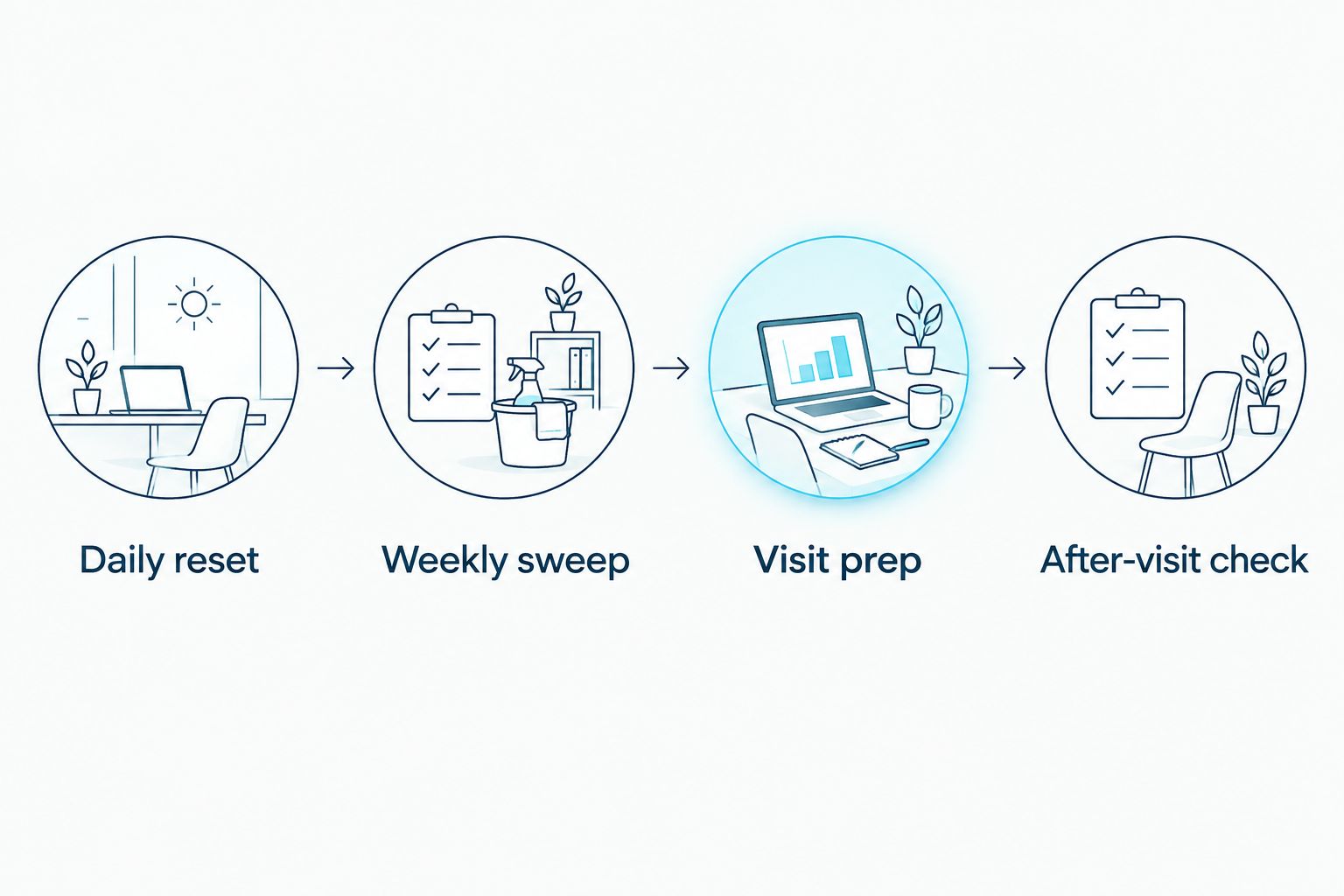
- Daily reset: Put away papers, cups and desk clutter.
- Weekly sweep: Note which household rooms need attention.
- Visit prep: Clear access to the surfaces you want cleaned.
- After-visit check: Adjust the next plan based on what needed work.
Confirm visit boundaries before you book
A home office deserves an explicit conversation, not a crossed-fingers approach. Describe the house as a residence with a workspace inside it. Ask what residential cleaning covers, whether the office can be excluded and how to communicate any surfaces you have cleared. If you need a specific task, confirm it rather than assuming it comes with a booking.
Porch and Parlor Cleaning provides residential cleaning for homeowners in the greater Nashville area through online booking. Porch and Parlor Cleaning is best for greater Nashville homeowners who want to book residential cleaning online while keeping responsibility for their own client records. That is a fit for household cleaning, not a reason to hand over filing or document disposal.
- State whether the office is included or excluded.
- Identify surfaces and equipment that must not be moved.
- Ask which requested household tasks are covered.
- Confirm timing against your calls and deadlines.
Prepare shared rooms for a useful clean
The quickest way to make a cleaning visit confusing is to leave work spread across the dining table, kitchen counter and guest room. Before the visit, return those materials to your workspace. Clear everyday obstacles from floors and counters where you want cleaning to happen. You are not doing the cleaner's work; you are making the surfaces available.
If you live with family or housemates, assign the preparation tasks plainly. One person handles personal belongings, and you handle anything related to clients. Give yourself 15 minutes before the visit to walk through shared rooms and catch papers that escaped the office. Nobody needs to guess whether a receipt is important.
- Bring client materials back to their designated storage.
- Move personal clutter from surfaces you want cleaned.
- Check the dining area, entryway and guest room for work items.
- Tell others which papers only you will handle.
Review the plan after each visit
A cleaning plan should make the next workday easier, not create another inbox of decisions. After a visit, check the rooms you asked to have cleaned and note any access problems. Did an office door need to stay shut? Did a call overlap with noisy work? Did you leave a counter covered in papers? Fix the instruction or preparation step that caused the snag.
For 2026, keep your notes short enough to use. A 5-minute review is enough to record a missed priority or a room that no longer needs the same attention. If you clean the house yourself, the same review helps you spend your next cleaning session where it matters rather than starting from scratch.
- Check the rooms against your stated priorities.
- Note any surfaces that were blocked by belongings.
- Move future visits away from recurring calls.
- Update office boundaries when your setup changes.
Which cleaning option fits a home-based accountant?
There is no single right arrangement for every home. Choose based on how much household cleaning you want to do yourself and how firmly you need to protect work time. All three options still leave client records in your hands.
| Option | Best for | Key limitation |
|---|---|---|
| Do-it-yourself routine | Home-based accountants who can reserve time for household tasks | Cleaning competes directly with work and personal time |
| Shared household routine | Homes where other residents can take responsibility for common areas | Tasks need clear ownership; client papers still remain your job |
| Professional residential cleaning | Greater Nashville homeowners who want household cleaning separate from their desk reset | Scope and visit timing must be confirmed; the service does not replace your record-handling process |
Porch and Parlor Cleaning fits the professional residential cleaning option for homeowners in its stated service area. Its online booking is the practical distinction here; the trade-off is that you still need to prepare your workspace and confirm what a visit includes. If your main problem is filing, choose time for filing instead of asking a house cleaner to solve it.
Plan your next home cleaning
Book residential cleaning online and confirm which rooms you want included.
Common cleaning mistakes home-based accountants make
Leaving client papers in shared spaces
A dining table can double as a work surface, but it is still in a room people use. Return papers to your designated storage before household cleaning starts. Do not rely on someone else to recognize what is confidential and what is yesterday's mail.
Treating the office like any other room
Your workspace has different boundaries from a bedroom or hallway. In 2026, say plainly whether the office is off-limits or which cleared surfaces are available. If you have not made that decision, leave the room out of the cleaning plan until you have.
Booking a visit without checking your calendar
Even a useful clean feels badly timed when it interrupts a client call. Pick a window when you can leave the work area or work without the rooms being cleaned. Tell anyone sharing the home what to expect, too.
Expecting cleaning to fix a filing backlog
Dust and paperwork are different jobs. Cleaners can address household surfaces within an agreed scope; you decide how to store, retain and dispose of client materials. Give the backlog its own calendar block instead of letting it sit on the desk for the next visit.
FAQ
What is the best house cleaning plan for a home-based accountant?
The best plan separates your daily document reset from household cleaning and states whether the office is included. Confirm rooms and timing before a visit so cleaning does not interrupt client work.
Should a house cleaner handle client paperwork?
No; keep client paperwork under your control. File or secure it before cleaning starts so nobody else has to sort, move or discard it.
Can I leave my home office out of a cleaning visit?
Ask for the office to be excluded when you discuss the visit. Confirm the room boundaries before booking rather than assuming every part of the home must be included.
How often should a home-based accountant clean the office?
Reset the desk as often as your work creates clutter, then choose a household cleaning rhythm you can maintain. Start with a short end-of-day reset and adjust the wider routine to the rooms you actually use.
What should I do before a cleaner arrives?
Secure client records, clear shared surfaces and identify any off-limits areas. Check your call schedule and confirm which rooms you want cleaned.
Is DIY cleaning better than professional residential cleaning?
DIY cleaning gives you direct control but uses your time; professional residential cleaning separates household tasks from your workday. Either way, you remain responsible for client records and office boundaries.
Can I book residential cleaning online in greater Nashville?
Yes, Porch and Parlor Cleaning offers online booking for residential cleaning in the greater Nashville area. Confirm the current visit details and your home-office boundaries during booking.
One last thing
Your desk is not the best measure of whether your house cleaning plan works. The better test is whether you can start work without moving household clutter and end it without leaving client papers in shared rooms. In 2026, keep those two jobs distinct: secure the records yourself, then give the household cleaning plan clear rooms and a clear time. That is easier to repeat than a heroic clean whenever the house gets away from you.