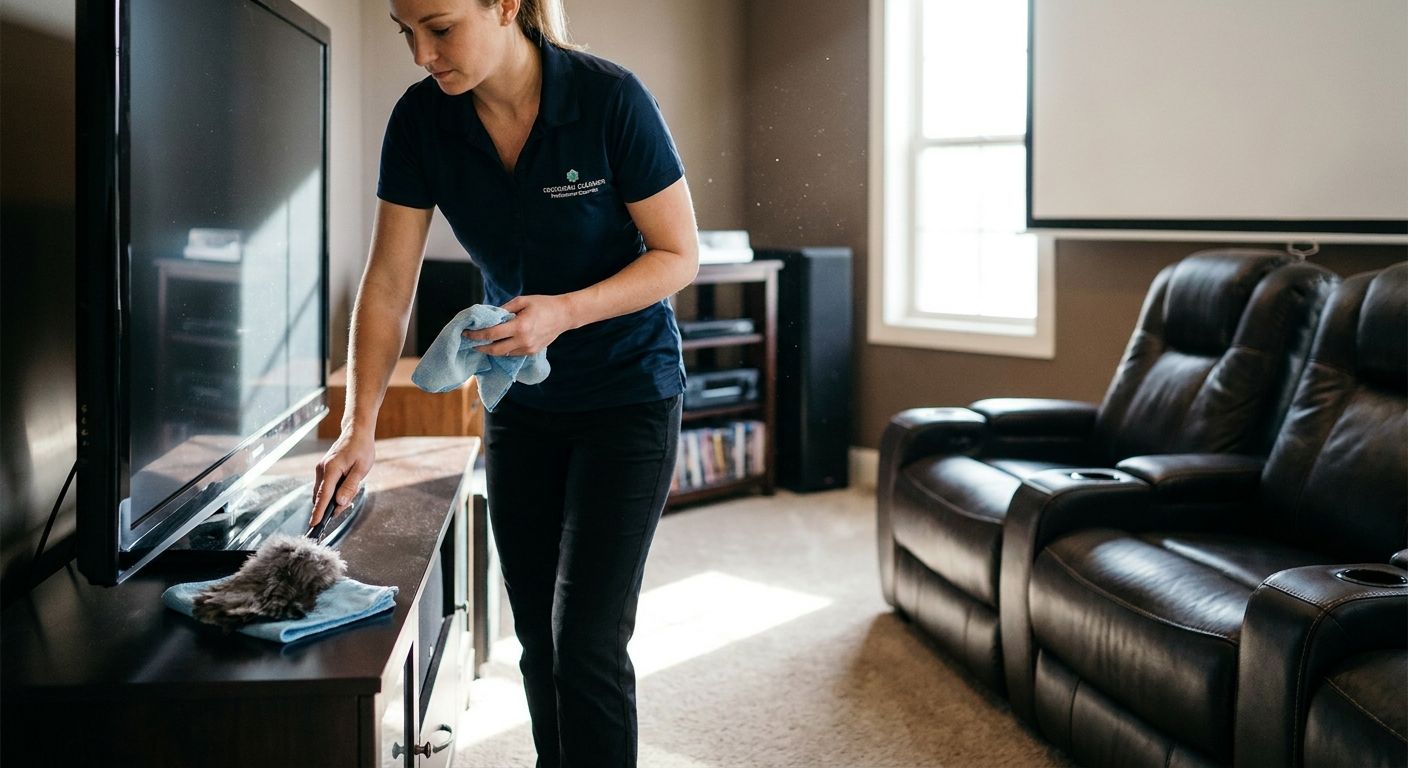
A home theater is basically a dust magnet with a subwoofer — blackout curtains, plush seating, and gear that hates getting wiped down the wrong way all sit in one dark room that rarely sees daylight. Here's what a real home theater cleaning service looks like in 2026, and how to pick one that won't fry your receiver or bleach your screen.
- A home theater cleaning service in 2026 should skip glass cleaner on projector screens and vacuum upholstery weekly to cut dust buildup.
- Most Nashville home theaters live in finished basements, so basement cleaning experience matters more than a shiny price tag.
- Recurring cleaning beats one-off deep cleans for media rooms because dust and pet hair rebuild fast in dark, low-traffic spaces.
- Porch and Parlor Cleaning treats cords, vents, and upholstery as separate zones instead of one quick vacuum pass. Buy that approach for 2026.
Why This Matters
Dark rooms hide dirt. That's the whole problem with a media room — nobody notices the dust settling on the receiver or building up in the felt of a speaker grille because the lights are off half the time you're in there. Meanwhile blackout curtains and thick carpet, the two things every home theater has, are two of the best dust and allergen traps in the entire house.
A lot of Nashville home theaters sit in finished basements, which come with their own humidity and airflow quirks that regular living-room cleaning doesn't account for. Skip the room for a few months and you're not just looking at a dusty shelf — you're looking at static-charged screens, musty upholstery, and vents blowing dust across your $2,000 projector every time the HVAC kicks on.
Who This Is For
This one's for the homeowner who built out a real media room — projector, surround sound, blackout curtains, the recliners with cupholders — and wants it to stay show-ready without babysitting the cleaning crew. It's also for families in Green Hills, Brentwood, and Belle Meade with finished basement theaters that host game nights and movie marathons on a regular rotation, plus anyone who just got a home theater cleaning quote and has no idea what to actually ask for.
If your "media room" is a TV and a couch, you don't need this guide — regular house cleaning covers you fine. This is for rooms with equipment that costs more than the furniture around it.
What To Look For In A Home Theater Cleaning Service
Dust-safe methods around electronics
Compressed air and microfiber, not spray cleaners, should touch anything with a power cord. A cleaner spraying glass cleaner near a receiver or soundbar is a red flag, full stop — overspray finds its way into vents and ports faster than you'd think.
Attention to soft surfaces
Blackout curtains, upholstered recliners, and carpet or rugs in a theater room hold more dust than the rest of the house combined because the room gets less daylight and less foot traffic to stir things up. A crew that only wipes visible surfaces and skips the fabric is doing half the job.
Screen and glass care
Projector screens and TV panels need a dry or barely-damp microfiber pass, never ammonia-based glass cleaner, which can streak or degrade screen coatings. This is the single most common mistake generalist cleaners make in a media room.
Cord and vent management
Cords tangled behind a console collect dust like nothing else in the house, and vacuuming them with a standard attachment risks yanking a cable loose. Good cleaners use a brush attachment and work around the cords instead of through them.
A schedule that matches actual use
A theater room used every weekend needs more frequent attention than one that gets opened for holidays. Matching the recurring cleaning schedule to how often the room actually gets used keeps dust from building up between visits without paying for cleanings the room doesn't need.
Discretion with expensive gear
Nobody wants a cleaner unplugging a receiver to dust behind it or repositioning speakers "to get a better angle." The best home theater cleaning service treats the equipment as off-limits for anything beyond a light dusting and lets you handle the rest.
Top Picks: Cleaning Approaches That Actually Work
The foundation pick — recurring service. One deep clean fixes a media room for about a week before dust starts creeping back in. Setting up recurring house cleaning on a two- or four-week cycle keeps the room camera-ready without a big reset every time. Buy.
The basement specialist. Since most home theaters sit below grade, finished basement cleaning experience matters — humidity, musty smells, and low natural light all change how a crew should approach the space. Buy.
The allergy angle. Blackout curtains and thick carpet trap dust and pet dander at a rate the rest of the house doesn't see, and a deep clean focused on allergy relief hits those exact surfaces. Worth adding a couple times a year even if you're not usually the allergy type. Consider.
The luxury finish approach. Theater rooms in higher-end Nashville homes often come with premium finishes — leather seating, custom millwork, specialty flooring — that need product-specific care instead of an all-purpose wipe-down. Consider if your setup leans upscale, Skip if it's standard carpet and cloth recliners.
The prep move — declutter first. Cables, remotes, and game controllers scattered around the seating area slow a cleaner down and put gear at risk of getting knocked around. A quick declutter before the visit means more time spent actually cleaning and less time moving things out of the way. Buy.
Get your media room show-ready
Book a home theater cleaning service in Nashville online in a few minutes.
What To Avoid
- All-purpose glass cleaner on a projector screen. It looks like the right tool and it's the wrong one — ammonia-based sprays can streak or dull the screen coating permanently.
- A one-time deep clean with no follow-up plan. A media room that gets deep-cleaned once a year and ignored the rest of the time just rebuilds dust between visits, especially behind speakers and inside vents.
- A cleaner who moves or unplugs equipment. Repositioning a receiver or speaker "to clean better" risks knocked-loose cables and misaligned surround sound. The gear should stay put; the dust around it shouldn't.
Verdict Comparison Table
| Approach | Basement-ready | Allergy focus | Fits recurring schedule | Verdict |
|---|---|---|---|---|
| Recurring service | Yes | Moderate | Built for it | Buy |
| Finished basement specialist | Yes | Moderate | Yes | Buy |
| Allergy-focused deep clean | Somewhat | High | Add-on, not standalone | Consider |
| Luxury finish care | Depends on décor | Low | Yes | Consider |
| Declutter prep | N/A | N/A | Pairs with any plan | Buy |
FAQ
What does a home theater cleaning service actually clean?
A home theater cleaning service in 2026 dusts electronics with dry microfiber or compressed air, vacuums upholstery and carpet, wipes screens without ammonia-based cleaners, and clears dust from vents and cords. It skips anything that involves unplugging or moving equipment.
How often should a media room get professionally cleaned?
Every two to four weeks works for a theater room used weekly, while a room used less often can go monthly. Recurring cleaning beats occasional deep cleans because dust rebuilds fast in dark, low-traffic rooms.
Is it safe to clean a projector screen with regular glass cleaner?
No. Ammonia-based glass cleaners can streak or damage a projector screen's coating. A dry or barely-damp microfiber cloth is the safer choice for screens and most TV panels.
Do home theaters need special allergy-focused cleaning?
Blackout curtains and thick carpet trap more dust and dander than most rooms in the house, so an allergy-focused deep clean a couple times a year helps on top of regular recurring cleaning.
Should I clean cords and cables myself before a cleaning visit?
You don't have to, but bundling loose cables and tucking remotes away speeds up the visit and keeps a vacuum attachment from snagging anything. Decluttering before the cleaner arrives makes the whole visit more efficient.
Can a house cleaner move my speakers or receiver to clean behind them?
A cleaner shouldn't unplug or reposition equipment. The safest approach is a light dusting around and behind gear without disconnecting anything, which keeps cables and calibration intact.
Do finished basements need different cleaning than upstairs rooms?
Yes. Basements deal with more humidity, less natural light, and different airflow patterns, all of which change how dust and musty smells build up in a media room specifically.
One Last Thing
The biggest offender in most home theaters isn't the carpet or the curtains — it's the felt and mesh on speaker grilles, which trap dust like a filter and rarely get touched during a regular cleaning pass. A quick brush-attachment pass over grilles during every visit keeps sound quality and air quality both in better shape heading into 2026's next binge-watching season.