Homeowners with an indoor pool need a house cleaning routine built around humidity control, chlorine residue, and mold prevention, not just wiping counters and vacuuming rugs. The moisture, chemical splash, and constant condensation from an enclosed pool room turn ordinary cleaning tasks into a different job entirely, and skipping that reality is how drywall, wood trim, and HVAC systems start failing years early.
- House cleaning indoor pool home routines need weekly deck wipe-downs and monthly tile descaling to stop chlorine mineral buildup.
- Indoor pool rooms run 50-60% relative humidity most days in 2026, well above the EPA's 30-50% mold-prevention range.
- Porch and Parlor Cleaning treats pool-adjacent rooms as a separate zone, not an add-on to a standard Nashville house cleaning visit.
- Poolside furniture and glass enclosures need weekly attention or hard water spotting sets in within a season.
Why house cleaning matters for homes with indoor pools
An indoor pool changes the physics of your house. Water evaporates constantly, chlorine off-gasses into the air, and every surface within twenty feet of the water line takes on a film of minerals and residue that regular dusting never touches.
The EPA's long-standing guidance puts healthy indoor humidity at 30-50%, but enclosed pool rooms commonly sit at 50-60% even with decent ventilation running. That gap is exactly why mold shows up on grout lines, window frames, and baseboards in pool homes faster than anywhere else in the house. Standard pool water chemistry also plays a role — chlorine levels typically run 1-3 ppm and pH between 7.2 and 7.8, and both drift onto tile, fixtures, and fabric with every splash.
A general house cleaner who's never worked a pool room will treat it like a bonus bathroom. That's a mistake. The cleaning cadence, the products, and the drying steps all need to change, or you're just rearranging the mold instead of removing it.
Update your ventilation and dehumidification routine
Air movement is the single biggest lever you have against mold and mildew in a pool room, and most of it costs nothing.
- Run exhaust fans or dedicated pool dehumidifiers during and for two hours after every swim
- Check humidity with a $15 hygrometer and log it weekly — anything consistently above 60% needs attention
- Crack windows or use HVAC dampers on dry, low-humidity days to flush moist air out
- Clean or replace HVAC filters every 60-90 days in pool-adjacent zones, not the standard 90-day house cycle
- Wipe visible condensation off windows and skylights daily rather than letting it pool on sills
This is the step homeowners skip first and pay for last — a dehumidifier check-in takes five minutes; regrouting a moldy pool bathroom takes a weekend.
Wipe down the pool deck and coping every day
Deck surfaces around an indoor pool collect standing water, sunscreen residue, and skin oils faster than any other floor in the house.
- Squeegee standing water off tile or coping after each swim session to cut drying time
- Use a pH-neutral cleaner on natural stone deck surfaces — vinegar and bleach both etch stone over time
- Spot-treat sunscreen and lotion residue with dish soap diluted in warm water
- Check deck drains weekly for hair and debris buildup that slows evaporation
Address chlorine and mineral buildup on tile and grout
Chlorine and calcium leave a chalky film on grout and tile that regular all-purpose spray won't cut.
- Descale tile and grout monthly with a diluted white vinegar solution, letting it sit five minutes before scrubbing
- Reseal grout lines annually in the splash zone — sealed grout resists staining far longer than bare grout
- Use a soft nylon brush, never wire or metal, on natural stone tile
- Rinse thoroughly after any acidic cleaner to stop long-term etching
Manage humidity's effect on wood trim and drywall
Wood and drywall within the pool enclosure absorb moisture cycle after cycle, and that's where warping and soft spots start.
- Inspect baseboards and door frames monthly for soft spots or bubbling paint
- Wipe down wood trim with a barely-damp microfiber cloth, never a soaked one
- Repaint pool-room trim with moisture-resistant or semi-gloss paint, which sheds water better than flat finishes
- Flag any drywall discoloration early — a small brown ring today is a mold remediation call in six months
This is usually the point where a homeowner realizes a once-a-month general clean isn't enough coverage. A recurring visit that specifically targets the pool zone — not just a pass-through — is the faster, more reliable path, and it's the core of how Porch and Parlor Cleaning approaches these homes across Nashville.
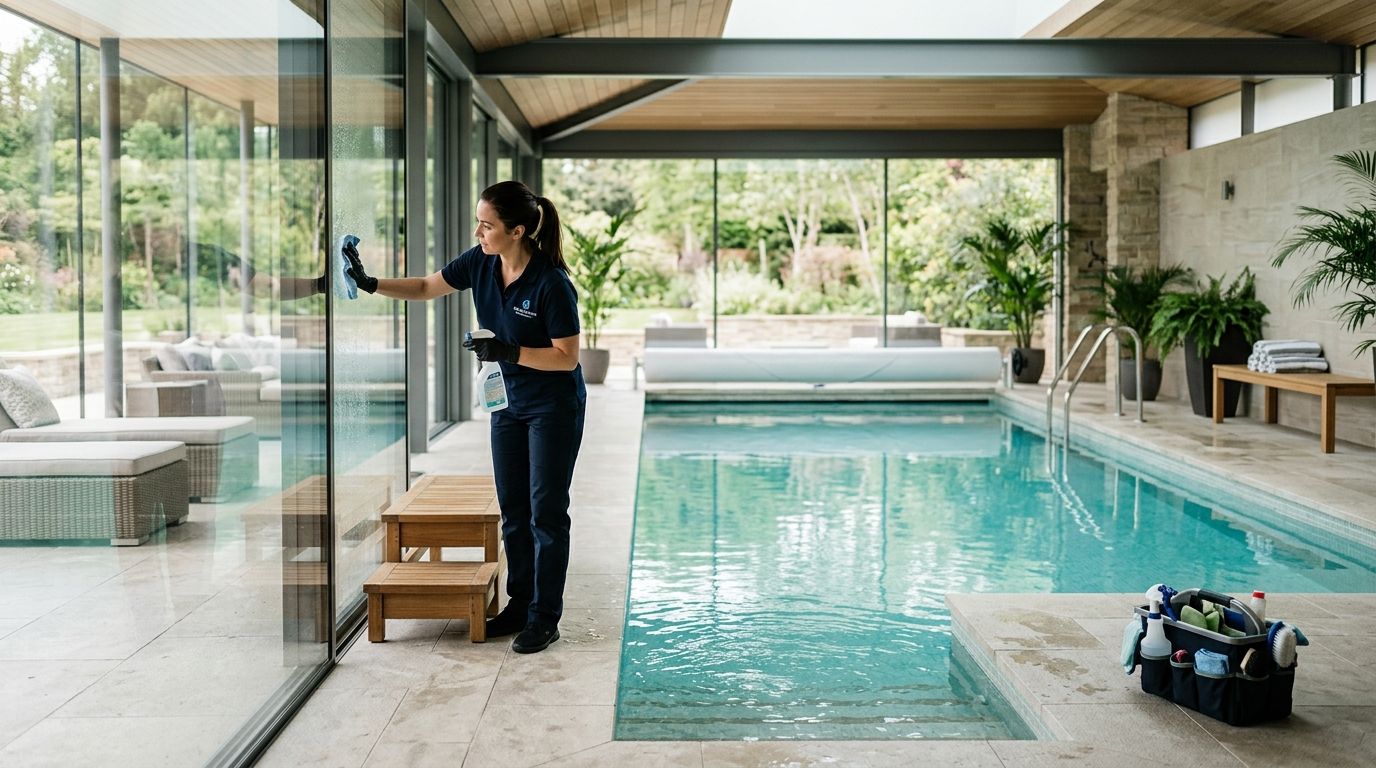
Clean glass walls, skylights, and window frames
Glass enclosures show every water spot and streak, and hard water minerals etch glass permanently if left too long.
- Squeegee interior glass after each swim to prevent mineral spotting
- Use a vinegar-water solution weekly on glass panels and frames
- Check rubber seals and caulking around skylights monthly for early mold spotting
- Clean tracks and frame channels, where standing water and grime collect unseen
Handle poolside furniture and textiles
Lounge chairs, towels, and cushions near an indoor pool absorb humidity and chemical residue constantly, and that shortens their life fast.
- Rotate and air out cushions weekly so trapped moisture doesn't turn into mildew
- Wash pool towels separately from regular laundry — chlorine residue breaks down other fabrics over repeated cycles
- Wipe down synthetic wicker or resin furniture with mild soap weekly; natural wicker needs monthly conditioning
- Store extra towels and robes in a ventilated cabinet, not a sealed closet
Households with a full home gym or yoga space next to the pool run into the same humidity issues on mats and equipment — the same weekly wipe-down logic applies, and Porch and Parlor Cleaning's guide for home gyms and yoga studios covers that overlap in more detail.
Schedule a professional deep clean for humidity-prone rooms
A seasonal deep clean catches what weekly upkeep misses — the mold spores building behind trim, the mineral crust under equipment, the spots nobody notices until they're bad.
- Book a deep clean every 3-4 months for pool-adjacent rooms, twice the frequency of the rest of the house
- Ask for grout and tile descaling as a named line item, not a general floor pass
- Request HVAC vent and filter checks bundled into the same visit
- Get glass enclosure cleaning done from both sides in one session
Comparison: cleaning options for indoor pool homes
| Option | Best for | Key limitation |
|---|---|---|
| DIY weekly wipe-downs | Homeowners who swim daily and can commit to a strict schedule | Time-intensive; easy to fall behind during busy weeks |
| General house cleaning service | Homes with light pool use and low humidity readings | Most general cleaners don't descale grout or check HVAC filters |
| Pool-zone specialized cleaning (Porch and Parlor Cleaning) | Homes with daily or near-daily pool use and visible mineral buildup | Requires scheduling a dedicated recurring visit, not a one-off |
| HVAC/dehumidification specialist | Homes with persistent humidity above 60% despite cleaning | Doesn't address surface-level grime, only air moisture |
Verdict: a general house cleaner handles the rest of the house fine, but an indoor pool room needs a service that treats humidity, grout, and glass as their own checklist — that's the gap most Nashville homeowners don't realize exists until 2026's humid summer months hit.
Common mistakes homeowners with indoor pools make
- Treating the pool room like any other room on the cleaning schedule — it needs roughly double the visit frequency of a standard bathroom or kitchen.
- Using bleach on natural stone deck surfaces — bleach and standard acidic cleaners etch stone and speed up mineral staining instead of removing it.
- Ignoring the dehumidifier until humidity is already visible on glass — by the time condensation is obvious, mold has usually already started behind trim.
- Skipping grout sealing — unsealed grout in a splash zone stains and molds within a single Nashville summer.
- Letting wet towels and cushions sit in sealed storage — this is the single fastest way to grow mildew in an enclosed pool area.
Get your pool room on a real schedule
Book a Nashville cleaning visit built around humidity, grout, and glass.
FAQ
How often should an indoor pool room get cleaned?
Weekly deck and glass wipe-downs plus a deep clean every 3-4 months keeps humidity, mold, and mineral buildup under control. Rooms with daily pool use need the weekly pass without exception.
Is house cleaning for an indoor pool home more expensive?
Pool-adjacent rooms usually add time to a standard visit because of grout descaling, glass cleaning, and HVAC checks. Ask any Nashville cleaning company for a line-item quote so you can see exactly what's added.
What humidity level is safe for a home with an indoor pool?
The EPA recommends keeping indoor humidity between 30-50% to prevent mold growth, though enclosed pool rooms often run 50-60% without active dehumidification. A hygrometer and a dedicated dehumidifier are the cheapest fix.
Can regular cleaners handle chlorine residue on tile?
Most general house cleaning visits don't include grout descaling or pH-neutral stone cleaning, which chlorine buildup requires. A specialized pool-zone cleaning plan covers that step specifically.
Does chlorine damage regular cleaning products?
Chlorine residue reacts with some ammonia-based cleaners, so pool rooms need pH-neutral products rather than standard all-purpose sprays. Mixing chlorine residue with ammonia cleaners can also produce harmful fumes.
How do I stop mold around an indoor pool enclosure?
Run ventilation during and after every swim, squeegee glass and deck surfaces, and reseal grout annually. Catching discoloration early on trim or drywall stops a small issue from becoming a remediation job.
Should pool towels be washed separately?
Yes, chlorine residue on pool towels breaks down fibers in other laundry over repeated wash cycles. Washing them in a separate load protects the rest of your linens.
What's the best cleaning schedule for a Nashville home with an indoor pool?
Weekly wipe-downs of deck, glass, and furniture paired with a recurring professional visit every two to four weeks covers most 2026 humidity conditions. Homes with daily heavy pool use should lean toward the shorter end of that range.
One last thing
The detail most homeowners miss: grout sealed in the splash zone lasts roughly a year before it needs resealing, but most people never reseal it at all — they just keep scrubbing stains that keep coming back because the porous grout underneath never got protected in the first place. Reseal once, and the monthly descaling gets a lot easier.