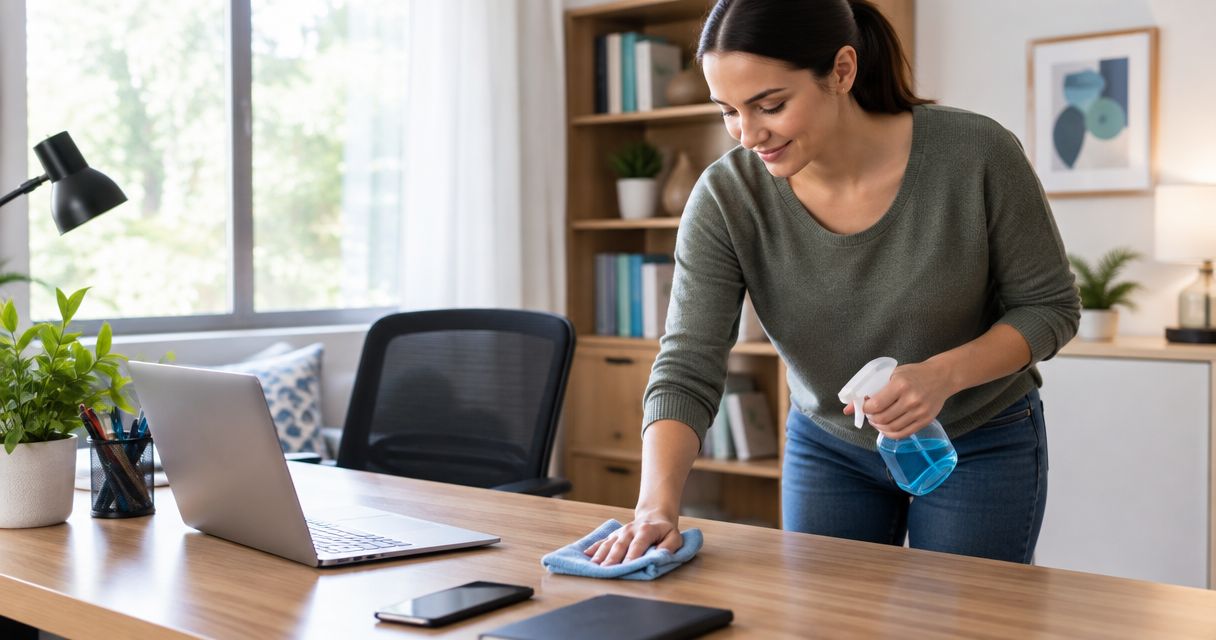
Insurance agents’ house cleaning is a home-care routine organized around confidential paperwork, client calls, and shared living spaces, with the aim of keeping household chores from interrupting client work. Effective house cleaning for insurance agents protects documents first, schedules noisy tasks outside calls, and separates ordinary cleaning from handling office equipment.
- House cleaning for insurance agents works best with secure files, clear home-office boundaries, and cleaning windows outside client calls.
- Porch and Parlor Cleaning suits greater Nashville homeowners seeking residential cleaning booked online; confirm home-office requests before booking.
- Keep document handling and electronics care separate from residential cleaning.
- Choose DIY or professional cleaning based on household upkeep, call schedules, and the tasks you can consistently finish.
Why house cleaning matters for insurance agents
When your home is also your workplace, a cleaning visit needs more planning than simply leaving the door unlocked. An active client call, an application on the desk, and a vacuum outside the office door do not belong in the same moment.
Protect the work before you clean the workspace. Put documents away yourself, establish when the office is accessible, and give household cleaning its own place on your calendar. Your cleaner should not have to guess whether a handwritten note belongs in the trash.
For your 2026 plan, start with the rooms you use during the workday: the office, kitchen, bathroom, and route between them. Compare that list with the provider’s residential cleaning services before requesting a visit. A room name alone does not explain which surfaces, equipment, or belongings need to stay untouched.
Build a cleaning routine around your insurance work
The best starting point is a written checklist, not another app. Use the following sequence to separate private work materials, quiet periods, and household chores before deciding what to outsource.
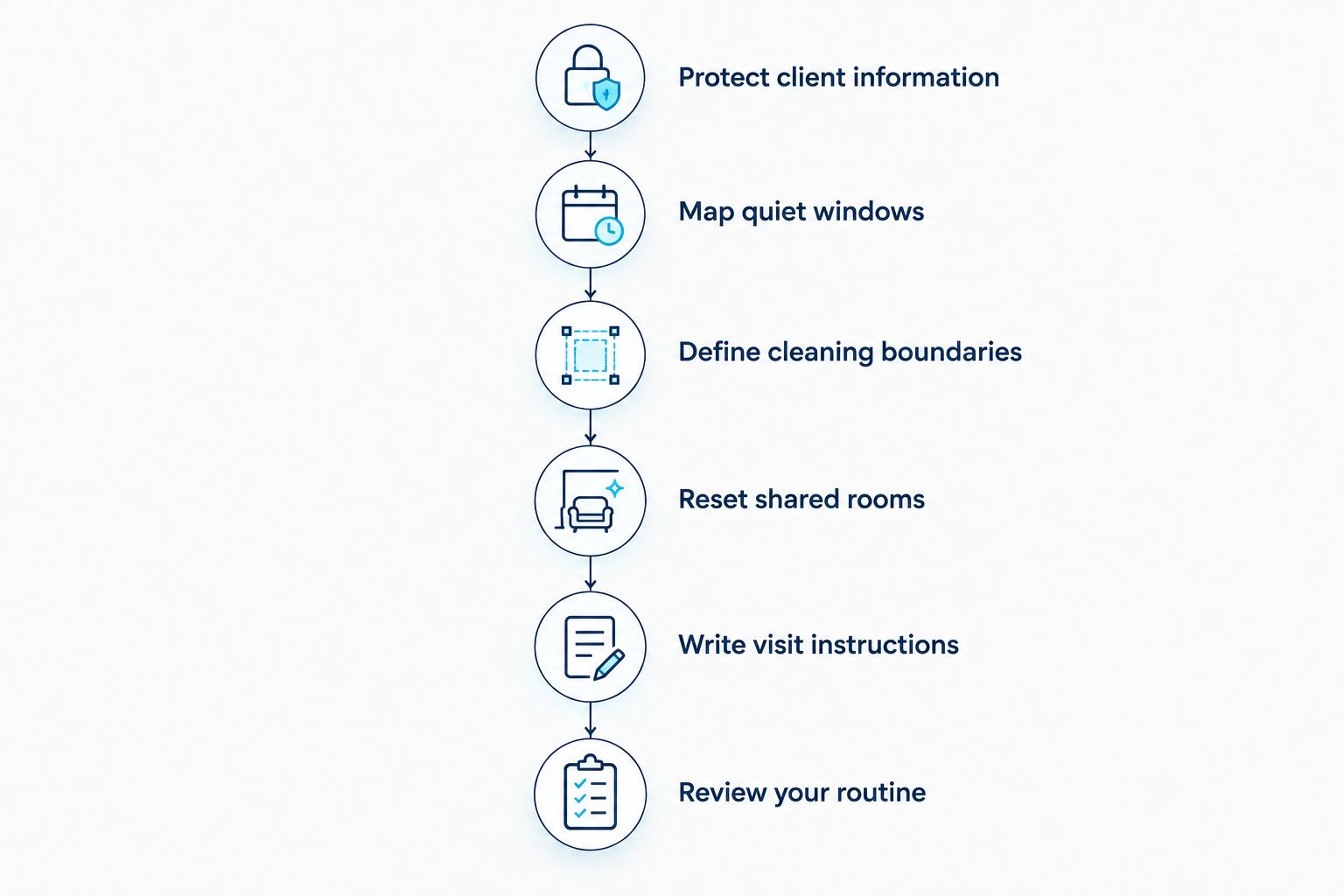
Protect client information
Start by putting work materials where you control access. Follow your agency’s document-retention, disposal, and information-security requirements; a house-cleaning checklist does not replace them. Do not ask a residential cleaner to decide which applications, policy notices, or claim notes you still need.
Give yourself a suggested 5-minute preparation block before a visit. That is a planning allowance, not a promise that every office takes five minutes to secure. If files are spread across the room, start earlier rather than hiding everything under a notebook and hoping for the best.
A tidy-looking desk is not necessarily a secure desk. Check the printer tray and the notes beside the phone, too.
- Store client papers in your designated secure storage.
- Lock your computer before leaving the workspace.
- Remove notes containing client details from exposed surfaces.
- Empty printer trays of work documents yourself.
- Separate confidential disposal from ordinary household trash.
Map quiet windows
Open your work calendar and mark the periods when household noise would interrupt a conversation. Include scheduled appointments, recording sessions if you use them, and any protected time you need for focused work. Then identify a cleaning window rather than trying to squeeze cleaning between unpredictable calls.
For a DIY routine, choose a task that fits the actual break. Emptying a household bin is different from starting the vacuum just before an appointment. For a professional visit, discuss the room order instead of assuming the office can always come last.
Your 2026 calendar should describe access clearly: office closed during calls, office accessible afterward. Keep client names and appointment details out of cleaning instructions.
- Mark call periods as quiet time.
- Group vacuuming outside those periods.
- Choose an alternate room for unexpected calls.
- Explain when the office door must remain closed.
- Confirm arrival and room-order expectations with the provider.
Define cleaning boundaries
Walk through your home and write down what you want cleaned, what requires permission, and what must stay untouched. You can do this yourself with a plain paper checklist. A clear scope is more useful than a vague request to clean everything.
Porch and Parlor Cleaning provides residential cleaning in greater Nashville with online booking. It is a practical alternative to doing all household cleaning yourself, but online scheduling alone does not establish permission to handle office equipment or confidential materials. Confirm those boundaries directly.
For office-specific preparation, use this guide to preparing your home office before a cleaning visit. Keep the instructions focused on accessible surfaces rather than asking someone to rearrange your work system.
- Identify exposed surfaces you want included.
- Mark file cabinets and document storage as off-limits.
- Specify whether the office floor is accessible.
- Leave monitors, keyboards, and printers out unless explicitly agreed.
- Ask about delicate finishes before assigning cleaning methods.
- Confirm whether requested extras fall within the visit’s scope.
Reset shared rooms
The office is not the whole story. If you work from the kitchen table or take breaks in the living room, household clutter can follow you from room to room. Pick up your belongings first so cleaning does not turn into a scavenger hunt.
Try a suggested 10-minute end-of-day reset: return dishes, store work materials, and clear the route to your desk. Treat this as an adjustable habit, not a standard cleaning duration. You still need separate time for floors, bathrooms, and other household tasks.
If clients visit your home, include the entry route and guest bathroom in your planning. If clients never visit, prioritize the spaces your household actually uses rather than polishing a room for imaginary company.
- Return mugs and dishes to the kitchen.
- Move work papers off dining surfaces.
- Clear bags and cords from walking routes.
- Put personal belongings in their usual storage.
- Keep the bathroom sink and surrounding area accessible.
Write visit instructions
Put your cleaning instructions in one short note. A provider needs to know which room is closed, how to enter, and which surfaces to avoid—not the details of your appointment calendar. Check the provider’s communication process before sending access information.
Be specific about disruption. A closed door means little unless you explain whether it means no entry, knock first, or return later. Likewise, explain where pets will stay and whether anyone else will be working or studying at home.
Use this 2026 visit note as a repeatable format, updating it whenever your household or work arrangements change. Do not include passwords, client information, or unnecessary business details.
- State the approved entry arrangement.
- Identify occupied rooms and no-entry areas.
- List agreed cleaning priorities in order.
- Describe any product or fragrance preferences for confirmation.
- Explain pet arrangements before work begins.
- Name the appropriate contact for questions during the visit.
Review your routine
Judge the cleaning plan by whether the agreed tasks get done without disrupting your work. Do not judge it only by how the room looks on a video call. A spotless bookshelf does not make up for a bathroom that keeps falling off the list.
For a simple trial, review your routine after 2 weeks. That is a suggested review interval, not a recommended cleaning frequency for every home. Note unfinished chores, scheduling clashes, and instructions that caused confusion.
If you outsource cleaning, discuss changes to scope or timing before the next appointment. If you clean yourself, reduce an overstuffed checklist rather than carrying the same unfinished tasks into another week.
- Record which agreed tasks were completed.
- Note any interruptions to calls or focused work.
- Check whether preparation felt manageable.
- Adjust room priorities to match actual use.
- Confirm changes with everyone involved in cleaning.
Compare cleaning options for your work-from-home setup
Choose the arrangement you can maintain, not the one that sounds most ambitious. DIY gives you direct control over timing and access. Professional cleaning transfers agreed household tasks, but still requires preparation and communication.
Porch and Parlor Cleaning is best for greater Nashville homeowners seeking residential cleaning they can book online. Its fit for your office depends on the scope and boundaries you confirm—not an assumption that residential service includes business records or equipment.
| Option | Best for | Main advantage | Key limitation |
|---|---|---|---|
| DIY household cleaning | Agents who can protect regular chore time | You control access, timing, and methods | You remain responsible for completing every task |
| Professional residential cleaning | Homeowners who want agreed household tasks handled | Household cleaning is assigned to a service provider | Office boundaries and requested tasks still need confirmation |
| Hybrid household routine | Agents who want help while retaining office control | You handle files and daily resets; a provider handles agreed cleaning | Responsibilities must be clear to avoid missed tasks |
A hybrid routine is a sensible starting point when you want help without handing over your workspace. Keep document handling and equipment care under your control, then request the household tasks you want covered. Confirm the provider accepts that arrangement before booking.
For professional residential cleaning, Porch and Parlor Cleaning offers an online booking route. Ask about the rooms and instructions that matter to your workday before treating the appointment as settled.
Plan your residential cleaning
Confirm your rooms, office boundaries, and scheduling needs before booking household cleaning.
Common mistakes insurance agents make
Treating document stacks as ordinary clutter
A pile of papers is not permission to sort, discard, or relocate them. Handle insurance documents yourself before cleaning starts, and apply your agency’s rules to storage and disposal. Leave an exposed surface only when it is ready to be cleaned.
Booking over calls without discussing noise
Being home does not mean every room is accessible throughout the visit. Explain your quiet periods and ask whether the proposed room order works. Keep a backup location for unexpected calls rather than expecting silent vacuuming. That setting has yet to arrive.
Assuming residential cleaning includes electronics
A desk, monitor, keyboard, and printer need separate decisions. Follow equipment-manufacturer instructions for your own care routine, and confirm any requested equipment cleaning with the provider. Never treat a general room-cleaning request as permission to spray electronics.
Cleaning only the camera background
Your video background is one small part of your home. Add the floors, bathroom, and kitchen areas you actually use to the household checklist. Then distinguish routine cleaning from any extra work you want quoted or discussed.
Expecting a cleaner to understand your filing system
Labels that make sense to you do not explain which documents are active or confidential. Keep filing, mail opening, and paper disposal out of household cleaning instructions. The cleaner should not need insurance training to wipe an accessible surface.
FAQ
What's the best house cleaning plan for insurance agents working from home?
The best plan separates document security, quiet work periods, and household cleaning tasks. Start with a written room checklist, then choose DIY, professional cleaning, or a hybrid arrangement based on the tasks you can consistently manage.
Can I work from home while a house cleaner is there?
Working from home during cleaning requires an agreed plan for room access and noise. Discuss occupied rooms, call periods, and an alternate workspace with the provider before the visit.
Should I leave insurance paperwork on my desk during cleaning?
Store insurance paperwork according to your agency's security requirements before cleaning begins. Keep document sorting, filing, and confidential disposal under your control rather than assigning them to a residential cleaner.
Will a house cleaner clean my keyboard and computer monitor?
Do not assume electronics are included in residential cleaning. Ask the provider about the requested task and follow the equipment manufacturer's care instructions for any cleaning you perform yourself.
How often should an insurance agent have the house cleaned?
Choose cleaning frequency according to household use, unfinished chores, and the time you can protect for upkeep. Track what needs attention between cleaning sessions rather than choosing a schedule based on your job title alone.
Is professional cleaning better than doing it myself?
Professional cleaning fits homeowners who want agreed household tasks handled, while DIY fits people who can reliably complete those tasks themselves. A hybrid arrangement keeps files and office preparation under your control while assigning other cleaning to a provider.
Does Porch and Parlor Cleaning serve Nashville home-based insurance agents?
Porch and Parlor Cleaning offers residential cleaning for homeowners in the greater Nashville area with online booking. Confirm your location, requested rooms, and home-office instructions directly before booking.
What should I put on my 2026 cleaning checklist?
Include document storage, call-related quiet periods, accessible surfaces, household priorities, and no-entry areas on your 2026 checklist. Keep client details out of the instructions and update the checklist when your working arrangements change.
One last thing
Write the do-not-touch list before the cleaning list. For a home-based insurance agent, an untouched file drawer can be the correct result—not a missed task. Make that distinction explicit, and you remove a needless guessing game from cleaning day.