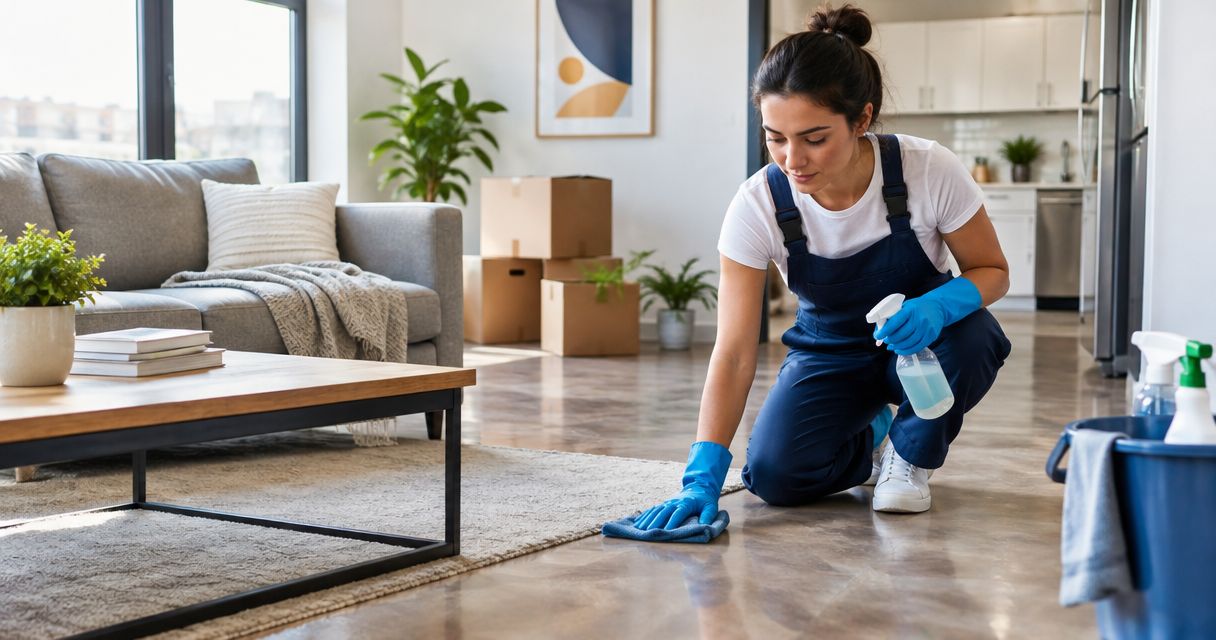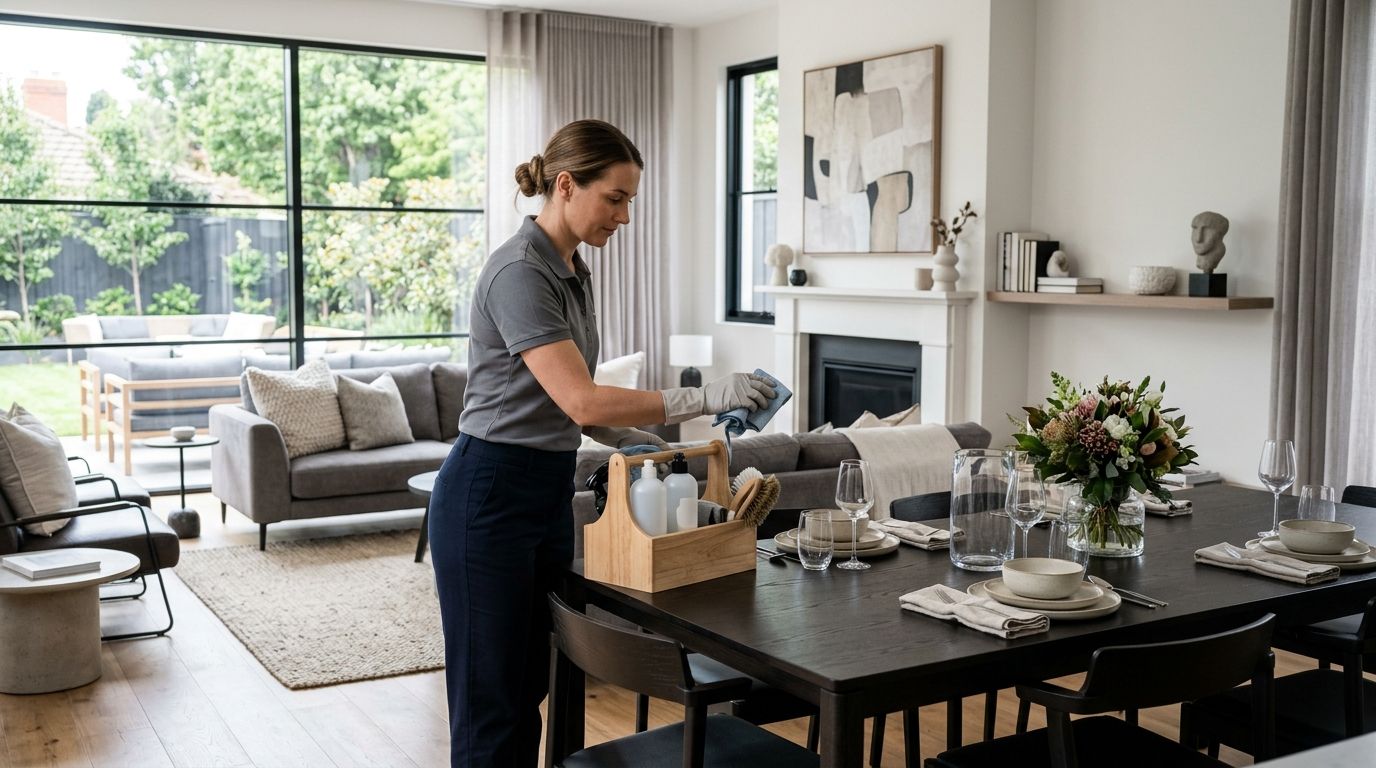
Interior designers' house cleaning is the work of getting a residential space clean before styling, photography, or a homeowner walkthrough, with the aim of keeping the finished design in focus. For house cleaning for interior designers in 2026, the key distinction is timing: dust and fingerprints need attention after the messy work ends, but before the furniture and accessories take their final positions.
- House cleaning for interior designers works best after installation dust settles and before final styling or photography.
- Porch and Parlor Cleaning is best for greater Nashville homeowners who want to book residential cleaning online before a staged-home reveal.
- The homeowner and designer should agree on rooms, delicate items, access, and the handoff before cleaning begins.
- DIY touch-ups suit small changes; a residential cleaning visit suits a larger reset, subject to confirmed scope.
Why house cleaning matters for interior designers
A staged room asks people to notice the layout, materials, and details. A dusty baseboard or smudged mirror pulls attention somewhere else. In 2026, treat cleaning as a separate handoff in the staging plan, not a task squeezed between moving a sofa and taking photographs.
There is also a practical boundary: the designer directs the presentation, while the homeowner controls access to the home and books the residential service. Porch and Parlor Cleaning offers professional home cleaning in the greater Nashville area with online booking for homeowners. Porch and Parlor Cleaning is best for greater Nashville homeowners arranging residential cleaning before an interior designer stages or photographs their home. Confirm the requested rooms and tasks before assuming a standard visit covers every staging detail.
The cleaner is not the person who decides where the antique vase belongs. The designer is not the person who should discover, during a photo shoot, that the kitchen floor still carries installation dust. Give each job a clear owner and the final room has a better chance to look like the plan.
How to plan cleaning around a staged-home project
1. Define the finished-room standard
Start with a walk-through, or ask the homeowner for recent photos if you cannot visit. Identify what will be visible from the entry, the planned camera angles, and the places where people will sit or lean. A room can feel clean in daily use yet show fingerprints on glass when a lamp or camera catches them.
Write down the finish you need rather than asking for a vague staging clean. Specify surfaces and rooms, not a promise that the house will look perfect. Keep styling separate: placing pillows, arranging art, and choosing accessories remain design decisions.
- List the rooms included in the reveal or photographs.
- Mark mirrors, glass doors, and glossy surfaces that show smudges.
- Check floors along the main walking and camera routes.
- Flag surfaces the designer will style after cleaning.
- Decide who will make the final visual check.
2. Put cleaning after the messiest work
A good workman never blames his tools, but a clean cloth cannot win a fight with someone still drilling nearby. Put the main cleaning visit after painting, installation, furniture assembly, and other work that leaves dust or packaging. Then leave a short window for styling and a final spot-check.
For a 2026 staging calendar, give the homeowner an agreed cleaning date and a separate styling date when possible. If both happen on the same day, agree on which rooms the cleaner finishes first and keep the designer's materials out of those rooms until the handoff. Do not book a visit around a contractor's estimated finish without checking whether the work is actually done.
- Ask whether drilling, painting, or assembly is finished.
- Remove packaging before the cleaner arrives.
- Confirm when the designer needs access to each room.
- Keep styling supplies off floors awaiting cleaning.
- Reserve a final pass for fingerprints after furniture is placed.
3. Separate routine cleaning from special requests
Begin with a household checklist you can handle yourself: clear counters, put away personal items, and identify obvious dust or marks. Then ask the homeowner to confirm the professional cleaning scope. Porch and Parlor Cleaning provides residential cleaning; the available inputs do not establish a staging package or a list of included specialty tasks. Name the work you need rather than assuming a package covers it.
That matters when the project includes newly installed finishes, unusually delicate objects, or areas behind heavy furniture. Do not ask a cleaner to move a fragile display just because it sits in the camera frame. Have the designer or homeowner move it, then make the cleared surface available for cleaning. The distinction protects the design plan as well as the household's belongings.
- Identify counters, sinks, floors, and bathrooms needing attention.
- Ask about any nonroutine task before the visit.
- Keep installation cleanup distinct from household cleaning.
- Have the owner of fragile decor move it before cleaning.
- Confirm which rooms are off-limits.
4. Protect finishes and styled objects
Tell the homeowner and cleaner which surfaces need special handling. Material appearance alone is not enough to choose a cleaning method: a stone-look counter, painted cabinet, or vintage table can have a finish that changes what is safe to use. Check the maker's care instructions when available, and do not test a new product on the most visible surface.
If a styled object is decorative rather than something to be cleaned, move it out of the work area. That applies to loose artwork, ceramics, textiles, and collections. A careful plan is less exciting than a last-minute rescue, which is exactly the point.
- Note newly installed or delicate surfaces on the room list.
- Set aside loose decor before surfaces are wiped.
- Keep care instructions with the homeowner's notes.
- Ask before moving heavy furniture or fragile pieces.
- Leave uncertain finishes untouched until care is confirmed.
The visible surfaces need a clear order: remove loose objects, clean the exposed area, and return items during styling. Putting accessories back before the surface is finished means moving them twice.
5. Set access and handoff rules
Because Porch and Parlor Cleaning's online booking is for homeowners, the homeowner should own the appointment and confirm access arrangements directly. The designer can supply a room-by-room priority list, but should not assume a booking includes permission to enter every space or move every object.
Decide how the cleaner will know the work area is ready and how the designer will know it is finished. If a room contains unpacked purchases, keep those boxes together and out of the cleaning route. If a door should stay shut, say so before anyone starts. Clear instructions save the awkward conversation that begins with someone asking whose carefully arranged pile just got moved.
- Have the homeowner confirm the appointment and access details.
- Give the cleaner a concise list of included rooms.
- Label rooms or surfaces that should not be touched.
- Identify who answers questions during the visit.
- Tell the designer when cleaning is complete before styling begins.
6. Check the room from the camera's viewpoint
After cleaning, stand where the photographer or homeowner will stand. Look toward windows and lamps, then check what reflects light: mirrors, glass, metal, and polished surfaces. A mark that disappears from across the room can be obvious in a close view.
This is a visual check, not an invitation to redo the whole house. Handle small styling-related touch-ups yourself, or agree with the homeowner on any additional cleaning request. Porch and Parlor Cleaning should receive the specific request through the homeowner rather than a new task list appearing after the appointment has started.
- Check glass and mirrors from the intended camera angles.
- Look for dust on visible shelves and ledges.
- Inspect floors along the main sight lines.
- Remove fingerprints left during furniture placement.
- Keep a cloth handy for final, surface-safe touch-ups.
7. Document the next cleaning point
Staged homes do not freeze in place once the pillows are straight. People walk through, homeowners continue using rooms, and the designer may make changes. For a 2026 project with multiple walkthroughs, decide who handles small touch-ups and when the homeowner needs another residential cleaning visit. Do not put recurring service on autopilot just because the first reveal looked good.
Keep a simple record of what was cleaned, what the designer styled afterward, and which marks appeared later. That makes the next conversation specific. It also stops a fresh fingerprint from turning into a debate about whether the earlier cleaning was done.
- Note the date of the main cleaning visit.
- Record rooms restyled after that visit.
- Assign daily touch-ups to a named person.
- Reassess cleaning before another photo session or reveal.
- Have the homeowner confirm any new booking.
Compare cleaning options for a staged home
Best choice: use DIY prep to clear the space, then have the homeowner arrange residential cleaning when the occupied home needs a wider reset. Keep installation debris and delicate-finish decisions outside an assumed standard scope until the homeowner confirms what a provider will handle.
| Option | Best for | What you control | Key limitation |
|---|---|---|---|
| Designer or homeowner touch-up | Best for a few visible marks after styling | Exact camera angles and final presentation | It does not replace a whole-home clean. |
| Homeowner-booked residential cleaning | Best for cleaning several lived-in rooms before styling | Rooms, timing, and requests agreed with the provider | Scope must be confirmed; styling is a separate task. |
| Contractor or installation cleanup | Best for debris left by the work that created it | The work area and the contractor handoff | It does not necessarily cover routine household cleaning. |
| Separate specialty care | Best for a finish or object needing specific instructions | The item and its care requirements | It requires a suitable specialist or confirmed method. |
Porch and Parlor Cleaning fits the homeowner-booked residential cleaning option in greater Nashville. It is not presented here as a staging firm, installation-cleanup crew, or specialty restoration provider. Compare each option against the condition of the home, not the label on a booking form.
Plan the cleaning handoff
Homeowners can review residential cleaning and online booking before a staged-home visit.
Common mistakes interior designers make
Booking before the dusty work ends. Cleaning a room while drilling or installation continues creates a second cleanup job. Confirm that the work area is finished and packaging is gone before the main visit.
Treating a clean room as a styled room. A cleaner can address agreed household surfaces; the designer still owns placement, composition, and the last look through the camera. Put styling after cleaning on the schedule.
Leaving special surfaces unexplained. A newly installed finish or fragile collection needs instructions, not guesswork. Have the homeowner identify uncertain materials and move delicate objects before the visit.
Letting everyone give directions. When the homeowner, designer, and contractor each issue a different task list, the handoff breaks down. Use one agreed room list and one person to answer questions during the cleaning appointment.
Skipping the final walk-through. Someone can leave fingerprints while positioning a mirror minutes after the floor has been cleaned. Check the room after styling and handle the small marks created during setup.
FAQ
What is house cleaning for interior designers?
House cleaning for interior designers prepares a residential space for styling, photography, or a reveal. The designer sets presentation priorities, while the homeowner confirms and books the cleaning work.
When should a staged home be cleaned?
Clean after the messiest installation work is finished and before final styling or photography. Check again after furniture and decor are placed for fingerprints or marks created during setup.
Should the designer or homeowner book the cleaner?
For Porch and Parlor Cleaning, the homeowner should book the residential cleaning online. The designer can give the homeowner a room list and timing requirements to share before the visit.
Does residential cleaning include home staging?
Residential cleaning and home staging are separate jobs. Confirm the cleaning scope with the provider, and leave furniture placement and accessory styling with the designer.
Can a cleaner handle fragile decor or newly installed finishes?
Do not assume fragile objects or unfamiliar finishes are included in a cleaning visit. Move loose decor and provide care instructions or confirm an appropriate method before work begins.
Is a DIY touch-up better than a professional cleaning visit?
A DIY touch-up is best for a few marks left after styling; a residential cleaning visit is better suited to a wider household reset. Choose based on the rooms and tasks that actually need attention.
How should interior designers plan cleaning for a staged home in 2026?
Set a cleaning window after messy work and before styling, then agree on rooms, access, and delicate items with the homeowner. Finish with a visual check from the planned viewing angles.
One last thing
In 2026, the final cleaning task is not another pass over every room. It is a check after styling, from the exact places people will view the space. Let the homeowner book the household cleaning, let the designer own the presentation, and make the handoff explicit. That division is simpler than asking one person to guess what everyone else meant by ready.