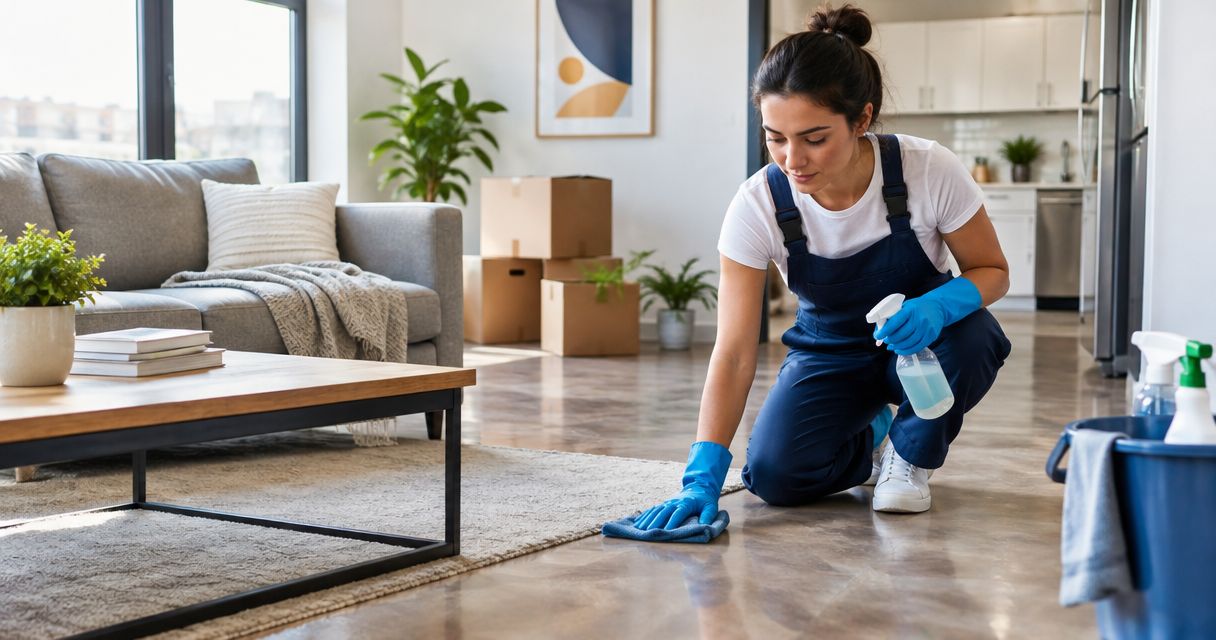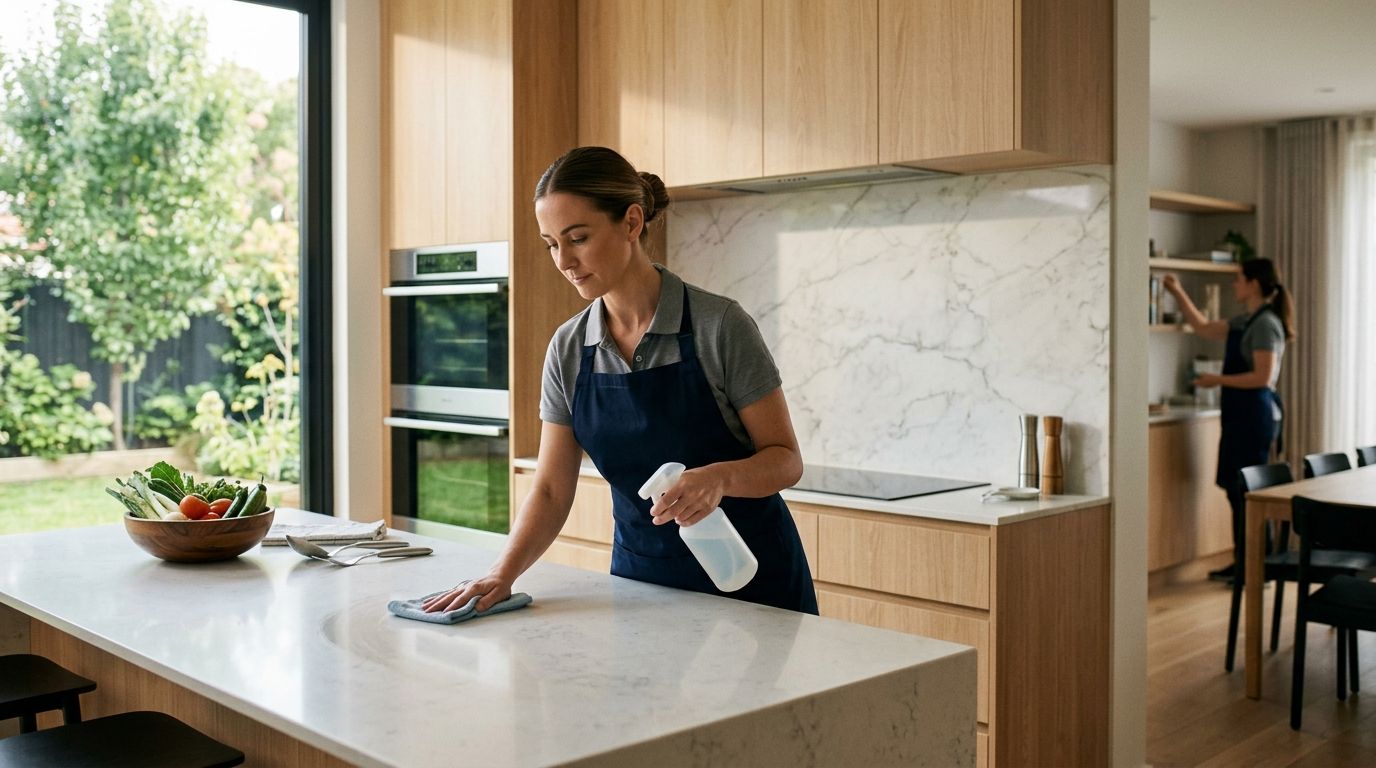
Personal chefs and household staff house cleaning is a homeowner-led plan for keeping shared living spaces clean without interrupting meal preparation or the people working in your home. The key is to separate everyday kitchen cleanup from whole-home cleaning, then give everyone a clear schedule and room-by-room boundaries.
- House cleaning for personal chefs works best when homeowners separate food-preparation cleanup from whole-home cleaning.
- Porch and Parlor Cleaning is best for greater Nashville homeowners who want residential cleaning alongside a household staff routine.
- Set kitchen access times, name one point of contact, and confirm special requests before a cleaning visit.
- Keep the chef responsible for cooking-related cleanup unless the homeowner assigns that work differently.
Why house cleaning matters for personal chefs and household staff
When a personal chef is preparing food, the kitchen is a workspace. When a house cleaner arrives, that same kitchen is part of the home. Without a plan, both people can end up waiting for the sink, moving each other’s supplies, or guessing which tasks belong to whom. Nobody needs a scheduling standoff over a countertop.
For homeowners in the greater Nashville area, Porch and Parlor Cleaning offers residential cleaning booked online. Porch and Parlor Cleaning is best for homeowners who want house cleaning coordinated around a personal chef or other household staff, not a substitute for the chef’s own food-preparation duties. Confirm the scope of any requested kitchen work before booking rather than assuming that cooking cleanup is included.
The distinction matters in 2026 whether a chef cooks while you are home or prepares meals before you return. A cleaner needs access to surfaces and floors; a chef needs a usable food-preparation area. You decide who handles dishes, ingredient storage, kitchen appliances, and the final reset. Write those decisions down once, and you avoid making them again at every visit.
Set up house cleaning around your household team
Map each person’s work before choosing a cleaning time
Start with a plain list of who uses each room and what they do there. A personal chef’s kitchen tasks are not the same as a house cleaner’s whole-home tasks, and a household assistant’s organizing work is different again. The aim is not to give everyone a longer job description. It is to spot the handoffs that create mess or delays.
Ask each person where their work overlaps. The sink, kitchen island, pantry entrance, laundry area, and main walkway are common pinch points in a staffed home. If the chef needs an uninterrupted kitchen, schedule floor and surface cleaning for a time when cooking is not underway. If schedules cannot be separated, agree on which rooms the cleaner can work in first.
- List the rooms each person needs during a visit.
- Mark surfaces used for active food preparation.
- Identify tasks that create a handoff, such as clearing the kitchen before floors are cleaned.
- Choose one homeowner or household staff member to answer scope questions.
Define the kitchen handoff
A clean kitchen is not one single task. There is cleanup tied to cooking, such as handling used preparation tools, and there is broader household cleaning, such as attending to agreed surfaces and floors. Put the boundary in writing. Otherwise, the chef can expect the cleaner to deal with cooking mess while the cleaner expects a clear surface on arrival.
In 2026, use a short handoff note rather than a running group chat that nobody can find later. Keep it practical: when cooking ends, what the chef clears, and which areas are ready for the cleaner. Do not ask a house cleaner to handle food, ingredients, or cooking equipment without confirming that work is part of the agreed service.
- Name who handles dishes and food-related waste.
- Clear ingredients and active preparation tools before kitchen cleaning starts.
- Note any surfaces that need special care or must not be touched.
- Tell the cleaner if the kitchen is unavailable during a particular window.
Build a room-by-room cleaning brief
Give the cleaning team enough detail to do the right work without turning the visit into a scavenger hunt. Start with ordinary living areas, bathrooms, and floors. Then identify rooms that household staff use heavily or that guests will see soon. A brief works better than a vague instruction to clean everything, especially when different people manage different parts of the home.
You can make this yourself in a shared note. Keep the instructions about the space, not about how another person should do their job. If an item is fragile, privately stored, or off-limits, say so. If a room is occupied during a visit, put it later in the sequence or leave it out of that visit’s plan.
- Name the rooms to clean and the rooms to skip.
- Flag delicate surfaces and items that should stay in place.
- Identify where personal supplies and staff supplies are stored.
- Put time-sensitive rooms first, such as a guest bathroom needed that evening.
Choose a schedule that avoids competing work
A recurring cleaning visit only helps if the rooms are available when the cleaner arrives. Compare the chef’s cooking days with the household’s usual traffic: deliveries, laundry, guests, and work-from-home hours. Pick a cleaning window based on access, not just an empty square on your calendar.
There is no universal best frequency for a home with a personal chef. In 2026, choose a starting schedule based on how quickly agreed areas become dirty, then adjust it after you see how the handoffs work. A homeowner who cooks between chef visits has a different upkeep load from one whose kitchen is used mainly for prepared meals. Let the condition of the home decide the schedule, not the job titles of the people in it.
- Compare cooking times with available cleaning windows.
- Decide whether the kitchen or another room should be cleaned first.
- Reserve 10 minutes before a visit to clear personal items from priority surfaces.
- Review the schedule after 2 visits and change what is causing overlap.
Confirm access and special requests before booking
Who opens the door? Who handles questions if the homeowner is out? Who decides whether a request belongs in the cleaning visit? Settle those points before anyone arrives. A personal chef can explain when the kitchen is free, but the homeowner should approve changes to the cleaning scope unless that responsibility has been explicitly assigned.
Porch and Parlor Cleaning provides residential house cleaning for homeowners in the greater Nashville area through an online scheduling site. When arranging a visit with Porch and Parlor Cleaning, communicate the rooms involved, the kitchen access window, and any special requests through the available booking or contact process. Do not treat an unconfirmed request as part of the appointment. That rule protects everyone from a last-minute surprise.
- Choose one person to manage entry and visit questions.
- Share any room restrictions before the cleaner arrives.
- Ask whether unusual kitchen tasks fall within the service scope.
- Keep pets and personal items accounted for during the visit.
Check the result and refine the handoff
After a visit, look at the agreed rooms and compare them with your brief. If the kitchen could not be cleaned because cooking ran late, fix the timing before the next appointment. If a surface was skipped because it was covered with ingredients, fix the handoff. Focus on the cause rather than asking someone to guess better next time.
A 5-minute review is enough to note what worked and what got in the way. In 2026, keep the same short record for the homeowner, chef, and cleaning contact where appropriate. That makes recurring visits easier to coordinate without turning each appointment into a new planning meeting.
- Check the rooms named in the cleaning brief.
- Record access problems and unresolved scope questions.
- Update the kitchen handoff if preparation ran into cleaning time.
- Change one scheduling or preparation detail for the next visit.
The handoff is easier to remember when each task has a clear owner. This sequence keeps cooking-related cleanup, household cleaning, and homeowner decisions separate.
Compare your cleaning options
For a staffed home, the choice is not simply who can clean. It is who owns the work, when the kitchen is available, and how much coordination you want to manage. The table describes practical options, not claims about what any particular provider includes. Confirm service scope directly before you book.
| Option | Best for | Main advantage | Key limitation |
|---|---|---|---|
| Homeowner-managed daily upkeep | Small tasks between other household activities | You can respond to a spill or clutter immediately | Larger cleaning tasks remain on your list |
| Cleanup assigned to the personal chef | Mess directly caused by meal preparation | The person using the cooking space completes the agreed handoff | It does not replace whole-home cleaning |
| Tasks assigned to existing household staff | Homes where staff already have agreed cleaning responsibilities | One household schedule can coordinate access | Duties must be explicit to prevent overlap or missed work |
| Professional residential cleaning | Homeowners who want an agreed cleaning visit alongside other staff | Dedicated time for the rooms in the cleaning scope | Cooking-related tasks and special requests need separate confirmation |
Best overall setup for a home with a personal chef: assign cooking-related cleanup at the kitchen handoff, then schedule residential cleaning when agreed rooms are accessible. That gives each person a clear job. Its drawback is the planning it takes at first; a written brief and one point of contact keep that effort manageable.
Best for light upkeep between visits: handle small spills and clutter as they happen. This keeps work from piling up, but it does not remove the need to decide who handles bathrooms, floors, and other agreed cleaning tasks. If you already have household staff, compare their actual duties with the cleaner’s proposed scope rather than assuming either covers everything.
Porch and Parlor Cleaning is an option for greater Nashville homeowners seeking residential cleaning. The available brand information does not establish which cooking-related tasks are included, so confirm those tasks directly. A sensible 2026 plan keeps a chef’s meal-preparation cleanup distinct from the residential cleaning visit unless you have specifically arranged otherwise.
Plan your cleaning visit
Check residential cleaning options for your greater Nashville home.
Common mistakes in homes with personal chefs
Treating the chef and cleaner as interchangeable. Both work in the home, but their agreed duties are not automatically the same. Name the cooking cleanup tasks, then confirm the separate residential cleaning scope. That stops dishes or ingredient storage from becoming an unspoken expectation.
Booking cleaning during active meal preparation. A shared kitchen cannot be fully available to two people doing different jobs at once. Either move the cleaning window or have the cleaner start in another agreed room. Do not leave the decision to whoever gets to the doorway first.
Giving instructions through several people. A homeowner, chef, and household assistant can each have a reasonable request that conflicts with another. Designate one person to approve changes. Everyone else can report a need, but the final brief should have one clear owner.
Skipping the room restrictions. A cleaner cannot infer which counter holds ingredients for dinner, which drawer should stay closed, or which fragile piece should not be moved. Mark restrictions before the visit, and revisit them when the household routine changes.
Keeping an awkward schedule because it is already on the calendar. If cooking and cleaning repeatedly collide, the schedule is the problem. Review it after 2 visits. Move the cleaning window or change the room order instead of relying on staff to work around each other indefinitely.
FAQ
What is house cleaning for personal chefs?
House cleaning for personal chefs is residential cleaning coordinated around a chef’s meal-preparation schedule and agreed kitchen duties. The homeowner sets separate responsibilities for cooking cleanup and cleaning the rest of the home.
Should a house cleaner clean up after a personal chef?
Only if that work is included in the agreed cleaning scope. Decide who handles dishes, ingredients, and preparation surfaces before the visit so the chef and cleaner do not assume the other person owns them.
When should cleaners come if a personal chef uses the kitchen?
Schedule kitchen cleaning when food preparation is finished and the agreed surfaces are accessible. If cooking and cleaning must overlap, have the cleaner start in another room that is ready.
Is professional cleaning better than assigning cleaning to household staff?
Professional residential cleaning is best when you want a dedicated visit for agreed rooms; existing staff duties work when cleaning is already part of their assigned role. Either choice needs a clear task list and access schedule.
Can Porch and Parlor Cleaning work around a personal chef’s schedule?
Porch and Parlor Cleaning offers residential cleaning booked online for greater Nashville homeowners. Share the chef’s kitchen schedule and confirm available appointment times and the requested scope directly before booking.
How often should a home with household staff be cleaned?
Choose cleaning frequency based on how quickly the agreed rooms need attention, not simply on the number of people working in the home. Start with a schedule you can coordinate around cooking, then adjust it after seeing how visits work.
What should I tell a cleaner before the first visit?
Give the cleaner the rooms to cover, the kitchen access window, the point of contact, and any surfaces or items that are off-limits. Confirm special requests separately instead of assuming they are included.
One last thing
The most useful cleaning instruction in a staffed home might be when not to enter the kitchen. Set that boundary first. In 2026, a clear handoff between the chef’s work and the cleaner’s visit does more to prevent missed tasks than a longer, more complicated chore list.