Give the notice required by your booking’s rescheduling policy, and request the change as soon as you know your plans have changed. Do not assume that moving a cleaning avoids the cancellation terms attached to the original visit. For a 2026 appointment, check your booking confirmation, use the provider’s designated contact method, and get written confirmation of the revised date.
- How much notice do I need to reschedule a cleaning? Follow your booking’s written deadline and contact the provider promptly.
- For Porch and Parlor Cleaning appointments, check your booking details before requesting a residential cleaning schedule change.
- Specify whether you are moving one visit or changing your recurring house cleaning schedule.
- Keep the original appointment on your calendar until the provider confirms its status and your replacement visit.
How much notice do I need to reschedule a cleaning?
Use the deadline in your booking terms—not a notice period borrowed from another cleaning company. Check the confirmation and any linked scheduling terms for the exact cutoff, how notice must be submitted, and what happens to the original appointment.
For homeowners booking residential cleaning through Porch and Parlor Cleaning, start with the information attached to your appointment. Online booking alone does not establish how a later schedule change must be handled.
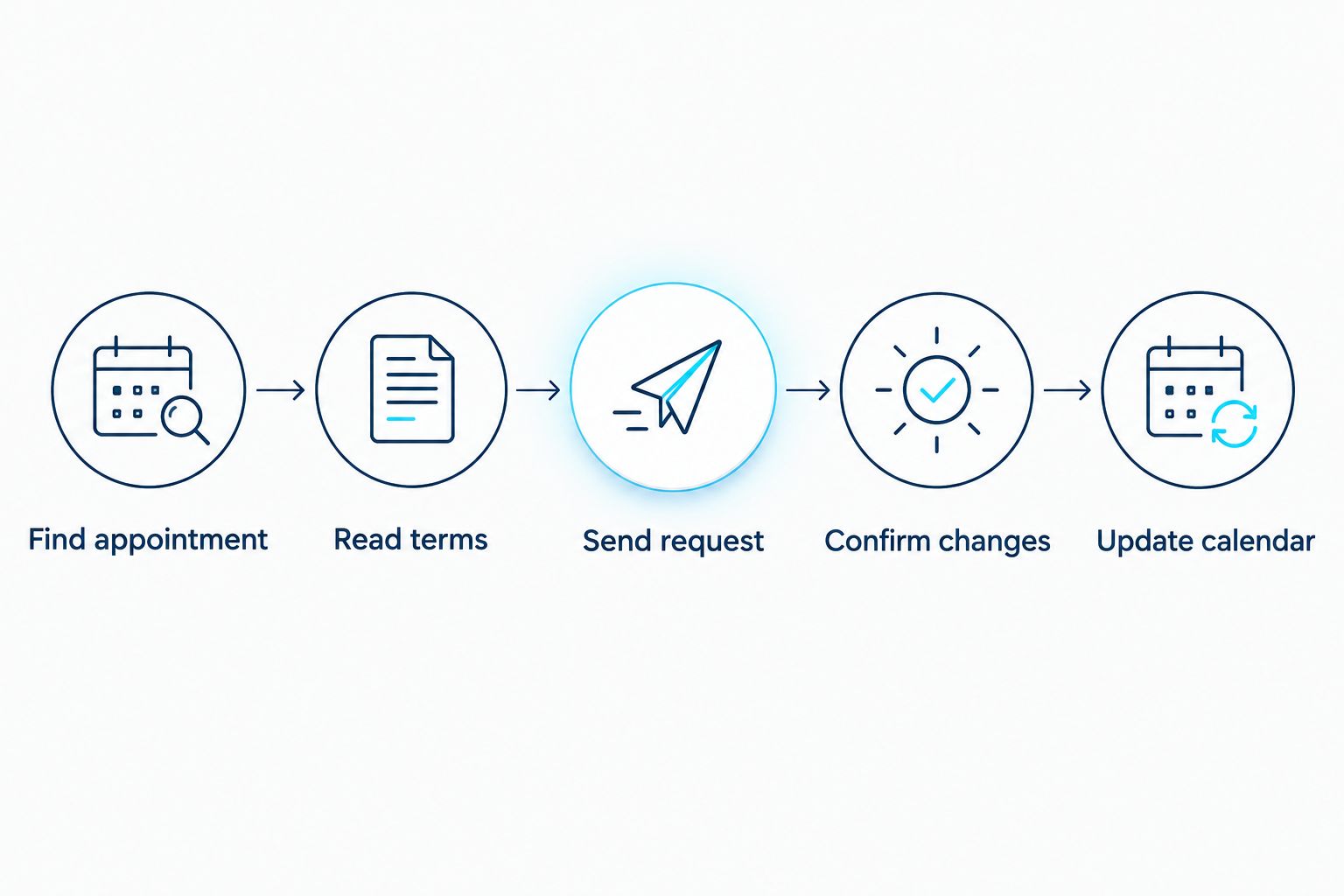
Follow this sequence:
- Find the original appointment. Check the service date, arrival details, booking name, and address.
- Read the rescheduling terms. Look for the deadline and the required way to submit a change.
- Send a clear request. Identify the visit you need to move and the replacement dates that work for you.
- Ask about the original booking. Confirm whether it remains scheduled while the request is being reviewed.
- Save the revised confirmation. Update your calendar only after the provider confirms what changed.
For the practical steps involved, see how to reschedule a house cleaning appointment.
Why this matters
A calendar edit on your phone does not tell your cleaning provider anything. Neither does deciding over breakfast that Friday would work better than Thursday. The change needs to reach the business through the method specified for your booking.
The useful distinction is between requesting a change and having a confirmed change. Keep those separate, and you avoid making plans around an appointment that has not actually moved.
When reviewing a 2026 booking, use the terms connected to that reservation rather than an old message from a previous visit. Save the relevant confirmation so you have the appointment details and scheduling instructions together.
Moving, skipping, or changing your cleaning schedule?
Before contacting your provider, decide what you want changed. Moving a visit, skipping it, and changing your ongoing schedule are different requests—even if all three begin with a calendar conflict.
| Request | Best for | Benefit | Limitation to address |
|---|---|---|---|
| Move one visit | A temporary conflict when you still want that cleaning | Keeps the request focused on a replacement appointment | You need confirmation of the replacement date and original booking status |
| Skip one visit | A visit you no longer need | Clearly communicates that you do not want a replacement cleaning | You need to check the cancellation terms and the next scheduled visit |
| Change the recurring schedule | An ongoing conflict with your usual cleaning day | Addresses the pattern rather than repeatedly moving individual visits | You need confirmation of when the new schedule begins |
Choose the request that matches your actual plan. If you want to keep cleaning on the calendar, say that you want to reschedule rather than simply asking the provider to remove the visit.
If your work schedule has permanently changed, explain that too. Moving the next appointment does not, by itself, communicate a request to change every future appointment.
Why rescheduling requirements vary
The terms attached to your appointment determine the notice requirement. Instead of searching for a universal number, check these parts of your booking:
- The stated cutoff: Find the exact deadline for changing or canceling the appointment. Do not substitute an informal rule of thumb.
- How the deadline is measured: Check whether the wording refers to elapsed hours, business days, or a particular time. Ask for clarification if it is unclear.
- The required contact method: Follow the instructions in the confirmation rather than assuming any message reaches the scheduling team.
- The kind of change: Check whether moving, skipping, and canceling a visit are addressed separately.
- The scope of the request: Make clear whether the change concerns one appointment or your recurring schedule.
For your 2026 household calendar, record the actual deadline once you have verified it. A reminder based on the booking terms is more useful than a guessed buffer that leaves you checking the policy at the last minute.
What should I include in my rescheduling request?
Make the message easy to act on. Your provider needs to identify the original appointment and understand exactly what you want instead—not solve a small scheduling mystery.
Include these details:
- The name used for the booking.
- The service address or booking reference, using the provider’s designated communication channel.
- The original appointment date and arrival details.
- Your preferred replacement dates and any firm time restrictions.
- Whether future recurring appointments should stay unchanged.
- A request for written confirmation of the outcome.
A brief explanation is enough. You can say that your plans changed without sharing private medical, family, or work details that are unrelated to the scheduling request.
State your constraints before the appointment is moved. If you cannot provide access on a particular day, say so in the first message rather than correcting the replacement booking afterward.
What if I need to change the appointment at the last minute?
Contact the provider immediately through the channel specified for your booking. Explain that the request is time-sensitive and identify the appointment clearly. Waiting does not resolve the conflict.
If you cannot provide access to the home, put that information near the beginning of your message. Do not hide it beneath a long explanation about why the day went sideways.
Ask what happens to the original appointment and which terms apply to the request. An urgent situation does not establish an exception to the booking policy, so get the answer directly rather than treating silence as permission.
Keep a record of the message and any response. If the provider directs you to another contact method, follow that instruction and make clear that you are discussing the same appointment—not requesting an additional visit.
Can I reschedule without canceling my recurring cleaning?
Ask to move the individual visit and explicitly state that the recurring schedule should remain unchanged. Then check the revised confirmation and the next appointment in the series.
A moved cleaning can create a gap or place visits closer together than you intended. Before agreeing to the replacement date, look at the surrounding appointments and decide whether the spacing still suits your household.
For your 2026 recurring schedule, confirm all of the following:
- Which original visit is being moved.
- The replacement appointment date and arrival details.
- Whether the next regular visit remains scheduled.
- Whether the ongoing cleaning day stays the same.
You do not need to redesign your entire cleaning routine because of one busy week. Just be precise about what stays put and what moves.
Does online booking mean I can reschedule online?
Online booking does not establish the process for changing an existing appointment. Follow the instructions attached to the reservation, whether those direct you to a scheduling tool or a designated contact method.
Porch and Parlor Cleaning offers online booking for residential cleaning in greater Nashville. That describes how homeowners book the service; check your appointment information for the instructions governing later changes.
Before using any scheduling control, read what it changes. Distinguish between a request to edit an existing visit and an action that creates a separate appointment.
After submitting the change, review the resulting message. You want confirmation of the appointment’s status, not just confirmation that a request was received.
What should I verify after the cleaning is moved?
A new date is only part of the job. Check the details that determine whether the visit will work for your household.
Review the revised confirmation against your actual plans, especially if someone else manages access to your home. A shared calendar is helpful only when everyone is looking at the same appointment.
Check these items before closing the message:
- Date and arrival details: Make sure the confirmed visit matches the change you requested.
- Service address: Verify that the appointment still refers to the correct home.
- Cleaning request: Confirm any agreed changes to the work rather than assuming they carried over.
- Home access: Update instructions through the provider’s designated channel when needed.
- Household arrangements: Tell anyone responsible for pets, entry, or being home about the confirmed change.
- Future appointments: Check that recurring visits reflect the agreement.
For a rescheduled 2026 visit, also update personal reminders tied to the old date. That includes reminders to clear counters, secure pets, or arrange access. Otherwise, your calendar moves while the rest of the household stays on the old plan.
When is this service a fit for my household?
Porch and Parlor Cleaning is best for greater Nashville homeowners who want to book residential cleaning online. If scheduling flexibility determines your choice of provider, read the appointment terms before booking rather than assuming that online scheduling includes unrestricted changes.
The benefit is a service aimed at residential homeowners with online booking. The boundary is just as important: assess rescheduling requirements separately, using the terms for your appointment.
FAQ
How much notice do I need to reschedule a cleaning?
Give the notice required by the rescheduling terms attached to your booking, and contact the provider as soon as you know you need a change. Check the exact cutoff and required contact method before assuming your request meets the policy.
Can I reschedule my cleaning on the same day?
Submit the request immediately and ask the provider how the original appointment will be handled. A same-day request does not establish approval or an exception to the booking terms.
Does rescheduling count as canceling a cleaning?
Check your booking terms to see how a moved appointment is treated. State that you want a replacement visit and ask whether cancellation terms apply to the original appointment.
Can I move one cleaning without changing my recurring schedule?
Ask to move only the individual visit and keep the recurring schedule unchanged. Confirm the replacement date and the next regular appointment so the scope of the change is clear.
What should I do if nobody replies to my rescheduling request?
Do not treat the lack of a reply as confirmation that your appointment moved. Follow the contact instructions in your booking and ask for an explicit update on the original visit.
Can I change my cleaning appointment by editing my calendar?
Editing your personal calendar does not notify the cleaning provider. Submit the request through the method specified for your booking, then update your calendar after the provider confirms the change.
What if I cannot let the cleaner into my home?
Tell the provider immediately that you cannot provide access for the scheduled visit. Ask how the appointment should be handled under your booking terms, and do not send sensitive entry information through an unapproved channel.
One last thing
Ask what happens to the appointment after the one you move. It is easy to focus on solving Thursday’s conflict and forget that the next recurring visit is still on the calendar.
Before you finish the conversation, read back the replacement date and the next regular date. That small check keeps a one-off scheduling problem from becoming an ongoing calendar puzzle. The dust bunnies do not need administrative help.