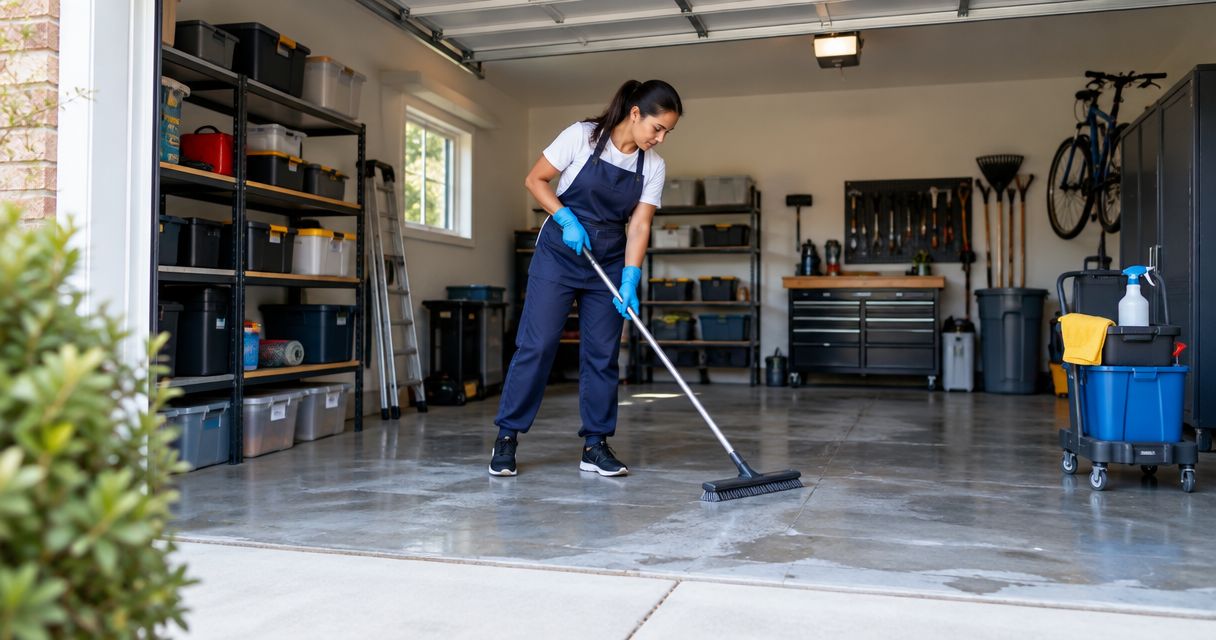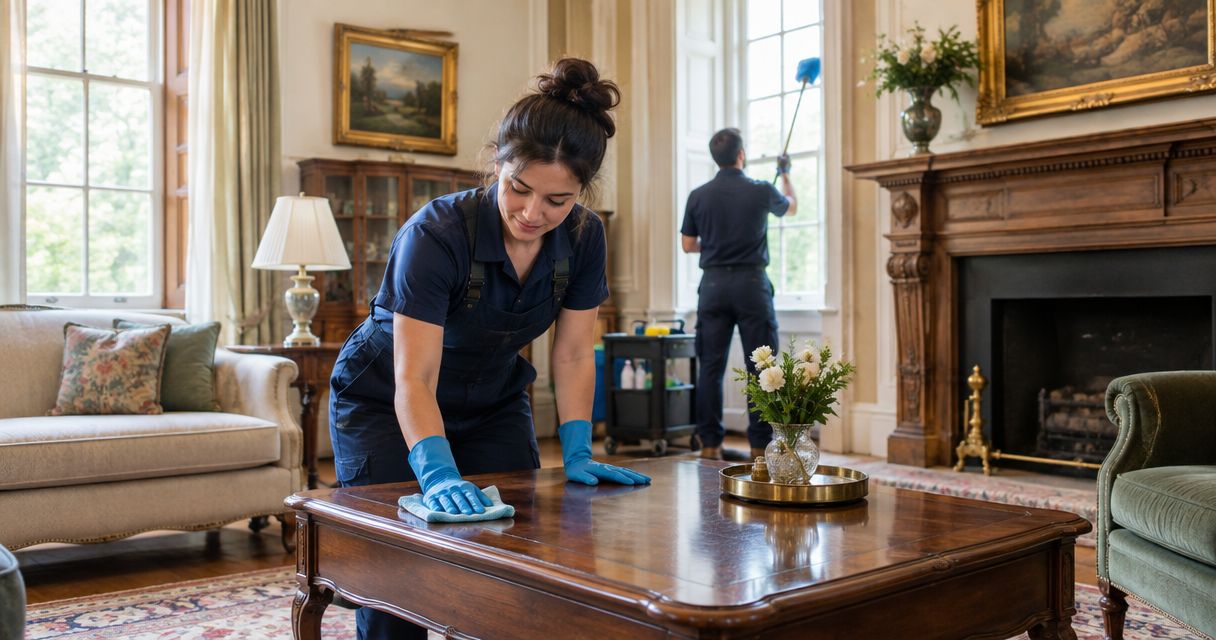
Cleaning a historic home in 2026 requires a home-specific quote based on the rooms, cleaning tasks, surface conditions, and access—not a reliable flat figure based on age alone. Ask whether detailed woodwork, fragile finishes, interior windows, and renovation dust are included; ordinary housekeeping and restoration need separate scopes.
- How much does cleaning a historic home cost? Get a written, home-specific quote rather than an age-based estimate.
- Compare house cleaning quotes by included tasks, surface precautions, and exclusions—not the headline total alone.
- Porch and Parlor Cleaning offers residential cleaning for greater Nashville homeowners, with online booking.
- Keep routine housekeeping separate from finish restoration, antique conservation, and hazardous-material cleanup.
How much does cleaning a historic home cost?
The useful answer is a written quote for your actual cleaning scope, not a historic-home surcharge with no explanation. Tell the cleaner what needs cleaning, what needs protecting, and what should remain untouched. Ask for separate descriptions of the initial visit and any ongoing maintenance.
For local planning, start with house cleaning for historic homes in Nashville. Then use the same room list and surface notes when requesting estimates, so you can compare like with like.
A useful quote breaks the work into clear categories:
| Scope to discuss | Best for | Benefit | Limitation to clarify |
|---|---|---|---|
| Routine housekeeping | Maintaining already-clean, sound surfaces | Keeps everyday tasks organized | Does not define restoration work |
| Detailed initial cleaning | Addressing an agreed list of neglected areas | Gives overlooked tasks their own scope | Requires clear surface and access boundaries |
| Recurring housekeeping | Keeping an agreed baseline | Establishes repeatable priorities | Must distinguish recurring tasks from occasional extras |
| Specialist conservation or remediation | Fragile objects, damaged finishes, or suspected hazards | Addresses work outside ordinary housekeeping | Requires an appropriately qualified provider |
These are categories to discuss, not promises about a particular company's packages. A label such as deep cleaning is no substitute for a task list.
Why this matters
An old house can have a modern kitchen, original woodwork, replacement floors, and delicate wallpaper under the same roof. A single instruction to clean everything leaves too much room for interpretation. Your goal is a cleaner home without treating every surface the same way.
For your 2026 cleaning budget, separate dirt removal from repair. Dust on a mantel is a cleaning question; a lifting finish is a condition question. Asking someone to scrub harder does not turn housekeeping into restoration—and elbow grease is not a conservation plan.
Routine housekeeping: define the everyday work
Choose routine housekeeping when your priority is maintaining sound, usable surfaces. List the rooms and tasks you want considered: accessible dusting, floor care, bathroom cleaning, and kitchen surface cleaning. Ask the provider to confirm which tasks belong in the proposed visit.
Do not assume original features are either automatically included or automatically excluded. Describe painted trim, exposed wood, stone, and other finishes separately. If you do not know a material or finish, say so instead of guessing.
The benefit is a manageable, repeatable scope. The limitation is that everyday cleaning does not explain how a cleaner will handle fragile details, accumulated residue, or areas requiring special access. Those need an explicit conversation before work starts.
Detailed initial cleaning: name the overlooked areas
Choose a detailed initial scope when specific areas need attention beyond everyday upkeep. Write down the actual tasks rather than asking for the deepest clean possible. Examples to discuss include accessible trim, door panels, cabinet fronts, and dusty ledges.
Distinguish dirt from wear before agreeing on the expected result. A stain, worn coating, or discoloration is not necessarily removable soil. Ask the provider to identify any result they cannot promise without risking the surface.
The benefit is clarity about work that needs extra attention. The drawback is that a broad request can hide disagreements about what finished means. A written list of included surfaces and stopping points is much more useful than an ambitious service name.
Recurring housekeeping: separate the first visit
Ask for the initial visit and recurring visits to be described separately. Your first appointment might include tasks you do not want repeated every time. Conversely, an occasional room should not quietly disappear from the long-term plan.
For a recurring arrangement in 2026, decide which tasks happen at every visit and which require separate approval. Include a way to update surface instructions after repairs, refinishing, or changes to furnishings.
The benefit is consistency. The limitation is that a recurring appointment only covers the agreed work; it is not an open-ended promise to tackle every new project. Keep the checklist current rather than relying on everyone to remember a conversation from booking day.
Why historic-home cleaning quotes vary
Use these factors to explain your home to a provider. Ask how each factor affects the proposed work instead of accepting an unexplained adjustment for the home's age.
- Rooms and usable space. Identify the rooms you want cleaned, including bathrooms, stairs, and any separate living areas. Mark rooms that are out of scope.
- Current condition. Describe ordinary dust, grease, pet hair, or longstanding buildup without assuming they require the same treatment. Photos help show what words leave out.
- Surface restrictions. Flag delicate finishes, unknown coatings, loose details, and existing damage. Ask what the cleaner will avoid and how uncertain surfaces will be handled.
- Detail and access. Identify carved trim, crowded shelves, high ledges, and awkward stairways. Confirm what can be reached safely within the proposed service.
- Requested extras. Ask separately about appliance interiors, windows, enclosed porches, and other tasks outside your main room list. Never assume an extra is included because it is inside the house.
- Preparation and scheduling. Explain furniture placement, household activity, and access arrangements. Ask whether anything must change before the work can begin.
These questions keep the discussion concrete. They also let a provider explain limitations before you commit, rather than while standing in your hallway with a cleaning caddy.
How do I get a useful historic-home cleaning quote?
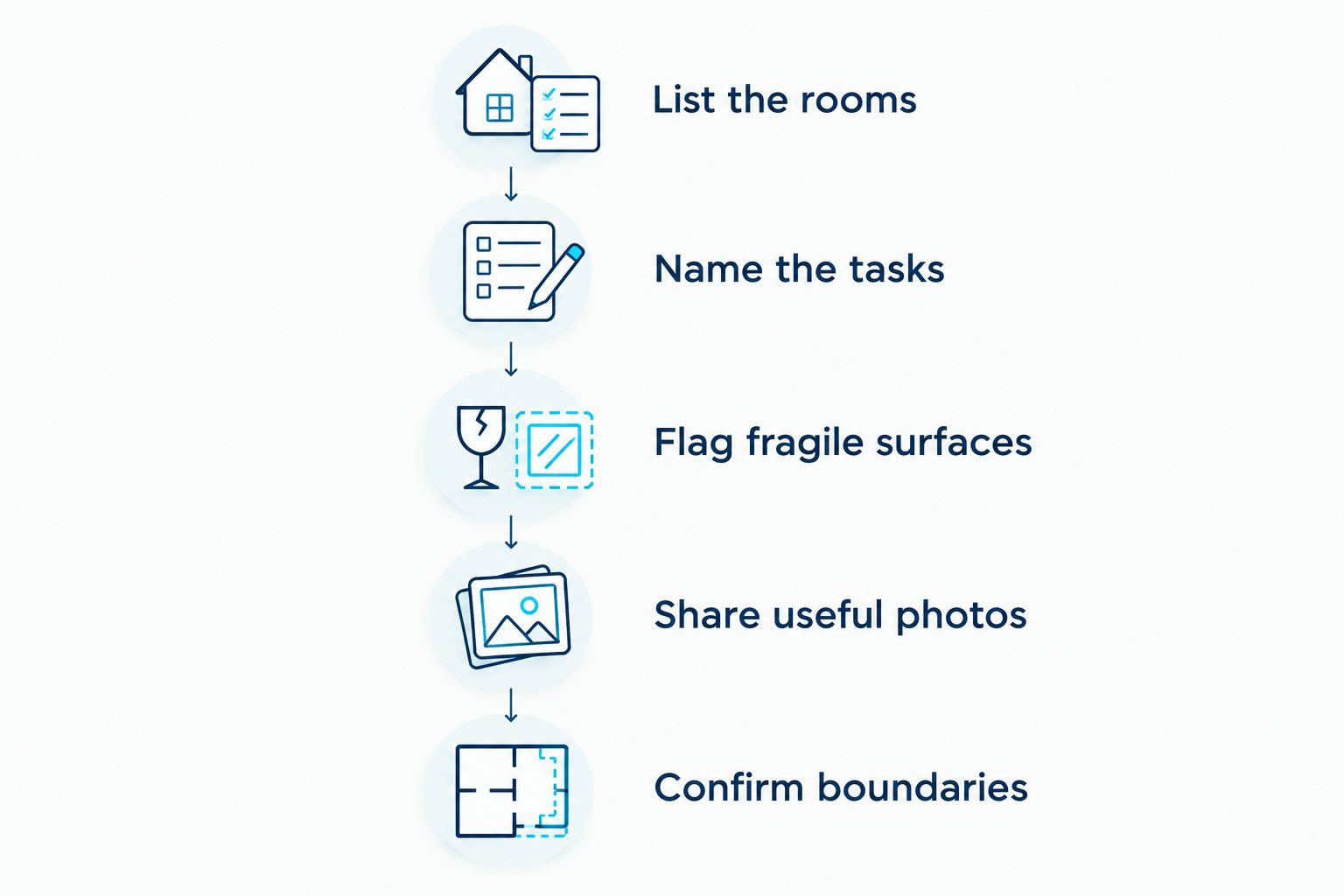
Build a short brief before requesting your 2026 estimate. You do not need a museum inventory; you need enough information to prevent avoidable misunderstandings.
- List the rooms. Name each room to include and mark any spaces to skip. Describe stairs, separate entrances, and areas with restricted access.
- Name the tasks. Separate your must-do jobs from optional work. Specify whether you mean surface dusting, detailed cleaning, or something that needs assessment first.
- Flag fragile surfaces. Note original woodwork, uncertain finishes, loose wallpaper, and objects that should not be handled. Include known care instructions rather than a homemade treatment recipe.
- Share useful photos. Start with 3 photos: a room overview, a close-up of the detail needing attention, and a view of any access problem. Add more if those leave questions unanswered.
- Confirm boundaries. Request written inclusions, exclusions, preparation requirements, and the process for approving changes. Keep the final version with your booking details.
If your home needs closer discussion, request 1 walkthrough before finalizing the scope. Ask whether the provider can assess it in person or through photos; do not assume either option is offered.
What should I check before accepting an estimate?
Compare the work before comparing the totals. A shorter checklist and a longer checklist are different purchases, even if both carry the same service label.
Keep 2 lists beside the estimate: included work and excluded work. Every priority should appear on one of them. Anything left floating between the lists needs a question before you book.
Check these points in the written proposal:
- Which rooms, surfaces, and tasks are included?
- Which areas require separate approval?
- What should you clear or prepare beforehand?
- What happens if the cleaner finds damage or an unidentified surface?
- Who approves changes to the agreed work?
- Does the provider describe the service's limits clearly?
For homeowners who want online-booked residential cleaning in greater Nashville, Porch and Parlor Cleaning is a relevant option. Porch and Parlor Cleaning offers home cleaning with online scheduling. For a historic property, confirm surface restrictions and the requested scope before booking; residential cleaning is not proof of specialist conservation capability.
How can I keep the scope manageable without cutting corners?
Reduce the amount of work, not the care each surface receives. Start with the rooms you use most and the tasks that matter most. Leave optional projects out of the initial request if they distract from your priorities.
Clear ordinary clutter when you can do so safely. Move small personal belongings yourself, but agree separately on anything heavy, fragile, or valuable. Do not make furniture moving a surprise assignment on cleaning day.
Prepare a simple do-not-touch list for delicate objects and uncertain finishes. This is especially useful when several people in the household have different ideas about what should be cleaned. The person booking and the person opening the door should be working from the same instructions.
For your 2026 plan, review the result against the agreed checklist before expanding the service. A manageable starting scope gives you something concrete to assess. It beats asking for everything and discovering afterward that everyone meant something different.
Does a historic home always cost more to clean?
A historic label alone does not describe the cleaning work. Compare the rooms, condition, access, tasks, and surface precautions before assuming that age determines the quote. Ask a provider to explain any adjustment in terms of actual work or restrictions.
Is deep cleaning the same as restoring an old home?
Deep cleaning and restoration are different jobs. Cleaning addresses removable dirt within an agreed scope; repairing finishes or conserving fragile materials requires a separate assessment. Do not authorize aggressive cleaning as a shortcut to repairing a worn surface.
What if I find peeling paint or renovation dust?
Pause and identify the issue before treating it as ordinary housekeeping. EPA guidance identifies homes built before 1978 as more likely to contain lead-based paint; disturbing that paint can create hazardous dust. Ask an appropriately qualified professional about suspected lead hazards rather than assigning the work to a routine cleaning visit.
FAQ
How much does cleaning a historic home cost in 2026?
Cleaning a historic home requires a home-specific quote based on the requested rooms, tasks, condition, access, and surface precautions. Ask for written inclusions and exclusions rather than relying on the property's age.
Can I get a historic-home cleaning estimate online?
You can ask a provider whether photos and a written room list are enough to prepare an estimate. Porch and Parlor Cleaning offers online booking for residential cleaning in greater Nashville; confirm the historic home's scope before scheduling.
Should I book standard cleaning or deep cleaning for an old house?
Choose by the tasks you need, not the house's age. Ask the provider to define both services and identify any fragile surfaces that require exclusion or separate assessment.
Will house cleaners clean original woodwork?
Ask the provider to confirm whether original woodwork is included and what surface instructions they require. Do not assume a method suitable for modern cabinetry is appropriate for an unknown historic finish.
Does a house cleaning quote include antique furniture?
Antique furniture should be discussed separately rather than assumed to be included. Identify objects that should not be moved or cleaned, and seek specialist advice for fragile or damaged pieces.
How do I avoid unexpected changes to a cleaning estimate?
Get the task list, exclusions, preparation requirements, and change-approval process in writing. Ask the provider to contact you before doing work outside the agreed scope.
Is ordinary house cleaning enough after renovating a historic home?
Do not assume ordinary housekeeping covers renovation residue or hazardous dust. Describe the work completed and resolve any material-safety questions before arranging cleaning.
One last thing
Leave a surface untouched when its condition or care requirements are uncertain. An old finish does not need to look new to be clean, and a remaining mark does not automatically mean someone missed a spot. Photograph existing damage, share known care instructions, and agree on when the cleaner should stop and ask.
The best next move is simple: send a room list, surface notes, and clear priorities. A useful quote tells you both what will be cleaned and what will be left alone.