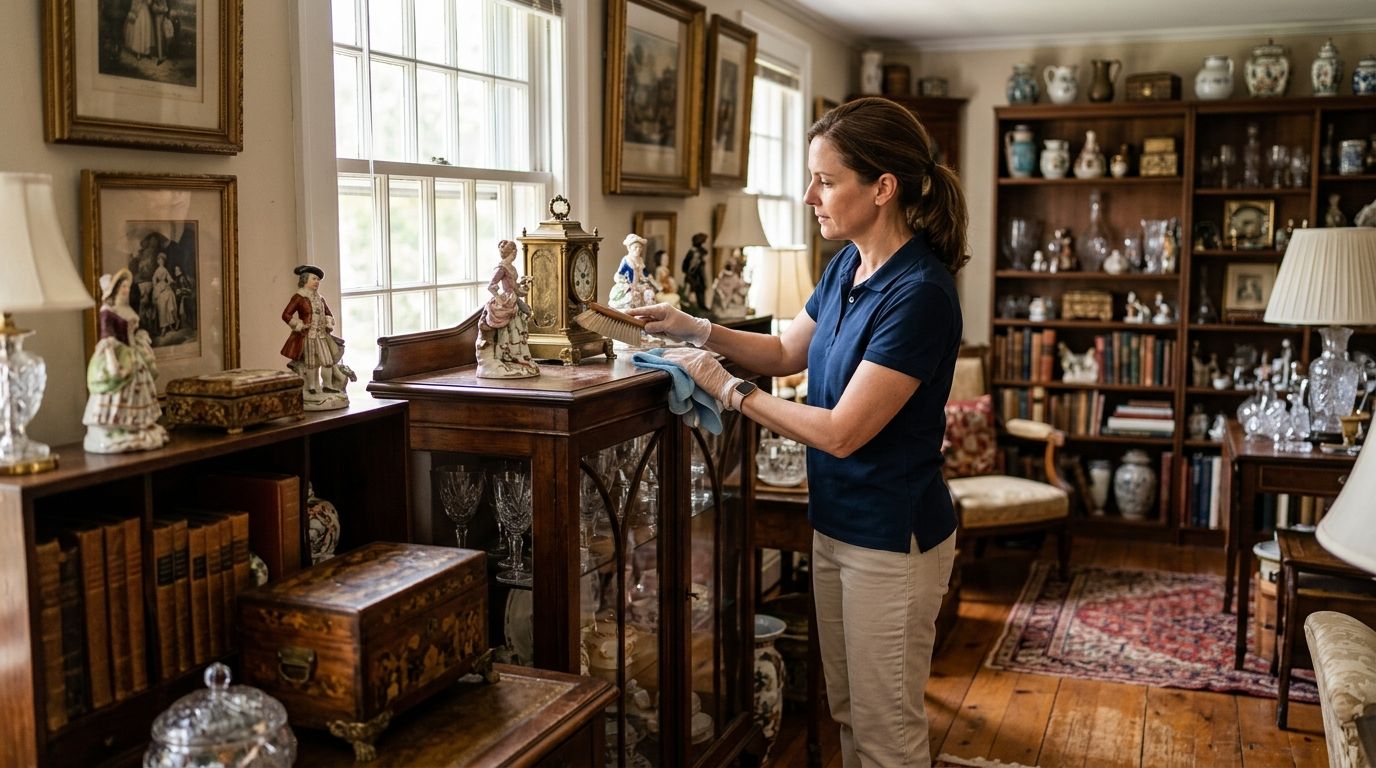
Antique and collectible-filled homes need a cleaning approach that treats dust like a threat and treats grandma's china cabinet like it's holding the family's actual inheritance, because sometimes it is. A standard cleaning routine built for a house full of IKEA furniture and washable rugs can chip glaze, scratch veneer, and knock a porcelain figurine off a shelf in the time it takes to say "oops." This guide covers what changes when a home is full of heirlooms, estate pieces, and display collections, and what to ask before you let anyone touch them with a duster in 2026.
- House cleaning antique collectibles home care means dusting and disinfecting around fragile pieces without moving, stacking, or scrubbing them.
- Nashville's historic homes and Belle Meade estates hold real collections that need written handling instructions, not verbal reminders.
- Porch and Parlor Cleaning works from a room-by-room 'do not touch' list you build before the first visit in 2026.
- Skipping cleaning altogether to protect antiques backfires — dust build-up on old varnish and metal causes more damage than a careful cleaner does.
Why house cleaning matters for antique and collectible homes
Dust isn't just cosmetic on old wood, brass, or glass. It holds moisture, and moisture sitting on aged varnish, unsealed wood, or tarnish-prone metal for months does more long-term damage than a cleaner's cloth ever will. Homes packed with collectibles also tend to have more surfaces per square foot — curio cabinets, open shelving, glass-front bookcases — which means more edges for a standard cleaning crew to bump into if nobody flagged them first.
The fix isn't avoiding cleaning. It's giving whoever cleans your house a map of what's fragile, what's off-limits, and what actually needs the attention. That's a conversation, not a mystery, and it takes about ten minutes before the first visit.
The routine that protects what you collect
Walk the house before the first visit
Before anyone with a caddy of supplies sets foot in your living room, walk them through it. This is the single biggest predictor of whether your collection survives cleaning day intact.
- Point out anything that shouldn't be picked up, even to dust underneath
- Flag pieces that are loose, cracked, or repaired and could shift with a light touch
- Note which shelves or cabinets are decorative-only versus safe to wipe directly
- Mention anything insured separately, since that's often the priciest item in the room
- Ask for a written copy of the instructions so it doesn't rely on memory next visit
If you're setting this up for the first time, declutter before a maid service visit so the walkthrough covers the pieces that matter instead of the pile of mail on the side table.
Dust with the right tool for the surface, not just any rag
A good workman never blames his tools, but a bad tool on a 100-year-old finish will absolutely blame itself later. Different materials need different approaches.
- Microfiber cloths, dry, for wood finishes and lacquer — no sprays, no water
- Soft natural-bristle brushes for carved detail, picture frames, and metal filigree
- Static-attracting dusters for glass shelving and display cases
- Cotton gloves when handling anything with a patina that oils from bare hands can dull
- A separate, clean cloth per surface type so grit from one piece doesn't scratch the next
Handle glass, china, and display cases as their own category
Glass and ceramics get moved more than any other collectible during a routine clean, and moving is when breakage happens — not dusting.
- Ask the cleaner to dust around pieces in place rather than lifting and resetting them
- Photograph shelf arrangements once so anything that does get moved goes back correctly
- Keep cabinet doors closed during vacuuming to cut down on airborne dust settling on glass
- Use a barely-damp cloth, never wet, on glazed ceramics to avoid streaking or moisture seeping into hairline cracks
Protect books, papers, and paper ephemera
Old books and paper collectibles are some of the most damage-prone items in a house because paper reacts badly to both dry dusting and humidity. If your home has a serious book collection or reading room, preparing your bookshelves before a dusting visit matters more than almost any other step on this list.
- Dust shelves and spines with a soft brush, never a wet cloth
- Keep books closed and upright; never fan pages to "air them out" during cleaning
- Store loose documents, letters, and photos in folders before the visit, not on open surfaces
- Ask for shelf exteriors only, with interiors left for you to handle separately
Set boundaries around what's off-limits to touch entirely
Some pieces shouldn't be cleaned by anyone but you, and that's a completely reasonable line to draw.
- Anything appraised for insurance purposes above a value you're not comfortable risking
- Pieces with active repairs, loose joints, or known structural weaknesses
- Items in active display for a sale, estate transfer, or appraisal appointment
- Anything sentimental enough that you'd rather dust it yourself once a month
Schedule cleaning frequency around your collection, not just your calendar
Most homes settle into weekly or biweekly cleaning by default. Antique-heavy homes sometimes do better on a schedule that reduces how often fragile zones get touched at all, while keeping the rest of the house on a normal rotation.
- Ask for antique rooms to be dusted lightly every visit but deep-handled less often
- Reserve deeper cabinet interior cleaning for a quarterly or biannual pass you're present for
- Keep high-traffic rooms (kitchen, bathrooms) on the standard schedule regardless
- Revisit the plan after the first two or three visits once you see how it goes
Book cleaning that respects your collection
Set your walkthrough and handling notes before the first visit.
Cleaning options for antique-filled homes, compared
| Option | Best for | Key limitation |
|---|---|---|
| DIY dusting only | Small, tightly held collections owners want full control over | Time-consuming, and the rest of the house goes uncleaned |
| Standard recurring cleaning, no special instructions | Homes with a few decorative pieces and no true fragility risk | Cleaners default to normal handling, which risks fragile items |
| Recurring cleaning with a written antique walkthrough | Most antique and collectible-heavy homes in 2026 | Requires an upfront conversation and occasional updates |
| Museum-conservator cleaning | Appraised, high-value estate collections | Rare, specialized, and not a substitute for regular house cleaning |
The recurring service with a written walkthrough wins for most collectors because it keeps the whole house clean while protecting the pieces that actually matter, without the cost or overkill of conservator-level care.
“Dust sitting on old varnish or unsealed metal for a season does more damage than a careful cleaner ever will.”
Common mistakes collectors make with house cleaners
- Assuming the cleaner will just "know" what's fragile. Nobody can eyeball which vase is a $40 flea market find and which is a family heirloom worth insuring.
- Giving verbal instructions once and never writing them down. Crews change, and memory fades faster than you'd think between visits.
- Overcorrecting by canceling cleaning altogether. Dust and grime buildup damage antiques too, just more slowly and less obviously than a bump.
- Rearranging collections right before a scheduled visit. New placement without new instructions is how accidents happen.
- Skipping a walkthrough for a house that's historic homes in Nashville-old. Older houses often mean older, more delicate original fixtures alongside the collectibles, not just the furniture.
FAQ
Can house cleaners work safely around antiques and collectibles?
Yes, when they get a walkthrough and written handling notes before the visit. Cleaners without that information default to standard handling, which is where most damage happens.
Should I ask my cleaning service to avoid touching certain shelves entirely?
Yes, and it's a completely normal request. Flag any appraised, repaired, or sentimental pieces as off-limits and ask for the shelf exterior only.
How often should antique-heavy rooms be cleaned?
Light dusting every regular visit works for most collections, with deeper cabinet or shelf-interior cleaning reserved for quarterly passes you're present for. High-traffic rooms stay on the normal schedule.
Is it better to clean antiques myself instead of hiring a service?
Not necessarily. DIY-only cleaning protects fragile items but leaves the rest of the house uncleaned, and dust buildup on unattended antiques causes its own damage over time.
What should I tell a cleaning company about my collectibles before the first visit?
Walk them through the house, point out anything fragile, loose, or insured, and get the instructions in writing so they carry over to future visits regardless of who's on the crew.
Do old books and paper collections need different cleaning care?
Yes. Paper reacts badly to both dry dusting and moisture, so shelves should be dusted with a soft brush, books kept closed, and loose documents stored in folders before any visit.
What's the biggest mistake owners of antique-filled homes make with cleaning?
Assuming the cleaner will automatically know what's fragile without being told. A ten-minute walkthrough before the first visit prevents most accidents.
One last thing
The collections that survive best over the years aren't the ones nobody ever touches — they're the ones with a clear, written plan that travels with the house even when the cleaning crew changes. Write it down once in 2026, update it when the collection changes, and you'll spend a lot less time worrying every time the doorbell rings on cleaning day.