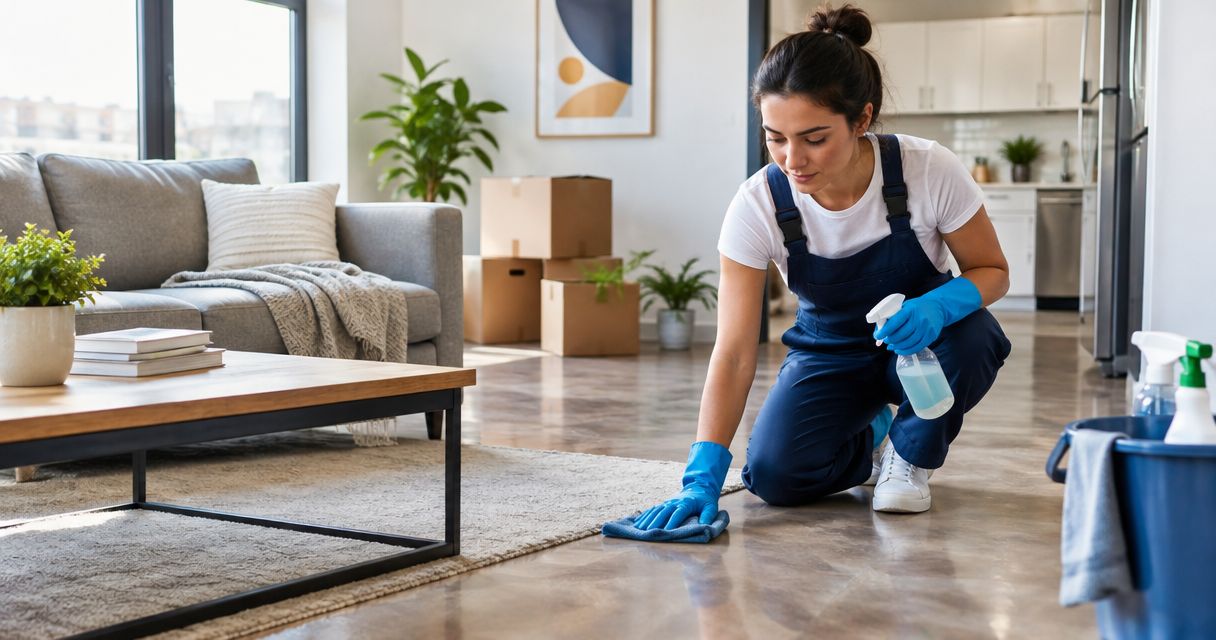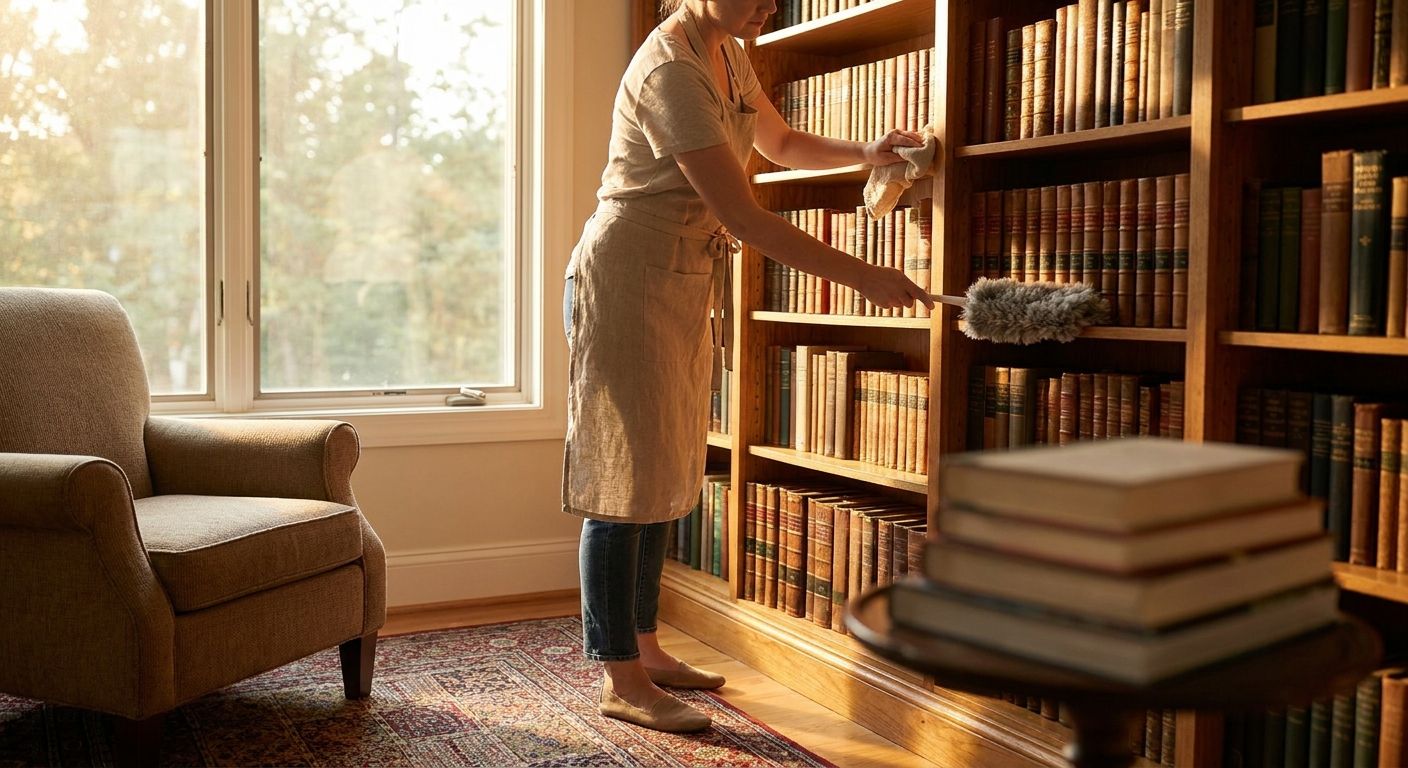
House cleaning for home libraries and reading rooms means dusting bookshelves top to bottom, keeping humidity in check, and clearing allergens without ever having to touch or rearrange a collection someone spent years building. A den full of paperbacks needs a different touch than a living room: books trap dust in ways upholstery doesn't, direct sunlight fades spines, and the wrong cleaning product can do real damage to bindings.
- House cleaning home library work means dusting top-down, controlling humidity, and never spraying glass cleaner near shelves.
- Porch and Parlor Cleaning handles Nashville home libraries as part of whole-house recurring visits, best for owners who want the room kept up without specialty conservation.
- DIY dusting works for small collections under roughly 200 books; anything bigger needs a scheduled routine.
- Rare or valuable first editions belong with a book conservator, not a general cleaning visit.
Why house cleaning matters for a home library
A good workman never blames his tools, but in a reading room the tools matter more than usual. Paper and cloth bindings attract dust the way a chalkboard attracts chalk dust — it settles into the grain and stays there if nobody wipes it off on a schedule. Conservators commonly recommend keeping book storage around 30 to 50 percent relative humidity and out of direct sun, because swings above that range invite mold and foxing (those brown speckles collectors dread).
A reading nook also collects a different kind of mess than a kitchen or bedroom. Think paper dust, leather chair conditioner residue, and lamp heat baking dust onto shelf tops for hours at a time. Regular house cleaning from a crew that knows to work around a collection, rather than through it, keeps that room from becoming the one spot in the house nobody wants to deep clean.
Homeowners in historic Nashville neighborhoods often ask about this room specifically, since older houses tend to have the built-in shelving and reading nooks that came standard with a Craftsman or bungalow floor plan. If your library lives in one of those older homes, the humidity and dust concerns are usually worse, not better, because older windows and trim let more outside air and pollen through.
Dust bookshelves from the top down
Gravity is not your friend here — dust you knock loose from the top shelf lands on everything below it. Work top to bottom every time, and this step alone solves most of the visible grime problem.
- Use a soft microfiber cloth, not a feather duster (feather dusters scatter dust instead of collecting it)
- Run a HEPA vacuum with a brush attachment along the top shelf first
- Wipe spines with a dry cloth, never a wet one, unless the binding is sealed cloth or vinyl
- Dust shelf boards and the underside of the shelf above before moving down a row
- Skip canned air near old paper — it can push dust deeper into page edges
Vacuum spines and shelf edges weekly
A quick weekly pass keeps dust from building into the kind of layer that needs scrubbing later. This is the step most homeowners skip because the shelf "looks" clean.
- Hold each book closed and vacuum the top edge with low suction
- Vacuum the shelf boards themselves, not just the books sitting on them
- Check spine crevices for insect casings while you're at it
- Rotate through the whole room over a month rather than trying to hit every shelf in one sitting
- Note any musty smell — that's an early humidity warning, not something to mask with air freshener
Control humidity and sunlight in the room
This is the step people ignore until pages start curling or covers start smelling musty. A reading room with a west-facing window is the highest-risk spot in most Nashville houses during summer.
- Keep blinds or curtains closed during peak afternoon sun
- Run a small dehumidifier if the room regularly reads above 50 percent relative humidity
- Keep HVAC vents from blowing directly onto open shelving
- Watch for any warping in nearby wood trim as a sign the room runs too humid
- Avoid placing new books directly against an exterior wall in older homes
Set up a recurring cleaning routine for the room
A once-a-year deep dust is better than nothing, but it lets grime build up between visits in ways that are harder to reverse. Doing it yourself on a calendar reminder works fine for smaller collections. For a full house with a library as one more room on the list, setting up a recurring house cleaning schedule through a company that briefs its team on no-touch shelving is the faster path once the collection gets past a shelf or two.
- Weekly, biweekly, or monthly recurring visits, depending on how fast dust builds in your house
- Technicians briefed ahead of time on which shelves are hands-off
- Baseboard and window sill add-ons since those collect the same paper dust
- A quick walkthrough or checklist after each visit so nothing gets moved without you knowing
Deep clean the reading nook furniture
The chair, the lamp, and the side table around a library shelf collect just as much dust as the books themselves, and they're easier to clean thoroughly.
- Vacuum upholstery seams on reading chairs, where dust settles deepest
- Wipe lamp shades — heat from a bulb left on for hours bakes dust into the fabric
- Clean window glass for better natural light without letting cleaner drift near the shelves
- Treat leather chairs with an appropriate conditioner, away from any nearby books
- Wash throw blankets on a normal rotation; they hold as much dust as a rug does
Protect the room from pests
Old paper and quiet, undisturbed corners are exactly what silverfish and paper-eating pests look for. A reading room that never gets a proper clean is an invitation.
- Check spine crevices and shelf corners for insect casings
- Keep food and drinks out of the room entirely
- Seal any small gaps near baseboards where pests get in
- Use cedar blocks instead of mothballs — mothball chemicals can leave residue on paper
- Inspect any storage bins or boxes kept near the shelving
Comparing cleaning options for a home library
| Option | Best for | Key limitation |
|---|---|---|
| DIY weekly dusting | Small collections, under roughly 200 books | Time-consuming and easy to miss high shelves |
| Standard recurring house cleaning | Home libraries as part of whole-house upkeep | Doesn't include specialty book conservation |
| Deep clean add-on for the book room | Collectors wanting extra care around shelving | Needs advance scheduling, not a same-day add-on |
| Professional book conservator | Rare or valuable first-edition collections | Handles individual volumes, not general room cleaning |
Verdict: for most Nashville homeowners, a recurring house cleaning visit that includes the library as part of the whole-house routine is the right call — book conservators are for rare collections, not everyday upkeep.
Get your library on the cleaning schedule
Ask about a routine that skips the shelves nobody wants touched.
Common mistakes home library owners make
- Using a feather duster — it just redistributes dust back onto the pages instead of removing it
- Spraying glass cleaner too close to shelves — overspray leaves a haze on book covers that's hard to undo
- Ignoring a summer humidity spike near a window — this is when foxing and musty smells start
- Skipping shelf edges and baseboards — "no visible dust" doesn't mean no dust
- Leaving a reading lamp on for hours — the heat bakes dust onto nearby covers over time
FAQ
How often should a home library be dusted?
A home library needs a light dusting weekly and a full top-to-bottom pass monthly to keep dust from settling into book spines. Rooms with direct sunlight or older windows may need it more often.
Is house cleaning safe for rare or first-edition books?
General house cleaning is safe for the room around a collection, but rare or valuable first editions should go to a professional book conservator rather than a standard cleaning visit. Cleaners should be briefed ahead of time on which shelves are hands-off.
What humidity level is best for a home library?
Conservators typically recommend 30 to 50 percent relative humidity for book storage to prevent mold and foxing. A small dehumidifier helps in Nashville homes where summer humidity runs high.
Can a regular house cleaner work around bookshelves?
Yes, as long as the company briefs its team in advance on no-touch zones. Porch and Parlor Cleaning handles home libraries as part of a whole-house recurring visit rather than a specialty conservation service.
Should I use a feather duster on bookshelves?
No — feather dusters scatter dust rather than collecting it, and that dust often lands back on open pages or spines. A microfiber cloth or HEPA vacuum brush attachment works better.
How do I stop pests from getting into my book collection?
Keep food out of the room, seal gaps near baseboards, and use cedar blocks instead of mothballs since mothball residue can affect paper. Check spine crevices periodically for insect casings.
Does sunlight damage books over time?
Yes, direct sunlight fades spines and covers and can dry out leather bindings faster than normal aging. Closing blinds during peak afternoon sun protects the collection without any extra cleaning steps.
One last thing
A reading room needs less water-based cleaning than almost any other room in the house — a barely damp cloth handles glass and trim, and everything else should stay dry. The single biggest favor you can do a home library is closing the blinds during peak afternoon sun, since fading and drying damage happen faster than dust ever will.