
Biweekly cleaning is cheaper over the same period when each biweekly visit costs less than twice as much as a weekly visit, with the same tasks included. For your 2026 budget, compare the total for both schedules—not just one appointment—and account separately for any initial cleaning, extra tasks, and upkeep you do yourself.
- Is it cheaper to hire weekly or biweekly cleaning? Compare equal periods and identical house-cleaning tasks.
- Weekly cleaning means visits every 7 days; biweekly cleaning means visits every 14 days.
- Biweekly wins on total spending when its visit charge is less than twice the weekly charge.
- Porch and Parlor Cleaning offers Nashville-area residential cleaning booked online; compare your requested tasks before choosing a schedule.
Why this matters
A smaller charge per appointment does not automatically produce a smaller cleaning bill. Weekly service gives you more appointments, while biweekly service leaves a longer stretch for you to handle spills, crumbs, and everyday mess.
The useful question is not simply which visit is cheaper. It is which schedule meets your household’s needs without paying for visits you do not need or leaving you with chores you cannot manage.
Start with your household’s routine. This guide to cleaning frequency for busy Nashville families helps you think about the schedule before comparing quotes.
Is it cheaper to hire weekly or biweekly cleaning?
Biweekly cleaning has the lower total when its per-visit charge is less than twice the weekly per-visit charge. That is a comparison rule, not a promise that every company charges less for a particular schedule.
For a straightforward comparison, use a repeating 28-day period. Weekly service gives you 4 visits in that period; biweekly service gives you 2 visits. Keep the home, requested rooms, and cleaning checklist identical.
| What you compare | Weekly cleaning | Biweekly cleaning |
|---|---|---|
| Time between visits | 7 days | 14 days |
| Visits per repeating 28-day period | 4 visits | 2 visits |
| Total comparison | Add the charges for 4 equivalent visits | Add the charges for 2 equivalent visits |
| Main advantage | More frequent professional attention | Fewer appointments to pay for and prepare for |
| Main drawback | More appointments in the same period | A longer gap for your own upkeep |
| Best for | Households that want more frequent help | Households comfortable maintaining the home between visits |
The break-even point is simple: if a biweekly appointment costs exactly twice a weekly appointment, the recurring totals match over this comparison period. Below that threshold, biweekly costs less; above it, weekly costs less.
Use your actual written quotes. A frequency label alone does not establish the winner, and a different checklist makes the comparison apples and oranges—with a mop thrown in.
Compare recurring service separately from the first visit
An initial appointment and a repeat appointment are different entries in your budget. Ask whether the first visit has a different scope or charge, rather than assuming the recurring quote describes every appointment.
For your 2026 decision, separate the starting expense from the ongoing schedule. Otherwise, an initial cleaning can make one option look more expensive even when you are trying to compare the repeating service.
Do not assume that an initial deep clean is required, included, or offered under either quote. Get the answer directly from the company.
Weekly cleaning: every 7 days
Best for: households that want professional cleaning at shorter intervals. Weekly cleaning brings the next appointment around every 7 days, so you have less time between scheduled visits.
That shorter interval matters if your current routine leaves you repeatedly cleaning the same bathrooms, floors, or kitchen surfaces between appointments. Look at what you actually do, not what you hope you will suddenly enjoy doing. Nobody needs a budget built around a newfound passion for scrubbing.
The drawback is the number of appointments. You are paying for more visits over the same period and arranging access more often, even if the home is easy to maintain.
Before choosing weekly service, ask yourself:
- Which chores do you want to hand over rather than continue doing yourself?
- Does the proposed checklist include those chores?
- Will you still need to tackle them between appointments?
- Can your household accommodate the access and preparation required each week?
Choose weekly cleaning for the shorter gap between visits, not because a lower per-visit charge automatically means a lower total. The total still needs to pass the comparison above.
Biweekly cleaning: every 14 days
Best for: households that can handle routine upkeep between appointments. Biweekly cleaning means every 14 days here, not twice a week and not twice a calendar month.
That distinction belongs in the booking details. An every-other-week schedule follows a repeating interval; a twice-monthly schedule follows dates within each month. Ask which arrangement the quote describes.
Biweekly service gives you fewer appointments over the same period. Its trade-off is the longer gap, during which you remain responsible for the everyday mess that cannot wait until the next visit.
Before choosing biweekly service, check whether your household can realistically handle:
- Cleaning up spills when they happen.
- Keeping kitchen work surfaces usable.
- Handling visible crumbs and tracked-in dirt.
- Putting belongings away so cleaning areas stay accessible.
These are upkeep examples, not a promised service checklist. Confirm what the professional visit covers separately.
Choose biweekly cleaning when the quoted total is lower and the between-visit work fits your life. If you spend the gap wishing the cleaner were coming sooner, the lower bill is only part of the story.
Why your weekly-versus-biweekly comparison varies
There is no universal winner without matching quotes. For a useful 2026 comparison, check these details rather than assuming that every recurring arrangement works the same way:
- Comparison period: Use the same length of time for both schedules. Comparing a weekly appointment with a biweekly appointment does not compare total spending.
- Cleaning scope: Match the rooms and tasks. A smaller checklist is not an equivalent service just because both quotes say house cleaning.
- First-visit treatment: Identify whether the initial appointment differs from repeat visits. Keep any starting expense visible rather than folding it silently into the recurring comparison.
- Separately requested work: Ask how tasks outside the recurring checklist are handled. Do not assume they are included or automatically charged separately.
- Schedule conditions: Confirm how skipped, moved, or paused appointments affect the arrangement. Use the company’s stated terms rather than guessing.
- Your own upkeep: Consider the chores left to you between visits. That affects which schedule is useful, even though it is not a charge on the cleaning invoice.
Compare the agreement you will actually book, not the schedule name. Weekly and biweekly describe timing; they do not tell you the complete scope, conditions, or total.
How do I compare weekly and biweekly cleaning quotes fairly?
Use the same home details and requested checklist, then compare the totals over a repeating 28-day period. That gives you 4 weekly visits against 2 biweekly visits without pretending every calendar month has the same appointment count.
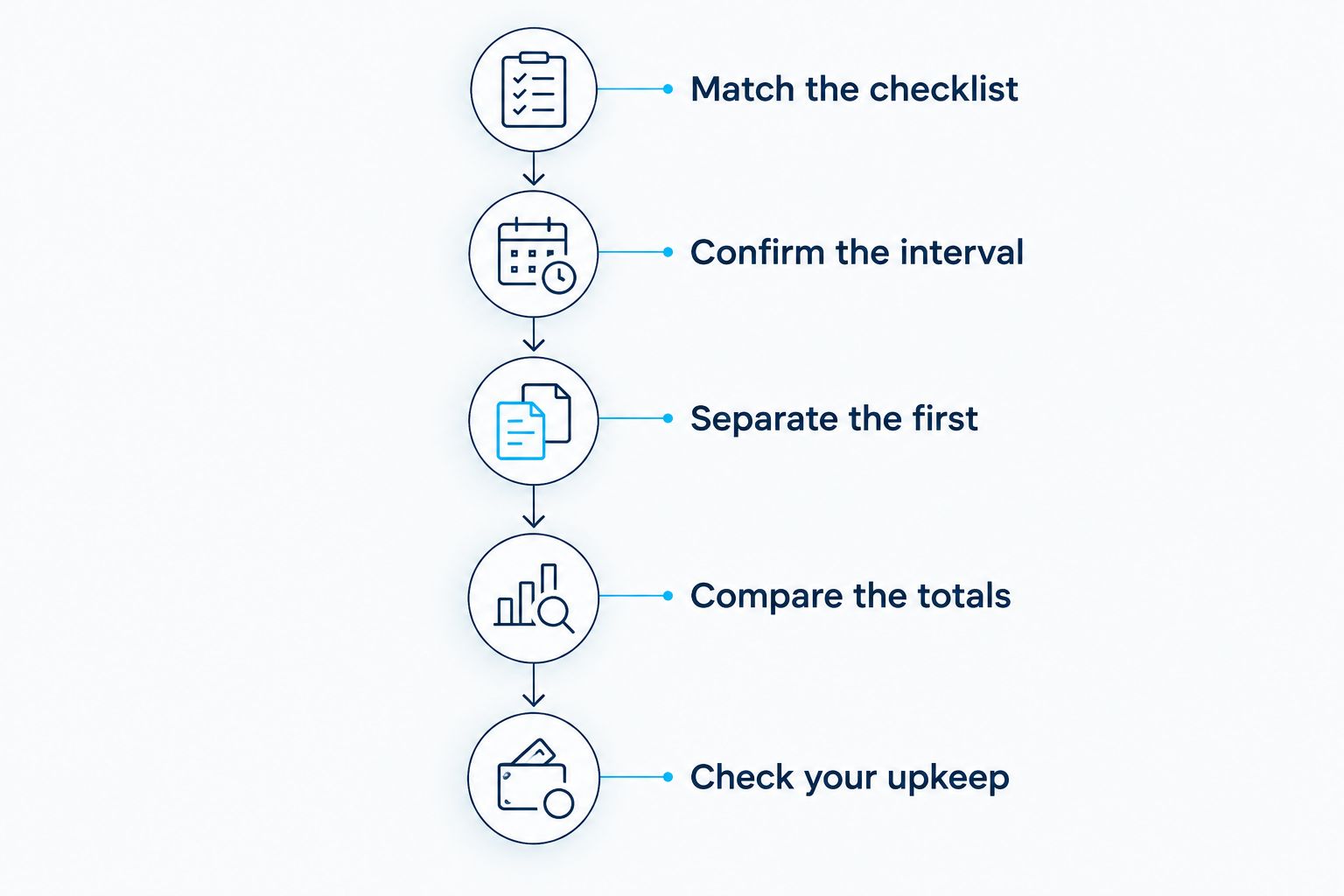
Follow these steps before booking
- Match the checklist. Write down the rooms and tasks you want covered. Give both quote requests the same information, including any areas you do not want cleaned.
- Confirm the interval. Ask whether weekly means every 7 days and biweekly means every 14 days. Clarify the start date and any scheduling exceptions.
- Separate the first visit. Identify any difference between the initial appointment and recurring appointments. Compare ongoing service on its own before adding the starting expense.
- Compare the totals. Add the recurring charges for each schedule over the same period. Include only charges the company has actually confirmed.
- Check your upkeep. Decide whether the longer gap leaves you with work you can reasonably handle. A lower total is useful only if the arrangement still meets your needs.
Keep those answers together in one note. You should be able to explain the difference between the schedules without searching through several messages or relying on memory.
For a 2026 household budget, keep cash spending and personal effort separate. Record what the service costs, then describe what you will still do yourself; do not turn your free time into an invented hourly expense.
Porch and Parlor Cleaning is for greater Nashville homeowners who want residential cleaning booked online. You can start with Porch and Parlor Cleaning and confirm the current scheduling options and requested scope before booking.
The online booking route is useful when you want to arrange home cleaning through a scheduling site. It does not replace checking the details: Porch and Parlor Cleaning’s service description alone does not establish which frequency will cost less for your home.
Plan your home cleaning
Review online booking and confirm the cleaning scope and schedule for your Nashville-area home.
Does a cheaper cleaning visit mean a cheaper cleaning schedule?
4 weekly visits versus 2 biweekly visits is the comparison over a repeating 28-day period. A weekly appointment can have the smaller individual charge while the weekly schedule still has the larger total.
Ask for both recurring quotes with identical tasks. Compare the totals first, then decide whether the more frequent appointments provide help you actually want.
Should I switch to biweekly cleaning to reduce spending?
14 days between visits is the upkeep gap you accept when choosing biweekly cleaning. Switch only after confirming that the recurring total falls and that your household can manage the longer interval.
For a 2026 schedule change, ask about the revised scope, timing, and terms before moving appointments. Do not assume your existing arrangement carries over unchanged.
FAQ
Is it cheaper to hire weekly or biweekly cleaning?
Biweekly cleaning is cheaper over the same period when each biweekly visit costs less than twice a weekly visit, with identical tasks included. Compare your actual recurring quotes rather than assuming a frequency discount.
Does biweekly cleaning mean every other week?
Biweekly cleaning means every 14 days in this comparison. Confirm that your booking means every other week rather than twice a calendar month.
How many weekly and biweekly cleaning visits should I compare?
Compare 4 weekly visits with 2 biweekly visits over a repeating 28-day period. Use the same home details and cleaning checklist for both schedules.
What's the best cleaning schedule if I don't want to clean between visits?
Weekly cleaning gives you the shorter interval between professional visits. It does not remove the need to handle spills or other everyday mess as it happens.
Is the first cleaning included in the recurring quote?
Ask the company whether its recurring quote also applies to the first cleaning. Confirm any difference in scope or charge before including that appointment in your budget.
Can I compare one company's weekly cleaning with another company's biweekly cleaning?
Yes, but match the requested tasks and comparison period first. Check each company's stated conditions so you are not comparing different services.
Can Nashville homeowners book Porch and Parlor Cleaning online?
Yes, Porch and Parlor Cleaning offers online booking for residential cleaning in the greater Nashville area. Confirm the current schedule options and cleaning scope through the booking process.
One last thing
An every-other-week schedule is not the same as booking twice each calendar month. Before finalizing your 2026 budget, put the proposed appointments on a calendar and count the visits in the period you are budgeting for.
Then look at the chores left between those dates. The right choice is the lower confirmed total that still leaves you with a manageable routine—not the smallest number attached to a single appointment.