Professional cleaning is better than DIY for allergies when it lets you avoid dust exposure or keeps allergen-removal tasks from getting skipped; it is not automatically more effective than careful DIY cleaning. The deciding factors are the methods, equipment, surfaces covered, and upkeep between visits—not who holds the mop. Neither approach cures allergies or replaces treatment from your clinician.
- Is professional cleaning better than DIY for allergies? Only when methods, consistency, or reduced personal exposure improve.
- Porch and Parlor Cleaning serves Nashville-area homeowners seeking residential cleaning help; confirm allergy-related requests before booking.
- Choose damp dusting and effective vacuum filtration over dry dusting and strong fragrances.
- Keep bedding care and moisture control on your routine, even when you hire a cleaner.
Is professional cleaning better than DIY for allergies?
Professional cleaning wins on help and reduced hands-on exposure, not on the job title alone. Start with the tasks in this guide to reducing allergens with regular house cleaning, then decide who can carry them out consistently.
| Approach | Best for | Main advantage | Main limitation |
|---|---|---|---|
| Professional cleaning | People who react while dusting or cannot keep up | Someone else handles agreed dust-removal tasks | Equipment, products, and included tasks need confirmation |
| DIY cleaning | People who can clean comfortably and consistently | You control products, tools, and timing | You handle the dust and must maintain the routine |
| Professional help plus DIY upkeep | Households dividing larger jobs from routine care | Responsibilities can be assigned clearly | Gaps remain unless everyone knows their tasks |
A careful DIY routine can use the same basic principles as a professional visit: capture dust, remove it from the home, and avoid unnecessary irritants. A paid visit that skips upholstery or uses products that bother you is not automatically the better choice.
For your 2026 decision, compare the actual checklist rather than the promise of an “allergy-friendly” clean. Ask what gets cleaned, how it gets cleaned, and what you still need to do yourself.
Why this matters
A home can look tidy while dust remains in bedding, carpet, upholstery, and overlooked corners. Allergens include substances such as dust-mite waste, pet dander, pollen, and mold spores; ordinary dust can carry a mixture of particles.
Cleaning also disturbs settled dust. That makes the cleaning process itself relevant if vacuuming, shaking bedding, or dry dusting brings on symptoms.
There is another wrinkle: an irritating smell is not necessarily an allergy. Fragrances and cleaning fumes can irritate airways, so swapping dust for a cloud of scented spray is no victory. Aim for dust removal, not a house that smells like a perfume counter.
Professional cleaning: best for avoiding the dusty work
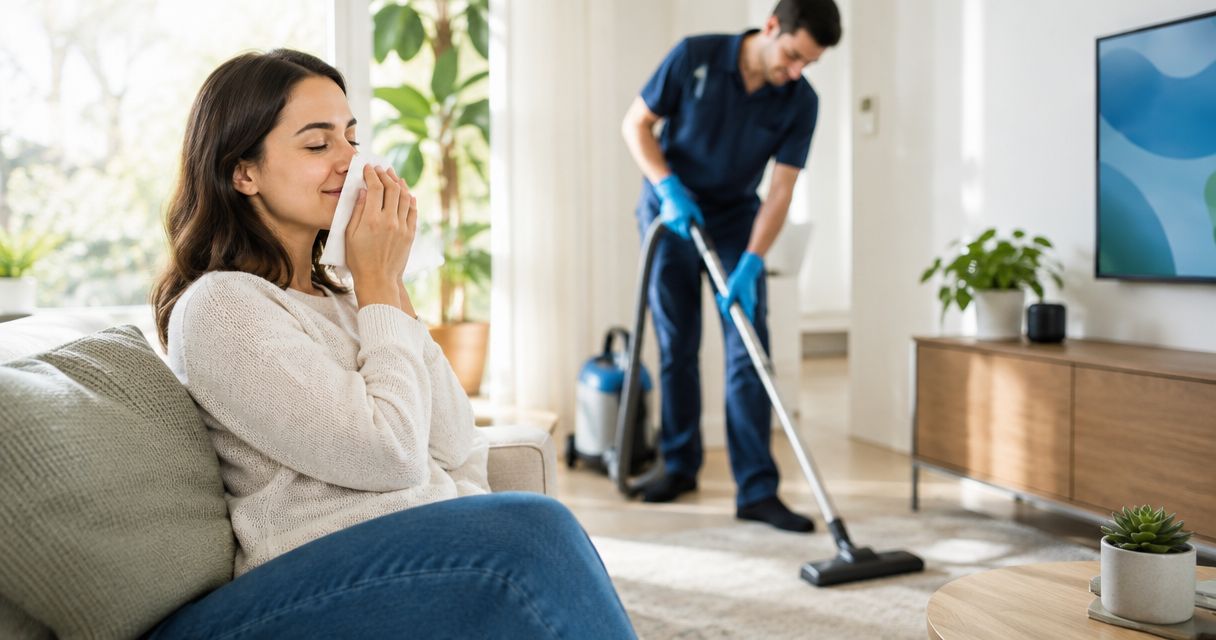
Professional help makes practical sense when cleaning exposes you to something that triggers symptoms or when physical limitations make routine work difficult. You can arrange for someone else to handle agreed tasks while you stay away from the active cleaning area.
That benefit depends on the scope. Do not assume a standard visit includes washing bedding, vacuuming upholstered furniture, moving heavy furniture, or cleaning every blind. Ask before booking, rather than discovering the gaps after the vacuum goes quiet.
For greater Nashville homeowners who want residential cleaning help, Porch and Parlor Cleaning offers online booking. Confirm equipment, product preferences, and specific dust-removal tasks directly; residential cleaning does not establish an allergy-specialist service.
Porch and Parlor Cleaning is a fit for Nashville-area homeowners seeking help with residential cleaning, not a substitute for allergy care.
The limitation is straightforward: hiring help does not remove the need to manage ongoing sources of allergens. Pets still shed dander, pollen still enters, and bedding still needs attention between visits.
DIY cleaning: best for control over your routine
DIY cleaning gives you direct control over what goes onto your surfaces and when each room gets attention. That is useful when you already know which products irritate you or which areas collect dust fastest.
Use damp dusting on suitable surfaces rather than flicking dust into the air. Follow the surface manufacturer's care instructions, especially for wood, electronics, and delicate finishes. Damp means lightly moistened—not dripping.
The drawback is your own exposure and the work involved. If cleaning reliably brings on coughing, wheezing, or other symptoms, do not treat pushing through as a badge of honor. Discuss those symptoms with your clinician and consider assigning the dusty tasks to someone else.
A realistic DIY plan for 2026 should fit your capacity. A short routine you repeat beats an ambitious checklist that lives permanently on the refrigerator.
A shared cleaning plan: best for dividing the work
Professional cleaning plus DIY upkeep lets you separate larger agreed tasks from everyday maintenance. It works only when the handoff is clear; otherwise, everyone assumes someone else washed the bedding.
Write down who handles floors, upholstery, washable fabrics, accessible shelves, and pet resting areas. Mark anything outside the cleaner's scope as a household responsibility or a separate service to arrange.
Do not confuse a recurring booking with complete allergen control. A cleaning appointment does not fix a leak, change your HVAC filter automatically, or stop outdoor pollen from entering through an open window.
Choose the division of labor you can sustain. More complicated is not necessarily better, especially if coordinating the plan becomes another chore nobody wants.
Why allergy-cleaning results vary
The difference between helpful cleaning and a disappointing visit usually comes down to the details below. Use these factors to compare professional and DIY cleaning on equal terms.
- Your triggers: Pet allergens, dust mites, and pollen call for attention to different sources and habits. Allergy testing and clinical advice can help identify what matters to you.
- Dust capture: Damp wiping and effective vacuum filtration focus on collecting particles rather than simply shifting visible dust.
- Surface coverage: Floors are only part of the job. Bedding, upholstered furniture, and accessible dust-catching surfaces deserve consideration.
- Product tolerance: Fragrances and sprays can irritate sensitive airways. Tell anyone cleaning your home what you need avoided.
- Moisture control: Damp conditions support mold growth and dust mites. Scrubbing alone does not resolve an ongoing moisture problem.
- Consistency: Dust returns after either type of cleaning. Between-visit habits matter as much as the initial reset.
These factors explain why there is no universal winner. A professional visit with unsuitable methods can miss your needs, while careful DIY cleaning can address them—and the reverse is also true.
What should your 2026 allergy-cleaning checklist include?
Begin with the bedroom and the places where you spend the most time. Then work through a repeatable sequence rather than chasing every speck in the house at once.
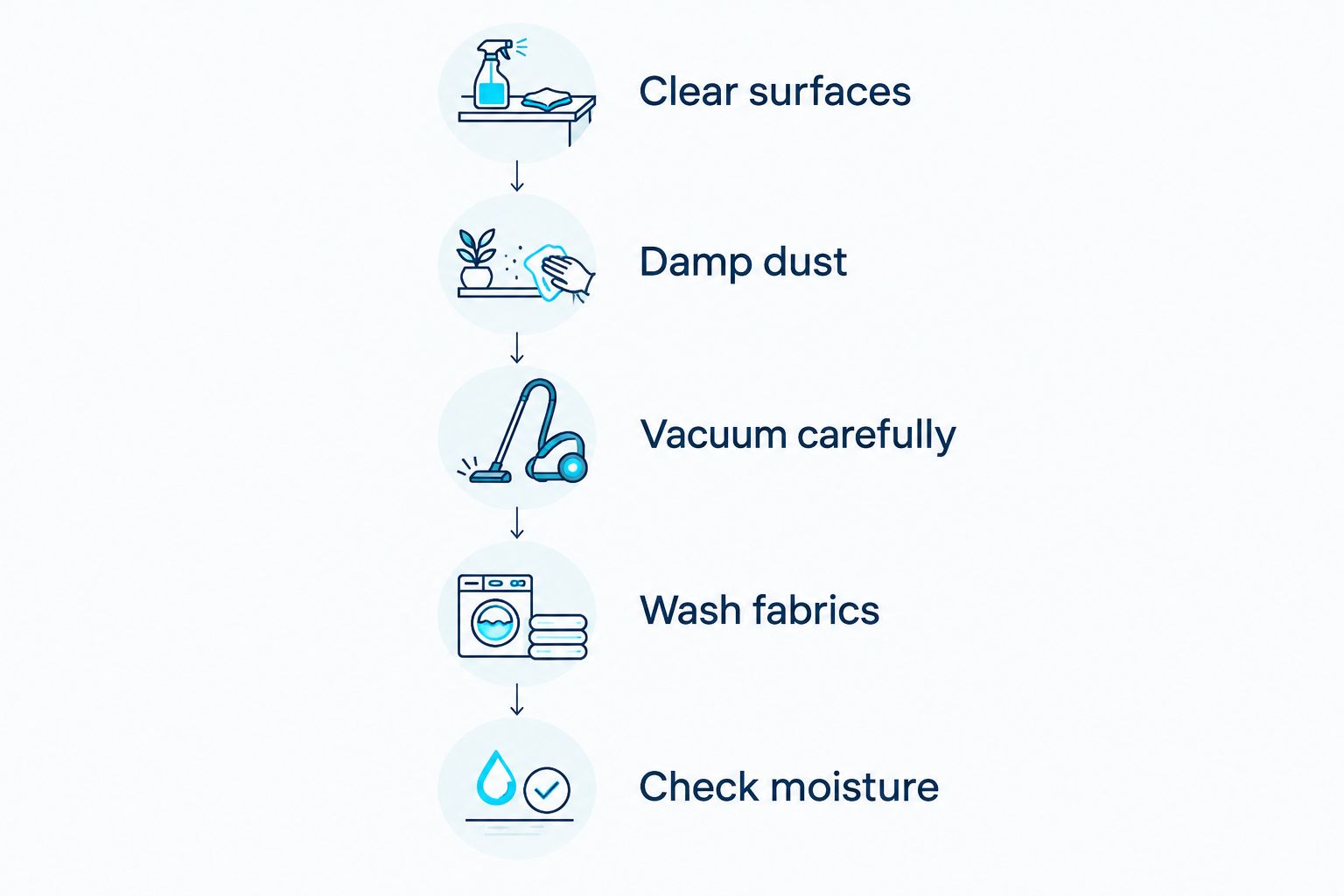
- Clear surfaces. Put away loose items so shelves, furniture, and floors are accessible. Move fragile belongings yourself rather than assuming someone else will handle them.
- Damp dust. Work from higher accessible surfaces toward lower ones, using a lightly dampened cloth where the material allows it. Change or clean dirty cloths instead of spreading the same dust around.
- Vacuum carefully. Include accessible carpet edges and upholstery when your equipment and the agreed service scope allow. Follow the vacuum's maintenance instructions.
- Wash fabrics. Include bedding and other suitable washable items according to their care labels. Keep laundry responsibilities explicit if you hire help.
- Check moisture. Look for leaks, condensation, and persistently damp areas. Arrange repairs rather than repeatedly wiping over the same problem.
Keep this checklist separate from medical treatment. A cleaner can remove household soil and dust from agreed surfaces, but cannot diagnose the cause of sneezing or promise symptom relief.
Understand what HEPA does—and does not—mean
The U.S. Environmental Protection Agency explains that a HEPA filter theoretically removes at least 99.97% of airborne particles at 0.3 micrometers. Those figures describe filter performance, not the percentage of allergens a cleaning visit removes from your home.
A vacuum also needs proper maintenance and a design that limits dust escaping around the filter. Ask about the whole machine and its use, rather than treating a HEPA label as a guarantee of results.
Keep moisture on the checklist
EPA household mold guidance recommends keeping indoor relative humidity below 60%, ideally between 30% and 50%. A hygrometer measures humidity; a shiny bathroom mirror does not.
Use those figures as moisture-management guidance, not a promise of allergy relief. If you find persistent dampness or recurring mold, address the source and seek appropriate help rather than adding stronger cleaning products.
What should you ask a cleaner before booking in 2026?
Describe the tasks and sensitivities you know about. “Please avoid fragranced sprays” is more useful than “make everything allergy-safe,” which does not define a clear cleaning method.
Ask these questions before agreeing to a visit:
- What vacuum and filtration system will you use?
- Can you use damp dusting on suitable surfaces?
- Which products will you use, and can you accommodate my stated sensitivities?
- Are accessible upholstery, blinds, and bedroom surfaces included?
- Who handles bedding, laundry, and items that must be moved?
- Can we arrange the work so I stay away from active dusting and vacuuming?
Porch and Parlor Cleaning provides residential cleaning in the greater Nashville area; confirm these requests rather than assuming they are included. A clear scope helps you compare services without relying on vague labels.
Keep the agreed checklist somewhere easy to find. If a task matters enough to affect your decision, it belongs in the conversation before the visit—not in a hopeful mental footnote.
Can a deep clean cure my allergies?
A deep clean does not cure allergies. It removes dust and soil from the surfaces included, but exposure can continue through pets, outdoor pollen, dampness, and fabrics that were not addressed.
For your 2026 plan, judge cleaning by whether the agreed work gets done consistently. Discuss ongoing symptoms with your clinician rather than treating another deep clean as the automatic next step.
Should I leave while someone cleans?
Staying away from active dusting and vacuuming reduces your direct involvement in those dust-disturbing tasks. Arrange where you will be and how the cleaner will access the rooms before work starts.
There is no single waiting period that fits every home, product, and person. Follow product instructions and your clinician's advice, especially if you have asthma or react strongly to cleaning fumes.
Is an air purifier better than cleaning?
An air purifier complements cleaning; it does not replace removing settled dust. Air filtration addresses particles passing through the device, while wiping, vacuuming, and laundering address material on surfaces and fabrics.
Choose measures around your known triggers rather than expecting one appliance to handle everything. Neither an air purifier nor a cleaning visit repairs water damage or eliminates an ongoing allergen source.
FAQ
Is professional cleaning better than DIY for allergies?
Professional cleaning is better when it reduces your hands-on dust exposure or makes an appropriate routine more consistent. Careful DIY cleaning can use the same dust-removal principles, so hiring someone is not automatically more effective.
Can house cleaning get rid of all allergens?
House cleaning cannot get rid of all allergens. It removes material from the surfaces addressed, but allergens can return through pets, outdoor air, fabrics, and other ongoing sources.
Is dry dusting bad if I have allergies?
Dry dusting can send settled dust into the air. Use a lightly dampened cloth on suitable surfaces and follow the material's care instructions.
Does a HEPA vacuum guarantee allergy relief?
A HEPA vacuum does not guarantee allergy relief. Filter performance, machine design, maintenance, cleaning technique, and your individual triggers all matter.
Are natural cleaning products always better for allergies?
Natural cleaning products are not automatically better for allergies. Fragrances and essential oils can irritate sensitive airways, so judge the ingredients and your tolerance rather than the label alone.
What humidity should I aim for at home?
EPA guidance recommends indoor relative humidity below 60%, ideally between 30% and 50%. Address leaks and persistent dampness as well as monitoring humidity.
Can I book Porch and Parlor Cleaning for my Nashville home?
Porch and Parlor Cleaning offers residential cleaning in the greater Nashville area with online booking. Confirm equipment, products, and allergy-related task requests directly before booking.
One last thing
“Smells clean” and “has less dust” are different claims. Before your next cleaning session in 2026, choose one room and write down exactly which surfaces and fabrics need attention.
That small change makes the professional-versus-DIY decision much easier. You are comparing who can complete a useful job—not who can make the strongest lemon scent.