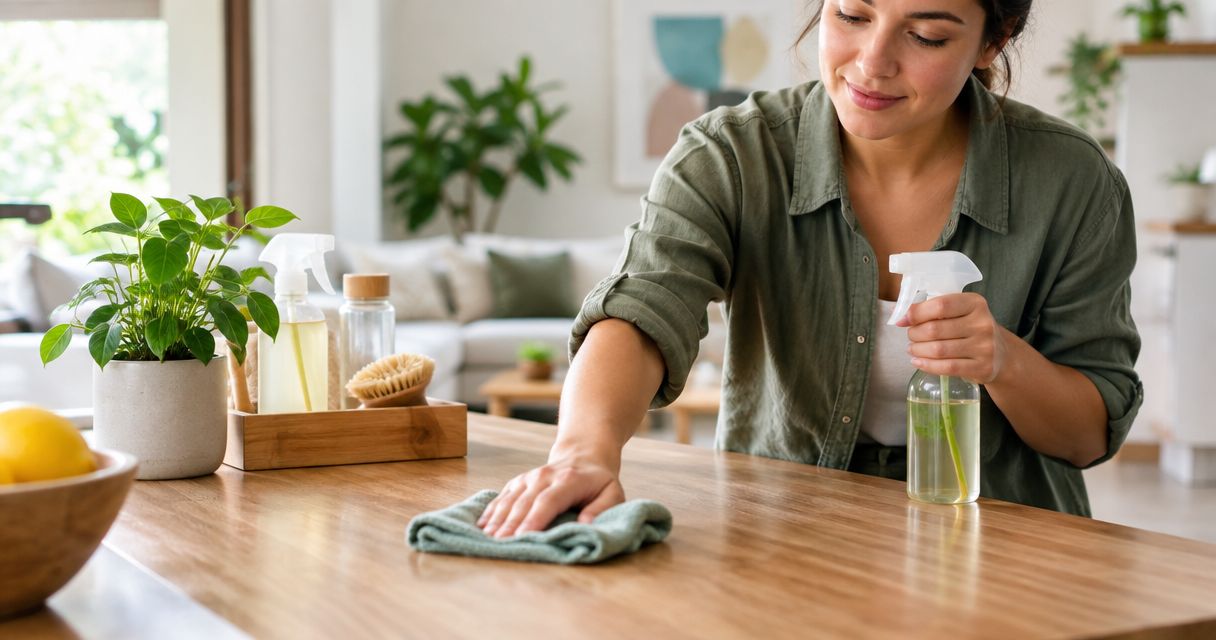
If your eyes water and your nose runs the second you crack open the cleaning caddy, the bottle in your hand might be the culprit, not the dust. Branch Basics Cleaning Concentrate wins best overall for allergy-prone homes in 2026, Force of Nature takes best for chemical-free disinfecting, and ECOS Free & Clear is the best budget option for everyday wipe-downs.
- Branch Basics Cleaning Concentrate is the best eco-friendly cleaning product for allergies overall in 2026 thanks to its fragrance-free, no-rinse formula.
- Force of Nature disinfects without bleach or ammonia residue by using electrolyzed water instead of harsh chemicals.
- ECOS Free & Clear is the best budget pick for allergy-prone households doing daily surface cleaning.
- Better Life and Puracy round out the list for pet owners and nurseries where low-toxicity matters most.
- Fragrance-free does not automatically mean allergen-free — check for third-party verification, not just the word 'natural' on the label.
Why this matters
Over 50 million Americans live with some form of allergy, according to the Asthma and Allergy Foundation of America, and synthetic fragrance is one of the most common household triggers. Nashville's pollen season runs long, which means allergy-prone families are already fighting an uphill battle before they even open a bottle of all-purpose cleaner.
Swapping to eco-friendly cleaning products cuts down on volatile organic compounds (VOCs) that linger in the air after cleaning day. It's not a magic fix — a deep clean built around allergy relief still matters more than which spray bottle sits under your sink — but the products you use daily between visits add up.
What makes the best eco-friendly cleaning products for allergies
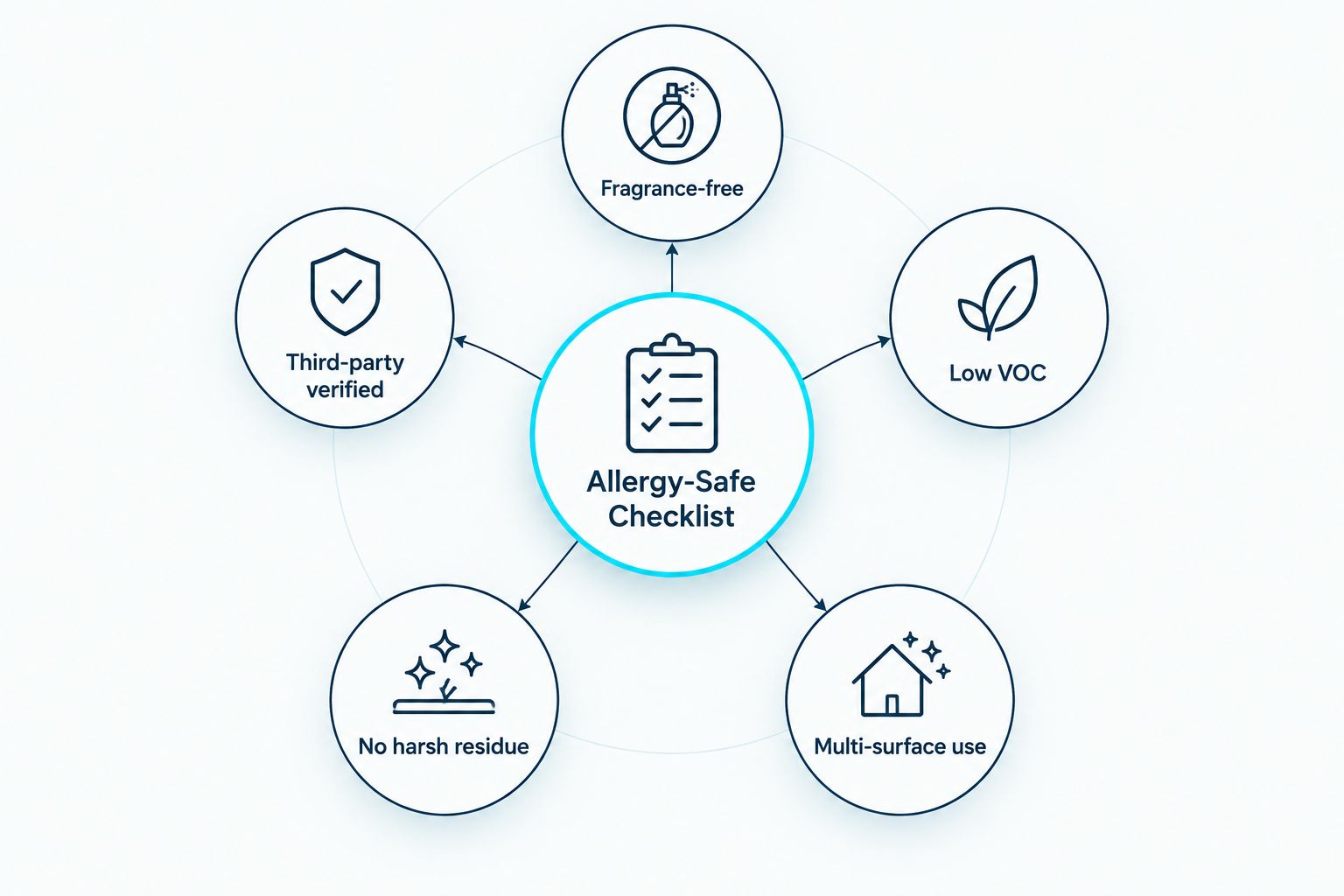
Not every bottle labeled "green" or "natural" earns a spot on this list. Here's what actually separates a product that helps allergy-prone households from one that just has better packaging:
- Fragrance-free or unscented — synthetic fragrance is one of the top irritants named by allergy and asthma sufferers
- Third-party verified — look for EWG Verified, MADE SAFE, or EPA Safer Choice certification instead of taking "natural" at face value
- Low or no VOCs — fewer airborne compounds means less irritation for sensitive lungs and sinuses
- No harsh chemical residue — a cleaner that needs a second rinse to be safe defeats the purpose
- Concentrated formulas — less packaging, less off-gassing, and usually less waste sitting in your recycling bin
- Multi-surface versatility — one bottle doing five jobs beats five bottles doing one job each
Best eco-friendly cleaning products for allergies at a glance
| Product | Best for | Standout feature | Key limitation |
|---|---|---|---|
| Branch Basics Cleaning Concentrate | Whole-home allergy relief | Fragrance-free, no-rinse formula | Requires mixing your own dilutions |
| Force of Nature | Chemical-free disinfecting | Electrolyzed water instead of bleach or ammonia | Shorter shelf life once activated |
| ECOS Free & Clear | Budget-friendly daily cleaning | EPA Safer Choice certified, widely available | Fewer specialty variants than premium brands |
| Better Life Natural All-Purpose | Homes with pets and allergies | Plant-derived surfactants | Scented versions can still trigger sensitivities |
| Seventh Generation Free & Clear Laundry | Laundry-related allergen reduction | Dye-free and fragrance-free detergent | Less effective on heavy grease or oil stains |
| Puracy Natural Multi-Surface | Nurseries and baby-safe cleaning | EWG Verified, plant-based ingredients | Milder on caked-on grime, needs more wipe passes |
1. Branch Basics Cleaning Concentrate: best eco-friendly cleaner for whole-home allergy relief
Branch Basics sells one concentrate that you dilute into different strengths for bathroom, kitchen, and laundry use. It's fragrance-free by design and doesn't rely on essential oils to mask the fact that there's no perfume added, which matters because "natural scent" can still set off a sensitive nose.
Branch Basics pros:
- Fragrance-free formula with no essential oil additives
- One concentrate replaces several single-purpose sprays
- Concentrated bottle format cuts down on plastic waste
Branch Basics cons:
- You have to measure and mix your own dilutions, which is an extra step some households skip
- Not marketed as a disinfectant, so it won't replace an EPA-registered product during cold and flu season
Best for: allergy-prone households replacing multiple cleaning sprays with one system. Verdict: Buy.
2. Force of Nature: best eco-friendly cleaner for chemical-free disinfecting
Force of Nature uses an EPA-registered electrolyzed water process, turning water, salt, and vinegar into a cleaner and disinfectant with an appliance you plug in at home. There's no bleach, no ammonia, and nothing that lingers in the air the way traditional disinfectant sprays do.
Force of Nature pros:
- No bleach, ammonia, or synthetic fragrance in the formula
- Doubles as a cleaner and an EPA-registered disinfectant
- Refillable system reduces ongoing plastic bottle waste
Force of Nature cons:
- Activated solution has a shorter shelf life than a bottled cleaner
- Requires the appliance up front, which is a different commitment than grabbing a spray bottle off the shelf
Best for: allergy-prone households that still need disinfecting power without harsh chemical residue. Verdict: Buy.
3. ECOS Free & Clear: best eco-friendly cleaner for everyday budget cleaning
ECOS, made by Earth Friendly Products, has been around long enough to sit on most grocery store shelves next to conventional cleaners. The Free & Clear line drops the dyes and fragrance while keeping the price close to mainstream options.
ECOS pros:
- EPA Safer Choice certified
- Widely available at grocery and big-box stores, not just specialty retailers
- No dyes or added fragrance in the Free & Clear line
ECOS cons:
- Fewer specialty formulas (like disinfectants) than newer eco brands
- Some scented ECOS products exist on the same shelf, so double-check you're grabbing Free & Clear
Best for: budget-conscious households that want an allergy-friendly option without hunting through a specialty store. Verdict: Buy.
4. Better Life Natural All-Purpose: best eco-friendly cleaner for homes with pets and allergies
Better Life makes plant-derived cleaners designed with pet owners in mind, which matters for allergy-prone households since pet dander is one of the most common co-triggers alongside chemical sensitivity. If you're managing both pet hair and a runny nose, this is one bottle doing double duty.
Better Life pros:
- Plant-derived surfactants instead of petroleum-based ones
- Formulated with pet households in mind
- Works on multiple surfaces without a strong chemical smell
Better Life cons:
- Some scented variants exist alongside the unscented line, so read labels carefully
- Not third-party disinfectant registered
Best for: homes managing pet hair and allergies together. Verdict: Buy.
5. Seventh Generation Free & Clear Laundry Detergent: best eco-friendly cleaner for laundry-related allergens
Laundry detergent residue on sheets and towels is an underrated allergy trigger, and Seventh Generation's Free & Clear line strips out the dyes and fragrance that cause the most irritation. It's one of the more widely stocked dye-free detergents, so you're not special-ordering it.
Seventh Generation pros:
- Dye-free and fragrance-free formula
- Plant-based cleaning agents
- Easy to find in most grocery and big-box stores
Seventh Generation cons:
- Less effective against heavy grease or oil-based stains than conventional detergents
- Doesn't include a built-in fabric softener, which some households will miss
Best for: reducing bedding and towel-related skin and respiratory irritation. Verdict: Buy.
6. Puracy Natural Multi-Surface: best eco-friendly cleaner for nurseries and baby-safe cleaning
Puracy is EWG Verified and built around plant-based ingredients, which makes it a common pick for nurseries and playrooms where a crawling baby's face ends up on every surface. It's milder than some of the other products on this list, which is exactly the point in a space where a toddler might lick the floor.
Puracy pros:
- EWG Verified ingredient list
- Plant-based formula gentle enough for baby gear and toys
- Fragrance-free option available
Puracy cons:
- Milder formula means more wipe passes on caked-on grime
- Not positioned as a disinfectant for illness cleanup
Best for: nurseries, playrooms, and any surface a baby is likely to touch or mouth. Verdict: Buy.
How we ranked these eco-friendly cleaning products
Every product on this list had to clear the same bar: fragrance-free or clearly labeled unscented options, some form of third-party verification (EWG, MADE SAFE, or EPA Safer Choice), and no harsh chemical residue left behind after use. Products that only claimed to be "natural" without backing it up with certification got left off, no matter how nice the packaging looked.
Which eco-friendly cleaning product should you choose?
If you only buy one thing off this list, make it Branch Basics Cleaning Concentrate — it covers the most surfaces with the least fragrance exposure. If disinfecting matters more to your household, Force of Nature is the better fit, and if budget is the deciding factor, ECOS Free & Clear gets the job done without the specialty-store markup.
Products only solve half the problem, though. Dust, pet dander, and pollen tracked in from outside build up regardless of what's in your spray bottle, and that's where regular professional cleaning cuts allergen buildup that daily wiping alone won't touch.
Book an eco-friendly deep clean
Pair the right products with a professional allergy-focused deep clean in Nashville.
FAQ
What are the best eco-friendly cleaning products for allergies in 2026?
Branch Basics Cleaning Concentrate, Force of Nature, and ECOS Free & Clear top the list in 2026 for fragrance-free, low-VOC cleaning that won't aggravate allergies. Each one is verified by a third-party program like EWG or EPA Safer Choice rather than just labeled 'natural.'
Is fragrance-free the same as hypoallergenic?
No, fragrance-free means no added scent, while hypoallergenic is a marketing term with no regulated standard. Look for fragrance-free labeling plus third-party certification instead of trusting the word 'hypoallergenic' alone.
Do natural cleaning products actually reduce allergy symptoms?
Removing synthetic fragrance and harsh chemical residue reduces one common trigger, but dust, pollen, and pet dander still need to be physically removed. Products help, but they work best paired with regular deep cleaning.
Is Force of Nature safe to use around people with allergies?
Yes, Force of Nature uses an EPA-registered electrolyzed water process instead of bleach or ammonia, which are two of the harsher chemical irritants found in traditional disinfectants. It still disinfects without the lingering chemical smell.
What eco-friendly cleaning product works best for laundry allergies?
Seventh Generation Free & Clear Laundry Detergent strips out dyes and fragrance that commonly irritate skin and airways. It's one of the more widely available dye-free detergent options in 2026.
Are eco-friendly cleaning products more expensive than regular ones?
Pricing varies by retailer and changes often, so check current pricing directly with each brand before buying. Budget options like ECOS Free & Clear are typically positioned closer to mainstream cleaning products than premium eco brands.
What's the best eco-friendly cleaner for a nursery?
Puracy Natural Multi-Surface is EWG Verified and formulated to be gentle enough for baby gear, toys, and surfaces a crawling infant might touch. Its fragrance-free option is the safer pick for a baby's room.
How often should allergy-prone homes deep clean in 2026?
Most allergy and asthma specialists recommend more frequent dusting and vacuuming than a standard household, since allergen buildup happens between visible cleanings. Pairing daily eco-friendly wipe-downs with a recurring professional deep clean covers both the surface and the buildup you can't see.
One last thing
A product marked "natural" can still list a fragrance blend under a vague term like "parfum," which tells you nothing about what's actually in the bottle. Check the ingredient list for the word "fragrance" or "parfum" itself, not just the front-of-bottle marketing — that single line does more to predict an allergic reaction than any other claim on the packaging.