Yes, house cleaners can clean ceiling fans and light fixtures when the work involves safely accessible surfaces and the company agrees to include it. Don’t assume that dusting includes removing glass shades, dismantling fixtures, or reaching lights above stairs; confirm those details before your visit.
- Can house cleaners clean ceiling fans and light fixtures? Yes—confirm access, surface cleaning, and exclusions before booking.
- Porch and Parlor Cleaning offers Nashville residential cleaning; confirm ceiling fan and light fixture requests directly.
- Fan blade dusting is different from washing removable shades or cleaning delicate chandelier components.
- Switch equipment off, let lights cool, and leave unsafe access or electrical problems to the appropriate professional.
Why this matters
A fan can look clean from below while its upper blade surfaces tell a different story. Light fixtures have the same problem: wiping the outside doesn’t remove dust or insects trapped inside a glass cover.
For your 2026 cleaning checklist, describe the result you want rather than simply asking for “the lights” to be cleaned. Review the residential cleaning services, then confirm which fixture surfaces your appointment will cover. A clear request beats a surprise on cleaning day.
Can house cleaners clean ceiling fans and light fixtures?
Yes—but surface cleaning, removable-part cleaning, and specialist work are different jobs. The useful question is not just whether a cleaner handles fans and lights. It’s which parts the cleaner will touch and how those parts can be reached safely.
Use this comparison to describe your request. These are task distinctions, not a promise that every cleaning company includes each task.
| Task | Best for | What to confirm | Main limitation |
|---|---|---|---|
| Fan blade dusting | Loose dust on accessible blades | Whether tops, bottoms, and edges are included | Doesn’t necessarily remove sticky residue |
| Fan blade wiping | Residue on a compatible blade finish | Manufacturer-approved cleaning method | Moisture or unsuitable products can damage materials |
| Fixture exterior cleaning | Dust on accessible outer surfaces | Which shade, frame, and trim surfaces are included | Doesn’t clean inside closed covers |
| Removable shade washing | Dirt inside washable glass covers | Whether removal and reinstallation are accepted | Fragile parts and fasteners need careful handling |
| Specialist fixture care | Delicate, complex, or difficult-access lighting | Appropriate expertise and access equipment | Not interchangeable with ordinary household dusting |
A task can be straightforward in a bedroom and unsuitable above an open stairwell. Share the location as well as the fixture type.
Ceiling fans: ask about every blade surface
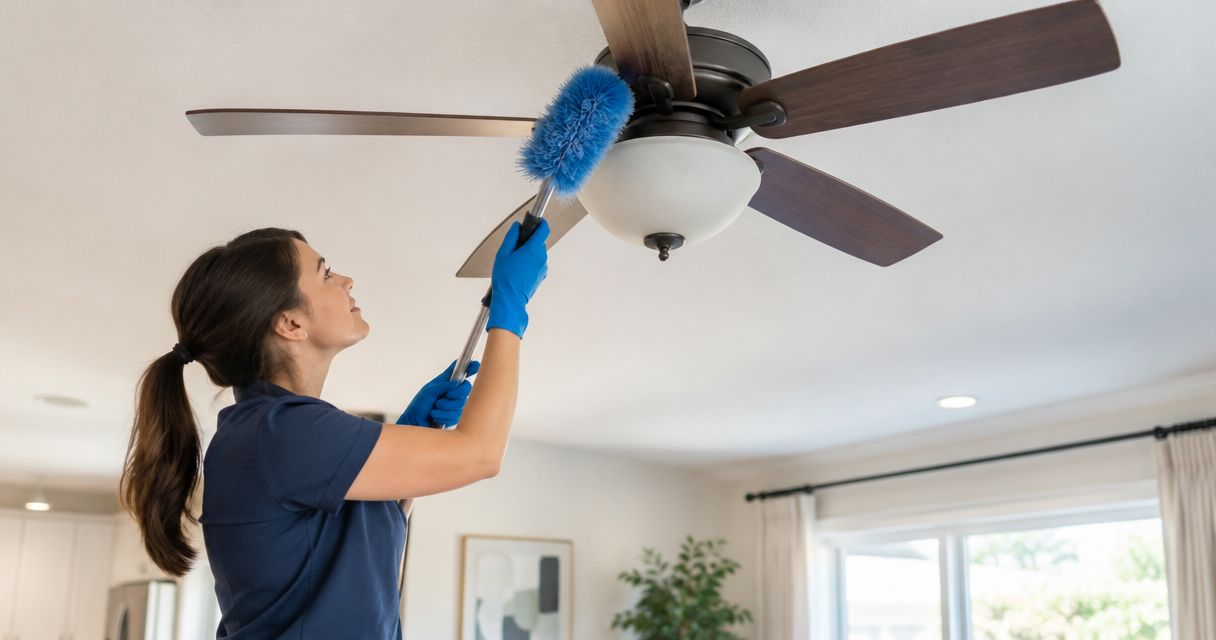
For ceiling fans, specify the upper surfaces, lower surfaces, and edges of the blades. Also identify accessible exterior parts you want dusted, such as the light cover or motor housing exterior.
Keep the request about cleaning, not repair. A wobbling fan, loose blade, damaged fitting, or unusual sound needs assessment rather than a harder scrub. Don’t ask a cleaner to tighten electrical components or investigate wiring as part of dusting.
Best for routine upkeep: agreed blade dusting on a safely accessible fan. Its limitation is simple: loose dust removal is not the same as removing a greasy film.
Light fixtures: distinguish outside from inside
Ask whether “light fixture cleaning” means wiping the exterior or also cleaning removable covers. A closed glass shade can have a spotless outside and still hold debris inside. Neither you nor the cleaner benefits from discovering that mismatch at the end.
Describe pendants, flush-mounted covers, wall sconces, and chandeliers separately. Mention loose glass, missing fasteners, unusual finishes, or anything sentimental before anyone starts.
Best for routine upkeep: exterior cleaning that follows the fixture’s care instructions. The drawback is that enclosed dirt remains until someone safely removes and cleans the cover.
Why ceiling fan and light fixture cleaning varies
The fixture itself determines the work—not the room’s name or how quickly the dust seems to disappear from below. These factors belong in your request:
- Safe access: A clear floor beneath a fan is different from a fixture hanging over stairs or a large, fixed table.
- Surface material: Painted blades, wood finishes, metal frames, fabric shades, and glass don’t all tolerate the same treatment.
- Type of buildup: Loose dust calls for a different approach from sticky cooking residue or adhered debris.
- Removable parts: Clips, screws, glass bowls, and hanging pieces add handling requirements beyond exterior dusting.
- Fixture condition: Cracks, loose fittings, exposed wiring, or unstable mounting are reasons to stop and address the problem.
- Agreed scope: Your booking needs to distinguish accessible surface cleaning from disassembly and specialist care.
For a 2026 booking, send a wide photo showing the access area and a closer photo showing the fixture. Photos help explain the request, but they don’t replace the cleaner’s on-site safety judgment.
How should you request fan and fixture cleaning?
You don’t need a technical description. A room-by-room list gives a cleaning company something concrete to confirm, especially when fixtures differ throughout your home.
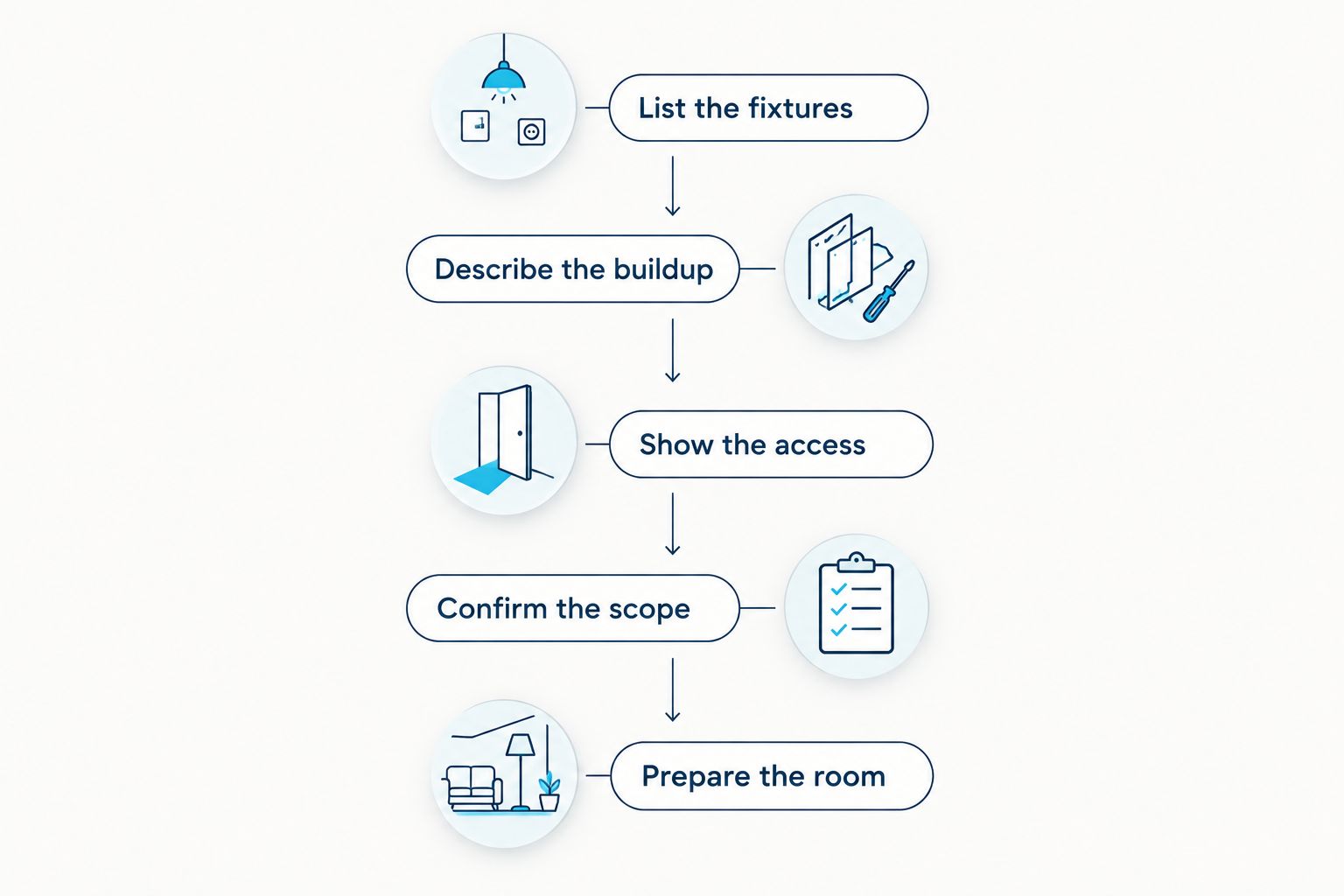
- List the fixtures. Identify each fan or light by room and location. Separate the bedroom fan from the stairwell pendant rather than grouping everything as overhead dusting.
- Describe the buildup. Say whether you see loose dust, sticky residue, cloudy glass, or debris inside a cover. Describe what you can see without climbing to investigate.
- Show the access. Explain what sits underneath and whether the fixture hangs over stairs. Don’t assume a long-handled tool makes every location safe.
- Confirm the scope. Ask which surfaces will be cleaned, whether any parts will be removed, and what will remain untouched. Keep the written confirmation with your appointment details.
- Prepare the room. Clear lightweight belongings from below, arrange for pets and children to stay away, and confirm who will switch equipment off before work begins.
For your 2026 request, useful wording identifies the room, the surface, and the limit: bedroom fan blade tops and bottoms, with no fixture disassembly. For a kitchen pendant, specify whether you want the outside wiped or the inside of a removable shade cleaned too.
Porch and Parlor Cleaning serves greater Nashville homeowners seeking residential cleaning booked online. For this specific task, contact the cleaning team to confirm fan and fixture scope before booking. The service description establishes residential cleaning, not a guarantee of fixture disassembly or high-access work.
What should happen before anyone cleans overhead?
Turn the fan off, prevent accidental activation, and let light bulbs cool before cleaning. Follow the manufacturer’s instructions for power isolation and care. A wall switch alone is not a substitute for any additional precautions those instructions require.
Keep liquid away from sockets, wiring, and motor openings. Don’t spray cleaning solution directly into a fixture or fan assembly. Any damp wiping should follow the material’s care instructions, without soaking the surface.
Safe footing matters just as much as the cleaning method. Don’t offer a dining chair, stack furniture, or encourage someone to stretch beyond a secure working position. The cleaner needs to decide whether the task fits their equipment and working rules.
Before your 2026 appointment, flag these stop signs:
- Cracked glass, loose shades, or unstable mounting.
- Exposed wires, scorching, or a burning smell.
- A fan that moves unexpectedly or has visibly loose parts.
- An access position that requires leaning over stairs or obstacles.
Cleaning doesn’t fix those problems. Arrange appropriate repair or specialist assessment first.
Can house cleaners remove glass shades and clean inside lights?
House cleaners can clean removable glass shades only when the company accepts that work and the fixture can be handled safely. Ask explicitly; exterior dusting doesn’t establish permission to remove parts.
The manufacturer’s instructions should determine whether a shade is washable and how it comes off. Don’t assume clear glass, frosted glass, painted glass, and decorative coatings share the same care requirements.
Before removal, agree on who handles reassembly and what happens if a fastener is damaged or a shade won’t seat securely. If the fixture’s construction is unclear, leave it assembled until someone qualified can assess it. A mystery screw is not an invitation to experiment.
Can house cleaners clean fans on high ceilings or above stairs?
High or stairwell-mounted fans need an access assessment before cleaning is agreed. There is no universal reach limit that applies to every company, tool, room layout, or fixture.
Describe the location honestly and send a photo from floor level. Include the stairs, furniture, or other obstacles beneath it rather than cropping them out. The access route is part of the job.
Don’t interpret a declined task as permission to try it yourself from a chair. For difficult access, ask what kind of specialist or equipment the situation requires, and arrange the work separately when necessary.
Is fan dusting enough, or does it need deeper cleaning?
Fan dusting addresses loose dust; it doesn’t necessarily remove attached residue. If a blade still feels sticky or shows a film after loose dust is removed, discuss a material-appropriate cleaning method rather than repeated dry brushing.
A kitchen-adjacent fan deserves a clear description of the buildup. So does a delicate decorative light. Choosing a deeper whole-home clean doesn’t automatically answer whether either fixture can be dismantled or safely reached.
For a 2026 maintenance plan, record what was completed and what was excluded. Base the next request on visible condition and the manufacturer’s care instructions, rather than assuming every overhead fixture needs identical treatment on every visit.
What should you check after the visit?
Review the agreed surfaces from a safe position on the floor. Don’t climb up to inspect blade tops or remove a shade just to check the work. Ask the cleaner to explain anything that couldn’t be completed.
Keep your review tied to the request:
- Did the agreed blade surfaces receive attention?
- Was the light cleaned outside only, or inside as well?
- Were fragile or inaccessible components left untouched as agreed?
- Did the cleaner identify damage or an access problem?
If something was excluded, record the reason before scheduling another visit. That gives you a useful next step instead of another appointment with the same unresolved obstacle.
FAQ
Can house cleaners clean ceiling fans and light fixtures during a regular visit?
Yes, when the company agrees to include the task and the surfaces are safely accessible. Confirm blade surfaces, fixture exteriors, removable parts, and access requirements before the visit.
Do house cleaners clean the tops of ceiling fan blades?
Ask specifically for the tops of ceiling fan blades to be included. A general dusting request doesn’t clearly establish whether tops, bottoms, and edges will all receive attention.
Will a house cleaner take down my light fixture to wash it?
Don’t assume a house cleaner will take down a light fixture. Removing a washable shade is different from disconnecting or dismantling an electrical fixture, and either task needs explicit agreement.
Can cleaners use my ladder to reach a ceiling fan?
Confirm equipment rules with the cleaning company before offering your ladder. Owning a ladder doesn’t establish that the equipment, location, or task meets the cleaner’s safety requirements.
Should I turn off the fan before the cleaner arrives?
Yes, switch the fan off and prevent accidental activation before cleaning begins. Follow the manufacturer’s power-isolation instructions, and let light bulbs cool before anyone handles nearby surfaces.
Can a house cleaner fix a wobbling fan while cleaning it?
Fan repair is a separate task from cleaning. Flag wobbling, loose components, or electrical concerns and arrange an appropriate assessment instead of asking the cleaner to troubleshoot them.
Does Porch and Parlor Cleaning offer residential cleaning in Nashville?
Porch and Parlor Cleaning offers residential cleaning in the greater Nashville area with online booking. Confirm ceiling fan and light fixture requests directly, including safe access and whether removable-part cleaning is accepted.
One last thing
Put overhead cleaning before the final cleaning of surfaces underneath it. Dust dislodged from a fan or shade can land on a bed, table, or freshly cleaned floor. Tell the cleaner about the overhead task before the room is finished—not while they’re packing up.
You don’t need to pre-clean the fan. Your most useful contribution is a clear request, an uncluttered access area, and permission to stop when the job isn’t safe.