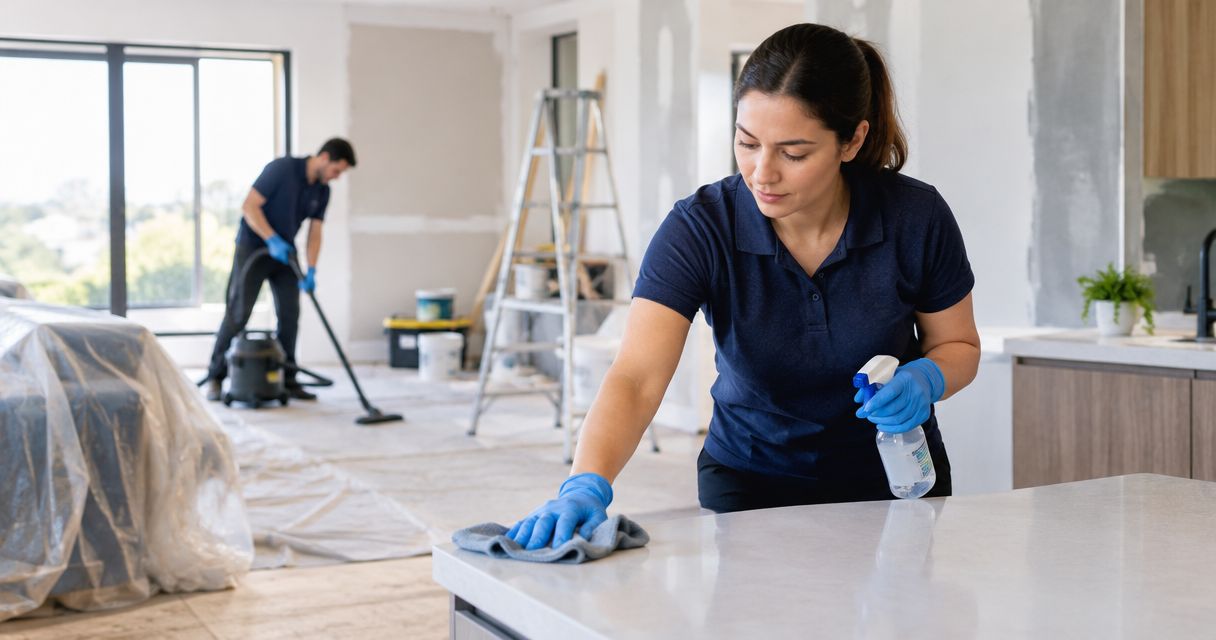
Yes, house cleaners can clean during a home renovation when the cleaning company agrees to the scope, the rooms are safely separated from construction, and workers are not creating dust in those areas. Routine house cleaning does not replace construction-debris removal, hazardous-material cleanup, or a separately agreed post-construction clean.
- Can house cleaners clean during a home renovation? Yes, in safe, separated rooms with an agreed cleaning scope.
- Keep routine house cleaning separate from construction cleanup; the tasks and equipment are not interchangeable.
- Schedule final post-construction cleaning after dust-producing work and debris removal are complete.
- Porch and Parlor Cleaning serves greater Nashville homeowners; discuss renovation conditions before booking residential cleaning.
Can house cleaners clean during a home renovation?
Yes—but book for the condition of the rooms, not just the fact that you want them cleaned. A working bathroom outside the construction area is a different job from a bathroom covered in tile-cutting dust. Before booking, review the company's residential cleaning services and explain exactly what work is underway.
Use this comparison when planning a renovation cleaning visit in 2026. These are booking categories, not promises that every cleaning company accepts every job.
| Cleaning approach | Best for | Main benefit | Main limitation |
|---|---|---|---|
| Routine cleaning in unaffected rooms | Households living at home during a contained renovation | Keeps usable kitchens, bathrooms, and living areas manageable | Does not address the active construction zone |
| Agreed interim construction cleanup | Projects that need cleanup between work phases | Addresses a specific stage before the next trade arrives | Requires a provider that accepts the materials and conditions |
| Final post-construction cleaning | Renovated rooms after dusty work and debris removal | Focuses on remaining construction residue and detailed cleaning | Finishing work afterward can dirty surfaces again |
| Pausing the visit | Homes without safe access or effective separation | Avoids exposing cleaners to an unsuitable worksite | Leaves ordinary household cleaning for another time |
Do not assume that ordering a deep clean automatically covers renovation residue. Describe the materials, surfaces, and tasks, then get the accepted scope in writing. A booking label is not a substitute for that conversation.
Why this matters
Renovation mess and everyday mess need different plans. Crumbs under the breakfast table are ordinary housekeeping; loose screws, broken tile, and unidentified dust belong in a conversation with your contractor and an appropriate cleanup provider.
The goal during construction is often a usable home, not a spotless worksite. Keeping the household bathroom clean helps. Asking someone to mop a hallway while tradespeople carry dusty materials through it is cleaning on a treadmill.
For your 2026 renovation plan, separate household maintenance from the contractor's cleanup responsibilities before arranging either visit. That gives everyone a clear stopping point and keeps you from expecting a residential cleaner to finish a construction task.
Routine cleaning: keep the unaffected rooms usable
Routine cleaning makes the most sense when construction stays behind a proper boundary and the rest of your home remains safely accessible. Ask the cleaner to focus on agreed household tasks in rooms outside that boundary.
For example, you might request bathroom surfaces, accessible floors, and ordinary kitchen cleanup in an unaffected part of the house. Those are requests to confirm, not automatic inclusions. Tell the company if a kitchen, sink, or bathroom is unavailable.
Best for: homeowners who still have a safely separated living area. The benefit is practical household upkeep while the project continues; the limitation is that fresh dust or contractor traffic can undo the result.
Keep tools, cords, building materials, and loose hardware out of the cleaner's route. Do not ask the cleaner to move protective sheeting or enter a closed-off room to reach a missed spot. That boundary has a job to do.
Interim cleanup: agree on the construction tasks separately
Interim cleanup happens between renovation phases rather than at the end. It can involve conditions beyond ordinary residential cleaning, so ask a provider whether it accepts the specific job before scheduling.
Tell the provider what created the mess: drywall work, woodworking, tile cutting, painting, or another activity. Include photographs of the affected rooms and explain whether workers will return afterward. A photograph helps show access and visible residue, but it does not identify what unknown dust contains.
Best for: projects with a defined cleanup handoff between trades. Interim cleanup can prepare a space for the next phase, but it is not a promise that the room will stay clean through the remaining work.
Keep disposal responsibilities explicit. Ask who removes offcuts, rubble, packaging, sharp objects, and leftover materials. Do not leave those decisions for the person arriving with a mop.
Final cleaning: wait until dust-producing work is finished
Final post-construction cleaning belongs after the work that creates the mess, not simply after the date labeled completion on your calendar. Ask the contractor whether sanding, cutting, drilling, and touch-ups still remain.
A final visit can focus on agreed accessible surfaces after construction debris is removed and the space is ready for cleaning. Fresh finishes also need their manufacturer's care instructions followed. Dry to the touch does not automatically mean ready for scrubbing.
Best for: renovated rooms ready to return to household use. The benefit is a focused cleanup after construction; the limitation is that later repairs or finishing work can require another cleaning pass.
Use the post-construction cleaning checklist to organize the areas you want discussed. Confirm which tasks the chosen provider accepts rather than treating any checklist as a service guarantee.
Why cleaning during a renovation varies
The right arrangement depends on the actual worksite. These factors determine what you should discuss before a cleaner arrives:
- Work stage: Demolition, installation, and final touch-ups leave different conditions. Name the current phase and the next scheduled activity.
- Dust source: Ordinary household dust is not the same as residue from cutting or sanding building materials. Explain what produced it.
- Room separation: A room outside the project is only useful for cleaning if construction dust and traffic are effectively kept out.
- Safe access: Clear walking routes, usable utilities, and freedom from exposed hazards matter more than keeping the original appointment.
- Surface condition: New flooring, paint, stone, and fixtures need care methods compatible with their finishes.
- Agreed responsibility: Debris removal, adhesive removal, high-access work, and ordinary housekeeping need clearly assigned owners.
Book around readiness, not optimism. If the contractor's schedule changes, reassess the cleaning scope instead of assuming the original plan still fits.
How do I prepare for a cleaner during a renovation?
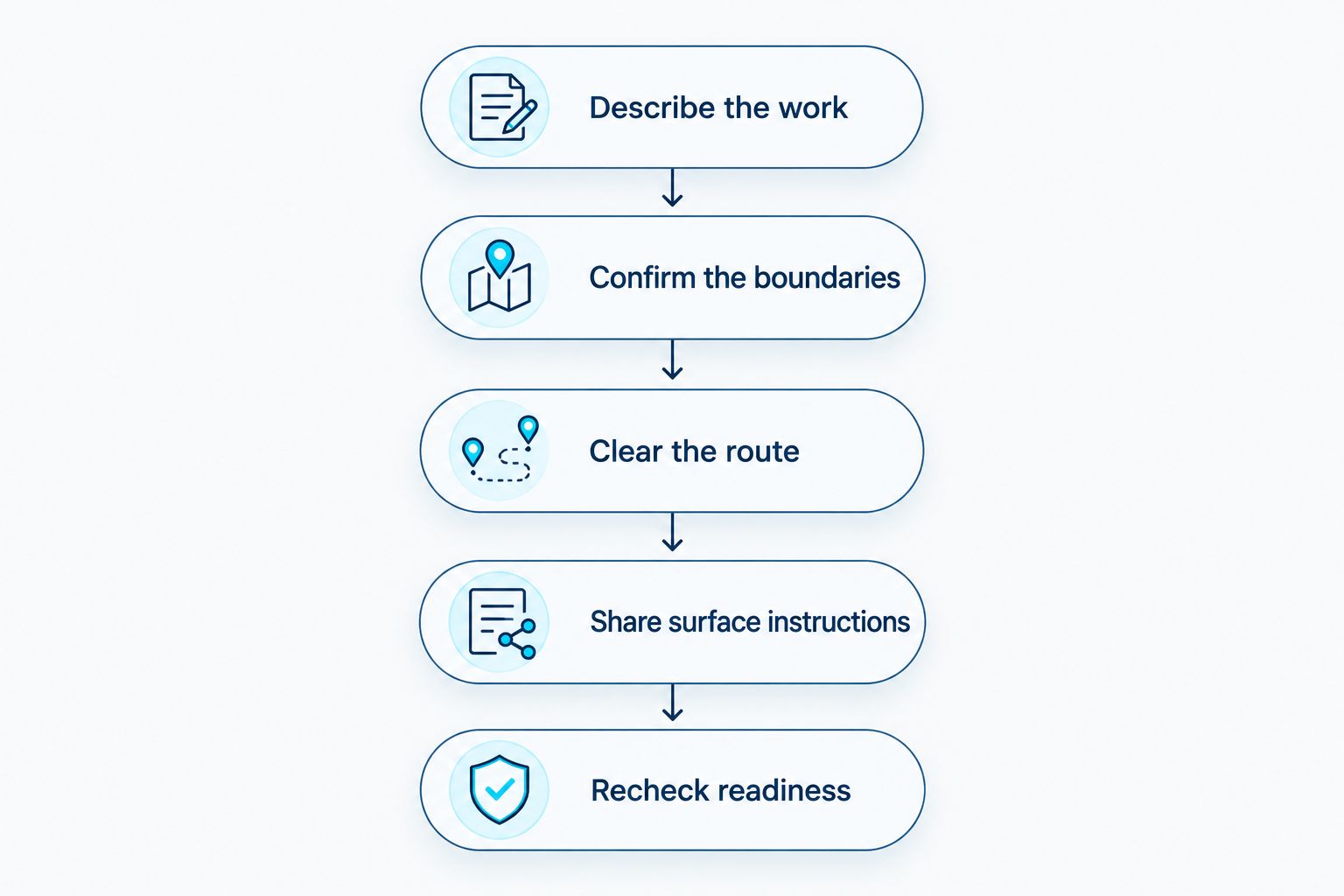
Use this sequence for your 2026 project. The point is to resolve the messy details before arrival—not give a rushed tour while someone unloads supplies.
- Describe the work. Tell the cleaning company which rooms are being renovated, what materials are involved, and whether you are living in the home. Send current photos rather than pictures taken before construction began.
- Confirm the boundaries. Identify rooms available for household cleaning and rooms that remain off-limits. Agree on a safe entrance and a route that does not cross the active worksite.
- Clear the route. Have the responsible person remove loose hardware, tools, cords, packaging, and construction debris from the cleaning area. Do not shift those items into another room the cleaner needs to use.
- Share surface instructions. Pass along the care directions for newly installed or refinished materials. Flag anything that must not get wet, scrubbed, uncovered, or moved.
- Recheck readiness. Before the appointment, confirm that the work schedule, access, and room conditions still match the agreed scope. Contact the company if they have changed.
A simple written room list helps: clean these rooms, skip these rooms, and leave these surfaces untouched. Keep it specific enough that a cleaner does not have to guess where the construction boundary begins.
Make access arrangements with the contractor too. A cleaner should not arrive to find the agreed entrance blocked by a delivery or the only usable bathroom disconnected that morning.
When should I postpone house cleaning during construction?
Postpone when the agreed rooms cannot be reached or cleaned safely. Active demolition, exposed wiring, unstable materials, sharp debris, and uncontrolled construction dust are reasons to stop and speak with the contractor and cleaning company.
Suspected lead, asbestos, or mold contamination needs assessment by an appropriate qualified professional—not a routine housekeeping workaround. EPA guidance treats lead-safe renovation and asbestos handling as specialized concerns. Do not ask a house cleaner to identify an unknown material or make it safe.
For a 2026 booking, tell the company about known hazards before confirming the visit. If someone discovers an unexpected condition on arrival, pause the affected work and reassess rather than asking the cleaner to work around it.
Also postpone cleaning a new finish when its care instructions prohibit the proposed method. A cleaner should not have to choose between leaving residue behind and risking damage to a surface that is not ready.
How should I coordinate the contractor and cleaning company?
Give each party a clear handoff. The contractor explains what work remains, which areas are restricted, and what cleanup the construction agreement covers; the cleaning provider confirms the household or post-construction tasks it accepts.
Ask who handles protection removal and when it should happen. Removing floor coverings or barriers can expose residue, so the order matters. Do not have a cleaner peel away construction protection without authorization.
Porch and Parlor Cleaning's residential cleaning service is for greater Nashville homeowners who want to book home cleaning online. For a renovation visit, contact the company to discuss the actual room conditions and requested tasks before choosing a booking.
The practical limitation is scope: residential cleaning should not be treated as an automatic replacement for construction cleanup. Ask specifically whether the proposed visit fits, and use a suitable specialist for tasks outside the accepted work.
Can cleaners work while contractors are in the house?
Yes, cleaners and contractors can be in the same house when their work areas are safely separated and both providers agree. Do not schedule them to share a room, doorway, or hallway where one person's work blocks or contaminates the other's.
For example, cleaning an unaffected upstairs bathroom is different from cleaning beneath active ceiling work. Describe the overlap before booking. Being under the same roof is not the deciding factor; the work conditions are.
Should I book a deep clean before the renovation ends?
Book a deep clean before the renovation ends only for an agreed, unaffected area or a clearly defined interim task. Save the final construction cleanup for when the remaining work will no longer recreate the same mess.
If your 2026 project has several completion dates, use room readiness rather than one whole-house deadline. A completed bedroom and an active kitchen do not need the same cleaning plan.
FAQ
Can house cleaners clean during a home renovation if I still live there?
Yes, house cleaners can clean agreed living areas when those rooms are safely separated from construction. Explain the renovation, available utilities, access route, and off-limits rooms before booking.
Is deep cleaning the same as post-construction cleaning?
No, deep cleaning and post-construction cleaning are not interchangeable booking terms. Confirm whether the provider accepts construction dust, residue, and the specific surfaces involved.
Can my house cleaner remove drywall dust?
Ask the cleaning company to assess the drywall-dust task before booking it. Construction dust requires suitable methods and equipment; do not assume ordinary household supplies are appropriate.
Do I need to remove construction debris before cleaners arrive?
Arrange construction-debris removal before a routine house-cleaning visit. Confirm who handles rubble, sharp objects, offcuts, and packaging rather than leaving those tasks unassigned.
How long should I wait after painting to have cleaners come?
Follow the paint manufacturer's care instructions before cleaning freshly painted surfaces. Drying and curing are different, so do not use a universal waiting period for every finish.
Can a cleaner vacuum dust that might contain lead or asbestos?
Do not ask a routine house cleaner to vacuum suspected lead or asbestos contamination. Stop disturbing the material and arrange assessment by an appropriate qualified professional.
Does Porch and Parlor Cleaning offer residential cleaning in Nashville?
Porch and Parlor Cleaning offers residential home cleaning in the greater Nashville area with online booking. Discuss renovation conditions and the requested scope before arranging a visit.
One last thing
Tell the cleaner what must stay dirty for now. An unfinished surface, protected floor, or freshly applied finish is not an invitation to scrub harder. Give those areas an explicit do-not-touch instruction.
Before booking, ask your contractor what work could put dust back into a cleaned room. That answer is more useful than a hopeful completion date—and saves the disappointment of seeing fresh footprints across a freshly cleaned floor.