Yes, you can hire insured cleaners for a rental property in 2026, whether you need cleaning between tenants, during an occupied lease, or between short stays. Ask for current insurance documentation and confirm that the policy covers the business performing your particular job. Insured does not mean every accident, missing item, or unfinished task is covered.
- Can I get insured cleaners for a rental property? Yes—verify current coverage before giving access.
- General liability insurance, workers’ compensation, and bonding address different risks; they are not interchangeable.
- Porch and Parlor Cleaning offers Nashville-area residential cleaning with online booking; verify rental suitability and insurance before scheduling.
- Keep the cleaning scope, insurance documents, and property-condition photos together for each rental.
Why this matters
A rental cleaning involves more than handing over a mop. Someone needs permission to enter, clear instructions about belongings, and a plan if something breaks or a worker gets hurt.
Insurance is one part of that plan, not a substitute for it. Use this guide alongside the checklist for how to vet a house cleaning company, and settle the paperwork before sharing keys.
Can I get insured cleaners for a rental property?
Yes. The practical question is whether the cleaner’s coverage matches the work, property use, and people entering your rental. A company’s advertising alone does not establish that match.
Use these 5 checks before booking a rental cleaning in 2026:
- Describe the property. Explain whether it is occupied, vacant between leases, or used for short stays. Include the address and any unusual cleaning tasks.
- Request insurance evidence. Ask for a current certificate of insurance showing the insured business, insurer, policy dates, coverage types, and limits.
- Match the business names. Compare the name on the certificate with the company taking your booking. Ask about any difference rather than assuming a trading name explains it.
- Confirm the work fits. Ask the insurance agent about rental-property cleaning, exclusions relevant to your tasks, and coverage for the people actually attending.
- Save the written agreement. Keep the scope, access instructions, reporting process, and insurance documents with your property records.
A certificate is a summary of insurance information. It does not change the policy or establish that a particular claim will be paid. For a coverage decision, get an explanation from the insurer or agent—not just reassurance from whoever answers the booking message.
Which insurance documents should I ask a rental cleaner for?
Start with general liability evidence, then ask about worker injuries and any protection described as bonding. These address different problems, so do not treat them as interchangeable badges.
| Coverage or document | Best for checking | What it helps establish | Main limitation |
|---|---|---|---|
| General liability insurance | Accidental injury or property-damage concerns | The business carries liability coverage, subject to policy terms | Exclusions and conditions determine whether a particular incident is covered |
| Workers’ compensation documentation | Injuries involving the cleaner’s employees | How employee work injuries are addressed | Requirements and applicability depend on the working arrangement and state law |
| Bond documentation | Understanding a specific theft or dishonesty protection claim | The type of bond, covered parties, and claim conditions | A bond is not a replacement for liability insurance |
| Additional insured endorsement | Meeting a landlord’s or manager’s contractual requirement | Whether a specified party receives insured status under the endorsement | A certificate holder entry alone does not establish additional insured status |
Ask what each document proves, not whether the company has an impressive-looking folder. More paperwork is useful only when it answers your actual questions.
What should I check on a certificate of insurance?
Check the named insured, insurer, effective dates, expiration dates, coverage types, and limits. Make sure the scheduled cleaning falls within the stated policy period, and ask the agent to confirm anything unclear.
For a recurring arrangement starting in 2026, set a reminder to request updated evidence when the listed policy expires. Do not assume an old certificate proves continuing coverage.
A certificate holder receives evidence of coverage; that label does not make the holder an insured. If your contract requires additional insured status, ask for the relevant endorsement and have your insurance adviser review it.
Does bonded mean the same thing as insured?
No. Bonding and insurance serve different purposes, and the details of the actual bond matter.
Ask who is protected, which conduct triggers a claim, and what documentation is required. Do not assume that the word bonded means any missing possession will be replaced.
How do I match coverage to my rental cleaning?
Describe the job as it really is. An empty apartment after a lease ends is a different assignment from cleaning around a tenant’s belongings or preparing a furnished home for arriving guests.
That does not automatically mean a different insurance policy is necessary. It means the cleaner and insurance adviser need an accurate description before confirming suitability.
Occupied rental: agree on permission and belongings
For an occupied home, agree with the tenant on access and follow the lease and applicable entry rules. Put any rooms or belongings that should not be touched in the written instructions.
Ask who will be home, how pets will be managed, and where the cleaner can work safely. Insurance does not replace permission to enter or make an unclear access arrangement acceptable.
Vacant rental: separate cleaning from repairs
For a vacant unit, identify existing damage before the visit. Photograph cracked fixtures, damaged flooring, loose fittings, and other concerns so a later discussion does not depend on memory.
List the actual cleaning tasks. Removing construction debris, handling suspected mold, or working around exposed wiring calls for a separate suitability discussion—not a casual addition to a standard cleaning request.
Short-stay rental: define the turnover work
For a short-stay property, distinguish cleaning from laundry, restocking, inspections, and guest communication. Ask which tasks the provider accepts rather than treating turnover as a universal service package.
Put the entry window and required completion time in writing. A clean home and a guest-ready home are not necessarily the same thing if nobody agreed who handles linens or reports missing essentials.
Why rental-cleaning coverage varies
The word insured cannot tell you everything about a policy. These factors explain why you need to check the documents against the job:
- Property use: Disclose whether the home is a long-term rental, short-stay accommodation, or occupied residence.
- Work requested: Explain tasks beyond ordinary residential cleaning, especially specialized work or unusual hazards.
- Who performs the work: Ask whether employees, independent contractors, or another business will attend and how coverage applies.
- Policy terms: Exclusions, limits, deductibles, and conditions affect how a claim is handled.
- Contract requirements: A property manager or building association might require specific documentation or insured status.
- Policy dates: A certificate from a previous booking does not establish coverage for the next visit.
Verify the arrangement you are hiring, not a general promise about the company. If the staffing or scope changes, revisit the questions that change with it.
What should I put in the cleaning agreement?
Keep the agreement plain enough that everyone can follow it. A useful rental-cleaning file contains 3 records: insurance evidence, a written scope, and a property-condition record.
The scope should identify the address, rooms, accepted tasks, excluded tasks, access arrangements, and person authorized to approve changes. Specify whether appliance interiors, inside cabinets, laundry, or moving items are included; do not assume they are.
The property-condition record should show relevant existing damage and any fragile surfaces or belongings. Keep sensitive tenant information out of unnecessary photos and share records only with the people who need them.
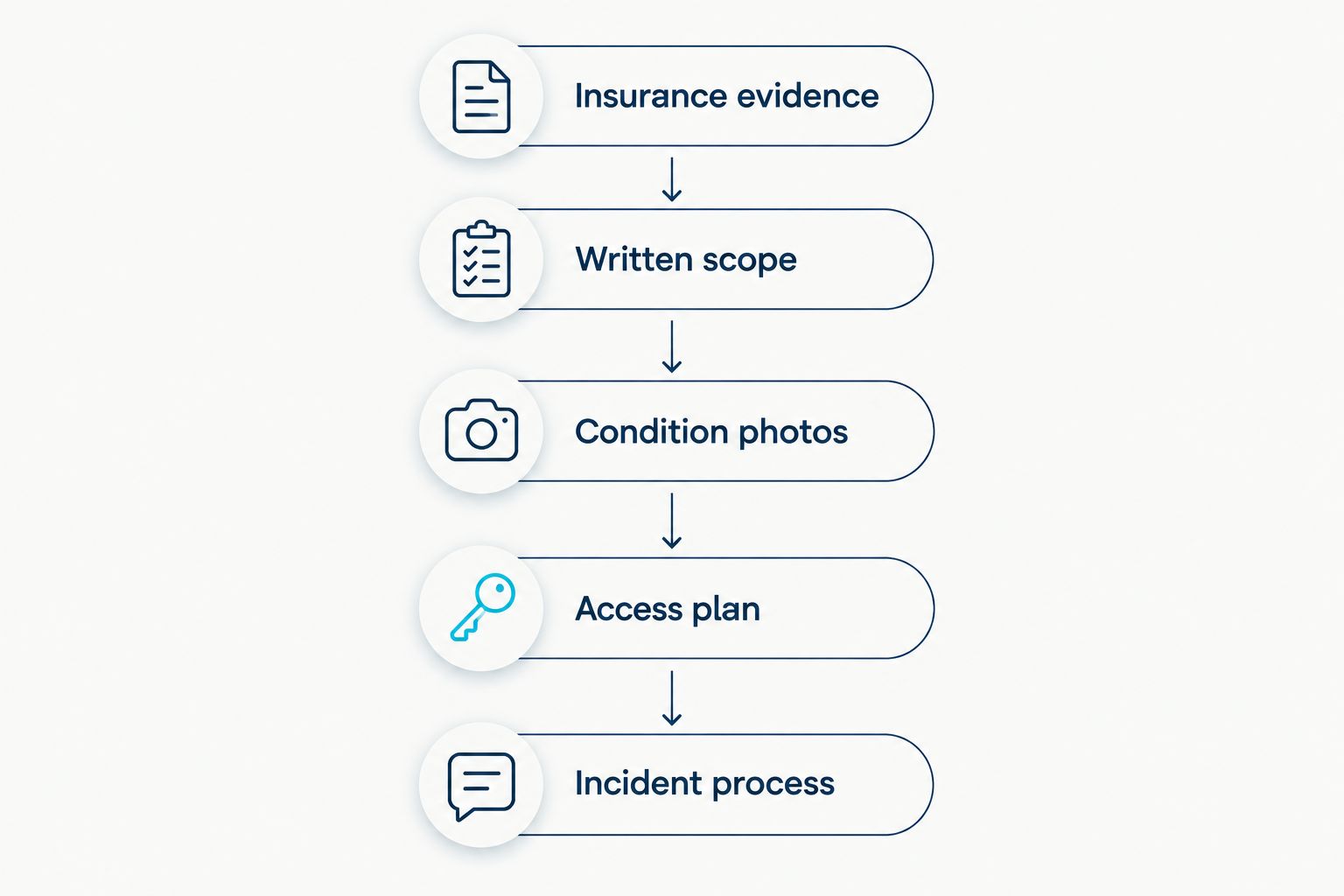
For your 2026 rental-cleaning checklist, use this sequence:
- Insurance evidence: Save current documents and the agent’s explanation of unresolved questions.
- Written scope: Record the agreed tasks, exclusions, and instructions.
- Condition photos: Document existing concerns before work begins.
- Access plan: Name the authorized contact and explain entry and lockup.
- Incident process: Agree on who receives reports and how to submit them.
Keep 2 contacts easy to find: the cleaning business’s responsible contact and your own insurance adviser. That gives you a practical starting point if an incident raises both service and coverage questions.
Can I book residential cleaning online for a Nashville rental?
You can use online booking to arrange residential cleaning, but the booking form is not insurance verification. Describe the rental use and confirm that the provider accepts the property and requested work before treating the booking as settled.
Porch and Parlor Cleaning is best suited to greater Nashville homeowners seeking residential cleaning with online booking. You can visit Porch and Parlor Cleaning to begin a residential-cleaning inquiry.
Porch and Parlor Cleaning offers homeowner bookings through its BookingKoala-powered scheduling site. That supports online scheduling; it does not establish rental-specific suitability, insurance coverage, or specialized turnover services. Confirm those points directly before arranging access.
What should I do if something is damaged during cleaning?
First, address immediate safety concerns and prevent further damage where it is safe to do so. Notify the cleaning business promptly and preserve the facts without assigning blame before you understand what happened.
Photograph the damage, record when it was discovered, and save relevant messages and before-cleaning photos. Ask the business for its incident-reporting process and the appropriate insurer contact if a claim is being considered.
Contact your own insurance adviser when the incident involves your property coverage or potential liability. A cleaner’s insurance is not a replacement for your landlord or rental-property policy. Coverage and responsibility depend on the incident and the relevant policy terms.
Should I reject a cleaner who cannot provide insurance evidence?
If verifiable coverage is a condition of your booking, do not authorize entry until that condition is met. Give the business a clear opportunity to provide current documents or arrange confirmation through its agent.
An unexplained name mismatch, expired certificate, or refusal to discuss who performs the work is a reason to pause. It is not proof of wrongdoing, but it leaves your hiring requirement unresolved.
Apply the same standard throughout 2026, including repeat visits. Familiarity with a cleaner is useful; familiarity is not a policy document.
FAQ
Can I get insured cleaners for a rental property I own?
Yes, you can hire insured cleaners for a rental property you own. Request current insurance evidence and confirm that the policy and provider are suitable for your property use and cleaning tasks.
Can I hire an insured cleaner if I rent rather than own my home?
Yes, tenants can hire insured cleaners, subject to their lease and any applicable building or access rules. Confirm permission for the work and avoid authorizing changes or tasks outside your authority.
Does a cleaner’s insurance cover every broken item?
No, a cleaner’s insurance does not automatically cover every broken item. Coverage depends on the incident, liability, exclusions, and other policy terms; ask the insurer or agent about the relevant protection.
Do I need to be listed as an additional insured?
Additional insured status depends on your contract requirements and insurance advice. Being named as a certificate holder alone does not establish additional insured status; request the applicable endorsement when required.
Are independent cleaners insured, or only cleaning companies?
An independent cleaner can carry business insurance, just as a cleaning company can. Verify the actual business and people attending instead of using business size as proof of coverage.
Does insured also mean bonded and background-checked?
No, insurance, bonding, and background checks are separate matters. Ask for evidence of each protection you require rather than assuming one label includes the others.
Should I check insurance again for recurring rental cleaning?
Yes, request updated evidence when the listed policy expires and revisit coverage questions when the work or staffing changes. Keep the current documents with your rental-cleaning agreement.
One last thing
A spotless kitchen does not tell you whether the business name on the insurance certificate matches the business you hired. That small administrative check belongs before the first visit, not after a broken fixture.
For any rental cleaning you arrange in 2026, send the property use, scope, and insurance questions together. Get clear answers before handing over access. It is much easier than sorting out assumptions after the mop bucket has left.