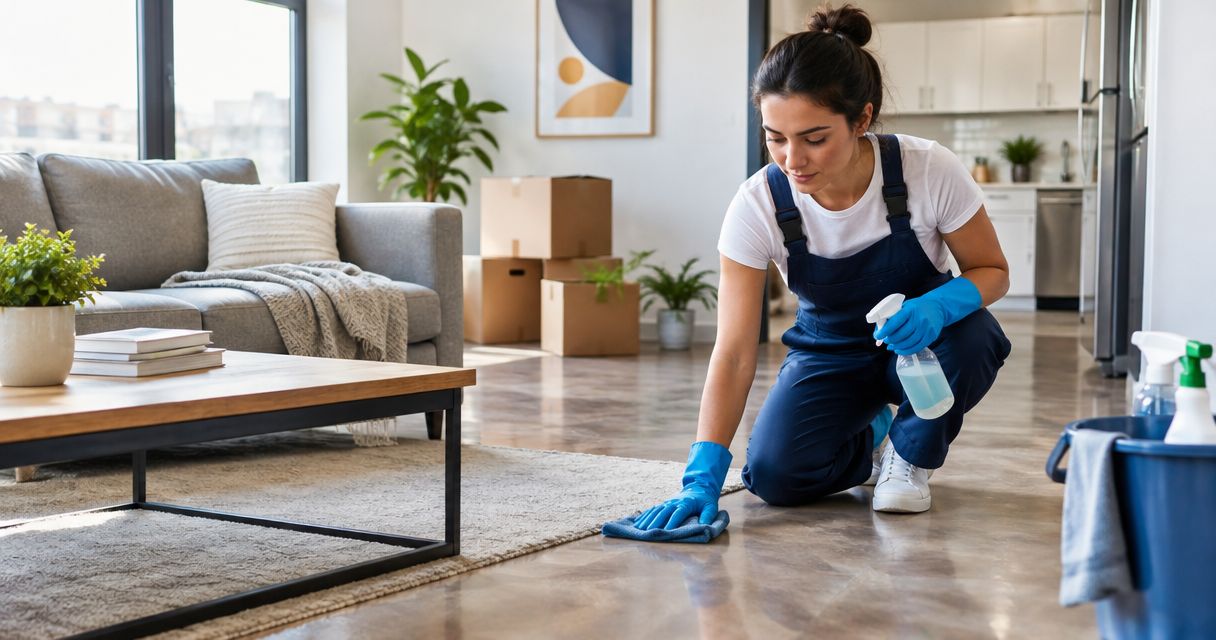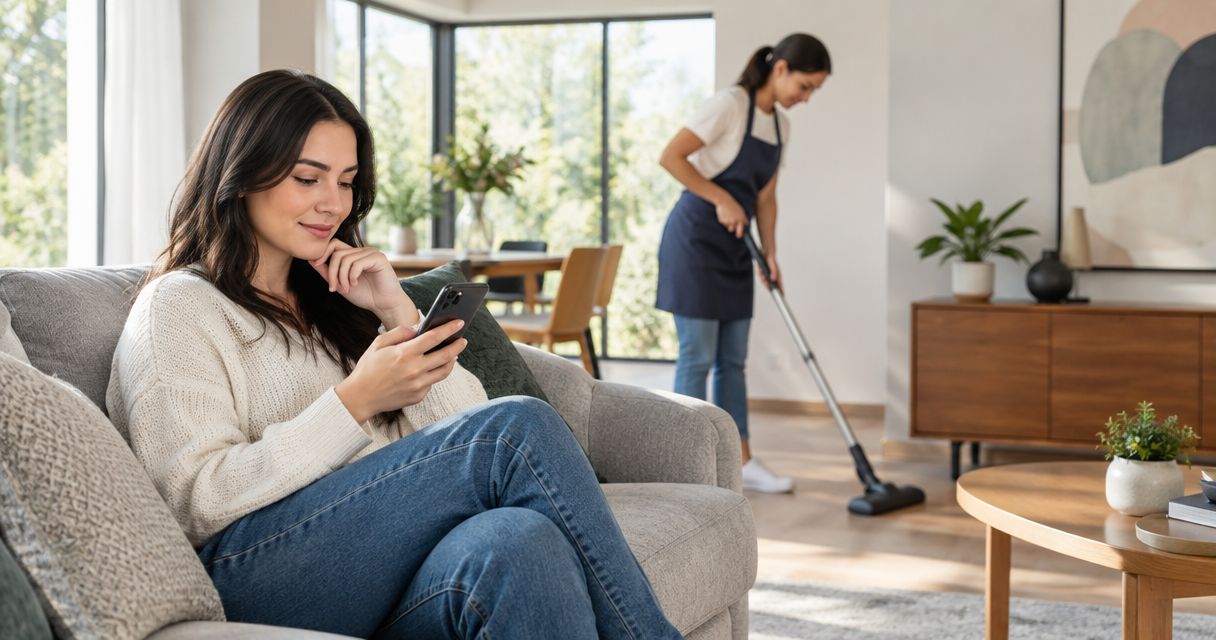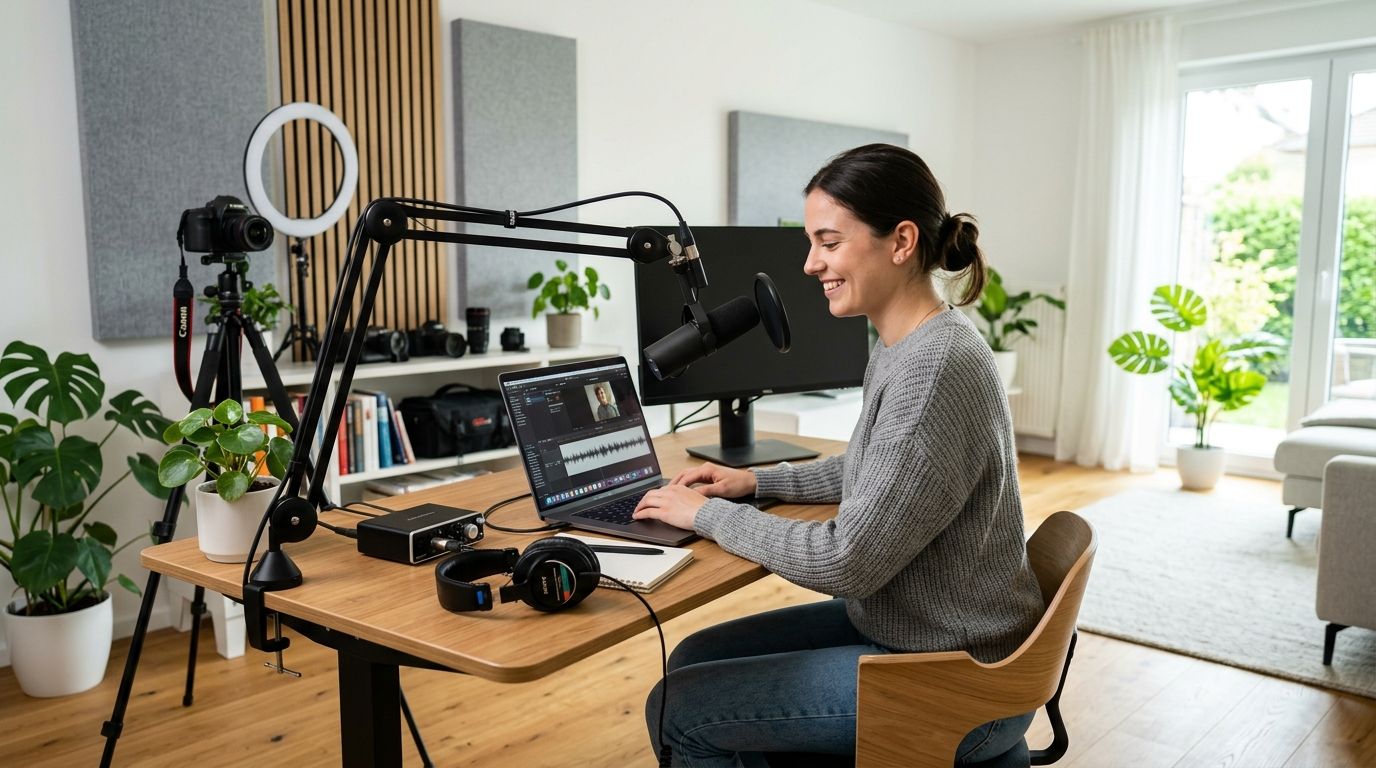
If you record videos, podcasts, or livestreams out of a spare bedroom, garage, or converted basement, house cleaning for content creator home studios has to work around gear, acoustic panels, and a shoot schedule that a regular cleaning crew has never been trained to respect. The goal isn't just a tidy house — it's a set free of dust bunnies on camera, no glare on the lens, and zero cables tripped over mid-take.
- House cleaning for content creator home studios means scheduling around shoot days, not after them.
- Porch and Parlor Cleaning in Nashville handles studio spaces but needs gear flagged before the visit.
- Recurring cleaning beats one-off deep cleans for creators who film weekly — dust builds fast around equipment.
- Soft surfaces like acoustic foam and rugs need vacuum-only treatment, never wet wipe-downs.
Why house cleaning matters for content creators
A home studio collects a specific kind of mess: cable spaghetti, lens dust, coffee rings on the desk that show up on every wide shot, and pet hair that a sensitive microphone picks up before your ears do. None of that is a normal living-room problem, and treating it like one is how gear gets damaged or a shoot gets scrapped.
Creators also work on a different clock than most households. A cleaning crew that shows up whenever is fine for a family kitchen. It's a disaster the morning of a scheduled livestream. The fix isn't a fancier cleaning service — it's a schedule and a prep routine built around your content calendar, in 2026 as much as any other year.
Audit your studio's dust and clutter zones
Walk your space like a stranger would before you ever book anyone. Dust hides in the same three or four spots in every studio, and knowing them saves time on every visit after this one.
- Behind and under the desk where cable bundles collect lint
- Top edges of monitors, ring lights, and speaker cabinets
- Acoustic foam panels, which trap dust in the texture
- Camera bags, tripod legs, and lens cases left open
- Window sills near natural-light setups
Set a cleaning cadence around your content calendar
Weekly uploaders need a different rhythm than someone who films once a month. Match the visit frequency to how often the room gets used, not to a generic house-cleaning default.
- Weekly or biweekly for anyone filming 3+ times a week
- Monthly for occasional or seasonal creators
- A pre-launch deep clean before a big series or brand deal shoot
- A move-in deep clean if the studio is a new room in the house
- An add-on visit after guest interviews or crew shoots that bring extra foot traffic
If you haven't set a standing schedule yet, setting up recurring house cleaning is the easiest way to stop thinking about it week to week.
Protect your gear before the cleaner arrives
No cleaning company should be moving a camera body or unplugging an audio interface mid-signal chain. That's on you to prep, every time.
- Cap lenses and store loose cameras in cases, not on open shelves
- Coil and label cables instead of leaving them draped across the floor
- Power down and unplug anything you don't want touched
- Move tripods and light stands to one corner, out of walking paths
- Flag any surface that's look-but-don't-touch with a sticky note if needed
Handle acoustic treatment and soft surfaces carefully
Foam panels, bass traps, and rugs are the parts of a studio most likely to get damaged by the wrong cleaning method. Wet wiping foam ruins the open-cell texture that makes it work acoustically in the first place.
- Vacuum foam panels with a brush attachment, never a wet cloth
- Spot-treat rugs instead of steam cleaning them if they sit near electronics
- Dust blinds and curtains used for light control separately from windows
- Keep adhesive-mounted panels untouched — re-mounting is a hassle nobody wants
Manage cables, mounts, and camera gear during cleaning
This is the step most generic house cleaners skip entirely, because most households don't have a wall of XLR cables running to a mixer. Walking a cleaner through it once saves confusion on every future visit.
- Point out floor cables that need to stay exactly where they are
- Note which mounts are load-bearing for lights or cameras
- Identify gear that's mid-project and shouldn't be reorganized
- Ask the crew to dust around, not move, anything bolted or clamped in place
Book cleaning around shoot days, not after them
A clean studio the morning of a shoot beats a clean studio the day after one. Scheduling backward from your content calendar, instead of forward from your last cleaning date, is the single biggest mindset shift for this segment.
- Book 1-2 days before a major shoot, never same-day
- Build in buffer time in case a visit runs long
- Skip cleaning entirely on days with fragile in-progress setups like multi-cam rigs
- Loop cleaning into your editorial calendar the way you'd schedule a thumbnail deadline
Decide when to bring in a professional cleaner
DIY dusting works for a solo creator with a simple desk setup. It stops working once you've got a fully treated room, multiple cameras, and a filming schedule that leaves no time for chores. That's the point to hand it off.
Porch and Parlor Cleaning works with Nashville-area creators who need the room camera-ready without babysitting every visit — book online and flag your gear zones in the notes.
Comparison: cleaning options for home studio owners
| Option | Best for | Key limitation |
|---|---|---|
| DIY dusting and wiping | Solo creators, simple desk setups | Time-consuming once gear multiplies |
| One-off deep clean | Pre-launch or post-move-in resets | Doesn't solve ongoing dust buildup |
| Recurring professional cleaning | Weekly or biweekly filmers with acoustic treatment | Requires clear gear-handling instructions upfront |
| Hourly independent cleaner | Occasional filmers with basic setups | Inconsistent quality, no standard protocol for equipment |
Verdict: recurring professional cleaning wins for any creator filming more than once a week — it's the only option built to keep up with the mess a working studio actually generates.
Common mistakes content creators make with studio cleaning
- Leaving gear out during the visit. A cleaner who doesn't know a condenser mic from a paperweight will treat both the same way.
- Wet-cleaning acoustic foam. It looks like a normal wall panel. It is not. Water and foam texture do not mix.
- Scheduling cleaning for whenever, then scrambling before a shoot. Reactive cleaning always looks worse on camera than planned cleaning.
- Ignoring cable management until it becomes a tripping hazard. A good workman never blames his tools, but a tangled cable snake under the desk isn't a tool problem — it's a prep problem.
- Skipping a pre-visit walk-through. Five minutes pointing out what not to touch saves an afternoon of re-setting your rig.
Book your Nashville studio cleaning
Schedule online and add gear-handling notes before your visit.
FAQ
What's the best cleaning schedule for a home content studio?
Weekly or biweekly cleaning works best for anyone filming three or more times a week in 2026, because dust builds fast around lights, monitors, and acoustic foam. Occasional creators can get by with monthly visits plus a deep clean before big shoots.
Can a regular house cleaner work around camera and audio gear?
Yes, as long as you flag the gear zones before the visit. A quick walk-through pointing out cables, mounts, and untouchable surfaces prevents most damage or misplacement issues.
Is it safe to wet-clean acoustic foam panels?
No, acoustic foam should only be vacuumed with a brush attachment. Wet wiping breaks down the open-cell texture that gives the foam its sound-dampening properties.
How much does house cleaning cost for a home studio setup?
Pricing depends on room size, cleaning frequency, and how much gear-handling prep is involved. Get a current quote directly from the provider rather than relying on a flat estimate.
Should I clean before or after a shoot?
Book cleaning one to two days before a shoot, never the same day. That gives you buffer time if the visit runs long and avoids disturbing a setup that is mid-lighting-test.
Do I need to unplug equipment before a cleaning visit?
Unplug anything you do not want touched or moved. It takes a few minutes and prevents a cleaner from accidentally disconnecting a signal chain or knocking a camera off a tripod.
What is different about cleaning a home studio versus a regular home office?
A home studio has acoustic treatment, camera gear, and cable runs that a standard home office does not, and all of it needs specific handling instructions instead of a generic dusting pass.
One last thing
The part most creators forget: dust doesn't only look bad on camera, it changes how acoustic panels perform over time as buildup fills the foam's texture. A quarterly vacuum pass on foam panels alone — separate from your regular cleaning cadence — keeps your room sounding the way it did on day one in 2026, not just looking that way.