Home-based music teachers’ house cleaning is the upkeep of student-facing rooms and shared household spaces to keep lessons comfortable and your home ready for visitors. This 2026 guide separates everyday cleaning from instrument care, with a practical routine for entryways, teaching rooms, waiting areas, and bathrooms.
- House cleaning for music teachers should prioritize student routes, shared surfaces, and bathrooms—not instrument maintenance.
- Porch and Parlor Cleaning offers residential cleaning for greater Nashville homeowners; confirm teaching-room tasks before booking.
- Keep piano keys, microphones, and instrument interiors outside ordinary household cleaning instructions.
- Combine between-lesson resets with planned home cleaning, and schedule noisy work outside teaching hours.
Why house cleaning matters for home-based music teachers
When you teach at home, your hallway does double duty. It carries household traffic, instrument cases, waiting parents, and students heading to the bathroom. Cleaning only around the piano leaves the rest of that route out of the picture.
Your cleaning plan also has a boundary that ordinary room checklists miss: a clean floor and a clean instrument are different jobs. Household surfaces need regular attention; instruments need care matched to their materials and manufacturer instructions. One spray bottle does not get an all-access pass.
For your 2026 teaching schedule, build cleaning around the rooms students actually use rather than treating every bedroom as equally urgent. The guide to keeping a cleaning schedule while working from home covers the broader scheduling problem; the steps below focus on lesson traffic and music equipment.
Build a cleaning routine around your lessons
1. Map the student route
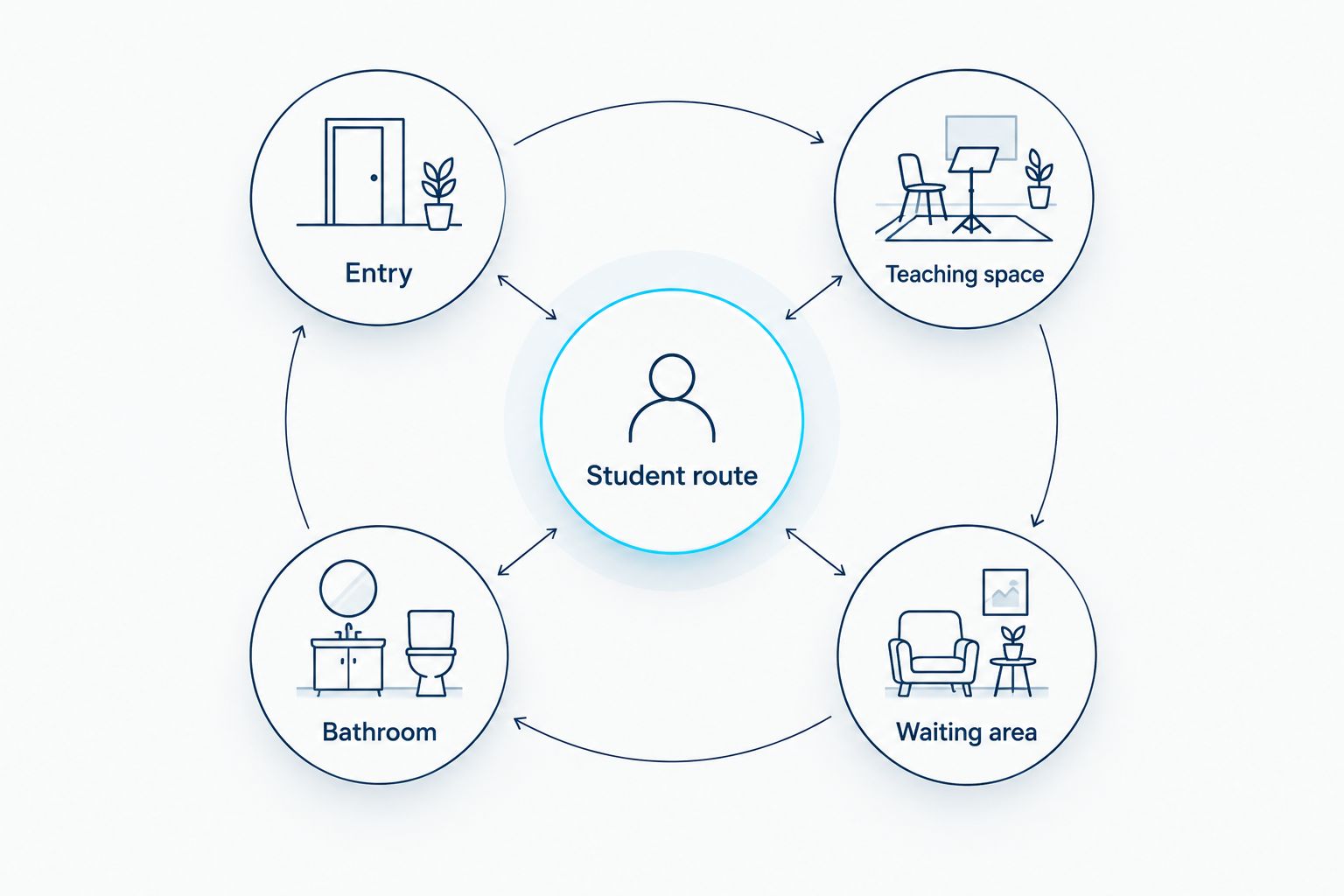
Walk from your front door to the teaching chair, then to the bathroom a student uses. Include the place where a parent waits. This is your student route, and it deserves attention even when the rest of your home is having a perfectly ordinary messy Tuesday.
Use a paper checklist before buying organizers or changing your routine. Divide the route into Entry, Teaching space, Bathroom, and Waiting area, then note what actually needs cleaning in each zone. Keep tidying separate: putting away scores clears access, but it does not remove dust from the shelf underneath.
Start with a 10-minute walk-through as a planning exercise, not a promise about how long cleaning takes. Look from a visitor’s height and position, including the chair where someone waits.
- Mark the rooms students and accompanying adults can enter.
- Check floors beneath waiting chairs and music stands.
- Give cases a designated spot outside walking paths.
- Identify household rooms that stay closed during lessons.
2. Separate household cleaning from instrument care
Make a written do-not-touch list before anyone helps clean. Include instruments, loose reeds, mouthpieces, microphones, pedals, audio controls, and anything whose position matters to your setup. A well-meaning adjustment still leaves you hunting for the right setting before a lesson.
Keep instrument care under your control unless you have specifically arranged qualified help. Use the instrument manufacturer’s instructions for suitable materials and methods. Do not turn general advice about furniture or bathroom surfaces into advice about piano keys, strings, finishes, or electronics.
For your own household cleaning, keep liquids away from equipment and avoid spraying into the air beside exposed instruments. Put supplies somewhere students cannot reach them. Before cleaning nearby, secure equipment yourself rather than asking someone to shuffle it around.
- List instruments and equipment that must stay untouched.
- Store loose accessories before cleaning starts.
- Separate household cloths from instrument-care materials.
- Record manufacturer instructions for equipment you maintain yourself.
3. Write a clear residential cleaning brief
Start with a simple room-by-room note you can use yourself or share with a cleaner. Write tasks rather than broad goals: clean the accessible floor, wipe the waiting table with a suitable product, and clean the student bathroom. A request to make the studio sparkle leaves too much open to interpretation.
If you want to hand off the household work, review the residential cleaning services offered by Porch and Parlor Cleaning. The company serves homeowners in greater Nashville and offers online booking. Confirm your room list, equipment exclusions, and timing before arranging a visit; residential service does not establish specialist instrument-care expertise.
Porch and Parlor Cleaning is best for greater Nashville homeowners seeking residential cleaning rather than specialist instrument care. For your 2026 plan, agree on the household scope first and keep music equipment on a separate checklist.
- Name the entry, teaching room, waiting area, and bathroom.
- Specify accessible surfaces rather than asking for everything.
- Flag cables, delicate finishes, and equipment exclusions.
- Ask which requested tasks fall within the agreed service.
- Confirm how to communicate changes before a visit.
4. Reset shared spaces between lessons
Begin with a manual reset that fits the gap you actually have. Remove rubbish, return teaching materials to their places, and check the next student’s route. Do not start wet floor cleaning just because you found a spare moment before the doorbell rings.
Use a 5-minute reset window as an optional calendar block, not as a requirement to finish every task. If your gaps are shorter, keep the reset smaller and move cleaning to the end of the teaching block. Your lesson schedule should not depend on winning a race against a damp floor.
Cleaning removes dirt; disinfecting is a separate task. Where disinfection is appropriate for a compatible household surface, follow the product label, including its required wet contact time. Never apply a household disinfectant to instruments merely because different students use them.
- Remove used tissues and other rubbish.
- Return loose pencils and scores to storage.
- Check the waiting table and student chair.
- Restock bathroom soap and check the hand-drying setup.
- Leave wet or unsuitable cleaning tasks for a proper break.
5. Clean floors without disturbing the setup
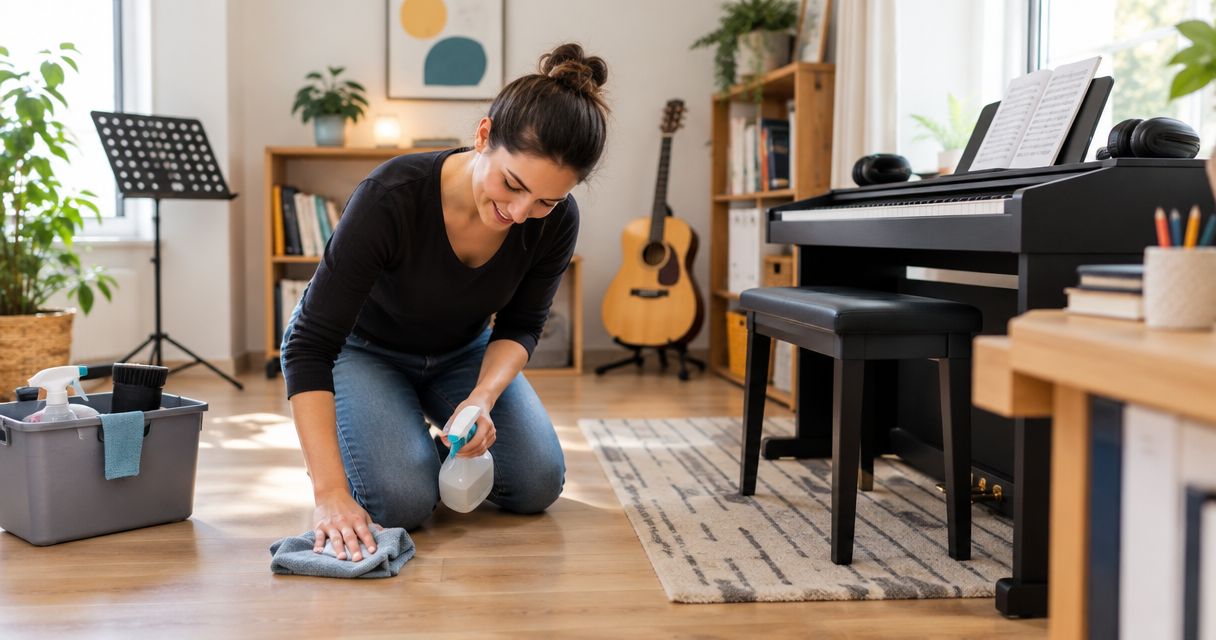
Pick up your own cables, pedals, cases, and portable stands before floor cleaning. Photograph their positions if that helps you restore the lesson setup. Clearing access is safer than expecting a cleaner to guess which lead can be unplugged or which stand is stable.
Work with the floor material, not against it. Follow the flooring manufacturer’s care instructions and avoid excess moisture around equipment. For rugs and carpet, arrange vacuuming when lessons and recordings are finished so the cleaning noise does not compete with a student’s playing.
Leave heavy instruments in place unless their movement is being handled appropriately. A piano is not an unusually stubborn coffee table. If an area cannot be reached without moving equipment, identify that limitation before the visit instead of leaving it as a surprise.
- Clear small equipment from the cleaning area yourself.
- Keep cable routes separate from walking paths.
- Identify rugs or floor finishes needing particular care.
- Schedule vacuuming outside lessons and recordings.
- Exclude inaccessible areas beneath heavy instruments unless agreed otherwise.
6. Match cleaning frequency to actual use
Keep a 7-day observation log to see which areas need attention first. Record visible grit, bathroom supplies, waiting-area mess, and the cleanup left after your final lesson. This is a planning tool, not a claim that every teaching home needs the same schedule.
For your 2026 calendar, separate between-lesson resets from fuller household cleaning. Choose the interval for the latter based on what the log shows and what you can maintain between visits. A room used occasionally and a hallway used throughout the teaching week do not need identical attention.
When arranging help, ask about suitable timing rather than assuming a short lesson gap will work. Leave room to check the result, let cleaned surfaces dry as directed, and restore your setup before students arrive. Update the plan when teaching days change.
- Log the areas that become visibly dirty first.
- Note teaching days and household use separately.
- Reserve quiet teaching periods away from noisy cleaning.
- Reassess after schedule changes or student recitals.
- Confirm appointment details rather than assuming calendar integrations exist.
7. Check readiness before the next student arrives
Do a final walk-through yourself, even when someone else handles the cleaning. You know where the stool belongs, which score comes next, and whether a moved object will interrupt the lesson. A clean room still needs a teacher’s setup check.
Start at the entrance and follow the route you mapped earlier. Look for damp flooring, supplies left out, blocked paths, or missing bathroom essentials. Then check the teaching position without turning this into another full cleaning session.
Keep feedback concrete if something needs changing. Describe the surface and requested task instead of saying the studio did not feel clean enough. When working with Porch and Parlor Cleaning, confirm any revised request before the next residential cleaning appointment rather than assuming it has become part of the scope.
- Check that walking surfaces are dry and clear.
- Put cleaning supplies away from student access.
- Restore your own instruments, stands, and teaching materials.
- Check bathroom soap, paper, and hand-drying supplies.
- Record specific changes for your next cleaning brief.
Compare your cleaning options
Choose help by task, not by the word studio. A home teaching room contains ordinary household surfaces alongside equipment that requires different care. Splitting those responsibilities gives you a clearer brief and avoids asking one person to do unrelated jobs.
| Option | Best for | Main benefit | Key limitation |
|---|---|---|---|
| Do-it-yourself household cleaning | Teachers who can fit cleaning around lessons | You control access, timing, and equipment boundaries | You remain responsible for both the work and the schedule |
| Porch and Parlor Cleaning residential service | Greater Nashville homeowners who want to hand off household cleaning | Offers professional residential cleaning with online booking | Confirm teaching-room tasks; instrument care is a separate requirement |
| Instrument technician or manufacturer-directed care | Instrument-specific maintenance needs | Keeps the care method focused on the instrument | Does not replace entryway, bathroom, or general home cleaning |
| Combined approach | Teachers who want household help while retaining equipment control | Separates residential work from specialist care | Requires a clear handoff and more than one checklist |
The combined approach has a practical advantage: you keep the between-lesson reset and equipment checks while handing off agreed household tasks. Its drawback is coordination. If you dislike managing several lists, start with a short cleaning brief and add detail only when a real issue appears.
Common cleaning mistakes home-based music teachers make
Treating the teaching room as the whole job
Students also encounter your entrance, hallway, waiting chair, and bathroom. Leaving those areas out creates a cleaning plan that stops halfway through their visit. Follow the student route when deciding priorities, then deal with private household rooms separately.
Giving instrument surfaces ordinary household instructions
A piano finish, electronic keyboard, and bathroom counter are not interchangeable cleaning surfaces. Keep equipment off the general household checklist and follow its specific care instructions. If you cannot identify a suitable method, leave that task for qualified advice instead of experimenting.
Scheduling noisy cleaning during a lesson
Vacuuming and music teaching compete for the same room’s attention. Put noisy work outside lessons and recordings, and check the appointment against your actual teaching calendar. A closed door is not a substitute for a workable schedule.
Expecting a cleaner to reorganize the studio
Loose scores, labelled student folders, plugged-in pedals, and balanced stands carry information that is obvious to you but not to a visitor. Put them in order before cleaning. Ask for accessible surfaces to be cleaned, not for someone to reverse-engineer your teaching system.
Choosing a routine that depends on perfect days
A checklist that only works when every student arrives on time is too fragile. Separate essential readiness checks from fuller cleaning so a delayed lesson does not derail everything. Keep the entrance clear, the bathroom supplied, and the teaching position ready; move unfinished household tasks to a planned break.
FAQ
What's the best house cleaning routine for music teachers who teach at home?
The best routine separates between-lesson resets, fuller household cleaning, and instrument care. Prioritize the entrance, teaching room, waiting area, and student bathroom, then adjust the schedule to actual use.
Can a house cleaner clean my piano or electronic keyboard?
Do not assume piano or electronic keyboard care is included in residential cleaning. Keep instruments outside the general cleaning brief and follow manufacturer instructions or arrange appropriate specialist care.
Should I book house cleaning while I'm teaching music lessons?
Schedule noisy cleaning outside music lessons whenever possible. Confirm the appointment allows time for surfaces to dry as directed and for you to restore the teaching setup before students arrive.
How often should I clean a home music teaching room?
Check readiness before lessons and choose fuller cleaning intervals based on visible dirt and room use. A short observation log helps you distinguish everyday resets from tasks that need a longer cleaning session.
Should I disinfect shared instruments between students?
Do not apply household disinfectants to shared instruments without instrument-specific instructions supporting that method. Follow the manufacturer's care guidance for each instrument rather than borrowing a method meant for household surfaces.
What should I tell a house cleaner about my teaching studio?
Provide a room list, accessible-surface checklist, equipment exclusions, and teaching schedule. Explain who will move small equipment and which instruments, cables, and controls must remain untouched.
Is Porch and Parlor Cleaning an option for Nashville music teachers?
Porch and Parlor Cleaning offers residential cleaning for homeowners in the greater Nashville area with online booking. Confirm the requested household tasks and teaching-room boundaries before booking; specialist instrument care is a separate requirement.
One last thing
Test the waiting chair before you call the room ready. Sit where a parent sits, put a case where a student would place it, and walk to the bathroom. That quick change of viewpoint shows you the areas your teaching position hides.
For your 2026 routine, keep that visitor check separate from your equipment check. A tidy piano bench does not tell you whether the hallway is clear—and neither check needs to become a full-house production.