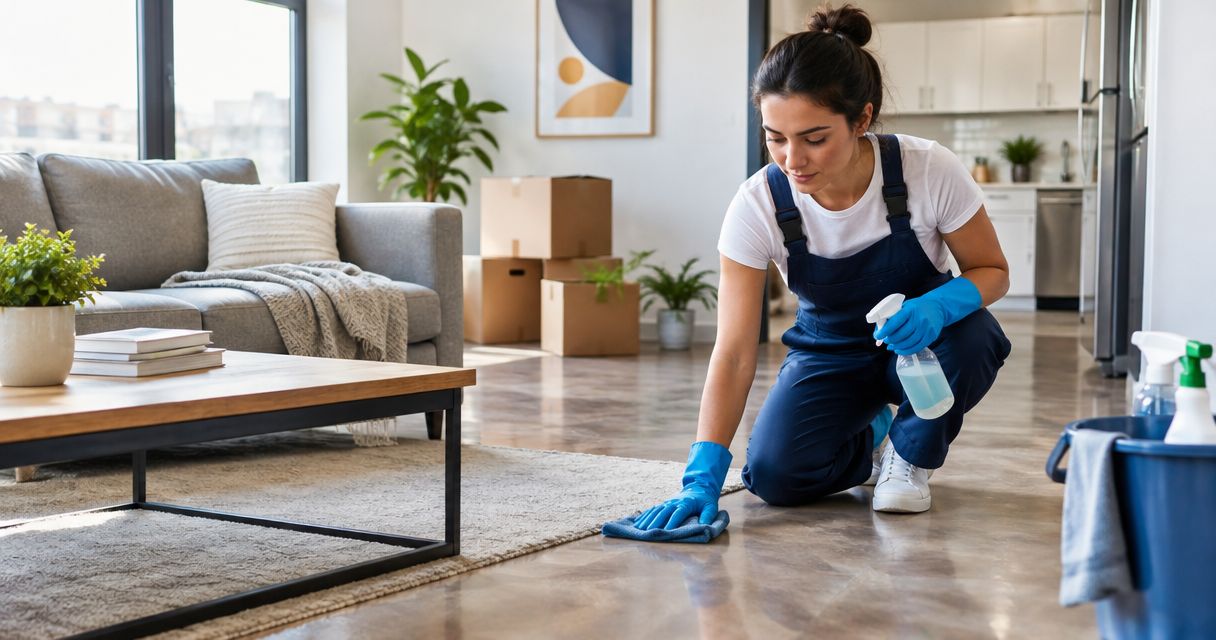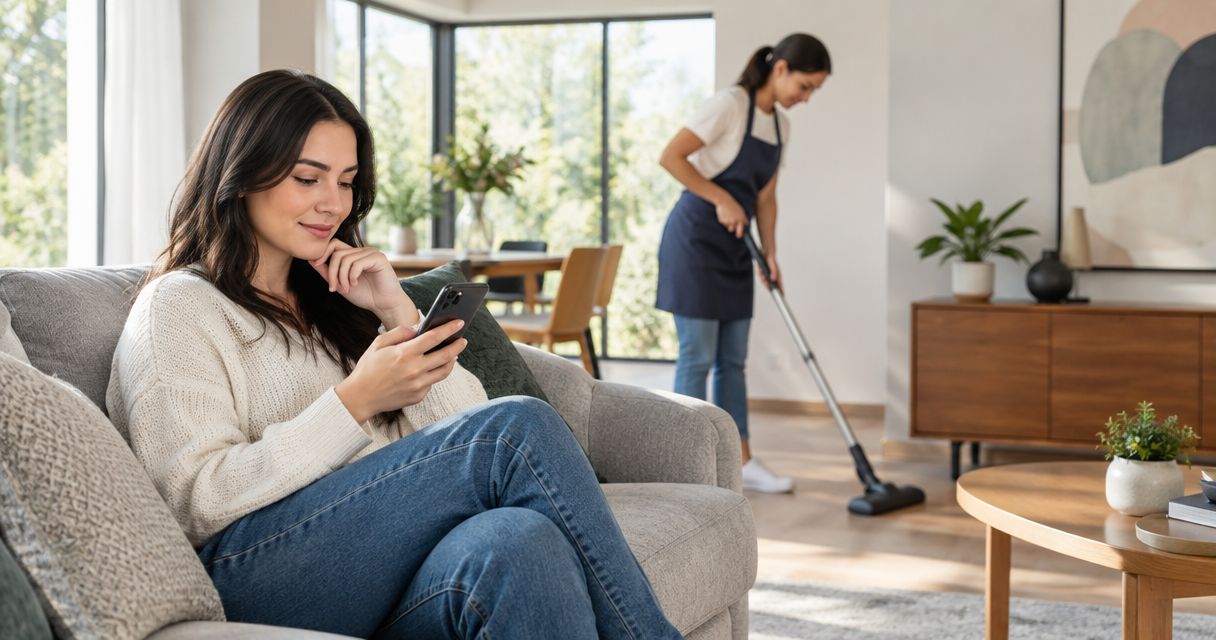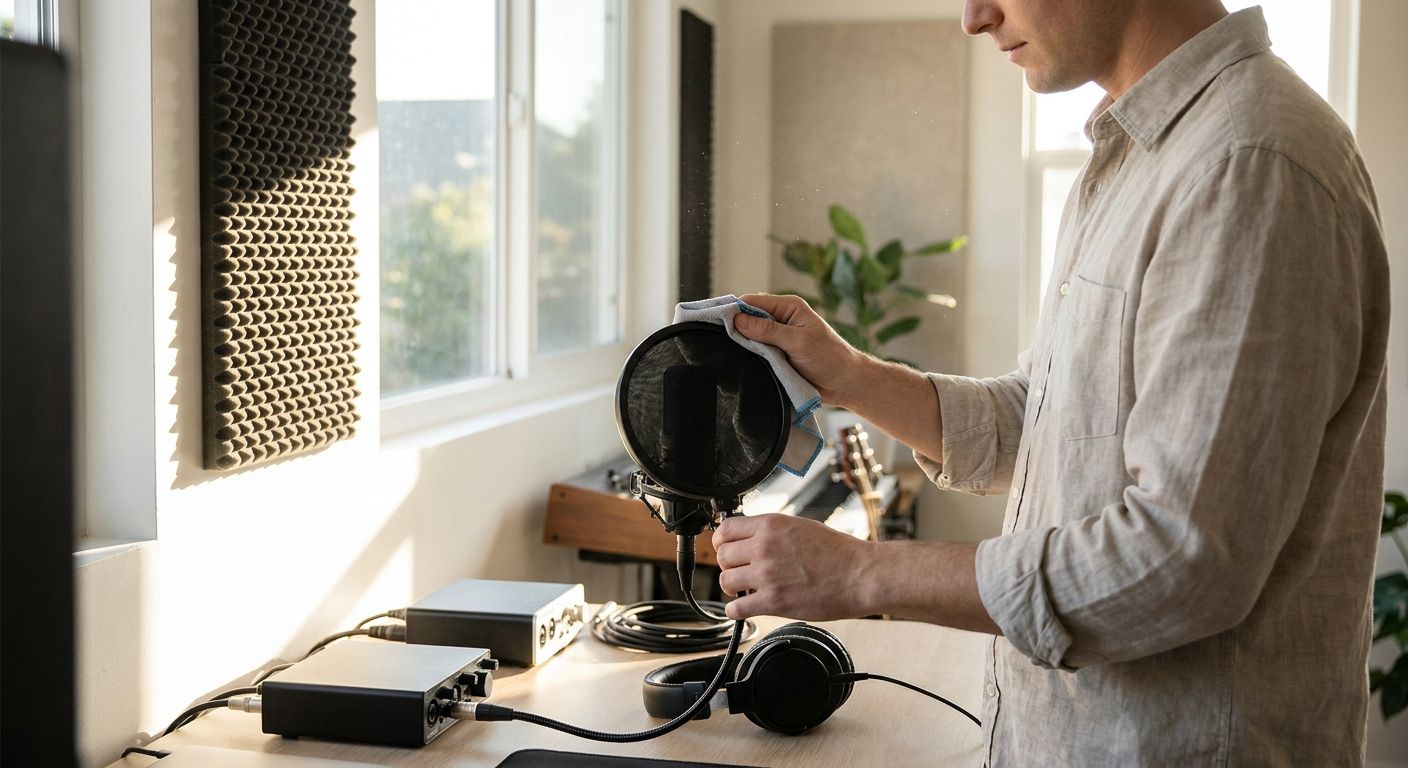
House cleaning for a home recording studio is a routine built around protecting gear and acoustic treatment, not just wiping counters — the goal is a room clean enough that neither your ears nor your equipment notice a difference. Nashville songwriters and producers tracking vocals in a converted bedroom or basement run into problems a standard house cleaner never trains for: foam panels that shed dust into the air, cable runs that can't just get unplugged and coiled, and sealed rooms with nowhere for that dust to go but a mic capsule.
- House cleaning for a home recording studio means dusting gear and foam without touching cables or mic placement.
- Sealed, soundproofed rooms trap dust and humidity worse than open rooms — treat them as a separate zone.
- Porch and Parlor Cleaning can flag a studio room as a do-not-touch-cables zone when you note it ahead of the visit.
- A recurring cleaning schedule beats a once-a-year deep clean for gear sensitive to dust buildup.
Why this matters for home studio owners
Producers running a Pro Tools rig or a stripped-down interface-and-mic setup out of a spare room don't get to treat dust the way a home office does. Acoustic foam and mineral wool panels are dust magnets by design — the same porous surface that absorbs sound also absorbs every particle drifting through the room. A studio that goes six months without a real cleaning collects enough buildup to change how a condenser mic actually captures a room, and that's the last thing anyone wants showing up in a final mix.
Gear that costs more per square foot than the furniture around it changes the math too. "Just vacuum it like any other room" is bad advice the moment cables, patch bays, and foam panels are involved, and it's a big reason house cleaning for a home recording studio needs its own set of rules instead of a generic once-over.
Dust your gear before you dust your floors
- Wipe mic bodies and stands with a dry microfiber cloth — never spray cleaner directly on a mic
- Use a soft brush or compressed air on knobs, faders, and ports on interfaces and mixers
- Vacuum foam panels with a brush attachment on low suction, working top to bottom
- Dust monitor speakers and stands separately from anything with an exposed driver
- Save the floor for last so settled dust doesn't get kicked back up onto gear
Protect acoustic treatment from moisture and product buildup
- Skip anything with ammonia or bleach near foam or mineral wool — it breaks the material down faster
- Keep spray bottles pointed away from panels entirely; dust dry or not at all
- Check corner bass traps for buildup monthly — they're the most neglected spot in most rooms
- Wipe diffuser panels with a dry cloth only, never a wet one
Manage cable clutter without disconnecting anything
- Coil and label loose cables so anyone dusting can work around them without unplugging a thing
- Use cable raceways or floor clips so a vacuum can pass without snagging a cord
- Flag any patch bay or snake as off-limits, full stop
- Dust cable runs with a dry cloth instead of moving them
A general house cleaner who doesn't know a studio from a home theater home theater and media room cleaning has zero reason to know a snake cable from an extension cord, which is exactly why the flag-it-first approach matters more here than almost anywhere else in the house.
Control humidity and airflow in soundproofed rooms
- Run a dehumidifier if the room stays sealed for hours — mineral wool holds moisture longer than drywall
- Crack the door between sessions so air actually exchanges; sealed rooms don't ventilate on their own
- Check for a mildew smell near exterior walls, especially in basement setups
- Wipe down any HVAC vent or window unit serving the room once a month
Schedule cleaning around session times, not the other way around
- Book cleaning for days you're not tracking vocals — even quiet vacuum noise in the next room can bleed into a mic
- Set up recurring house cleaning on a schedule so gear dust never has six months to build up
- Give a 24-hour buffer before a session if you want the room cleaned that same week
- Keep a standing note on file flagging the studio room as gear-heavy so it never gets treated like a spare bedroom
Set boundaries for what a cleaner touches and what they don't
- Put a card on the studio door listing exactly what's off-limits
- Walk a new cleaner through the room once before the first visit
- Negotiate a cleaning contract that locks the do-not-touch list into the recurring plan
- Reconfirm the list any time gear gets rearranged
A good workman never blames his tools — but a good producer definitely blames the dust when a mic starts sounding dull, and half the time they're right.
Comparing your cleaning options as a home studio owner
| Option | Best for | Key limitation |
|---|---|---|
| DIY cleaning between sessions | Solo producers on a tight gear budget | Eats into studio time and gets skipped when deadlines hit |
| General house cleaning service, no studio notes | Homeowners who don't track in the room being cleaned | Risk of moved cables, sprayed foam, or bumped mic stands |
| Porch and Parlor Cleaning recurring plan with a studio flag | Nashville producers who want the room cleaned without gear touched | Needs a short walkthrough or written do-not-touch list upfront |
| One-time deep clean before a session or client visit | Studios prepping for an artist visit or showcase | Doesn't solve ongoing dust buildup between bookings |
Verdict: a flagged recurring plan through Porch and Parlor Cleaning is the only option built for repeat gear-safe visits — DIY and one-time deep cleans both leave gaps a working studio can't afford.
Book cleaning around your session schedule
Set a recurring plan that flags your studio as a no-touch-cables zone.
Common mistakes home studio owners make
- Letting a general cleaner spray glass cleaner near foam panels — it degrades the material and leaves residue that changes absorption over time.
- Skipping cable labeling, then blaming the cleaner when a cord gets bumped loose — label it or expect it to move.
- Scheduling cleaning right before a session instead of a day ahead — vacuum noise and airborne dust both mess with tracking.
- Treating a home recording studio the same as any spare room and booking a once-a-year deep clean, when gear dust builds up faster than furniture dust ever does.
- Never walking through the room with the cleaner, then discovering the mic stand got moved two feet after the fact.
A producer who works from home full-time already knows the room needs different rules than the rest of the house — the same logic applies for work-from-home professionals trying to keep an office dust-free without derailing a workday, and it maps almost directly onto studio scheduling.
FAQ
What's the best way to clean a home recording studio without damaging gear?
Dust gear dry with a microfiber cloth, vacuum foam panels on low suction with a brush attachment, and never spray cleaner directly on mics or acoustic treatment. Flag cables and patch bays as off-limits before anyone else touches the room.
Is it safe to vacuum acoustic foam panels?
Yes, with a soft brush attachment on low suction, working top to bottom so dust doesn't settle back into the material. Skip liquid cleaners entirely — foam and mineral wool absorb moisture and break down faster with any wet product.
How often should a home recording studio be cleaned?
A recurring schedule, not a once-a-year deep clean, keeps up with the dust foam panels collect. Monthly is a reasonable baseline for most home setups, with a lighter dusting pass in between if the room is used heavily.
Can a house cleaning service work around recording equipment?
Yes, as long as the room is flagged ahead of time with a written or verbal do-not-touch list. Porch and Parlor Cleaning can treat a studio room as a no-cables-touched zone once that's set up in your recurring plan.
Does dust actually affect microphone sound quality?
Dust buildup inside a mic grille or on a diaphragm can change how it captures a room over time. Regular dry dusting of mic bodies and stands prevents buildup long before it becomes an audible problem.
How do I keep cable clutter clean without unplugging anything?
Coil and label cables so a cleaner can dust and vacuum around them without disconnecting a single cord. Cable raceways or floor clips also keep a vacuum from snagging a run mid-clean.
Should I clean my studio before or after a recording session?
Before, with at least a 24-hour buffer if possible, so airborne dust from cleaning has time to settle before tracking. Cleaning immediately before or during a session risks both dust in the air and noise bleed into open mics.
Is a recurring cleaning plan better than a one-time deep clean for a studio?
Yes for ongoing gear protection — a recurring plan keeps dust from building up on foam and equipment between bookings. A one-time deep clean is better suited to a single event, like prepping for an artist visit or showcase.
One last thing
A dusty mic grille is one of the most overlooked reasons a vocal chain starts sounding duller over time — long before anyone thinks to blame the preamp or the room treatment. Wipe the grille dry after every few sessions and it's one variable off the table for good.