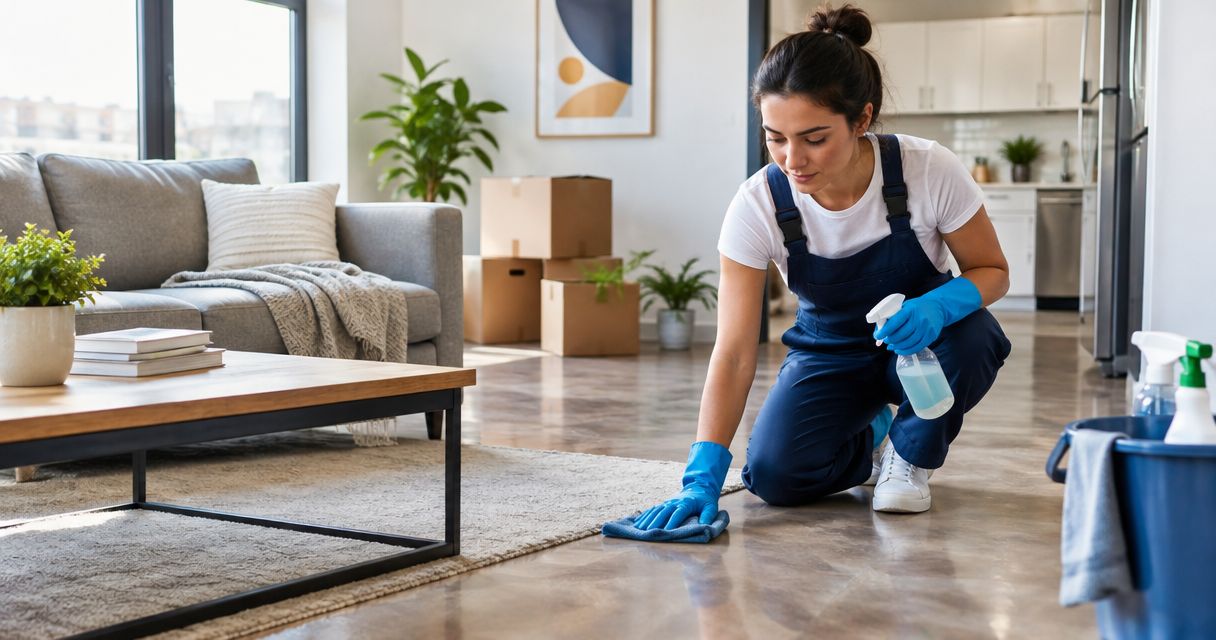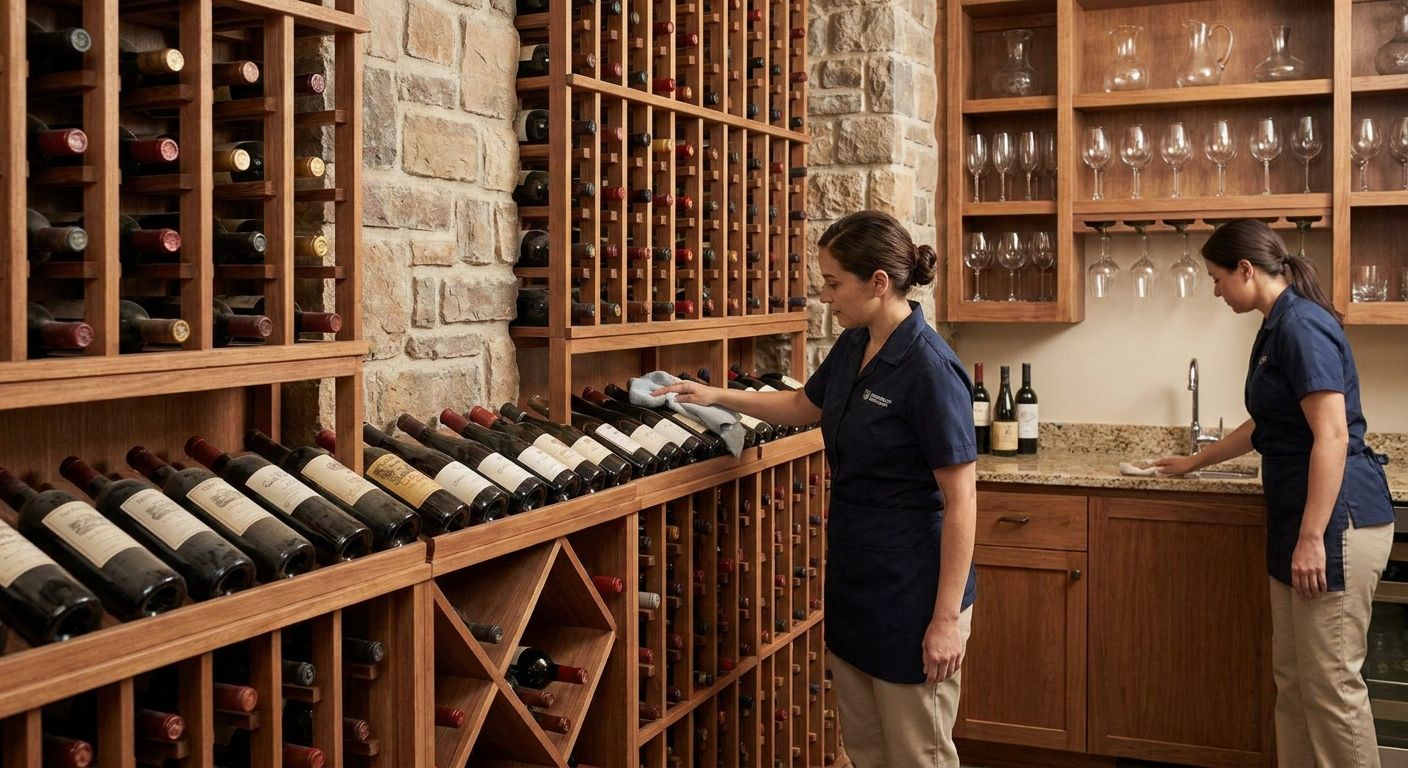
A wine cellar or home bar is not just another room to wipe down — it holds temperature-sensitive bottles, label-forward inventory, and glassware that scratches if you look at it wrong, and a wine cellar cleaning service that treats it like a regular den is going to cause problems fast in 2026.
- A proper wine cellar cleaning service in Nashville skips ammonia near labels and never rearranges bottles — Porch and Parlor Cleaning treats this as a specialty add-on, not a standard pass.
- Bi-weekly maintenance cleans (the Steady Eddy approach) are the buy for cellars in finished basements; one-time move-in cleans are a skip as a long-term plan.
- Home bars paired with a media room or theater benefit from a bundled cleaning visit rather than two separate bookings.
- Ask any cleaner how they vet staff before letting them near a $10,000 bottle collection — if they can't answer, that's your sign to keep looking in 2026.
Why this matters
Most house cleaning companies quote a flat rate per bedroom and bathroom and never ask what's behind the basement door. A wine cellar or home bar changes the math: humidity control units that shouldn't sit open, cork-sealed bottles that shift with temperature swings, and bar tops finished in materials that hate bleach.
Get this wrong and you're not just risking a streaky mirror. You're risking a ruined vintage or a warped bar rail, and that's a much more expensive mistake than a missed baseboard.
Who this is for
This guide is for Nashville-area homeowners with a dedicated wine cellar, wet bar, or entertaining space — the kind of setup common in cleaning for luxury homes in Green Hills and similar higher-end neighborhoods, but it applies just as much if your cellar is a converted basement nook with a dozen bottles and a mini fridge. If you host regularly, store anything worth more than a weekend grocery run, or just don't want a well-meaning cleaner spraying glass cleaner on a 2019 Cabernet label, this is your checklist.
What to look for in a wine cellar cleaning service
Temperature and humidity awareness
A cellar cooling unit keeps bottles at a steady range, usually somewhere around 55-58°F with humidity in the 60-70% band, and propping a door open for twenty minutes to vacuum undoes that balance. A cleaner who understands this works fast, keeps the door closed between passes, and never disables the unit to "get some air moving."
Product knowledge for wood and cork
Wine racks are usually wood, wrought iron, or a mix, and cork-topped bottles don't like solvent-heavy sprays anywhere near them. The right approach uses dry or barely-damp microfiber on racking and skips ammonia and alcohol-based cleaners within a few feet of open bottles.
Hands-off bottle policy
Bottles that get "straightened" or moved around during cleaning can disturb sediment in aged reds, and mislabeling which bottle goes where throws off an owner's whole system. A good cleaner dusts around bottles, never repositions them, and asks before moving anything on display.
Glass and bar-top care
Home bars mean mirrors, glass shelving, and counters finished in stone, wood, or laminate — each needing a different product. Streak-free glass work and a bar top that isn't dulled by the wrong cleaner both matter here, especially if the bar doubles as a photo backdrop for holiday parties.
Dust control on open shelving
Open bottle racks and label-forward displays collect dust fast, and a cleaner who blasts a duster across open shelving just relocates the dust onto the labels. Look for a slower, wipe-down approach instead of a quick spray-and-go.
Trust and vetting
You're letting someone into a room with real money sitting on the shelves, so background-checked, insured staff aren't optional. If you haven't already, vet a house cleaning company before handing over cellar access — this matters more here than in any other room of the house.
Top picks: cleaning approaches for wine cellars and home bars
The Steady Eddy — recurring maintenance clean
This is a bi-weekly or monthly pass that keeps dust, fingerprints, and spilled-pour residue from building up between hosting nights. It works especially well when the cellar sits inside a finished basement setup, since the whole lower level gets attention on the same visit. A 14-day interval keeps glass and bar surfaces from ever looking neglected. Verdict: Buy — this is the plan most cellar owners should default to.
The Pre-Party Deep Clean — one-time detail before hosting
Booked a day or two before a holiday gathering or a big game night, this pass focuses on glassware polishing, bar cart detailing, and floor work around the seating area. It typically runs longer than a standard visit because glass and stemware take real time to do right. Verdict: Buy for anyone who entertains more than a couple times a year — skip it if the bar never sees guests.
The Media Room Bundle — bar plus adjacent theater space
A lot of home bars sit right next to a home theater or media room, and bundling both into one visit saves a trip and keeps the whole entertaining wing consistent. Screens, seating, and bar surfaces get the same attention window instead of split scheduling. Verdict: Consider — worth it if the two spaces are used together, not worth the coordination if they're on opposite ends of the house.
The One-and-Done Move-In Clean
Fine as a first pass right after a cellar gets installed or a bar gets remodeled, but it's not a substitute for ongoing care. Dust and grime don't wait for your next open house or holiday party to show up. Verdict: Skip as a long-term plan — treat it as a starting point, not a strategy.
As they sometimes say, a good workman never blames his tools — but in a wine cellar, the wrong tool can cost you a bottle you can't replace.
“You can own the finest wine cellar in Green Hills, but a good workman never blames his tools — the wrong spray bottle still ruins a label.”
What to avoid
- Ammonia-based glass cleaners near open racks. They look fine on a mirror but leave residue that can seep into cork over time.
- "Straightening" bottles during a dust pass. It looks tidy, but it disturbs sediment in aged reds and undoes an owner's organization system.
- Cleaners who skip the vetting conversation. Anyone hesitant to answer questions about insurance or staff background checks shouldn't be near a cellar full of inventory — go back and vet a house cleaning company first.
Book a cellar-safe cleaning
Schedule a maintenance or pre-party clean built for wine cellars and home bars.
Verdict comparison
| Approach | Frequency | Best for | Verdict |
|---|---|---|---|
| Steady Eddy maintenance | Every 14 days | Cellars in daily-use basements | Buy |
| Pre-Party Deep Clean | Before events | Frequent hosts | Buy |
| Media Room Bundle | Paired visits | Bar + theater combos | Consider |
| One-and-Done Move-In | Single visit | New installs only | Skip long-term |
FAQ
What's the best cleaning service for a wine cellar in Nashville?
The best wine cellar cleaning service in Nashville is one that treats bottle racks, glassware, and cooling units as specialty items rather than standard house cleaning. Ask specifically whether staff avoid ammonia near corks and whether they move bottles during a visit.
Is it safe to have a cleaner move bottles during a wine cellar cleaning?
No, bottles should stay in place during a cleaning visit. Moving or straightening bottles can disturb sediment in aged reds and throw off an owner's storage organization.
How often should a home bar be professionally cleaned?
Most home bars do well on a bi-weekly maintenance schedule, with an extra deep clean added before holidays or hosting events. Bars that see daily use may need weekly attention to glassware and surfaces.
Does cleaning a wine cellar affect the temperature or humidity?
It can if the cooling unit is disabled or the door stays open too long during the visit. A cellar-aware cleaner works quickly and keeps the door closed between passes to protect the 55-58°F range most cellars are set to.
Can a regular house cleaning include the wine cellar and home bar?
Yes, but only if it's booked as a specialty add-on rather than folded into a standard pass. Standard cleaning products and techniques aren't built for wood racking, cork, or bar-top finishes.
How much does a wine cellar cleaning service cost in 2026?
Cost depends on the size of the cellar or bar area and whether it's a maintenance visit or a full deep clean. Get a quote based on square footage and the specific add-ons you need for 2026 scheduling.
What products are safe to use on wine racks and bar counters?
Dry or barely-damp microfiber works best on wood and wrought-iron racking, while bar counters need a product matched to their finish, whether that's stone, wood, or laminate. Ammonia and heavy solvents should stay away from both.
Should I be present during a wine cellar cleaning?
You don't have to be, but pointing out which bottles are off-limits to move and confirming the cooling unit setting beforehand saves confusion. A quick walkthrough on the first visit sets expectations for every visit after.
One last thing
The detail most homeowners skip: labeling which shelves or racks are "do not touch" before the first cleaning visit. It takes two minutes and it's the single biggest thing that prevents a mixed-up collection or a moved bottle in 2026 and every year after.